BAJA All-Terrain Vehicle (ATV) Model
BAJA All-Terrain Vehicle (ATV) Model
Aim:
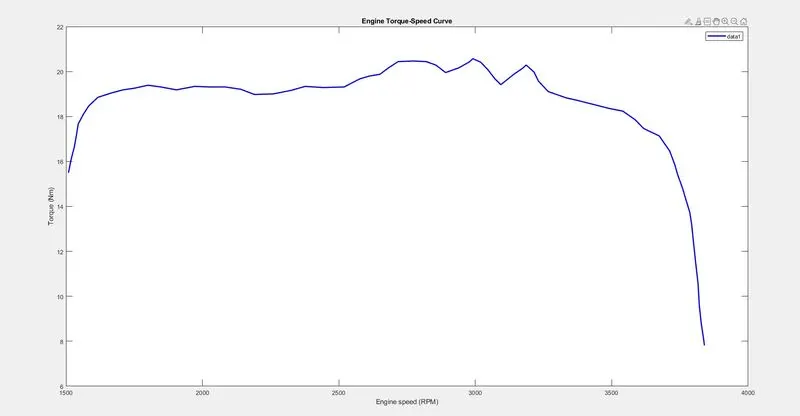
These models show how to build an ATV with CVT which is mostly used in BAJA competitions. Simscape and Simscape Driveline have been used to complete the system. The engine data used in the model is provided as an image that shows the Engine Speed (RPM) Vs Torque curve.
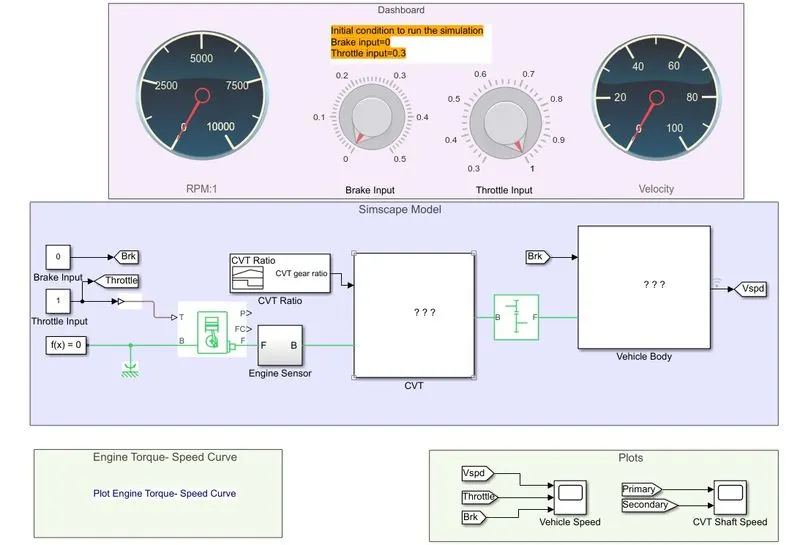
cvtModel with dashboard:
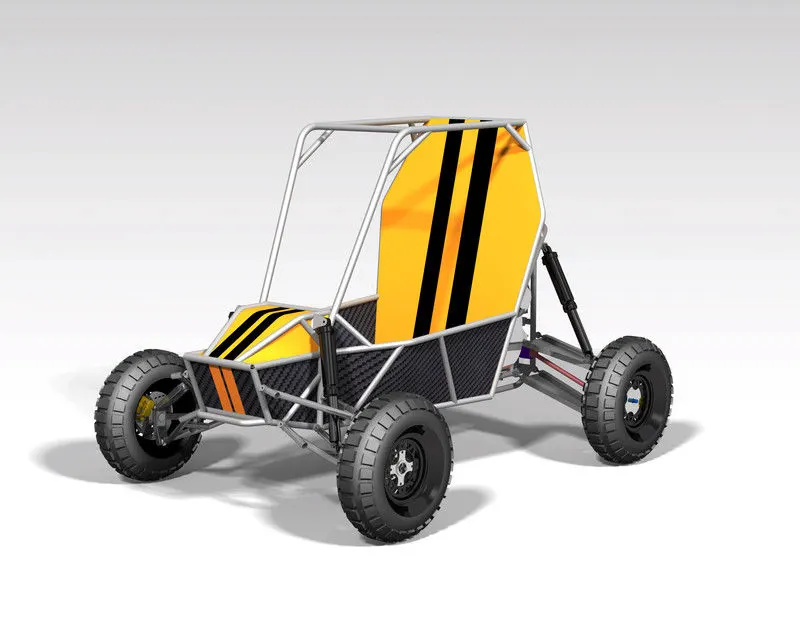
- Components of BAJA ATV:
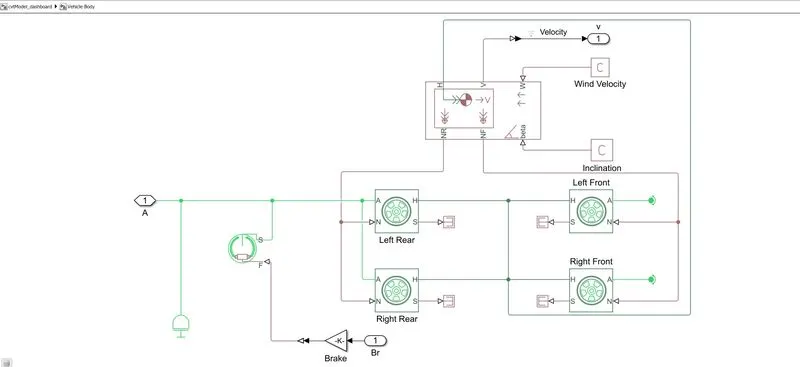
- Vehicle Body
- Suspension
- Tire
- Engine
- CVT
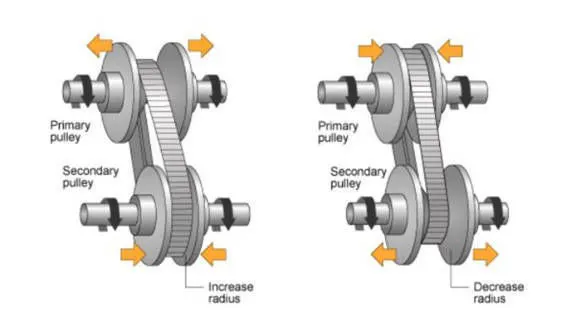
- CVT
- it consists of a primary pulley, Variator, and secondary pulley and belt.
- when the Variator is connected to the primary pulley when it goes outward the Variator of the secondary pulley will move inward such that the radius of the secondary pulley will be more than the radius of the primary pulley that will lead to speed reduction.
- when the Variator of the primary pulley moves inwards when the Variator of the secondary pulley moves outwards and it will lead to overdrive.
- When we are changing the throttle or the brake input the vehicle velocity and RMP is changing.
note:
- the gear ratio is selected using the comparison of vehicle velocity, engine torque, engine RMP.
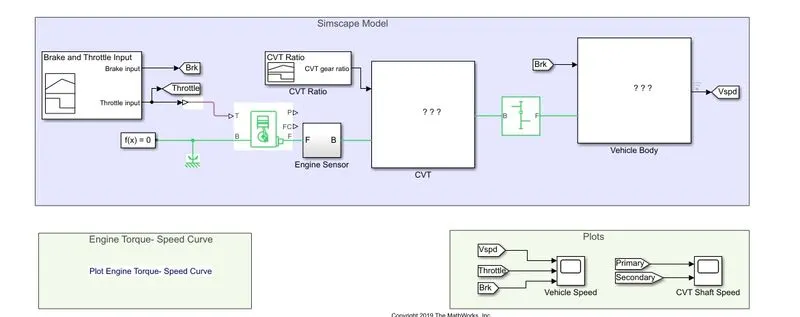
CVTModel
- There are two types of model open loop and closed loop
- where there will be feedback from the velocity to CVT model
- and inside CVT based on the value given in the lookup table, there will be one more extra block connected as CVT ratio input.
Subsystems:
- CVT:
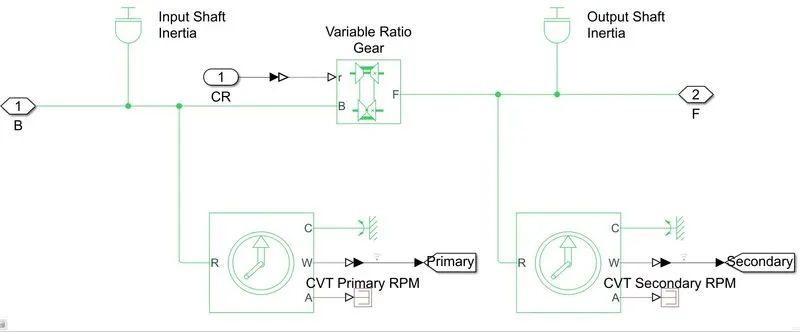
- here the input shaft inertia and output shaft inertia are representing the primary and secondary pulley.
- to specify gear ratio we have a variable gear ratio block.
- Engine sensor:
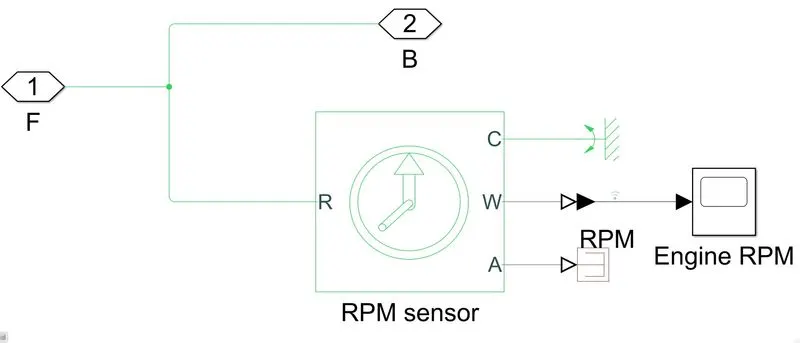
- the input value is the speed vector and torque vector which is given by the engine torque-speed curve.
- Vehicle body:
Input plots:
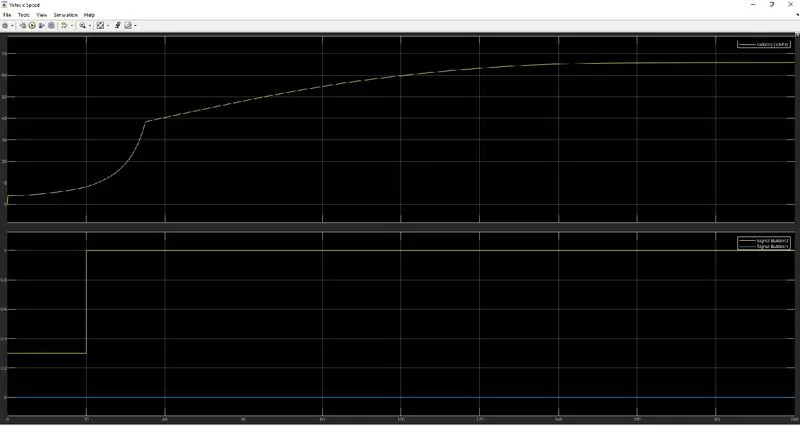
- brake and throttle input:
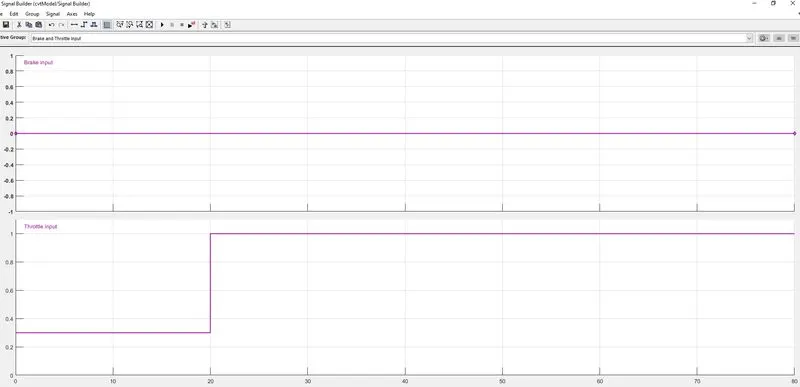
- break input is given 0 and throttle input is given from 0.3 to 1.0 after 20secs.
- we can give random brake and throttle inputs and check the velocity here shown below is one type.
- input can be varied by using the nob present in the dashboard.
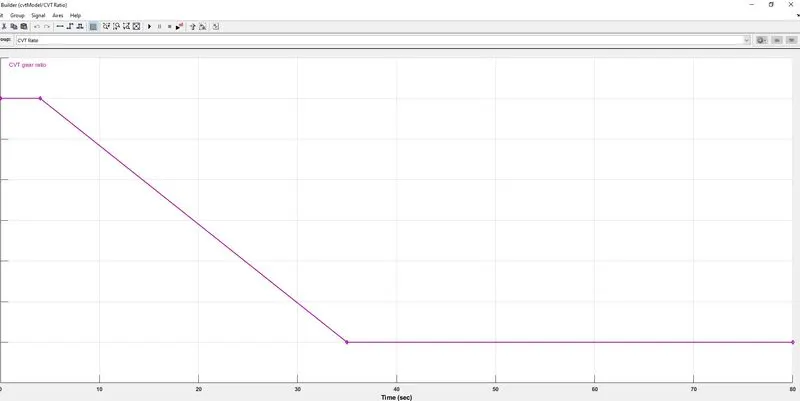
- CVT gear ratio:
- we can give a random CVT ratio as input and check the velocity here shown below is one type.
- this input can be changed by building the signal in the signal builder block.
- also, we can be input by using the lookup table and this converts the system into a closed-loop system.
- and inside CVT based on the value given in the lookup table, there will be one more extra block connected as CVT ratio input.
- engine torque-speed curve:
- T his input is given to the engine because the engine has an input value of speed vector and torque vector
- These values can be extracted by using GRABIT and feed to the engine.
- maximum is peed is 3840RMP
Output plots:
- vehicle speed :
- we can observe that when we are increasing the throttle the velocity is increasing and after some time howsoever you increase the throttle the velocity will be maximum and attains saturation.
- also, note that the graph shown may be less in magnitude when the vehicle weight is increased.
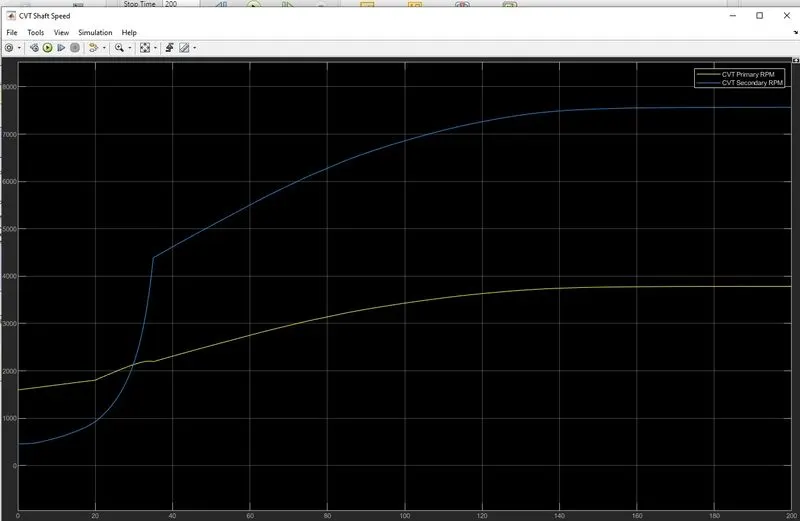
- CVT shaft speed:
- when the Variator is connected to the primary pulley when it goes outward the Variator of the secondary pulley will move inward such that the radius of the secondary pulley will be more than the radius of the primary pulley that will lead to speed reduction.
- when the Variator of the primary pulley moves inwards when the Variator of the secondary pulley moves outwards and it will lead to overdrive.
- the plot below shows the variation in CVT primary RMP and CVT Secondary RPM.
Result:
- we can conclude using a gear ratio of 4 suitable for the CVT model.
- and output plots can be observed from the above plots shown and a suitable and appropriate model can be built.