Simulation of BAJA All-Terrain Vehicle
Simulation BAJA ATV Vehicle
Here we making the Simulink model of BAJA All-terrain vehicle(ATV) by using the Continuously variable transmission(CVT) and we are giving gear ratio to CVT and different speed and torque values to the Engine of the model and analysing the output signals.
Before going to Simulation we are going to explain some critical blocks and subsystems used in the simulation.
- Generic Engine
- Continuous various transmission(CVT)
- Vehicle body
Generic Engine :
Here we are using basic general internal combustion engine and the Engine types include spark-ignition and diesel. Speed-power and speed-torque parameterizations are provided. A throttle physical signal input specifies the normalized engine torque. Optional dynamic parameters include crankshaft inertia and response time lag. A physical signal port outputs engine fuel consumption rate based on the choice of fuel consumption model. Optional speed and redline controllers prevent the engine to stall and enable cruise control.
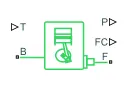
The throttle input signal T lies between zero and one and specifies the torque demanded from the engine as a fraction of the maximum possible torque. If the engine speed falls below the Stall speed, the engine torque is blended to zero. If the engine speed exceeds the maximum speed, the simulation stops and issues an error message.
Connections F and B are mechanical rotational conserving ports associated with the engine crankshaft and engine block, respectively. Connections P and FC are physical signal output ports through which engine power and fuel consumption rate are reported.
Continuous various transmission(CVT) :
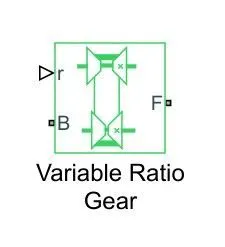
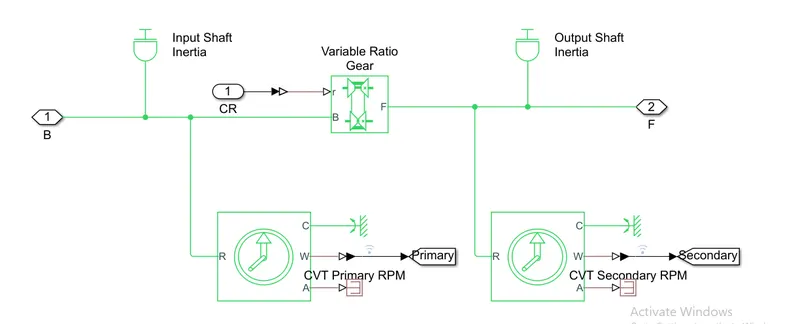
The CVT (Continuously Variable Transmission) provides smooth and "stepless" ratio changes, unlike conventional transmission systems that use sets of fixed gears. to create the CVT we are using the Variable gear where primary and secondary are connected to ideal rotational motion sensors block, and the gear ratio input has been given by using the signal builder block
Vehicle body :
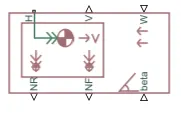
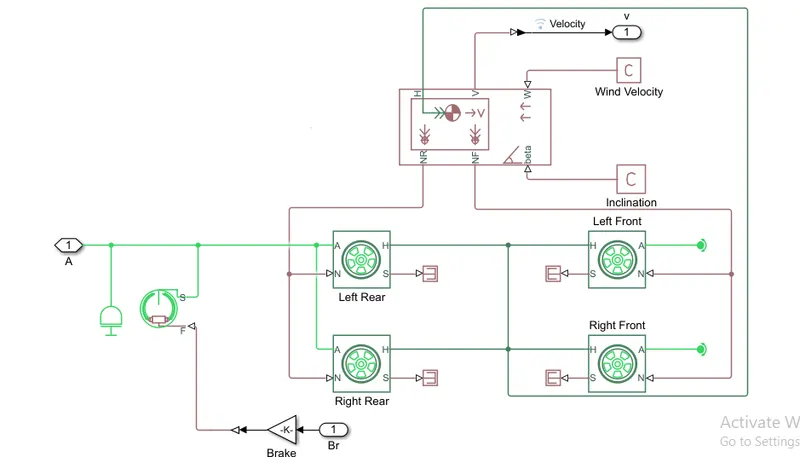
Here we have used the vehicle body Simscape block which connected to the CVT by using the simple gears and this block Represents a two-axle vehicle body in longitudinal motion. The block accounts for body mass, aerodynamic drag, road incline, and weight distribution between axles due to acceleration and road profile. The vehicle can have the same or a different number of wheels on each axle. Optionally include pitch and suspension dynamics or additional variable mass and inertia. The vehicle does not move vertically relative to the ground.
By using the above Simscape blocks and Sub-systems we have created the Simulink model and done the simulations in different conditions
- Creating BAJA ATV Simscape model where throttle, brake and CVT gear ratio input has given by using the Signal builder block.
- Creating BAJA ATV Simscape model where throttle, brake and CVT gear ratio input has given by using the Signal builder block and storing the gear ratio values and output velocity to the workspace.
- Making the Simscape model of BAJA ATV model with closed-loop where the gear ratio has been given using the lookup table block and creating the dashboard by varying the speed and brake we can observe the change in speed and velocity
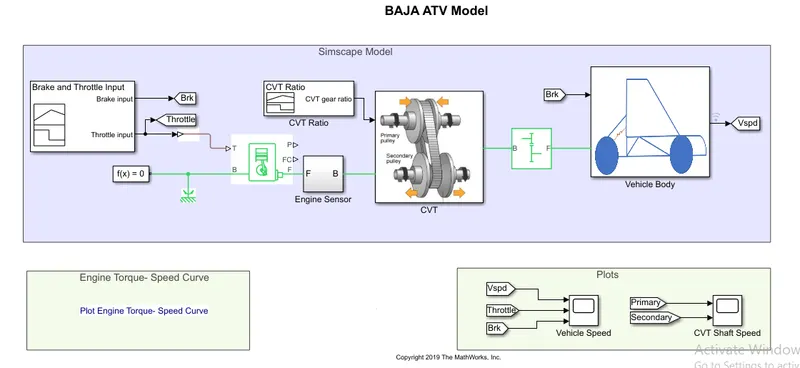
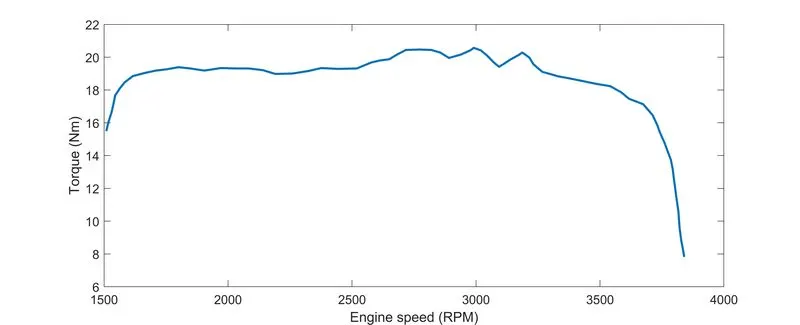
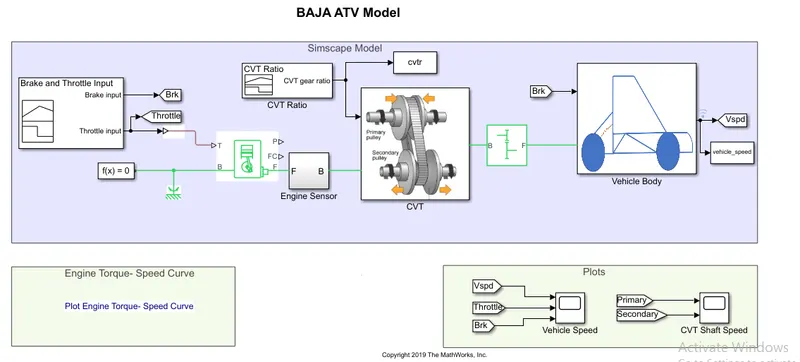
Below diagram shows the Simulink model of BAJA ATV model which we are given throttle and Brake as input to the Vehicle by using Signal Builder Block and the Speed & torque values have been given by using the Speed VS Torque Plot and also giving the gear ratio to the CVT by using the Signal builder block and we are analysing the output speed, Velocity of the Vehicle and Primary and secondary of the CVT.
Simulink Model :
Explanation :
from the above model, we have given input signals like throttle, brake &CVT ratio by using the signal builder block and the engine Speed & Torque values have taken from the Torque-Speed plot shown below
and the below diagram shows the CVT block where the primary is connected to the Driving shaft and the secondary is connected to the Driven shaft and we are giving some input and output inertia then the RPM of the primary and secondary of the CVT has been analysed by using the Ideal Rotational Motion Sensor connected on both sides.
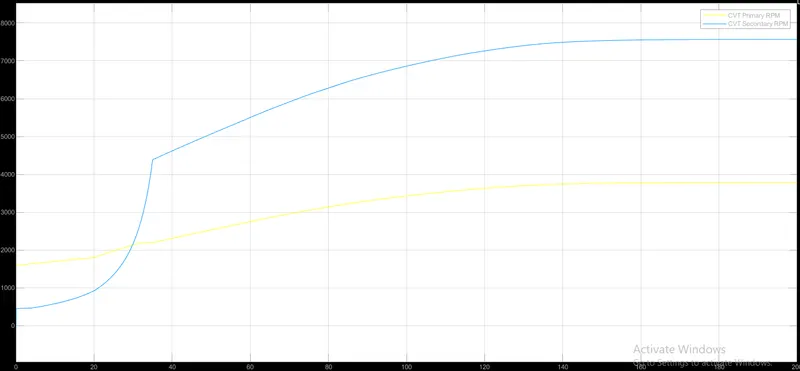
The output RPM of the primary and the secondary of the CVT Shaft is shown below the plot
Below Model shows the subsystem of the vehicle body which is connected to the CVT by using simple gear block and this vehicle body block has connected to the tyres block and we are taking the wind Velocity and the inclination values as zero
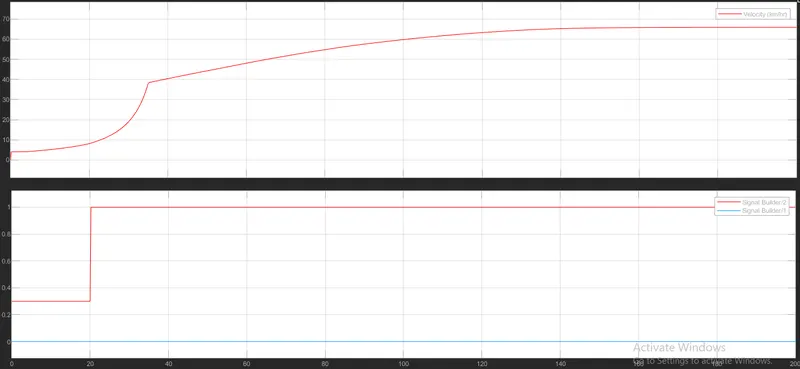
The input and the output values of the BAJA ATV model has been shown below where the brake has given 0 and when we have given throttle we observe the change in output velocity that has shown in the below Plot
The below simscape model of BAJA ATV vehicle where the CVT and the output Velocity values are taken to MATLAB workspace by using To Workspace block has been shown below the diagram
Controlling of BAJA ATV model by using the dashboard :
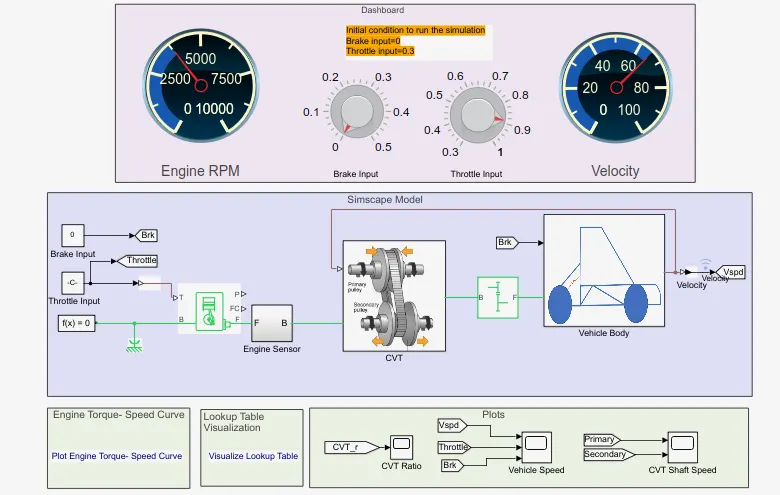
The Simscape model of the BAJA All Terrian Vehical model using the Dashboard has been shown below.
Explanation:
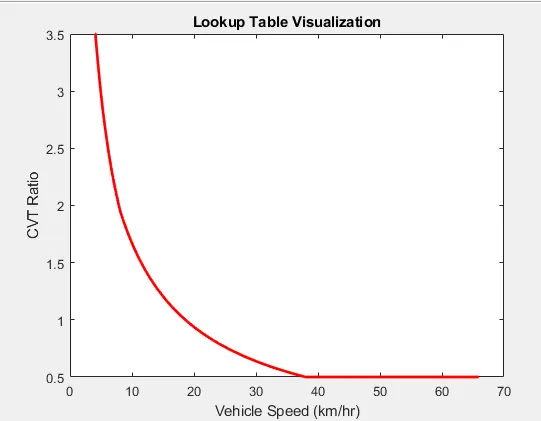
From the above Model, we have changed the input gear ratio of the CVT instead of giving sperate signal we have used the output Velocity of the vehicle body to the CVT by using the Lookup table which makes the closed-loop system that makes the smooth operation of the vehicle simulation and the input throttle and brake has given by using constant block where this is connected to the adjustable knob block that can vary the throttle by changing the knob where brake has been 0 at the initial condition and we can observe the change in velocity and the Engine RPM and same has been shown in the plots.
Lookup table
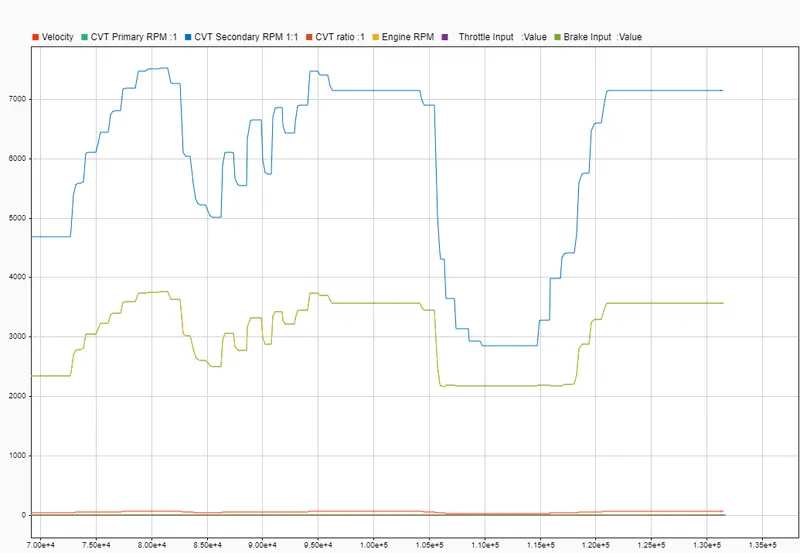
By varying the throttle there will be changing in engine speed that has equal to the primary of the CVT and the RPM on secondary has been varying depends upon the gear ratio and the output plot of the BAJA ATV simscape model has been shown below here we have taken brake has 0.
Conclusion :
The simulation of BAJA ATV model has done by using CVT with different gear ratio inputs using the Lookup table and signal builder block
Reference :
https://drive.google.com/file/d/1NhP7VThVGCuVp147ND51zRpMx1_EtvQ1/view?usp=sharing
https://drive.google.com/file/d/1nlkOqbJgoy0BqF5KoHObPoDHanunqXdT/view?usp=sharing