Project-1: Powertrain for aircraft in runways
Part A:
1. Search and list out the total weight of various types of aircrafts.
2. Is there any difference between ground speed and air speed?
3. Why is it not recommended to use aircraft engine power to move it on the ground at Airport?
4. How an aircraft is pushed to runway when its ready to take off?
5. Learn about take off power, tyre design, rolling resistance, tyre pressure, brake forces when landing.
Ans:
-
An Aircraft is a vehicle that is able to fly by gaining support from the air.
- It counters the force of gravity by using either static lift or the dynamic lift of an airfoil, or in few cases the downward thrust from jet engines.
- The common examples of aircrafts includes airplanes, helocopters, airship, glifers, paramotors, and hot air balloons.
1. Search and list out the total weight of various types of aircrafts.
ANS:-
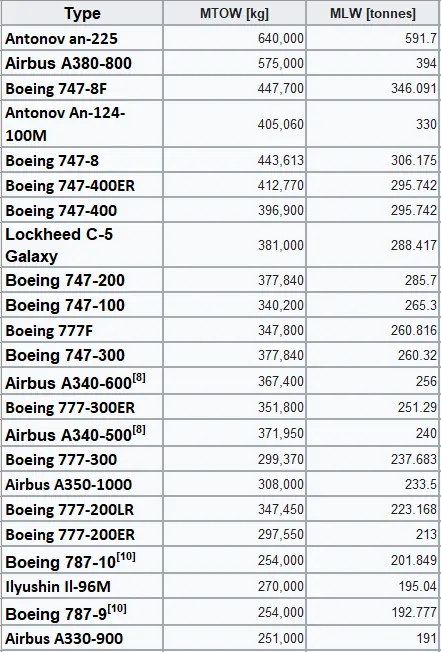
The list of aircraft shorted by maximum take off weigth is shown below:
MTOW-Maximum take off weight.
MLW- Maximum Landing weight. 1ton.=1016.04691kg
- The aircraft gross weight also known as the all up-up weight (AUW) is the total aircraft weight at any moment during the flight or ground operation.
- An aircraft gross weight will decrease during a flight due to fuel and oil consumption.
- An aircraft gross weight may also vary during a flight due to payload dropping or in flight refulling.
- At the movement when aircraft release it brake it's gross weight is equal to it's take-off weight.
>The figure below shows the take up weight components.
- The MTOW or Maximum gross take off weight (MTGOW) or Maximum Take of mass (MTOM) of an aircraft is the maximum weight at which the pilot is allowed to attempt to take off, due to structure or other limits.
- MTOW is usually specified in Kilograms or poounds.
- MTOW is the heaviest weight at which the aircraft has been shoown to meet all the airworthiness requirements applicable to it.
- MTOW of aircraft is fixed and doesnot vary with altitude, air temperature, or the length of the runway to be used for the takeoff or landing.
- Maximum permissible takeoff weight or "regulated takeoff weight", varies according to flap setting, altitude, air temperature, length of runway and other factors. it is different from one takeoff to the next, but can never be higher than MTOW.
- Maximum taxi weight (MTW) also known as Maximum Ramp weight is the maximum weight authorized for maneuverig (i.e taxing or towing) an aircraft on the ground as limited by aircraft strength and airworthiness requirements. It includes the weight of taxi and run-up fuel for engines and auxillary power units (APU). It is greater than the MTOW due to the fuel that will be burned during the taxi and runup operations.
- The different between the maximum taxi weight and MTOW depends on the size of the aircraft, and engines APU fuel consumption .
- Maximum Landing Weight(MLW) authorised for normal landing of an aircraft. The MLW must not exceed the MTOW.
2. Is there any difference between ground speed and air speed?
ANS:-
- Ground speed is the airplane’s speed relative to the surface of the Earth, airspeed, at least true airspeed, is its speed relative to the air it is flying in.
AIR SPEED V/S GROUND SPEED.
- As mentioned above, true airspeed is simply the speed at which an aircraft is moving relative to the air it is flying in. As such, it’s also the speed at which the air is flowing around the aircraft’s wings.
- Ground speed, on the other hand, is the aircraft’s speed relative to the ground. One thing that should be noted here is that it’s its horizontal rather than vertical speed - an aircraft climbing completely vertically would have a ground speed of zero.
- In other words, while airspeed is what determines whether there is enough airflow around an aircraft to make it fly, ground speed is what determines how fast an aircraft will get to its destination.
Effect of Wind on GROUND SPEED.
- The relationship between airspeed and ground speed is fairly simple. Ground speed is simply the sum of airspeed and wind speed.
- If the aircraft is flying in the same direction as the wind is blowing, the aircraft experiences tailwind, and its ground speed is higher than its airspeed. On the other hand, if the wind is blowing against the direction the aircraft is traveling in, the aircraft experiences headwind, and its ground speed is lower than its airspeed.
To understand let us consider actual example, imagine an aircraft that cruises at an airspeed of 500 miles per hour that has to cover a ground distance of 2,000 miles.
If there is no wind at all, then both the aircraft’s airspeed and ground speed would be the same 500 miles per hour, and the aircraft would reach its destination in four hours.
If there was a 100 miles per hour headwind – wind blowing against the aircraft’s direction of travel – the aircraft would still be traveling at an airspeed of 500 miles per hour. However, its ground speed would be just 400 miles per hour (100 miles per hour slower than its airspeed). And as such, it would take the aircraft five hours to reach its destinations.
Finally, if there was a 100 miles per hour tailwind – wind blowing in the same direction as the aircraft’s travel – the aircraft would still be traveling at an airspeed of 500 miles per hour, but its ground speed would be 100 miles faster. And, at 600 miles an hour, the aircraft would reach its destination in just three hours and twenty minutes.
The above is the reason why some flights go “out of their way” to avoid headwinds or catch tailwinds. And, why some flights might appear to be traveling at “supersonic speeds,” even though their airspeed – the speed that would actually matter in determining whether or not the flight truly is supersonic – is subsonic.
3. Why is it not recommended to use aircraft engine power to move it on the ground at Airport?
Ans:
- Aircraft towing is an essential part of daily operations at airports worldwide. There's no question that the safest way to move an aircraft on the ground is through the use of aircraft towing equipment. Without aircraft towing equipment, airports open themselves up to the possibility of dangerous accidents that can jeopardize the safety of ground crews, passengers and the aircraft itself.
- it is not recommended to use aircraft engine power to move it on the ground at Airport because of following region.
1.Aircraft Engines can create Hazardous Conditions:
- Aircraft towing equipment is typically used for the towing and pushback process to avoid some of the significant hazards posed by aircraft engines. When an aircraft's engine is activated, the thrust can create a high-speed wind that can easily cause damage to the airport terminal, surrounding ground vehicles, jetway, baggage and most importantly, ground personnel.
- Suppressing the use of engines is especially important when towing a large aircraft, as their more powerful thrust capabilities can become exceedingly dangerous. Engine thrust can easily send any loose items airborne, turn the tiniest grains of dust into hazardous projectiles and create debris that can cause damage to multi-million dollar engines. Additionally, aircraft engines consume a great deal of fuel and generate extreme noise that can be harmful to ground personnel. Using a pushback tug for aircraft is simply a more economical and safer option than running the engines.
2.Aircraft Towing is Easier for Maintenance Purposes:
- Towing and pushback tugs for aircraft are also used to make general maintenance easier for ground personnel. When an aircraft needs to be moved to a hangar for maintenance purposes or is not required for flight, the easiest way is to send an aircraft tug to the tow-in gate for transport.
- Aircraft towing frees up time for the airline, maintenance team, airport ground controllers and pilots who don't need to waste time getting the engines started. It's also not cost-efficient to start aircraft engines just to reposition an aircraft for maintenance purposes. Typically, ground personnel are trained to only need the aircraft brake system when towing a large aircraft.
3.Pilot have limited visibility from the Flight Deck:
- Pilots do not have a clear view of the rear from the flight deck and thus rely on aircraft towing equipments for ground pushback when needed. Once the aircraft is perfectly positioned and far from the terminal tow-in gate and other vehicles, the airport tug is disconnected and the aircraft can use its engines and steering to move to the runway for takeoff.
4.Terminals tow-in gates are confined spaces:
- Another common reason aircraft towing equipment is used in airports concerns aircraft safety from the taxiway to the tow-in gate. Aircraft towing from the taxiway occurs with significant time constraints, so pilots and ground personnel are under extreme pressure to navigate the aircraft quickly and efficiently.
- The tight confines of the terminal tow-in gate combined with the restricted view of the pilots generally always require a tow in order to arrive safely and on time.
- Even though pilots follow taxi centerlines, aircraft with very large wingspans are often faced with the challenge of having adequate clearance. If an airplane connects with another aircraft or hits a gate terminal, it can cause significant damage, huge expenses and contribute to lost time for extra maintenance repairs.
- Aircraft towing can prevent contact with other structures because ground personnel have much better visibility from the airplane tug. With the aid of ground personnel walking with the wings and tail, the airport tug driver can precisely position the aircraft to ensure it will not hit a structure, vehicle, person or another aircraft. In addition to this, the airplane tug driver is in constant communication with the pilots to ensure the aircraft will brake if an emergency occurs.
5.pushback tugs for aircrafts are required for going in reverse:
- Typically, most aircraft cannot move in reverse without the help of aircraft towing equipment. Planes are not designed with a reverse option that pilots can use for backward movement, so pushback tugs for aircraft are the only option when moving aircraft into hangers or away from the terminal building. This is because aircraft are not outfitted with gears or transmission for propulsion – power for movement is derived solely from the engines through thrust. When aircraft tugs are used to tow planes, an airline can maximize safety and optimize efficiency with on-ground operations.
4. How an aircraft is pushed to runway when its ready to take off?
ANS:
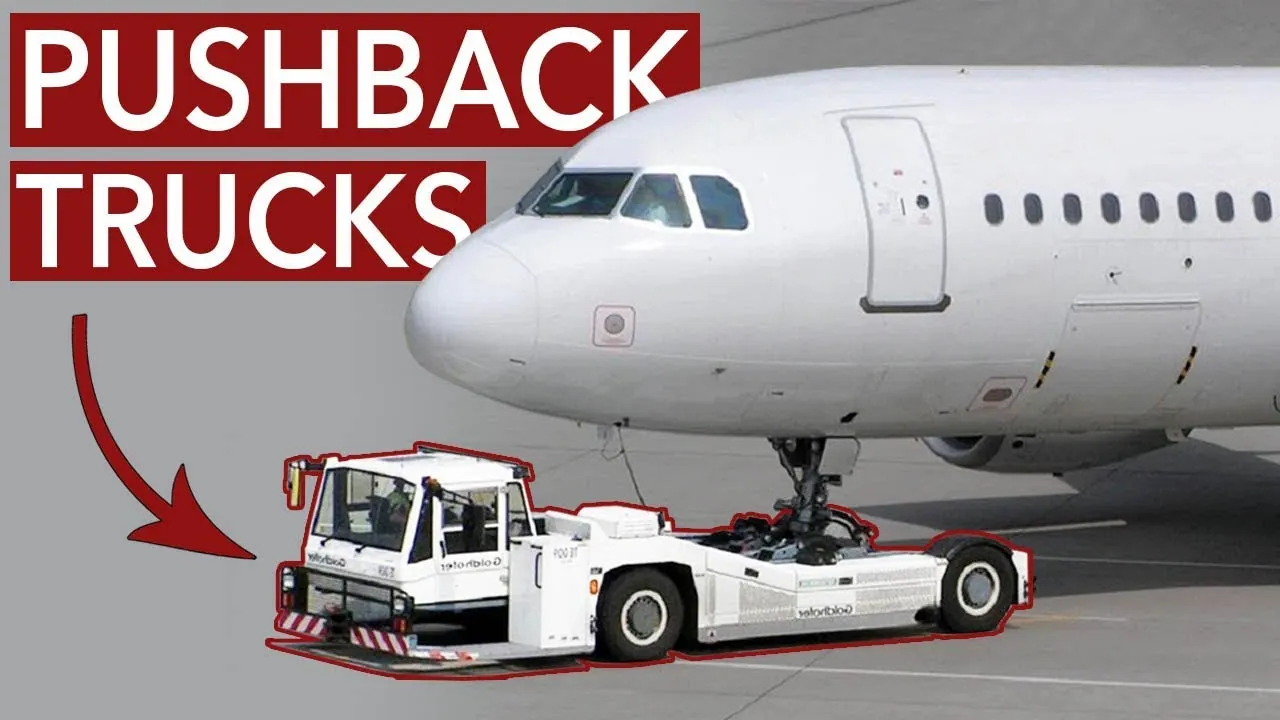
- Pushback is when an aircraft is pushed backwards away from the airport gate by vehicles called tugs or tractors. Closer to departure, an aircraft tug will park right in front of the nose wheel. The tug might be directly attached to the plane's nose gear with a tow bar, or could be a "wheel-lift" tug. These tugs cradle the nose gear, then lift it up before moving the plane. That gives the tug driver control over the plane's direction during pushback. New taxi technologies are appearing, like pilot-controlled tugs, and electric motors mounted to the plane's landing gear. Both promise to save fuel, and reduce airport noise.
- A pushback truck lifts the front weel of the aircraft, their role in most airports is to move the aircraft away from the parking spot on to the taxiways. Here the truck is removed and when all platform staff is out of the way the engines are started one by one. From here on the aircraft moves on its own power to the runway.
- In the aircraft we- will hear the engine spinning up when power is demanded for acceleration.An airplane uses taxiways to taxi from one place on an airport to another; for example, when moving from a hangar to the runway. The term "taxiing" is not used for the accelerating run along a runway prior to takeoff, or the decelerating run immediately after landing, which are called the takeoff roll and landing rollout, respectively
The steps to ready the aircraft for take-off are given below:-
- The pilot parks the aircraft in exactly the right place. Usually with the help of an automatic system, but occasionally guided by a marshaller waving two paddles or wands. Dozens of handling personnel are already standing by to perform a whole range of tasks simultaneously.
- As soon as the aircraft is stationary and the engines are switched off, the priority is to disembark the passengers as quickly as possible. The apron handler places chocks in front of the wheels and connects the ground power. Meanwhile, the passenger bridge manoeuvres up to the door, and a belt loader rolls up to the cargo hold. Luggage is unloaded and transferred to the terminal on baggage carts.
- Refueling begins, usually from a hydrant at the stand. A hose is attached to this from a special vehicle called a dispenser, with the other side connected to the fuel tank in the wing.
- Now it is time to service the aircraft. The caterer loads new meals and takes away the food waste and used cutlery and crockery. Other activities include draining the lavatories, replacing the headrest covers, removing rubbish, and distributing fresh blankets and in-flight magazines.
- A specialist team – or sometimes the crew themselves – cleans the cabin so that the new passengers board a pristine aircraft.
- Meanwhile, specialists from the airline conduct a technical check to make sure that the engines, wings, control surfaces, landing gear, instruments, doors, and other equipment are in full working order.
- The aircraft is now ready for baggage to be loaded for the next flight. This is a quick process, on average taking only 10-15 minutes. A little later the passengers start boarding. As soon as they are all in their seats, the door is closed and the pilot informs air traffic control that the flight is ready for departure.
- The apron handler removes the chocks. A so-called pushback truck reverses the aircraft into taxiing position, pushing it with a towbar attached to the nose-wheel strut. Or, in the most modern versions, by actually lifting the wheel. That speeds up coupling and decoupling.
- The aircraft taxis to the runway to depart at the agreed time.
- The pilot waits for permission to take off from air traffic control. This is possible once the departure route is clear. As soon as the go-ahead is received, the plane takes to the air at full power.
5. Learn about take off power, tyre design, rolling resistance, tyre pressure, brake forces when landing.
ANS:-
a. Take-off Power:
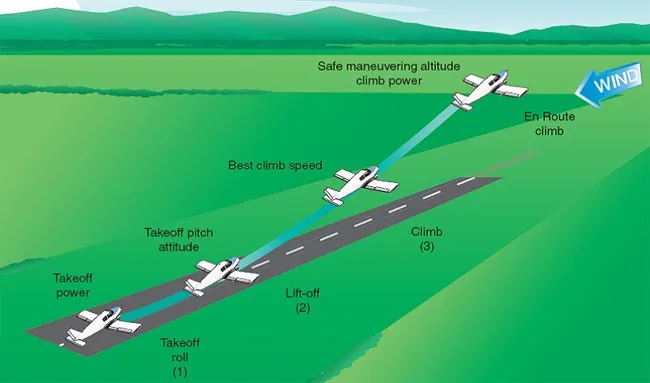
- Takeoff is the phase of flight in which an aerospace vehicle leaves the ground and becomes airborne. For aircraft traveling vertically, this is known as liftoff. For aircraft that take off horizontally, this usually involves starting with a transition from moving along the ground on a runway. For light aircraft, usually full power is used during takeoff. Large transport category (airliner) aircraft may use a reduced power for takeoff, where less than full power is applied in order to prolong engine life, reduce maintenance costs and reduce noise emissions.
-
After taxiing onto the runway, the airplane should be carefully aligned with the intended takeoff direction, and the nose wheel positioned straight, or centered. After releasing the brakes, the throttle should be advanced smoothly and continuously to takeoff power. An abrupt application of power may cause the airplane to yaw sharply to the left because of the torque effects of the engine and propeller. This will be most apparent in high horsepower engines. As the airplane starts to roll forward, the pilot should assure both feet are on the rudder pedals so that the toes or balls of the feet are on the rudder portions, not on the brake portions.
-
Takeoff performance can be predicted by using a simple measure of Acceleration of the aircraft anong the runway based on force equilibrium.
-
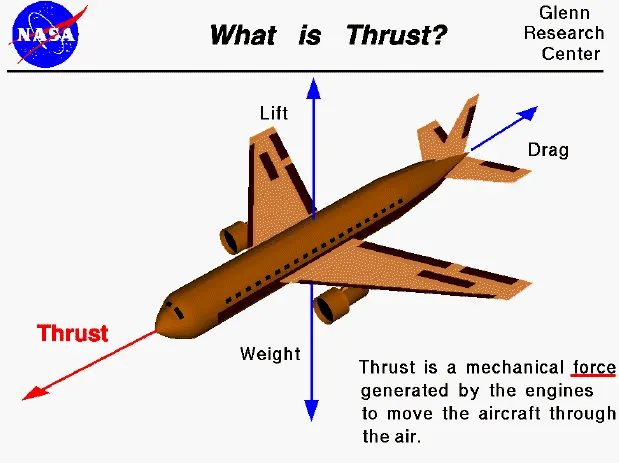
The force involved will be :-
T- Thrust of propulsion system pushing aircraft along runway
D- Areodynamic Drag of vehicle resisting the aircraft motion.
F- Rolling resistance friction due to the contact of wheels of skids on the ground.
-
During take –off run the imbalance in these forces will produce an acceleration along the runway
-
DV/dt = (T-D-F)/m
-
Where dV/dt is the acceleration along the runway and m is the mass of the vehicle.
b.Tyre Design:
- Tyres are one of the most important components of aircraft. They help to absorb the shock of landing and provide cushioning. It also provides the necessary traction for braking and stopping of an aircraft. An aircraft Tyre is designed to withstand extremely heavy loads while landing, take off, taxing, and parking. The number of wheels required for aircraft increases with the weight of the aircraft, as the weight of the aero plane needs to be distributed more evenly.
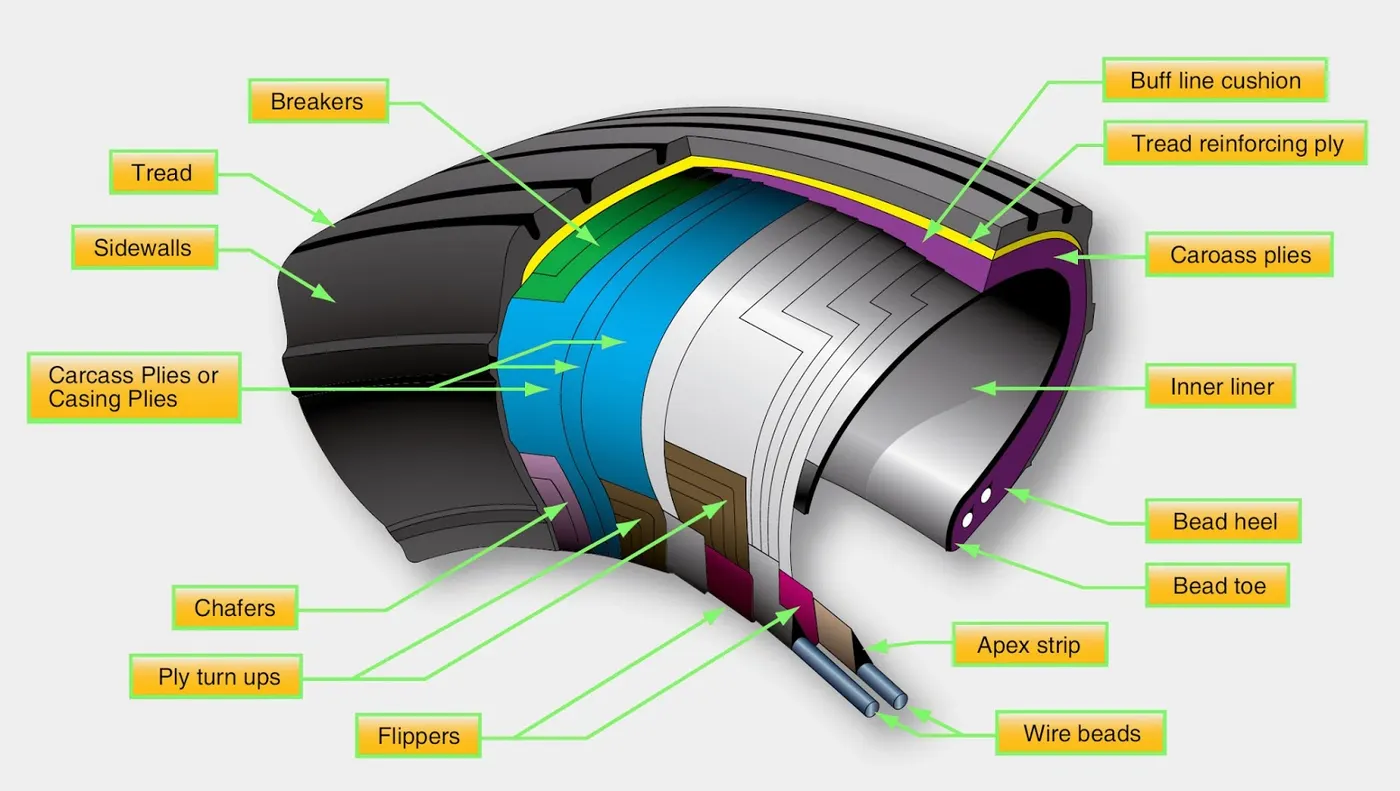
- Carcass plies are used to form the tire. They are sometimes called casing plies.
- The carcass ply is comprised of thin textile fiber cables that are bounded into rubber.
- Designing aircraft tires is a very intense undertaking. The tyre is designed to withstand heavy loads while landing, take off, taxing, and parking. The number of wheels required for aircraft increases with the weight of the aircraft, as the weight of the aeroplane needs to be distributed more evenly. Aircraft tyre generates more heat during landing. Aircraft drags the wheel until they match the rotational velocity of wheels. Due to this heat generates. However, each tyre is built to operate within a given temperature. This is known as vulcanization temperature. During the course of its use, if the tire is heated past the vulcanization temperature, it begins to wear gradually.
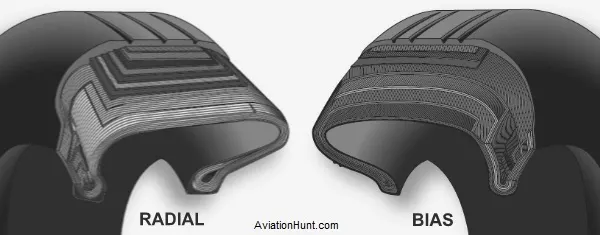
Two types of tires are used in aircraft applications: i.bias-ply tires and ii.radial tires
- Radial Tyre: It has fibre strands of the ply fabric oriented at 90° to the direction of rotation and the tyre sidewall. This restricts flexibility bidirectional and the flexibility of the sidewall while it strengthens the tyre to carry heavy loads. Due to their unique construction most radial tyres are resistant to penetration ad cuts. Due to stiffer tread they distribute weight evenly. Thus provide greater traction. Radial tyres have an advantage in term of reducing the heat better.
- Bias- ply Tyre: It has the fabric bias oriented with and across the direction of rotation and the sidewall. Since fabric can stretch on the bias, the tyre is flexible and can absorb loads. Tyre strength is obtained by adding plies. It is cut resistant is sidewall area. These tyres do not offer as much smoothness in terms of riding quality.
c.Rolling Resistance:
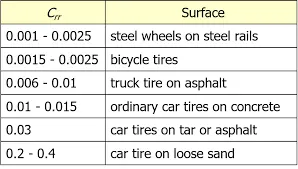
- Rolling resistance, sometimes called rolling friction or rolling drag, is the force resisting the motion when a body (such as a ball, tire, or wheel) rolls on a surface.
- The Rolling Resistance force is given by,
- Frr = Crr*N
- where, Crr is cofficient of rolling resistance and
- N is Normal force, the force perpendicular to the surface on which the wheel is rolling.
-
The friction between aircraft and runway will be proportional to the normal force exerted by the aircraft on the runway.
F=μ(W-L)">F=μ(W−L)
- The normal force will be the difference between Weight (W) of aircraft and Lift (L), the friction coefficient (μ) will be typically of a magnitude of 0.02 for a standard tarmac runway.
d.Tyre Pressure:
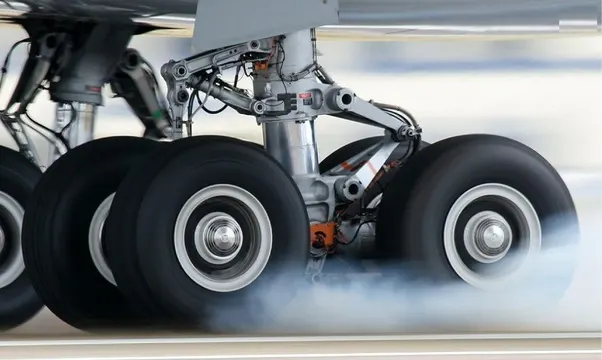
- The typical airliner tire can handle a 38-ton load. It can meet the ground 500 times before needing a re-tread, a refresh it can take on seven times in its life. Aircraft tires generally operate at high pressures, up to 200 psi (14 bar; 1,400 kPa) for airliners, and even higher for business jets. The main landing gear on the Concorde was typically inflated to 232 psi (16.0 bar), whilst its tail bumper gear tires were as high as 294 psi (20.3 bar).
e.Brake Force When Landing:
- In aircraft types, the brake units are powered by the hydraulics system. An electrical signal is sent from the flight deck to hydraulic actuators near the main landing gear. Here, hydraulic fluid at 3,000 pound per square inch is used to force the brake unit against the wheel, thus slowing it down.
- Stopping a 200-tonne aircraft landing at 180 mph requires a lot of braking force. To do this either hydraulic brakes or electric brakes are used. Hydraulic brakes put on weight of the aircraft. Now a days designers use electric brake system. The aim of brake force when landing is to minimise the distance.
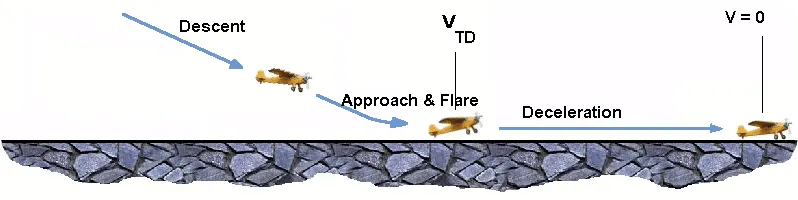
The touch down velocity should be approximately the stall speed of the aircraft in landing configuration. This will be achieved by increasing the drag and decelerate the aircraft to minimum flying speed. The deceleration on the landing roll from to will be accomplished by braking and reverse thrust. This can be solved by the average acceleration approach that was used to estimate the take-off roll.
dvdt=-T-D-Fm">dv/dt=−T−D−F/m
Where,
T – Thrust of propulsion system pushing aircraft along runway.
D – Aerodynamic Drag of vehicle resisting the aircraft motion.
F – Rolling resistance friction due to the contact of wheels or skids on the ground.
m – Mass
- So, the brake force= Mass * Deceleration.
Part B:
6. A. With necessary assumptions, calculate the force and power required to push / pull an aircraft by a towing vehicle.
B. Develop the model for the calculated force and power using Simulink.
7. A. Design an electric powertrain with type of motor, it’s power rating, and energy requirement to fulfill aircraft towing application in Simulink. Estimate the duty cycle range to control the aircraft speed from zero to highest. Make all required assumptions. Prepare a table of assumed parameters. Draw a block diagram of powertrain.
B. Also, Design the parameters in excel sheet.
ANS:
6. A. With necessary assumptions, calculate the force and power required to push / pull an aircraft by a towing vehicle.
Ans: The Force required to push / pull an aircraft by a towing vehicle at airport are Rolling resistance force and Aerodynamic Drag force.
1.Rolling Resistance Force (Frr): The Force resisting the motion when a body such as ball, tire, wheel etc rolls on surface is known as Frr. it is also known as rolling friction or rolling Drag.
It is given as; Frr = Crr * m * g-----------(i)
where, Crr is rolling resistance coefficient or coefficient of rolling friction. Crr is the Force needed to push / tow a wheeled vehicle forward ( at costant speed on a level of surface, or zero grade, with zero air resistance) per unit force of whight.
m is Mass of the object / body
g is acceleration due to gravity
m*g is the force which is perpendicular to the surface on which the wheel is rolling.
2.Aerodynamic Drag Force (Fad/FD): It is the acting opposite to the relative motion of any objects moving with respect to a surrounding fluid. This can exist between two fluid layers or between a fluid and a solid surface.
It is given as,
 ----------------(ii)
Where,
 = density of the fluid
 = velocity of the object relative to the fluid
 = drag coefficient - a dimensionless number
 = Frontal cross sectional area
To carryout the calculation let us assume some parameters are as below;
Mass of Towing Vehicle = 40,000 kg
Mass of aircraft = 175,000 kg
Therefore, Total weight/Mass (m) = 215,000 kg
Frontal cross section area of aircraft (A) = 17 m^2
velocity of Vehicle () = 30 kmph = 30*(1000/3600) = 8.33 m/s
Rolling resistance coefficient (Crr) = 0.01
Drag coefficient (Cd) = 0.71
Density of air () = 1.225 kg / m^3
Acceleration due to gravity(g) = 9.8 m / s^2
now, Using above equation (i) and (ii), we get.
Frr = 0.01*215000*9.8 = 21070 Newton
and
Fad = 0.5* 1.225 * (8.33)^2 * 0.71 *17 = 512.98 Newton
Therefore the total Force required to push/pull the aircrcraft by the towing vehicle (F) = Frr+ Fad
=21,582.98 N = 21.58 KN
and
The Power (P) = Force * velocity = 21582.98*8.33 = 179786.2234 watt = 179.786 KW
6.B. Develop the model for the calculated force and power using Simulink.
The simulink Model for calculating Force and Power is shown below;
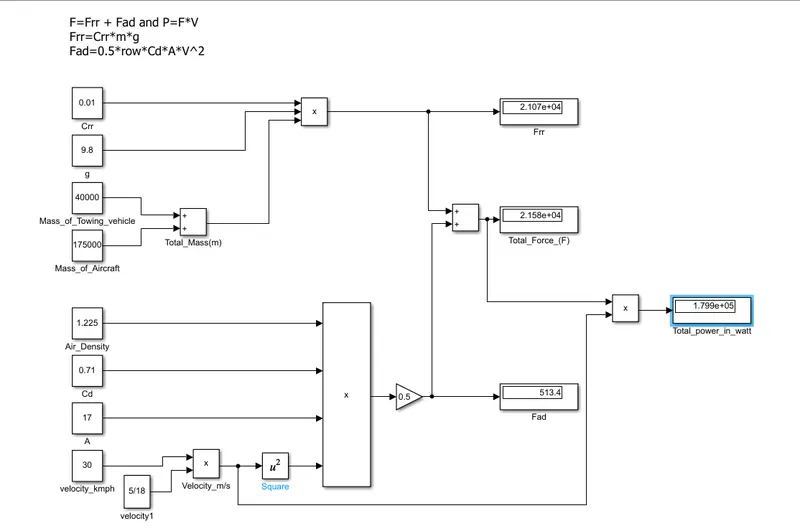
- For calculating power we have to multiply both total force(F) and velocity in m/sec for this we have used 'product' block (P=F*V).
- For calculating the Total Force(F) we have added both Frr & Fd by using 'Sum' block as shown in the above figure.
- To find the value of rolling resistance (Frr) we used product to multiply the values Crr, Total mass(m) & gravity (g) which are to be entered in the 'Constant' block.
- Similarly for calculating Drag force(Fd) we have to multiply the velocity in m/sec,Drag coefficient, Frontal area of aircraft(A) and a constant value 0.5 which are to be entered in 'constant' block.
- In order to convert velocity in Kmph to m/sec we have multiplied it with 5/18.
7. A. Design an electric powertrain with type of motor, it’s power rating, and energy requirement to fulfill aircraft towing application in Simulink. Estimate the duty cycle range to control the aircraft speed from zero to highest. Make all required assumptions. Prepare a table of assumed parameters. Draw a block diagram of powertrain.
Ans::-
Let us considered the results obtained in the Q.6.A and do the further calculation.
From Q.6.A calculation we have,
Force required to push / pull the aircraft (F)= 21.58 KN
Power required (P) = 179.78 KW
Now, also let us assume,
The Radius of the Tyre = 35 inch = 35* 0.0254 = 0.899 meter . (since 1inch=0.0254meter)
Gear ratio = 8
Transmission Efficiency(nt) = 85 %
Motor Efficiency (nm) = 95 %
Then,
The Torque required by the Wheels(or Tyre) (Tw) = F * Radius = 19.4 KN-m
and
Motor Torque (Tm) = Tw / ( gear ratio* nt) = 2.853 KN-m
since, Motor Efficiency is 95 %, The Required (Tm) = 2.853/0.95 = 3.003 = 3.00 KN-m
and also,
The Total Power required to delivered by the motor considering all the efficiency is,
Pt = 179.78/(0.85*0.95) = 222.64 KW
Now, we know that, Energy = power * time
Let us assume the towing vehicle operated for 10 minutes. Then,
Total Energy Consumed = 222.64*(10/60) = 37.11 KWh
If we consider the battery capacity =250 kw is used by the towing vehicle then, The duty cycle range to control the speed from 0 to max speed (5m/s) is given as
Duty Cycle (d) = (Required Power)/ (Rated power)= 0.89 = 89%
we know that, P = V*R
From DC_7 we have
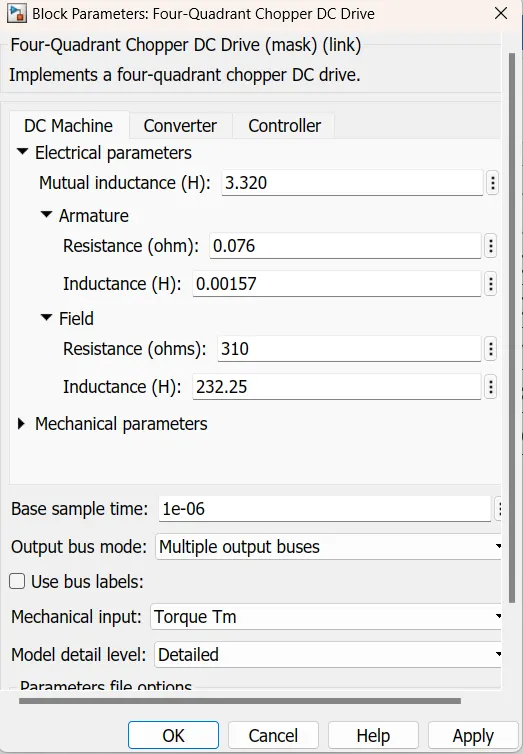 From, this we get R=0.076+310=310.076 ohm
Therfore, V=P/R = 718 volt
Now the simulink model DC 7 is shown below.
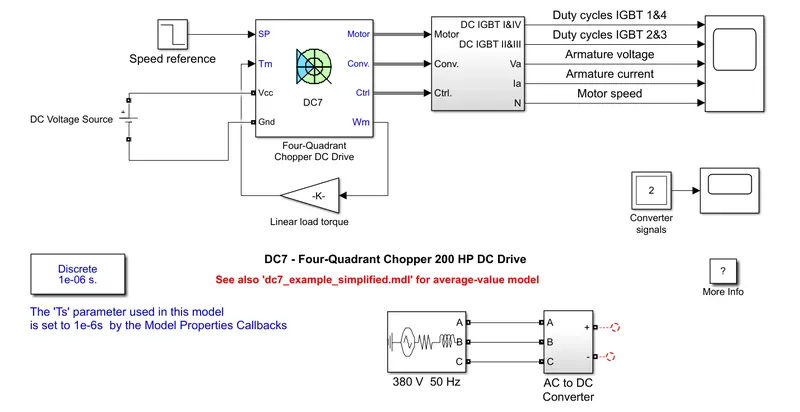
As shown in above model the AC to DC converter is replaced by the Battery with a voltage amplitude of 718 volts.
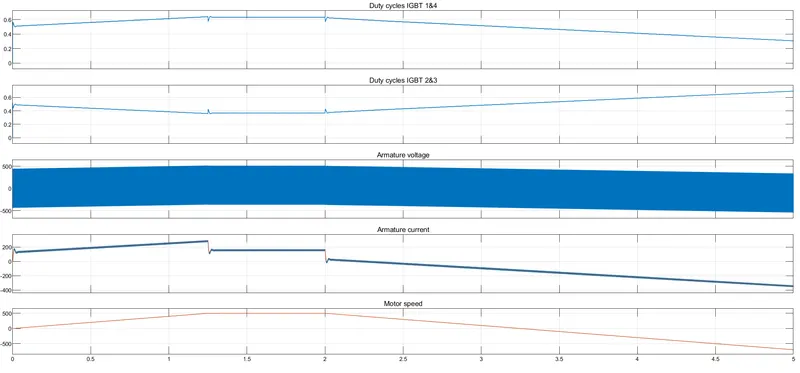
The simulation is run for 5 sec and the output results is shown below;
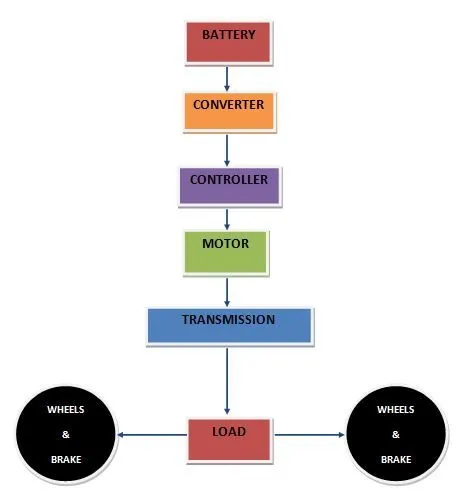
The Block Diagram of Powertrain is shown Below:-
Q7.B. Also, Design the parameters in excel sheet.
Ans:-
| parameters | Values | |
| Mass of Towing Vehicle in Kg | 40000 | |
| Mass of Aircraft in kg | 175000 | |
| Total Mass(m) in kg | 215000 | |
| Rolling Resistance Force(Frr) | ||
| Coefficient of rolling resistance | 0.01 | |
| Acceleration due to gravity in m/S^2 | 9.8 | |
| Frr in Newton | 21070 | |
| Aerodynamic Drag Force (Fad) | ||
| Air density in Kg/m^3 | 1.225 | |
| Drag coefficient | 0.71 | |
| Frontal cross section Area in m^2 | 17 | |
| Velocity in m/s^2 | 8.333333333 | |
| Fad in Newton | 513.3940972 | |
| Total Force | 21583.3941 | |
| Total Power in watt | 179861.6175 | |
| Radius of Tyre in meter | 0.889 | |
| Gear Ratio | 8 | |
| Transmission efficiency (nt) | 0.85 | 85% |
| Motor efficiency (nm) | 0.95 | 95% |
| Torque required by wheel (Tw) in N-m | 19187.63735 | |
| Motor Torque (Tm) in N-m | 2821.711375 | |
| Required Motor Torque (Tm) | 2970.2225 | |
| Total Power required by the Motor in Watt | 222738.8452 | assuming operating time of towing vehicle=10sec |
| Total Energy Consumed in Wh | 37123.14086 |