Project-1: Powertrain for aircraft in runways
1) Search and list out the total weight of various types of aircrafts.
ans =
Weight is a major factor in airplane construction and operation, and it demands respect from all pilots and particular diligence by all maintenance personnel. Excessive weight reduces the efficiency of an aircraft and the available safety margin if an emergency condition should arise. The total weight is the maximum take-off weight. It is the maximum mass at which the aircraft is certified for take-off due to structural or other limits.
MTOW = Maximum take-off weight, MLW = Maximum landing weight, TOR = Take-off run, LR Landing run
Maximum Takeoff Weight:
The maximum weight limits for an aircraft to begin its takeo roll is called the max takeoff weight.
Maximum Landing Weight:
The maximum landing weight is, as you might imagine, the maximum aircraft weight limit approved for an aircraft to land. Landing weight can cause structural damage.
| type | MTOW(kg) |
| Antonov An-225 | 640,000 |
| Scaled Composites Model 351 Stratolaunch | 589,670 |
| Airbus A380-800 | 575,000 |
| Boeing 747-8F | 447,700 |
| Boeing 747-8 | 443,613 |
| Boeing 747-400ER | 412,770 |
| Douglas DC-8-32 | 140,000 |
| Tupolev Tu-154M | 104,000 |
| Bombardier Q400 | 28,000 |
| ATR 42-500 | 18,600 |
| BAe Jetstream 41 | 10,890 |
| Learjet 75 | 9,752 |
| Cessna Citation CJ4 | 7,761 |
MTOW[kg]: Maximum Take off weight in kg
2) Is there any difference between ground speed and air speed?
ans =
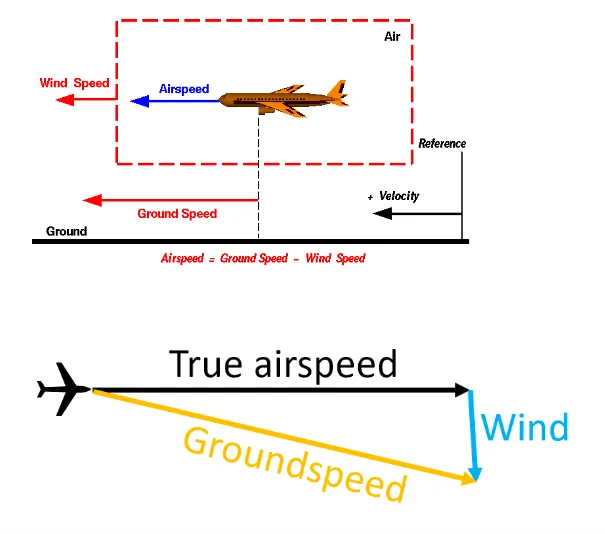
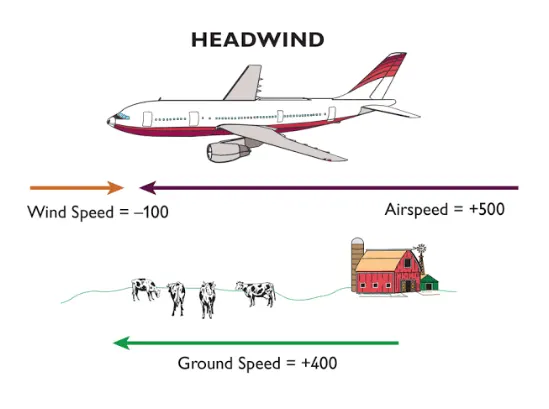
Aircraft can move using their own engine power all the time on the airport apron and taxiways under their own power to go towards runways and after landing taxi to their assigned gate. But the thrust produced resulting jet blast might cause damage to the terminal building or equipment. Engines close to the ground may also blow sand and debris forward and then suck them into the engine, causing damage to the engine. A pushback is therefore the preferred method to move the aircraft away from the gate. And also it can reduce the cost for fuel. Taxiing can save money.
- Effectively a loss of control can happen, especially during high power engine running. Damage can occur to the aircraft itself, other aircraft nearby or to airsidestructures.
- There is a risk of injury to ground support personnel who may be in relatively close proximity to the aircraft.
- It is easier for truck driver to see the surroundings better than the pilot sitting in the cockpit with limited window. The pushback driver knows the airport better than the pilot.
- It also saves fuel virgin Atlantic hadproposed a new system in which pushback truck will move the aircraft all the way to runway to save fuel and reduce impact of environment.
- The plane engines are very loud. When more than one plane will add up their sound, than it will not be pleasent for passangers and others near airport.
ans =
Taxiing
Taxiing is the movement of an aircraft on the ground, under its own power, in contrast to towing or push-back where the aircraft is moved by a tug. The aircraft usually moves on wheels, but the term also includes aircraft with skis or floats . An airplane uses taxiways to taxi from one place on an airport to another; for example, when moving from a hangar to the runway.
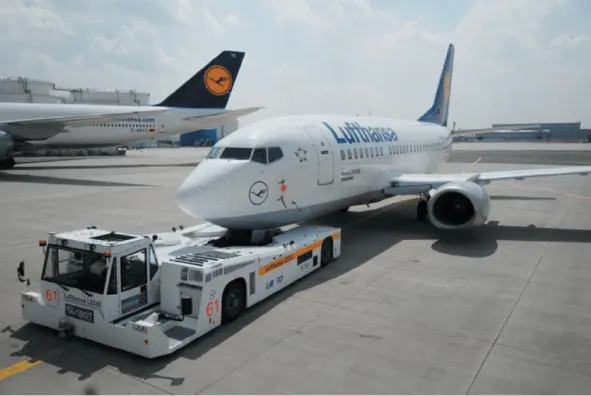
Towing:
Movement of large aircraft about the airport, flight line, and hangar is usually accomplished by towing with a tow tractor. In the case of small aircraft, some moving is accomplished by hand pushing on the correct areas of the aircraft. Aircraft may also be taxied about the flight line but usually only by certain qualified personnel.
Towing aircraft can be a hazardous operation, causing damage to the aircraft and injury to personnel, if done recklessly or carelessly. This article outline the general procedure for towing aircraft. However, specific instructions for each model of aircraft are detailed in the manufacturer's maintenance instructions and are to be followed in all instances.
5) Learn about take off power, tyre design, rolling resistance, tyre pressure, brake forces when landing.
ans =
Take off power:
Take off power can be predicted using a simple measure of the acceleration of the aircraft along the runway based on force equilibrium.
The forces involved will be.
T is Thrust of propulsion system pushing aircraft along the runway.
D is Aerodynamic Drag of vehicle resisting the aircraft motion.
F is Rolling resistance friction due to the contact of wheels or skids on the ground.
During the take-off run, the imbalance in these forces will produce an acceleration along the runway.
m*(dv/dt)=T-D-F
where, dv/dt is the acceleration along the runway and m is the mass of the vehicle.
The procedure for take-off will be that the vehicle will accelerate until it reaches a safe initial flying speed. The pilot can then rotate the vehicle to an attitude to produce a climb lift and it will ascend from the ground. The determination of this safe flying speed or rotation speed. V, is a critical factor in determining take-off performance. Take-off rules vary slightly depending on the aircraft category.
For Small commuter aircraft
V= 1.1*VSTALL
or
V=1.05*V Control
where S-Runway length
Take Off power = force*displacement
Tyre Design:
Designing aircraft tires is a very intense undertaking The tyre is designed to withstand heavy loads while landing, take off, taxing, and parking. The number of wheels required for aircraft increases with the weight of the aircraft, as the weight of the aeroplane needs to be distributed more evenly. Aircraft tyre generates more heat during landing Aircraft drags the wheel until they match the rotational velocity of wheels. Due to this heat generates. Aircraft's tread pattern is designed to facilitate stability in high crosswind conditions, to channel water away to prevent hydroplaning and for braking effect.
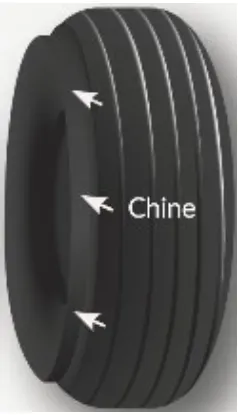
Construction of tyre:
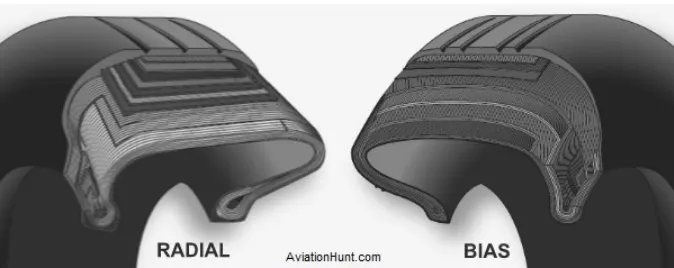
Radial Tyre: It has fibre strands of the ply fabric oriented at 90° to the direction of rotation and the tyre sidewall. This restricts flexibility bidirectional and the flexibility of the sidewall while it strengthens the tyre to carry heavy loads. Due to their unique construction most radial tyres are resistant to penetration ad cuts. Due to stiffer tread they distribute weight evenly. Thus provide greater traction. Radial tyres have an advantage in term of reducing the heat better.
Bias-ply Tyre: It has the fabric bias oriented with and across the direction of rotation and the sidewall. Since fabric can stretchon the bias, the tyre is flexible and can absorb loads. Tyre strength is obtained by adding plies. It is cut resistant is sidewall area. These tyres do not offer as much smoothness in terms of riding quality.
Rolling Resistance:
Rolling resistance is the force resisting the motion when a body (such as ball, tyre or wheel) rolls on a surface. Rolling resistance can be seen in the aircraft when the aircraft takes-off from the runway & while landing at the runway with the help of their wheels.
Rolling resistance can be expressed as
Where
m is mass (kg)
g is acceleration due to gravity = 9.81m/s^2
Tyre pressure:
Aircraft tyres operate at such high extremes of pressure, load, and speed, their care and service is critically important. The most important action an operator can take to prevent tyre-related events is to maintain proper tire inflation pressure. Failure to keep aircraft tires properly inflated can lead to very serious consequences. One relatively easy way to help avoid those consequences is to check tire pressures regularly and service them as necessary. Following these three actions is a good way to make sure you get the most value out of your tires and contribute to the safe operation of your aircraft.
Braking Forces During Landing:
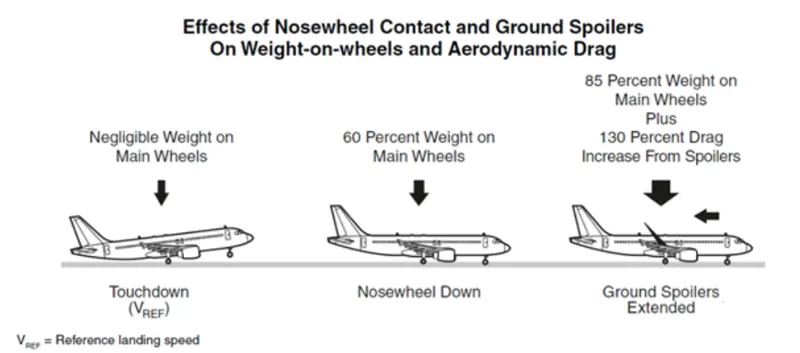
Following braking devices are used to decelerate the aircraft -
1. Spoilers.
2. Wheel Brakes (Including Anti-Skid systems & Auto-Brake systems).
3. Reverse Thrust
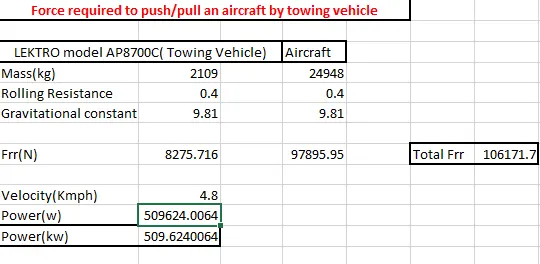
6. A. With necessary assumptions, calculate the force and power required to push / pull an aircraft by a towing vehicle.
ANS =
datasheet:
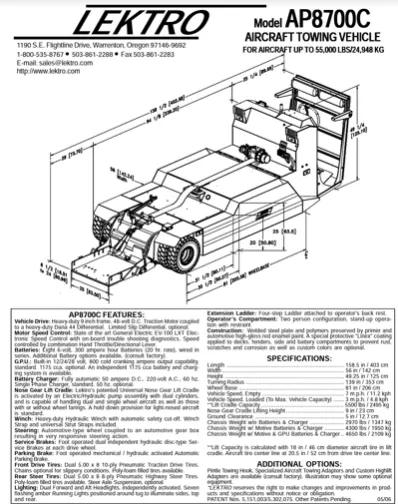
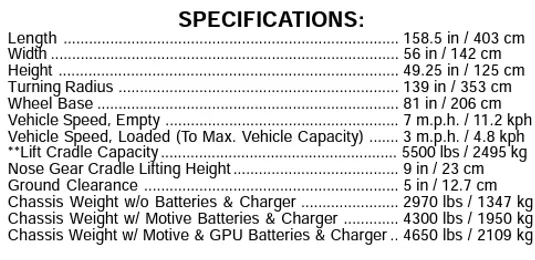
- Mass of towing vehical and aircraft taken from given datasheet.
- Rolling resistance assumed 0.4 considering worst case.
- Aerodyamic drag is considered as 0.
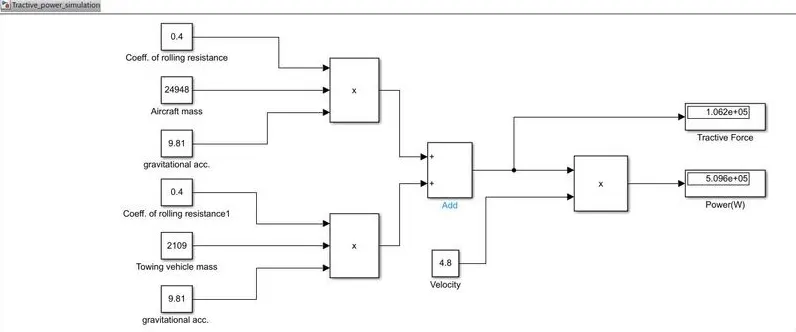
- By using fomula Frr= Urr*m*g, tractive force is calculated.
- Power is calculated using p= Frr*v
B) Develop the model for the calculated force and power using Simulink.
ANS =
7) A. Design an electric powertrain with type of motor, it’s power rating, and energy requirement to fulfill aircraft towing application in Simulink. Estimate the duty cycle range to control the aircraft speed from zero to highest. Make all required assumptions. Prepare a table of assumed parameters. Draw a block diagram of powertrain.
ans =
From above calculations power at wheels = 509.62kw
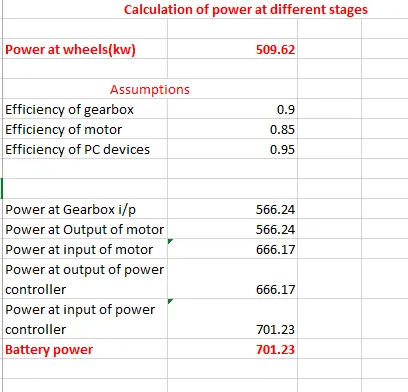
Duty Cycle= Output power of towing vehicle/input power of towing vehicle = 509.62/701.23 = 0.726
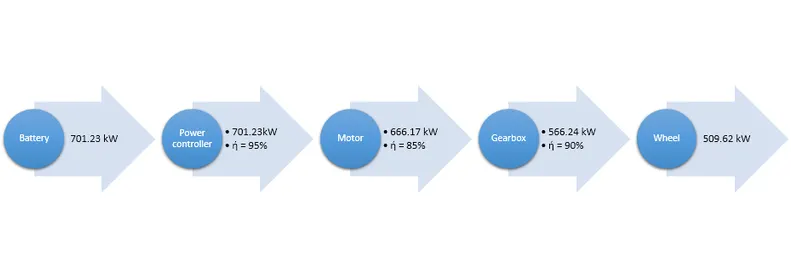
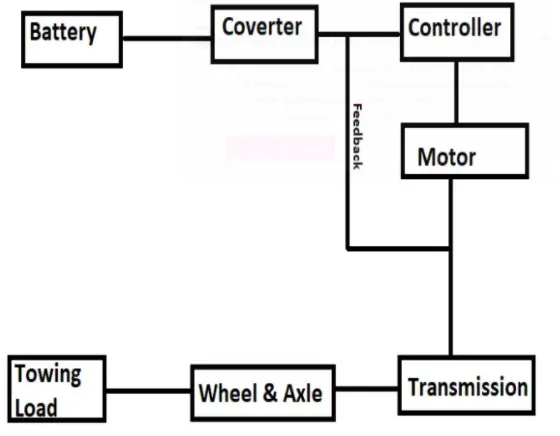
Fig: powetrain block diagram of towing vehicle
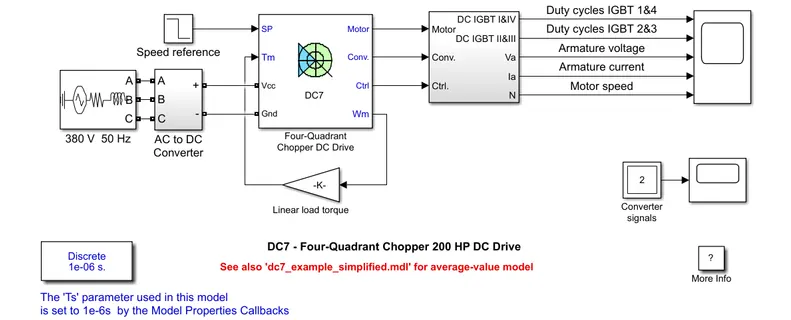
Motor specifications: Permanent magnet synchronous motor.