Week-4 Challenge WOT Condition Part-2
1) What is the difference between mapped and dynamic model of engine, motor and generator? How can you change model type?
ans=
1. Mapped:-
- CI mapped engine:
-SI mapped engine:
-Implementation:
Model uses a set of steady lookup table to characterize thebengine parameters. It is used when you have engine data from a dynamometer or a design tool like GT-power.
The table provides overall engine characteristics including actul torque, fuel flow rate,BSFC and engine out exhaust emmision. It is used for quasi- steady state engine simulator.
- When to use:
It is used when you have engine data from a dynamometer or a design tool like GT-power. used for quasi- steady state engine simulator.
2. Dynamic:
- CI engine
-SI engine:
- Implementation: Model decomposes the engine behaviour into engine characteristics that are seperated into lower level components. By combining components in this way, the models capture the dynamic effects.
- When to use: If you need a more detailed dunamic model and have components-level data. To analyze the impact of individual engine components on the overall performane.
2) how does the model calculate miles per gallon? Which factors are considered to model fuel flow?
ans=
model:
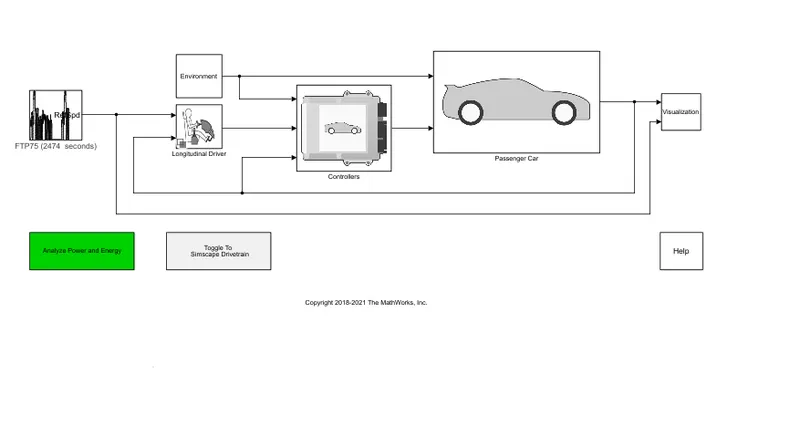
visualisation:
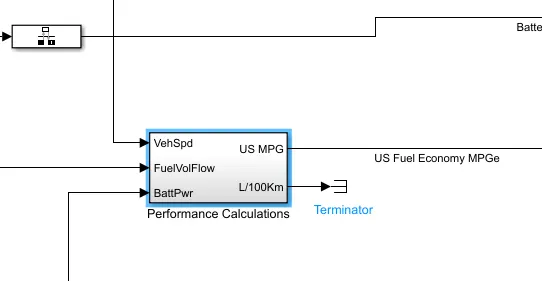
performance calculation:
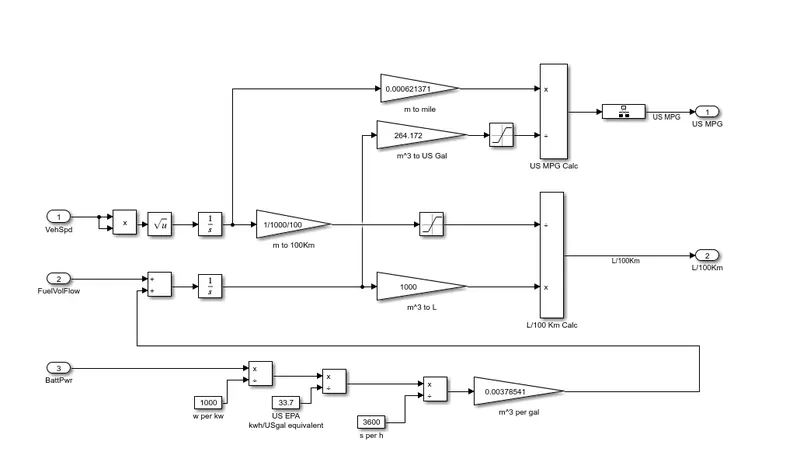
Miles per gallon calulations:
- The vehicle speed is integrated hence the output of it is distance in meters.
- Battery power is converted into m^3 per gallon
- Distance in mile is divided with gallons which gives miles per gallon of vehicle.
To calculate the fuel flow, vehicle speed and battery power are taken into consideration.
-When vehicle is accelerated the the battery draws more current.and motor torque is also incresed.
-The battery SOC is decresing as the vehicle travelles distance.
- When the vehicle is stationary the fuel economy is also constant.
3)Run the HEV ReferenceApplication with WOT drive cycle. Change the grade and wind velocity in the environment block. Comment on the results.
ans=
model
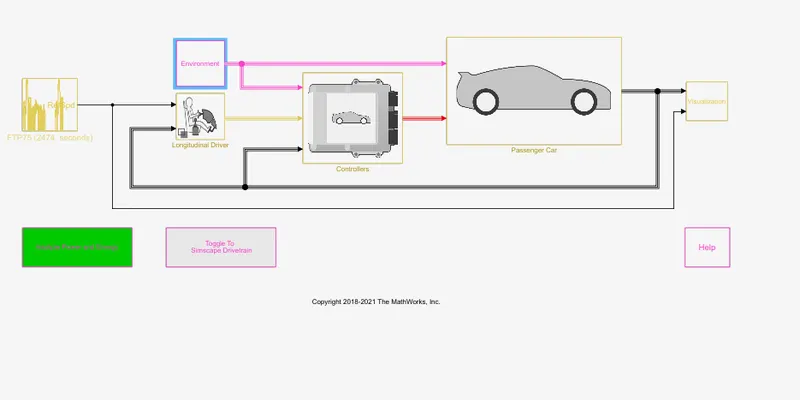
grade=0.5 & velocity=0.2
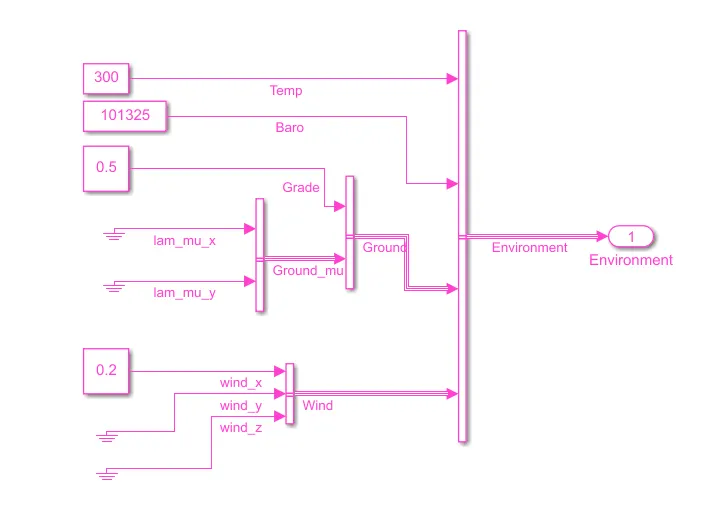
scope output:
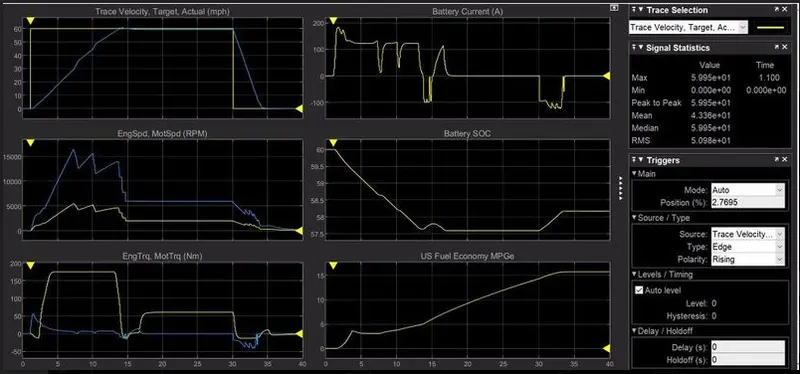
4)Keeping all other parameters same, compare the simulated results of hybrid and pure electric powertrains.
ans= pure electric vehicle
model
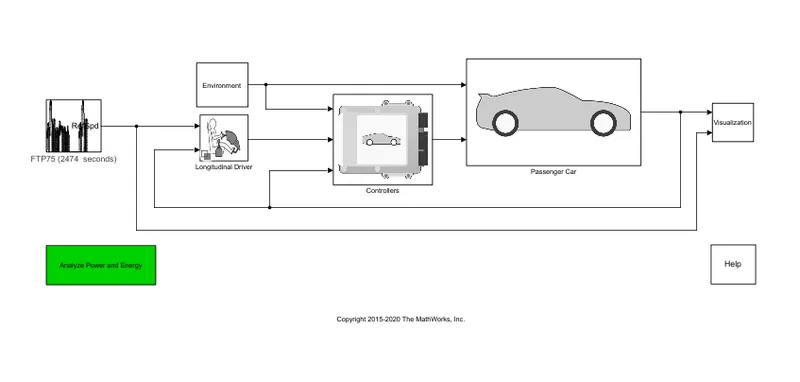
scope output:
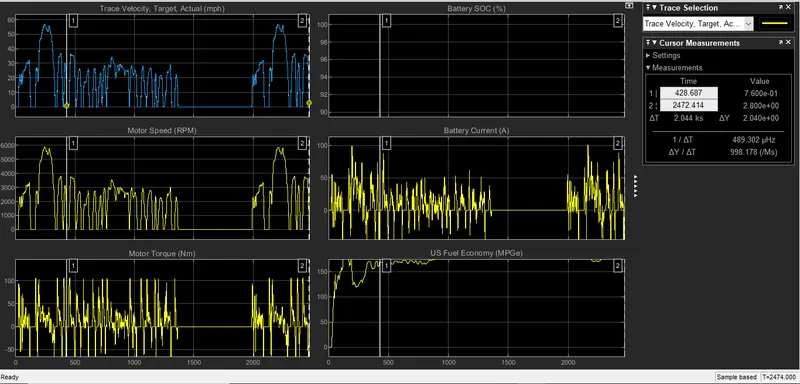
In HEV the Fuel flow is present with battery and vehicle speed block.
- As vehicle accelerated it is taking more battery current.
-The battery SOC is decreasing as the distance travelled is incresing.
Comparison:
- EV is having more fuel efficiency than HEV.
-In HEV the battery is discarging rapidly. But in EV battery discharing rate is slower.