Project-1: Powertrain for aircraft in runways
1. Search and list out the total weight of various types of aircrafts.
Ans-
The aircraft have different types of weights and are as follow
- Manufacture's empty weight-
It is also called as the manuactures's weight empty (MWE). It is the weight of aircraft as built.
It include the structure, Power plant, Furnishings, Installation, Systems and other equipement which are considered as
intregral part of the aircraft. It excluded the baggage weight and guel weight.
b. Zero fuel weight(ZFW)-
This is the total weight of the fuel excluding the usable fuel and including the unusable fuel. When airoplane consumes
the fuel the total weight of the airoplane reduces but the zero fuel weight remains the constant.
c. Operating empty weight(OEW)-
It is the basic weight of the aircraft including the crew all fluied operation such as engine oil, engine coolant, water,
unusable fuel and all other operating equipement required for the flight excluding the payload and the unusable fuel.
d.Payload-
It is the carrying capacity of an aircraft which include cargo, People, extra fuel.
e.Maximum takeoff weight(MTOW)-
This is the maximum weight at which pilot of the aircraft allow to attend the takeoff.
f.Regulated takeoff weight( RTOW)-
Depending on different factors (e.g. flap setting, altitude, air temperature, length of runway), RTOW or maximum permissible
takeoff weight varies for each takeoff. It can never be higher than MTOW.
g.Maximum Landing Weight (MLW)
This maximum weight at which an aircraft is permitted to land
Following are the weights of different airoplanes-
| Type | MTOW [kg] | MLW [tonnes] |
| Airbus A220-100 | 59,000 | 50.8 |
| Airbus A220-300 | 65,000 | 57.61 |
| Airbus A300-600[14] | 1,63,000 | 138 |
| Airbus A300-600R[14] | 1,92,000 | 140 |
| Airbus A310-200[14] | 1,42,000 | 123 |
| Airbus A310-300[14] | 1,57,000 | 124 |
| Airbus A318[18] | 59,000 | 57.5 |
| Airbus A319[18] | 64,000 | 62.5 |
| Airbus A320-100[18] | 68,000 | 66 |
| Airbus A321-100[18] | 83,000 | 77.8 |
| Airbus A330-200[12][13] | 2,42,000 | 180 |
| Airbus A330-300[12][13] | 2,42,000 | 185 |
| Airbus A330-900 | 2,51,000 | 191 |
| Airbus A340-200[8][11] | 2,53,500 | 181 |
| Airbus A340-300[8][9] | 2,76,700 | 190 |
| Airbus A340-500[8] | 3,71,950 | 240 |
| Airbus A340-600[8] | 3,67,400 | 256 |
| Airbus A350-900 | 2,70,000 | 175 |
| Airbus A350-1000 | 3,08,000 | 233.5 |
| Airbus A380-800[1][2][3] | 5,75,000 | 394 |
| Airbus A400M | 1,41,000 | 122 |
| Antonov An-124-100M | 4,05,060 | 330 |
| Antonov An-225 | 6,40,000 | 591.7 |
| ATR 42-500 | 18,600 | 18.3 |
| ATR 72-600 | 22,800 | 22.35 |
| Avro RJ-85 | 42,000 | 36.74 |
| BAe Jetstream 41 | 10,890 | 10.57 |
| Beechcraft 1900D | 7,765 | 7.605 |
| Boeing 377 | 67,000 | |
| Boeing 707-120B[15] | 1,17,000 | 86.3 |
| Boeing 707-320B[15] | 1,51,000 | 97.5 |
| Boeing 707-320C[15] | 1,51,000 | 112.1 |
| Boeing 717-200BGW | 50,000 | 46.265 |
| Boeing 717-200HGW | 55,000 | 47.174 |
| Boeing 720[16] | 1,04,000 | 79.5 |
| Boeing 720B[16] | 1,06,000 | 79.5 |
| Boeing 727-100[17] | 72,500 | 62.4 |
| Boeing 727-100C[17] | 72,500 | 62.4 |
| Boeing 727-200[17] | 78,000 | 68.1 |
| Boeing 727-200 Advanced[17] | 84,000 | 70.1 |
| Boeing 737-300 | 63,000 | 51.7 |
| Boeing 737-400 | 68,000 | 54.9 |
| Boeing 737-500 | 60,000 | 49.9 |
| Boeing 737-600 | 66,000 | 54.66 |
| Boeing 737-700 | 70,000 | 58.06 |
| Boeing 737-800 | 79,000 | 65.32 |
| Boeing 737-900 | 85,000 | 66.36 |
| Boeing 737-900ER | 85,000 | 71.35 |
| Boeing 747-8 | 4,43,613 | 306.175 |
| Boeing 747-8F | 4,47,700 | 346.091 |
| Boeing 747-100[7] | 3,40,200 | 265.3 |
| Boeing 747-200[7] | 3,77,840 | 285.7 |
| Boeing 747-300[7] | 3,77,840 | 260.32 |
| Boeing 747-400 | 3,96,900 | 295.742 |
| Boeing 747-400ER | 4,12,770 | 295.742 |
| Boeing 757-200 | 1,16,000 | 89.9 |
| Boeing 757-300 | 1,24,000 | 101.6 |
| Boeing 767-300 | 1,59,000 | 136.078 |
| Boeing 767-300ER | 1,87,000 | 136.08 |
| Boeing 767-400ER | 2,04,000 | 158.758 |
| Boeing 777-200ER | 2,97,550 | 213 |
| Boeing 777-200LR | 3,47,450 | 223.168 |
| Boeing 777-300 | 2,99,370 | 237.683 |
| Boeing 777-300ER | 3,51,800 | 251.29 |
| Boeing 777F | 3,47,800 | 260.816 |
| Boeing 787-8[10] | 2,28,000 | 172.365 |
| Boeing 787-9[10] | 2,54,000 | 192.777 |
| Boeing 787-10[10] | 2,54,000 | 201.849 |
| Bombardier CRJ200 | 23,000 | 21.319 |
| Bombardier CRJ700 | 33,000 | 30.39 |
| Bombardier CRJ900[21] | 36,500 | 33.345 |
| Bombardier Q400 | 28,000 | 28.01 |
| Caravelle III | 46,000 | |
| Cessna Citation CJ4[26] | 7,761 | 7.103 |
| Concorde | 1,85,000 | 111.1 |
| Convair 880 | 87,500 | |
| de Havilland Comet 1 | 50,000 | |
| de Havilland Comet 2 | 54,000 | |
| de Havilland Comet 3 | 68,000 | |
| de Havilland Comet 4 | 70,700 | |
| de Havilland Hercules | 7,000 | |
| Douglas DC-4 | 33,000 | |
| Douglas DC-6 | 44,000 | |
| Douglas DC-6A | 48,600 | |
| Douglas DC-6B | 48,500 | |
| Douglas DC-7 | 55,000 | |
| Douglas DC-8-32 | 1,40,000 | |
| Douglas DC-8-51 | 1,25,000 | |
| Douglas DC-8-61 | 1,47,000 | |
| Embraer 120 Brasilia | 11,500 | 11.25 |
| Embraer 170[22] | 36,000 | 32.8 |
| Embraer 175[20] | 37,500 | 32.8 |
| Embraer 190[19] | 48,000 | 43 |
| Embraer ERJ 145 | 22,000 | 19.3 |
| Embraer Phenom 100 | 4,800 | 4.43 |
| Embraer Phenom 300[25] | 8,150 | 7.65 |
| Fokker 100 | 46,000 | 39.95 |
| Handley Page Hermes | 39,000 | |
| Hawker Siddeley Trident 2E | 65,000 | |
| Ilyushin IL-86 | 2,08,000 | 175 |
| Ilyushin IL-96-300 | 2,50,000 | 175 |
| Ilyushin Il-96M | 2,70,000 | 195.04 |
| Learjet 75[23] | 9,752 | 8.709 |
| Lockheed C-5 Galaxy[4][5][6] | 3,81,000 | 288.417 |
| Lockheed L-1011-200 | 2,11,400 | |
| Lockheed L-1011-500 | 2,31,300 | 166.92 |
| McDonnell Douglas DC-10 | 2,56,280 | 183 |
| McDonnell Douglas MD-11 | 2,73,300 | 185 |
| McDonnell-Douglas MD-83 | 73,000 | 63.28 |
| McDonnell-Douglas MD-90-30 | 71,000 | 64.41 |
| Pilatus PC-24[24] | 8,300 | 7.665 |
| Saab 340 | 13,150 | 12.93 |
| Saab 2000 | 22,800 | 21.5 |
| Scaled Composites Model 351 Stratolaunch | 5,89,670 | |
| Tupolev Tu-154M | 1,04,000 | 80 |
| Tupolev Tu-204SM | 1,04,000 | 87.5 |
| Vickers VC10 | 1,52,000 | 151.9 |
2. Is there any difference between ground speed and air speed?
Ans-
Yes ground speed and airspeed both are the different things ground speed is the speed relative to the surface of the earth.
And airspeed is the speed relative to the air speed which it is fly in.
Air speed-
True air speed is the simply the speed at which an aircraft is moving relative to the air it is flying. As such it is also the speed
at which the air is flowing through the wings of aircraft.
Ground Speed-
It is relative speed with the ground ground speed is with reference to the horizontal and vertical position of the airoplane at vertical position
the ground speed is zero
3. Why is it not recommended to use aircraft engine power to move it on the ground at Airport?
Ans-
Aircraft can move using their own engine power all the time on the airport apron and taxiways under their own power to go towards runways
and after landing taxi to their assigned gate. But the thrust produced resulting jet blast might cause damage to the terminal building or equipment.
Engines close to the ground may also blow sand and debris forward and then suck them into the engine, causing damage to the engine. A pushback
is therefore the preferred method to move the aircraft away from the gate. And also it can reduce the cost for fuel. Taxiing can save money.
1.Aircraft engine creates the hazardous conditions-
Aircraft towing equipement is typically used for the towing and pushback process to avoid some of the significant hazards posed by aircraft angines.
When an aircraft's engine is activated, the thrust can create a high-speed wind that can easily cause damage to the airport terminal, surrounding ground
vehicles, jetway, baggage and most importantly, ground personnel.
2.Aircraft towing is easier for the maintanence purpose-
To make maintanece time to time we can not easily handle the aircraft and we can easily handle the aircraft towings.
3.Pilot have the limited visibilty from the flight deck-
Pilot do not have the clear visibility from the flight deck and thus rely on the towing vehicles and also aircraft have not backward motion so the towing
vehicle is required.
4.Pushback tugs are required to push back aircrafts-
Pushback is not possible in the most of the aircraft so with help of the towing wquipement the we can push back the aircraft.
4. How an aircraft is pushed to runway when its ready to take off?
Ans-
Aircrafts are usually ‘pushed’ by ground vehicles known as tow vehicles such as tow trucks. It is used mainly to reverse an
airplane from the terminal area, until it is in a position to move by itself. These tow trucks will only help move the aircraft to
an area where the pilots can safely switch on the engines, not the runway! (Ground vehicles are rarely allowed to move on a
runway (save for emergencies and inspection), and the aircraft is supposed to move to the runway by itself.
Aircrafts don’t have powered wheels, and hence cannot move in reverse (let alone forward by themselves). Imagine a tiny jet
strapped to one of your toy cars; that’s essentially how airplanes work on the ground! They go where the engines push them
towards. (Note: There is a mechanism known as reverse thrusters, which allow the engine air flow to be pushed towards the
front, but that is highly risky maneuver, and is only used to reduce speed immediately after landing.)
Another reason to push back an aircraft to a safe area, is for safety reasons. The engines produce tremendous thrust from the
exit, and an immense vacuum from the front; enough to suck in people, small vehicles, ground equipment etc.Hence it is a
common procedure to start the engines once it is cleared away from the terminal area and lined up on a taxiway.
5. Learn about take off power, tyre design, rolling resistance, tyre pressure, brake forces when landing.
Ans-
Take Off Power-
The amount of power that required for the aircraft generate to take off for limited period of time is called as take off power.
At the time of take off the plane move above the horizontal this usually involves the starting with transition moving along the ground
on run way.Large aircraft use refuced power for the take off where less engine power is used where less than power is used it reduced the
maintanence cost and reduce emission. For light aircraft takeoff power required is high as compared weighted aircraft.
Tyre Design-
Aircraft tyre is designed to withstand for very heavy loads for short duration of time. The number of tyre of the aircraft increase with the
weight of the aircraft and weight of the aircraft must be distributed evenly. Aircraft tyre alson incldue the fusible plug it is assembled inside the
tyre and designed as to melt in the specific temperature. Tyre produce more heat when aborted during the takeoff and in the emergency braking
can cause produce more heat which can blast the tyre. To preven the accidental blast of the tyre by using fusible plug we can control it.
The points to be considering while designing the aircraft tyres they supoort the weight of the aircraft while grounding. It also provide the neccessary
braking and stopping of an aeroplane. It also helps to absorb the shocks of landing and providing the cushioning to the aeroplane.
Aircraft tyre must be tubeless, Aircraft tyre must be radial or bias.
Rolling resistance-
The rolling resistance is the combination of the forces that works against the forward motion of vehicle. The weight of the vehicle, Gravity, Inertia
the amount of the friction of the tyre between the road and surface, air drag.
Tyre Pressure-
Aircraft tyre handle 38 ton of the load. The high flying rubber is typically inflated to 200 psi. Rougly the pressure of the aircraft tyre is six times the
automobile tyre.
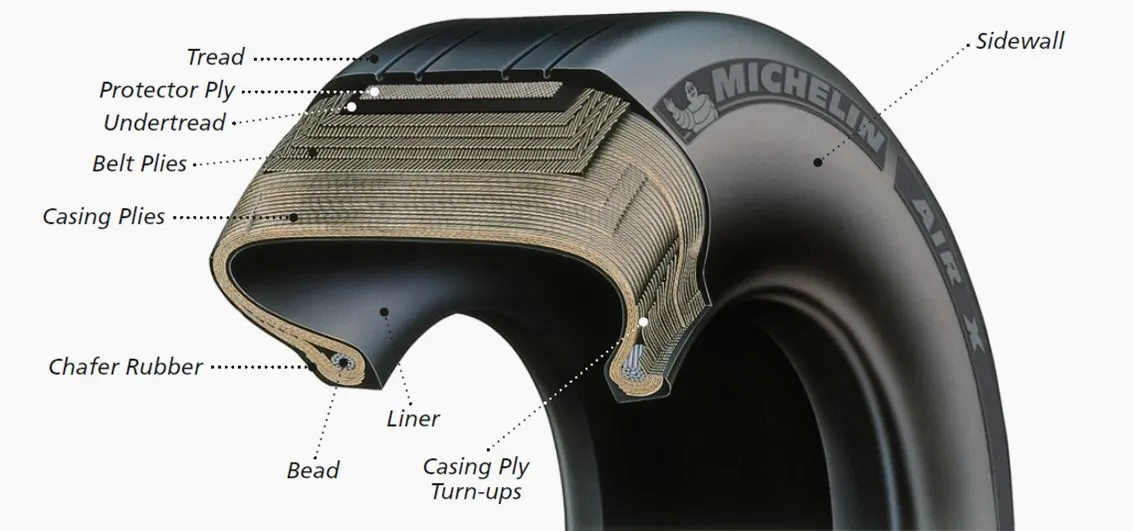
Aircraft tires are usually inflated with nitrogen to minimize expansion and contraction from extreme changes in ambient temperature and pressure experienced
during flight. Dry nitrogen expands at the same rate as other dry atmospheric gases (normal air is about 80% nitrogen). but common compressed air sources
may contain moisture, which increases the expansion rate with temperature. Also, the use of an inert gas for tire inflation eliminates the possibility of tire explosion.
Brake forces when landing-
Following braking devices are used to decelerate the aircraft -
1. Spoilers.
2. Wheel Brakes (Including Anti-Skid systems & Auto-Brake systems).
3. Reverse Thrust
Spoilers:
The mechanical deflection of parts of the wing upper surface by increasing aerodynamic drag on the moving aircraft. This can be achieved by raising upper wing surface
panels called ground spoilers or by operation of a tail cone 'clamshell' type air brake and also by increasing the effective downward load on the landing gear and thereby
increasing the efficiency of wheel braking.
Wheel Brakes:
To be effective, braking action at any speed depends upon sufficient friction existing between the tires and the runway surface achieved through freely rotating wheels.
Anti skid system:
When landing on slippery runways, there's a chance that the wheels may start to skid as the brakes are applied. To stop this from happening and to maintain maximum
effective braking, each wheel has anti-skid protection. Using a variety of sources to determine the aircraft speed, the brake units know how fast the wheels should be
spinning. If that speed drops significantly, it's because the current brake pressure on that wheel is too great and the wheel is just skidding over the surface.
In this situation, the anti-skid system automatically reduces the braking on that wheel to a point where the skid stops before reapplying the pressure.
Reverse Thrust:
Thrust reversers provide a deceleration force that is independent of runway condition. Thrust reverser efficiency is higher at high airspeed therefore. Treversers must be
selected as early as possible after touchdown. Thrust reversers should be returned after reverse idle at low airspeed to prevent engine stall or foreign object damage.
6. A. With necessary assumptions, calculate the force and power required to push / pull an aircraft by a towing vehicle.
Ans-
By using the following calculation and with the help of excel calculator we can calculate the power required to tow the aircraft.
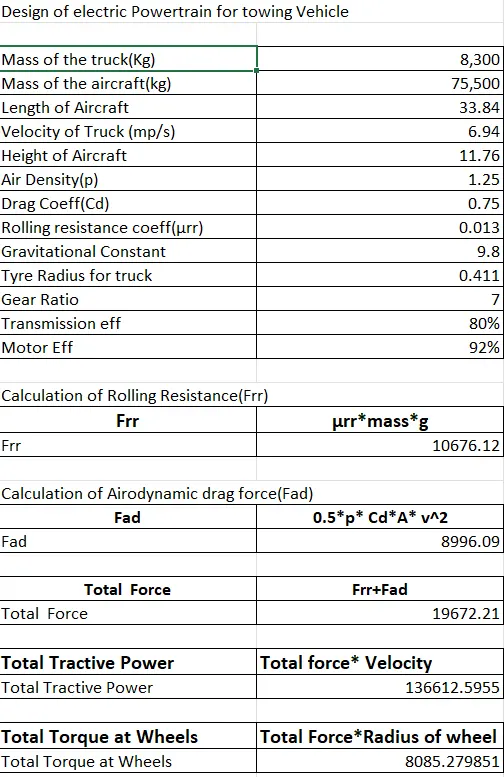
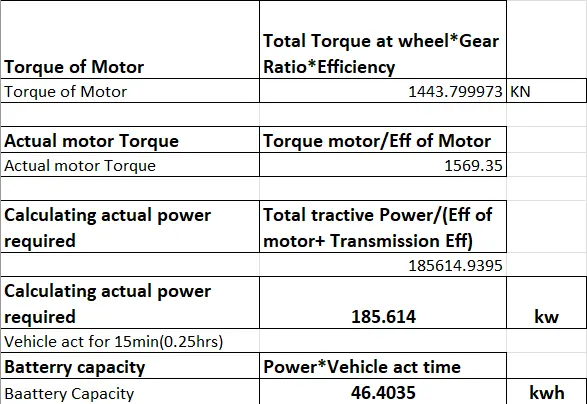
B. Develop the model for the calculated force and power using Simulink.
Ans-
The MATLAB model is as follow
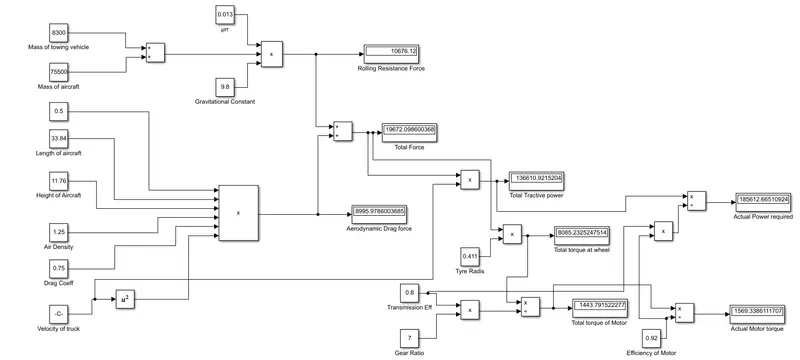
By using the simple blocks from the simulink we made the calculations.
The blocks we used Constant which we considered, Adder, Product and display is for the displaying the calculation result.
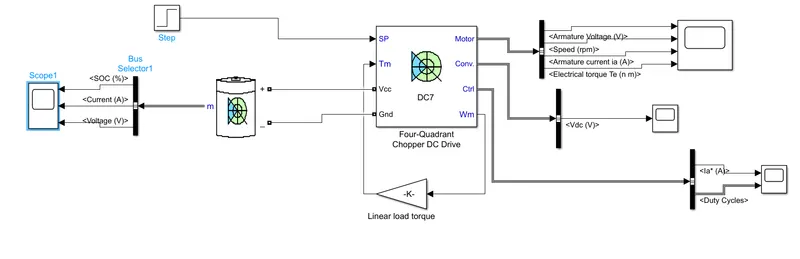
7. A. Design an electric powertrain with type of motor, it’s power rating, and energy requirement to fulfill aircraft towing application in Simulink. Estimate the duty cycle range to control the aircraft speed from zero to highest. Make all required assumptions. Prepare a table of assumed parameters. Draw a block diagram of powertrain.
(Hint :DC7 Block)
B. Also, Design the parameters in excel sheet.
Ans-
The model is as follow
The simulation result is as below
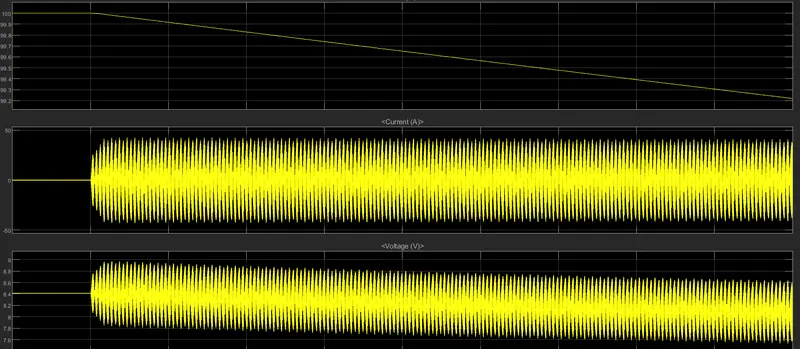
The below output shows the behaviour of the battery.
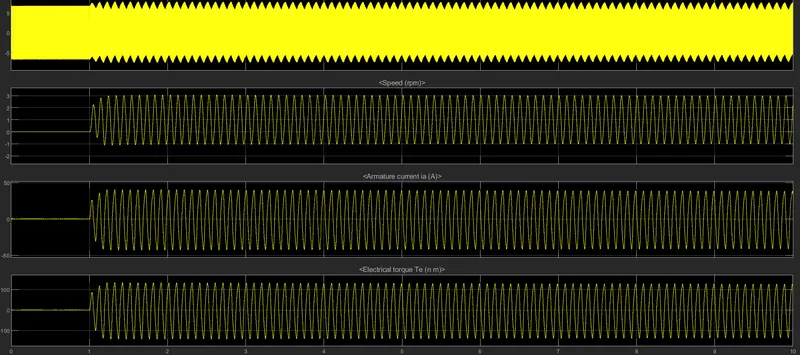
Below graph shows the output of the motor
Below graph shows the output of the converter
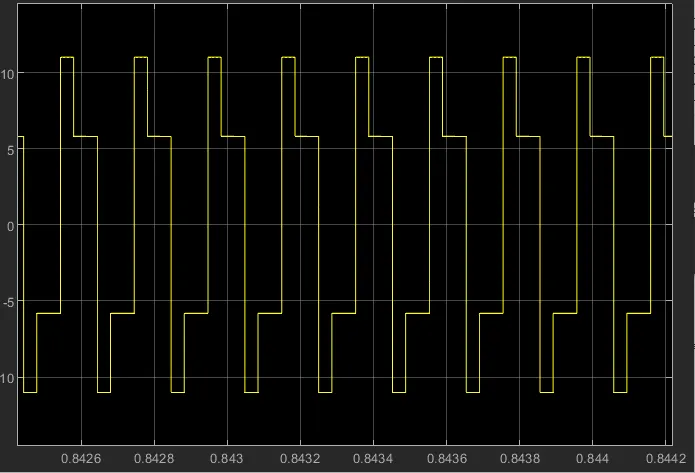
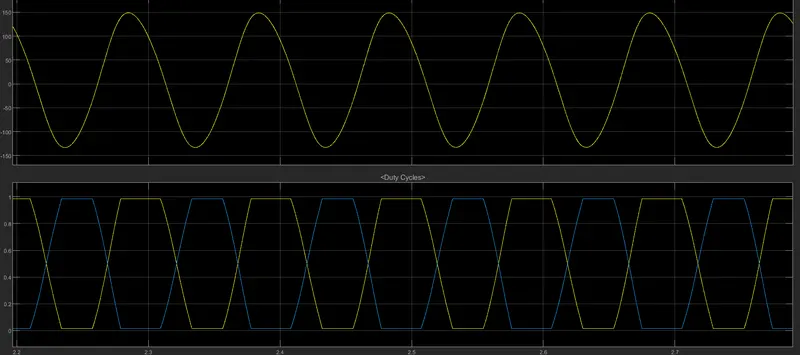
And last graph shows the output of the controller
For calculation the excel sheet is attached.