Project-1: Powertrain for aircraft in runways
Note-This is Live EV Batch-21.
Ans-1:-
Weight ia the major factor in airplane construction and operation.Excess weight reduces the efficiency and increses risk factor.
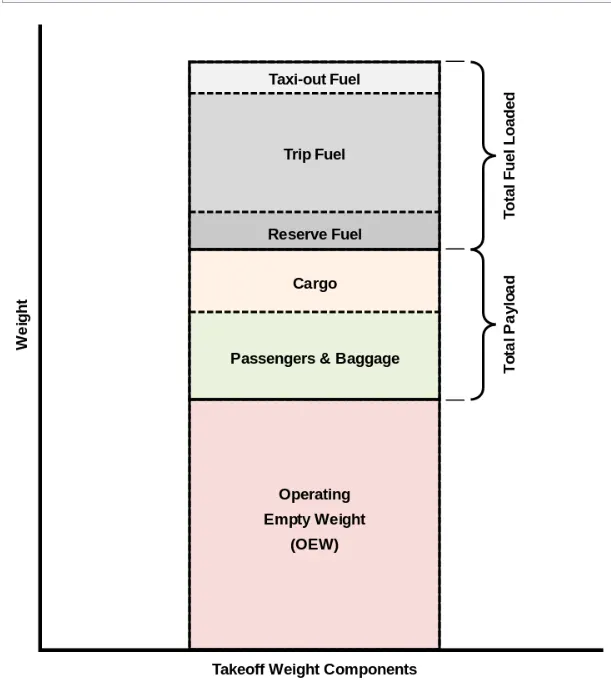
The aircraft gross weight (also known as the all-up weight and abbreviated AUW) is the total aircraft weight at any moment during the flight or ground operation.
An aircraft's gross weight will decrease during a flight due to fuel and oil consumption. An aircraft's gross weight may also vary during a flight due to payload dropping or in flight refuelling.
The gross weight is shown by below as-
Maximum Taxi Weight-
The maximum design taxi weight (also known as the maximum design ramp weight ) is the maximum weight certificated for aircraft manoeuvring on the ground (taxiing or towing) as limited by aircraft strength and airworthiness requirements.
It is greater than the maximum take off weight due to fuel which is burned during taxi and runup operation.
Maximum takeoff weight (MTOW)-
The maximum takeoff weight (also known as the maximum brake-release weight) is the maximum weight authorised at brake release for takeoff, or at the start of the takeoff roll.
The maximum takeoff weight is always less than the maximum taxi/ramp weight to allow for fuel burned during taxi by the engines and the APU.
In operation, the maximum weight for takeoff may be limited to values less than the maximum takeoff weight due to aircraft performance, environmental conditions, airfield characteristics (takeoff field length, altitude), maximum tire speed and brake energy, obstacle clearances, and/or en route and landing weight requirements.
Maximum landing weight (MLW)-
The maximum weight authorised for normal landing of an aircraft.The Maximum landing Weight must not exceed the MTOW.
The operation landing weight may be limited to a weight lower than the Maximum Landing Weight by the most restrictive of the following requirements:
- Aircraft performance requirements for a given altitude and temperature,landing field length requirements,approach and landing climb requirements
- Noise requirements
Maximum zero-fuel weight (MZFW)-
The maximum permissible weight of the aircraft less all usable fuel and other specified usable agents (engine injection fluid, and other consumable propulsion agents). It is the maximum weight permitted before usable fuel and other specified usable fluids are loaded in specified sections of the airplane.
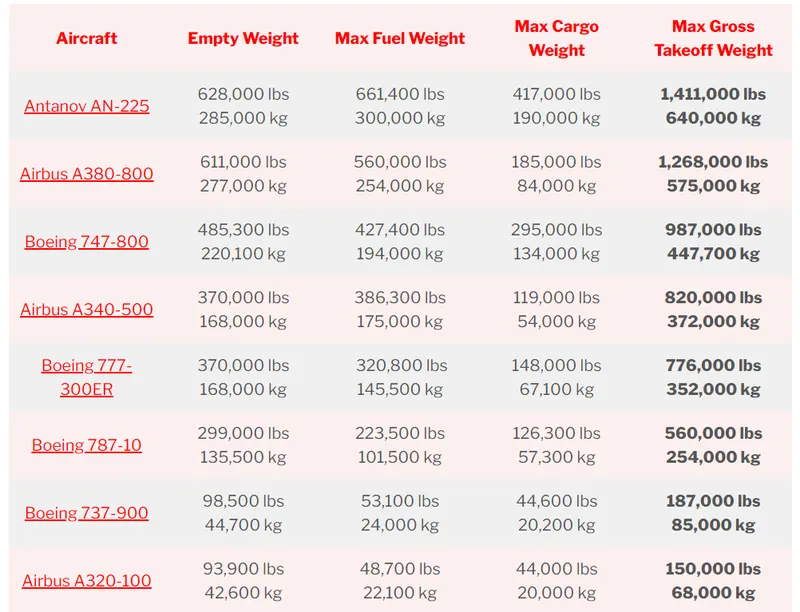
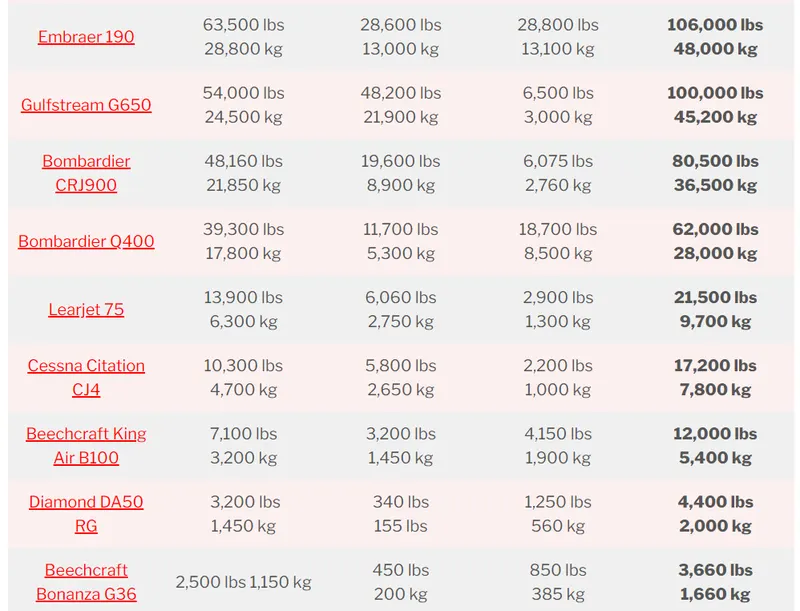
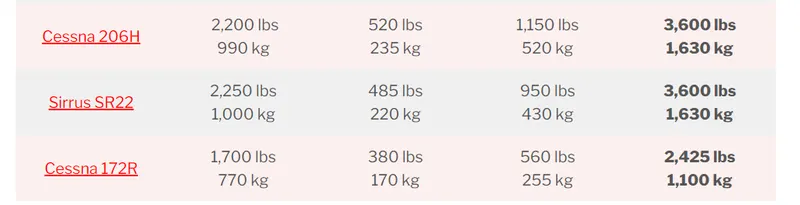
Various Aircraft and their weight-
Ans-2:-
Difference between Ground and Air Speed-
- Ground speed of the airplanr's speed relative to the surface of ground/earth.While Air speed is relative to air in which it is flying.
- Ground speed tells about how fast an aircraft will get to its destination.While Air speed determines whether there is enough airflow around the aircraft to make it fly.
- Ground speed is the sum of wind speed and air speed.While Air speed is independent of ground speed.
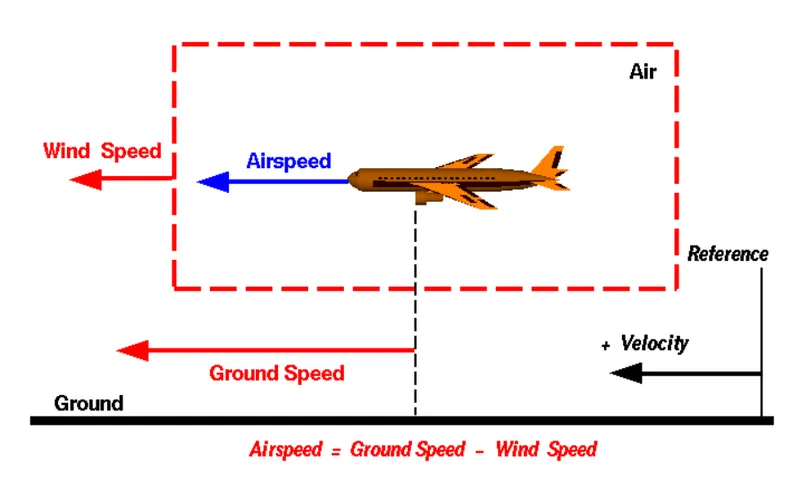
If the aircraft is flying in the same direction as the wind is blowing, the aircraft experiences tailwind, and its ground speed is higher than its airspeed. On the other hand, if the wind is blowing against the direction the aircraft is traveling in, the aircraft experiences headwind, and its ground speed is lower than its airspeed.
Ans-3:-
It not recommended to use aircraft engine power to move it on the ground at Airport because of following reasons-
- Aircraft operated at full thrust creats high volume air spreading which can damage the other aircraft or vehicle near it.
- If engine is using in full speed ,it can pulled in someone inside it.
- Aircraft when using engine power creats a lot of noise which is not pleasent for passengers and others.
- The engine of thrust near terminal cause damage to it.
- Using engine power,it will consume a considerable amount of fuel.
Ans-4:-
As by using engine power of aircraft ,we can move the aircraft either in forward or backward direction at ground.But due to disadvantage of using engine power at ground ,it is restricted to use engine power to ground.
There are basically two process by which an aircraft is pushed to runway when its ready to take off.
1-Towing
2-Taxiing
Towing-
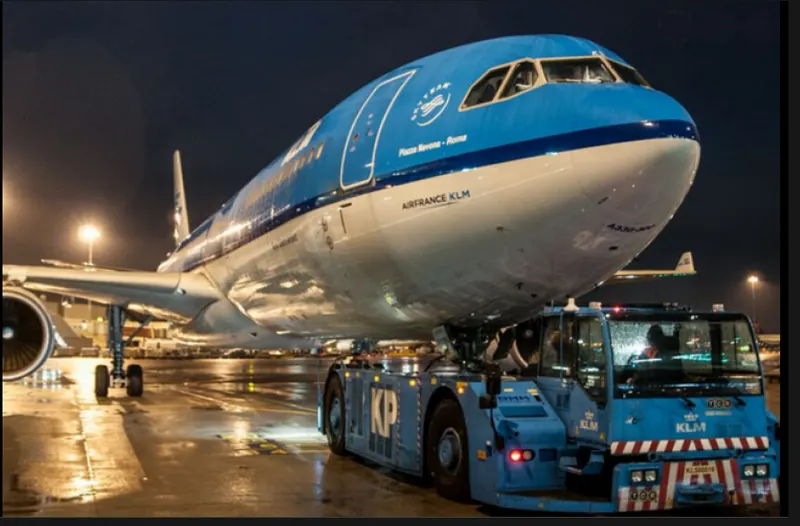
A tow tractor is used for Movement of large aircraft about the airport,flight line and hanger.The most common operation for which a pushback tractor is used is an aircraft pushback operation.
A towing hook attaches its one end to the aircraft and the other end to the pushback tractor. The driver receives a go ahead signal from Pilot and begins the pushback operation.
It pushes the aircraft back and also steers it so that the aircraft ends up in correct position on the taxiway (a connecting pathway between aircraft stand and runway).
Pilot then gives an okay to disengage signal to the pushback tractor driver at which he unhooks the towing bar and steers the pushback tractor away from the aircraft.
Taxiing-
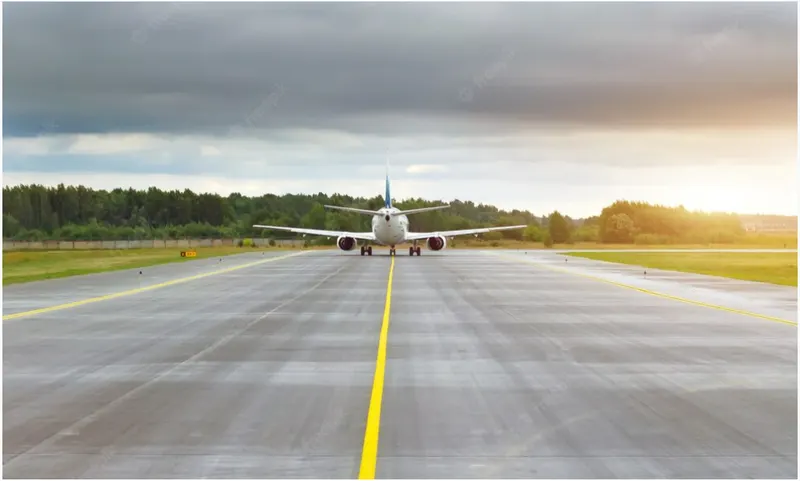
Taxiing is the movement of an aircraft on the ground, under its own power, in contrast to towing or pushback where the aircraft is moved by a tug. The aircraft usually moves on wheels, but the term also includes aircraft with skis or floats (for water-based travel).
An airplane uses taxiways to taxi from one place on an airpots to another; for example, when moving from a hanger to the runway.
Taxiing is simply the process of moving an airplane while it’s on the runway. It occurs after an airplane has landed, and it occurs before an airplane takes off. Airplanes don’t actually fly while on the ground. As a result, the process by which they move on the runway isn’t known as flying; it’s known as taxiing.
Ans-5:-
Takeoff - TakeOff is the phase of flight in which an aerospace vehicle leaves the ground and becomes airborne.For aircraft that take off horizontally, this usually involves starting with a transition from moving along the ground on a runway.
The amount of power that an engine is allowed to produce for a limited period of time for takeoff.
For light aircraft, usually full power is used during takeoff. Large transport catogary (airliner) aircraft may use a reduced power for takeoff, where less than full power is applied in order to prolong engine life, reduce maintenance costs and reduce noise emissions. In some emergency cases, the power used can then be increased to increase the aircraft's performance.
Rolling Resistance-
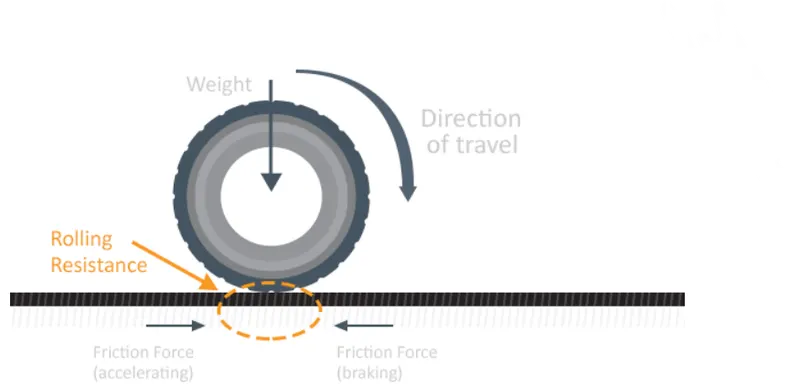
The rolling resistance is opposing force of motion on the ground when the tyre of aircraft touch the groud.
The friction between the tyre of aircraft and runway is proportional to the force exerted by the aircraft on thr runway.
The rolling resistance can be calculated as-
F= µrr*m*g
µrr is the coefficient of rolling resistance.
So rolling resistance is dependent on coefficient of rolling resistance,weight of aircraft and lift force acting on it.The rolling resistance is not constant as the velosity changes during take-off and landing ,the lift force varries which impact the normal force.
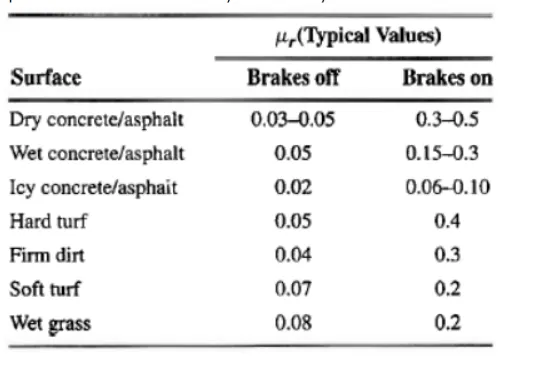
The rolling resistance coefficient depends on the nature of tyre and runway nature.Some are given below-
Tyre Pressure-
An aircraft tire or tyre is designed to withstand extremely heavy loads for short durations.The number of tires required for aircraft increases with the weight of the aircraft, as the weight of the airplane needs to be distributed more evenly. Aircraft tire tread patterns are designed to facilitate stability in high crosswind conditions, to channel water away to prevent hydroplaning, and for braking effect.
Aircraft tires also include fusible plug (which are assembled on the inside of the wheels), designed to melt at a certain temperature. Tires often overheat if maximum braking is applied during an aborted takeoff or an emergency landing. The fuses provide a safer failure mode that prevents tire explosions by deflating in a controlled manner, thus minimizing damage to aircraft and objects in the surrounding environment.
Brake Force-
To stop the aircraft during landing,the oilot press the brake.Due to this the generated force is known as brake force.
It depends on the speed of aircraft and wind velosity.
There are many type of brake system-
Electric brake,anti skid protection,auto brake.
Ans-7:-
Simulink Block diagram-
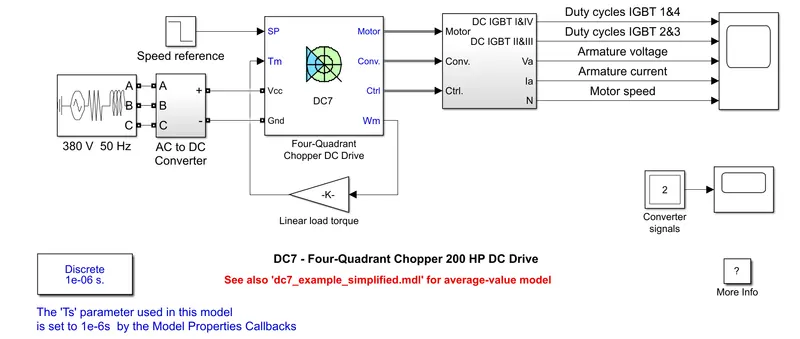
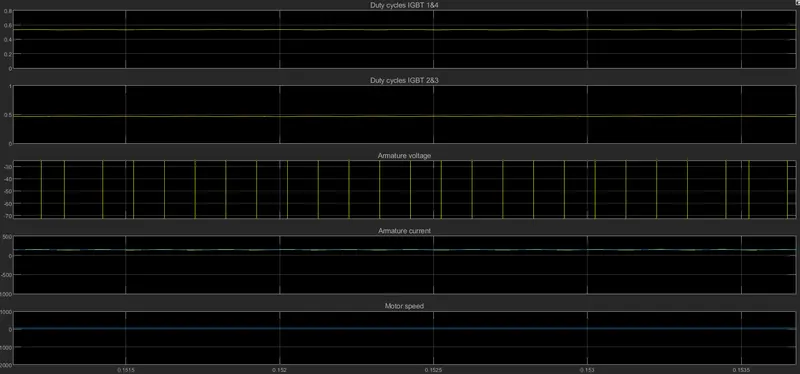
Three phase AC supply is provided to AC to DC converter after it there is four-quadrant chopper.After thius a selecter is used which is connected to scope.
OUTPUT-