Project-1: Powertrain for aircraft in runways
PART A :
1. Search and list out the total weight of various types of aircraft.
There are many factors that lead to the efficient and safe operation of an aircraft. Among these weights and balance control are the vital factors. The maximum allowable weight of an aircraft is determined by its design considerations and the manufacturer provides the details of the empty weight of an aircraft and the location of its empty weight center of its gravity and some other details too.
MAXIMUM DESIGN TAKE OF WEIGHT(MDTOW) AND LANDING WEIGHT(MDLW):
The maximum design take-off weight is the maximum certified design weight of an aircraft for takeoff run as limited by aircraft strength and airworthiness and the Maximum landing design weight is the maximum designed certified weight for landing limited by aircraft strength and airworthiness requirements.
AIRCRAFT GROSS WEIGHT:
It is the total aircraft weight at any moment during ground or flight operation. This decreases during the flight due to fuel and oil consumption. The gross weight gives the maximum take-off weight. The total weight(W) of the aircraft is simply the sum of all the individual weights
W= w(fuselage)+w(wing)+w(engines)+w(payload)+w(fuel)
WEIGHT OF VARIOUS TYPES OF AIRCRAFT:
GLIDER:
A glider is a fixed-wing plane that is supported in flight by the dynamic reaction of the air against its lifting surfaces, and whose free weight does not depend on an engine. Most gliders do not have an engine, although motor gliders have small engines for extending their flight when necessary by sustaining the altitude with some being powerful enough to take off self-launch.
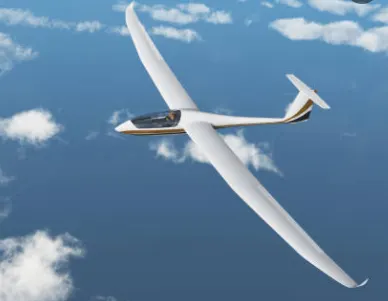
Weight of glider plane 110kg-200kg
Powered lift aircraft planes:
A powered lift aircraft plane takes off vertically under engine power but uses a fixed for horizontal flight. These aircraft do not need a long runway to take off and land but they have speed and performance similar to standard fixed-wing aircraft in combat or other situations.
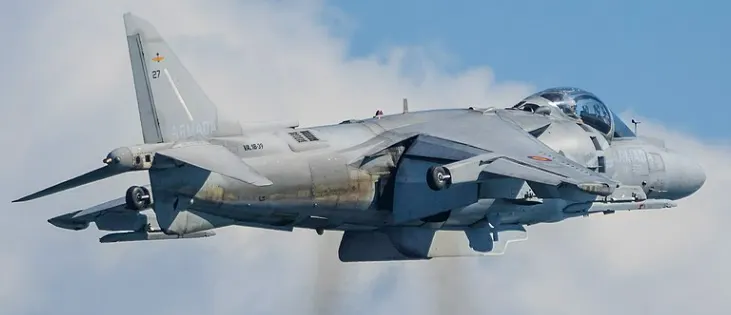
Weight - 160kgs
Fighter aircraft:
A fighter aircraft often referred to simply as a fighter, is a military fixed-wing aircraft designed primarily for air to air combat against other aircraft.
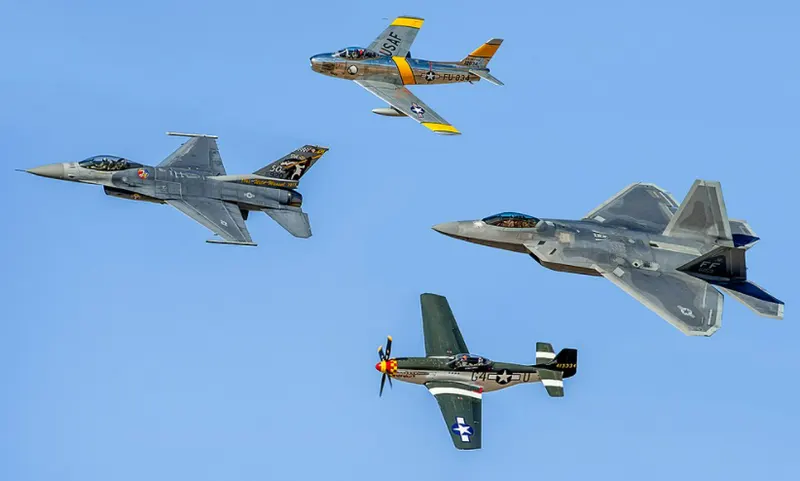
Weight - 13500kgs
4. Aerobatic aircraft:
An aerobatic aircraft is an aerodyne (a heavier than air aircraft) used in aerobatics, both for flight exhibitions and aerobatic competition
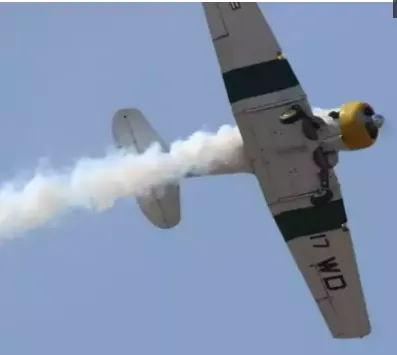
Weight - 771kgs
2. Difference between ground speed and airspeed
Ground speed: Ground speed is how fast an airplane is traveling, relative to a fixed point on the ground. Think of it this way, Ground speed is how fast an airplane has moved with reference to a fixed point to reach a particular destination.
Airspeed: Airspeed, in contrast, how fast an airplane is really flying strictly under its own power.
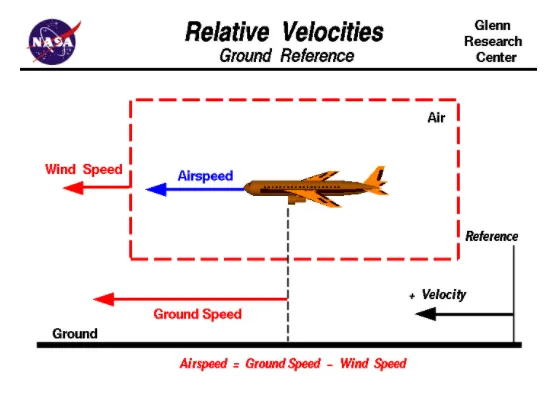
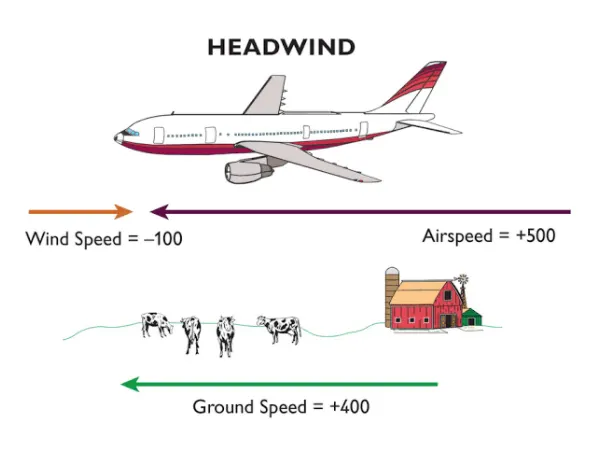
The airplane operates on both ground as well as in the air, so we need to observe how these speeds are related. The ground speed and airspeed usually depend on the wind speed. If the wind speed changes these speeds may change. If we consider there is no wind then the airspeed is equal to the ground speed.
If the wind is flowing in the same direction of flight then (airspeed < ground speed) so airspeed = ground speed -wind speed
If the wind is flowing opposite to the direction of flight then (airspeed > ground speed) so airspeed = ground speed + wind speed
3. Why is it not recommended to use aircraft engine power to move it on the ground at the airport?
Towing is the coupling of two or more objects together so that they may be pulled by a designated power source or sources. The towing source may be a motorized land vehicle or human, and the load is anything that can be pulled.
Although many aircraft are capable of moving themselves backward on the ground using reverse thrust ( a procedure referred to as a power back), the resulting jet prop might cause damage to the terminal building or equipment. Engines close to the ground may also blow sand and debris forward and then suck them into the engine, causing damage to the engine. A pushback is therefore the preferred method to move the aircraft away from the gate.
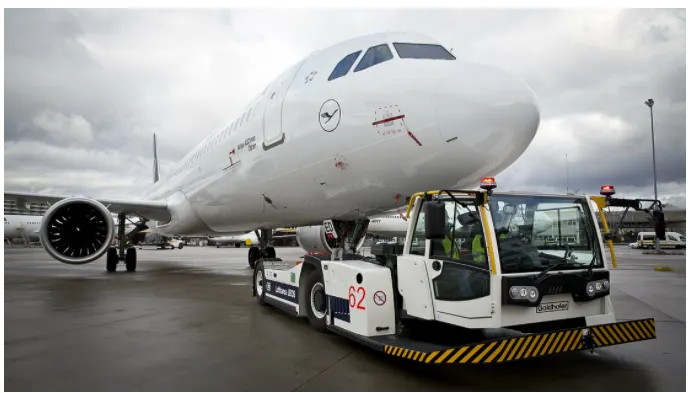
Although many aircraft are capable of moving themselves backward on the ground using reverse thrust, a procedure called a power back, it is not typically done due to the following reasons.
- The jet blast from the engine may damage the terminal building and nearby equipment. It can even throw away the people standing nearby.
- Engines can blow sand and debris
- It is easier for the truck driver to see the surroundings better than the pilot sitting on the cockpit with limited windows
- The pushback truck driver knows the airport better than the pilot
- The plane engines are very loud. This noise can add up substantially when multiple planes are moving around the airport. It won't be a pleasant experience for people sitting inside the terminal.
- It saves fuel. Virgin Atlantic has proposed a new system in which the pushback trucks will push the plane all the way to the runway to save fuel and reduce the impact on the nearby environment
4. How an aircraft is pushed to the runway when it's ready to take off?
Taxing is the movement of an aircraft on the ground under its own power in contrast to towing or pushback where the aircraft is moved by a tug. The term 'taxing' is not used for the accelerating run along a runway prior to takeoff, or decelerating run immediately after landing which are called takeoff and landing rollout respectively.
The power for taxing comes from the engine itself. If it is a propeller-powered aircraft, the propeller provides the thrust and pulls the aircraft. like it would in the air. If it is a jet engine the exhaust air that comes out of the engine creates a forward force due to newton's third law and moves the airplane.
The trust to propel the aircraft forward from its propeller or jet engines. Steering is achieved by turning a nose wheel or tail wheel or rudder. The pilot controlled the direction traveled with their feet. The use of engine thrust near terminals is restricted due to the possibility of jet blast damage. This is why the aircraft is pulled back from the buildings by a vehicle before they can start their own engines for taxing.
- Pushbacks are carried out by special, low-profile vehicles called pushback tractors or tugs.
- These are heavy weighing low profile vehicles with enormous torque to do the job of pushing/pulling the large aircraft from the terminals to the runway.
5. Learn about take-off power, tire design, rolling resistance, tire pressure, and brake forces when landing
TAKE OFF POWER:
- Take-off is the phase of flight in which an aerospace vehicle leaves the ground and becomes airborne.
- For aircraft that take off horizontally, this usually involves starting with a transition from moving along the ground on a runway.
- The takeoff speed required varies with air density, aircraft gross weight, and aircraft configuration.
- The power from the engine of the aircraft used to achieve the flight is called take-off power
- For light aircraft, usually, full power is used during takeoff.
- Large transport category aircraft may use reduced power for takeoff, where less than full power is applied in order to prolong engine life, reduce maintenance costs and reduce noise emissions.
TYRE DESIGN:
An aircraft tire is designed to withstand extremely heavy loads while landing, taking off, taxing, and parking. The number of tires required for aircraft increases with the weight of the aircraft, as the weight of the airplane needs to be disturbed more evenly. Aircraft's tread patterns are designed to facilitate stability in high crosswind conditions to channel water away to prevent hydroplaning and for braking effect. some of the tire design is listed below.
BIAS-PLY TYRE:
- The bias ply tire consists of casing piles running diagonally at appropriate right angles to one another.
- The number of piles and the angles at which they are laid dictate strength and load capacity.
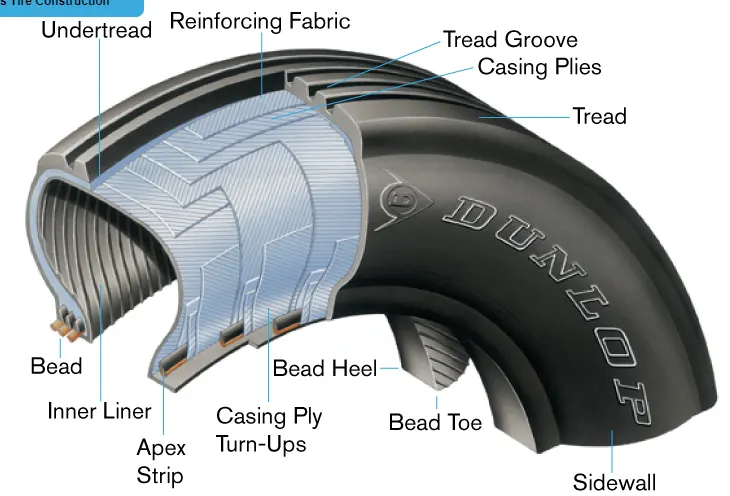
TIRE TERMINOLOGY:
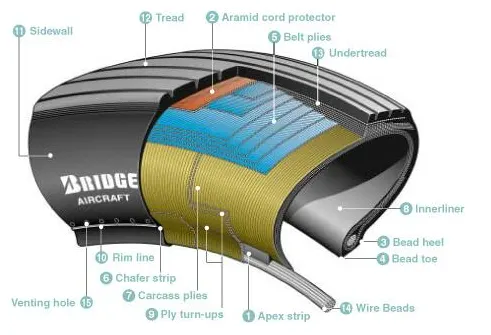
1. Apex strip: A Triangular piece of stiff rubber that is fitted onto the bead code to tapper the rigid bead into the flexible body piles in the sidewall.
2. Bead heel: Outer edge of the bead
3. Bead toe: Inner edge of the bead
4. Breakers: Breakers are fabric piles placed directly on the upper-most ply beneath the tread rubber. They disperse stress throughout the tire.
5. Chafer strip: Reinforces the beads and protects the cord body piles from damage from rim friction or from damage when replacing the rim.
6. Carcass piles: Each nylon pile is held by wire beads across the tire to keep the tensile strength at the proper level, and is folded to the side of the sidewall.
7. Decoration line: A projecting amassed line molded between the shoulder and the sidewall of a tire. Its purpose is for decoration only.
8. Flipper strip: A strip of material that is wrapped around the bead bundle and filler to add support and help taper the assembly into the sidewall.
9. Inner liner: A sheet of special rubber laminated to the inside of the first caping ply of the tubeless so as to ensure retention of pressure when the tire is inflated.
10. Ply turn-ups: The turned-up ends of piles around the bead. Other piles lock the ends into place.
11. Tread reinforcing fabric: Nylon card piles located in the tread between the tread groove and the outer ply of the carcass which reduces tread squirm and increases stability for high-speed operations.
12. Rim line: This line is provided near the beads to allow the inspection of how the tire fits with the rim.
13. Shoulder: The area on the side of the tire between the sidewall and the tread.
Balance marker:
A balance marker consists of a red dot, that is affixed on the sidewall of the tire immediately above the bead to indicate the lightweight point of the wire.
Radial tire:
Radial tires are the most modern design of aircraft tires. It is a design that is similar to that of car tires. Typically, the radial tire offers more landings per tread and lighter weight than a bias tire, though sometimes at the expense of retread lives. Radial aircraft tires in that the piles all run radially from bead to bead at approximately 90 degrees to the center line of the tire. Angled belt plies are laid between the tread and the top casing ply, resulting in a flatter tread and adding strength to the tyre.
Rolling resistance:
The rolling resistance force is mainly experienced by the tires when the vehicle moves over the surface. The rolling resistance forrce is given by the following expression
Frr = urr.(mg)
Where
mg = weight in newtons
urr = coefficient of rolling resistance
The coefficient of rolling resistance depends on many factors like the tire pressure, tire temperature, the material of the tyre, tread pattern of the tyre, and also the round roughness and liquids on the road. These factors determine the rolling resistance force.
Tire pressure:
The amount of air inside the tire is known as tire pressure. Tire pressure plays a major role in vehicle dynamics. If the tire pressure is less, the rolling resistance will become more so it leads to more energy requirements. so the vehicle can't achieve high speed and the vehicle can't bear the total weight. a typical airline tire can handle a 38ton load. Usually, the tire pressure will be around 200 to 300 psi of pressure and they can change based on the tire of the aircraft. Tests of airliner aircraft tires have shown that they are able to sustain pressures of a maximum of 800psi. Aircraft tires are usually inflated with nitrogen to minimize expansion and contraction from extreme changes in ambient temperature and pressure experienced during flight.
Brake force while landing:
The aircraft has disk rotors in the landing gear used to brake the wheels while touching the ground. These brakes are operated hydraulically and pneumatically'
Thrust reversers:
Thrust reverser allows thrust from the engines to be used to slow the aircraft. This is also very effective in bringing down the speed of the aircraft. By using a negative angle plane, e afre turning the wind that is coming into the propeller to flow into the opposite direction.
Air brake:
Air brakes are dedicated flight control surfaces that work by increasing the drag force, air brakes are designed to increase drag while making little change to lift, resulting in a higher stall speed. These are some of the types of braking methods used to bring down the aircraft's speed while landing the flight.
PART B:
6A. With necessary assumptions, calculate the force and power required to push/pull an aircraft by a towing vehicle?
The force acting on aircraft should be analyzed:
The force that will be involved in moving the aircraft with the towing tractor is studied and there are mainly two forces acting in this condition
1. Rolling resistance force:
The rolling resistance force is mainly experienced by the tire when the vehicle moves over any surface.
The rolling resistance force is given by the expression:
Frr = urr*(m*g)
m*g = Weight in newton
urr = coefficient of rolling resistance
the coefficient of rolling resistance depends on many factors like the tire, the tire temperature, the material of the tire, etc..
Here we are taking the heaviest aircraft as the reference to design our electric-powered towing tractor.
Weight of the aircraft( airbus a-380) = 575000kg
Rolling resistance coefficient of an aircraft tire (urr) = 0.0001
Weight of the towing tractor = 50000kg
Then,
Rolling resistance force for towing tractor = urr*(m*g) = 0.0001*(50000*9.81) = 0.49KN
Rolling resistance force of aircraft = (0.004*(575000*9.81) = 22.56KN
Total rolling resistance force = 0.49 + 22.56 = 23.05KN
Air drag force:
The air drag force is the force that occurs due to the air striking effect on the vehicle when it moves.
The vehicle moves through an air medium of a particular density value with a certain speed, this causes the air to strike against the vehicle's body and it causes a drag force on the vehicle.
The aerodynamic drag is given by the expression
Fad = 1/2*rho*A*v^2*c_d
Rho = Density of air medium
A = frontal area of the vehicle which strikes the air
V = velocity with which the vehicle moves
c_d = coefficient of drag which varies with the different shapes of frontal area
Calculation
Let us assume
The velocity of aircraft while towing = 30kmph
The density of air medium (rho) = 1.225
The frontal area of the aircraft = 20 m^2
The coefficient drag of the aircraft = 0.026
Air drag force = 0.5 * rho * A * V^2 * cd = 0.5 * 1.225 *20* 8.33^2 *0.026 =0.022KN
Air drag force acting = 0.022KN
The total force that the motor needs to overcome in order to push/pull the aircraft = 23.07KN
Power required
The Power required by the motor is given by the velocity with which the towing operation takes place.
Power = force * velocity = 23.07*30 =
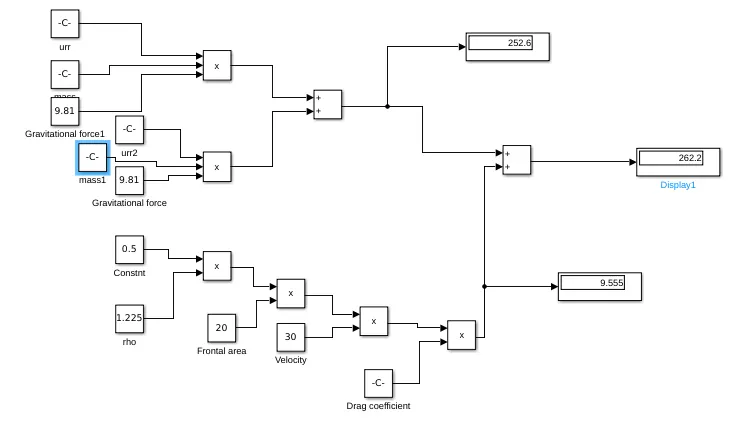
6B. Develop the model for the force and power using Simulink.
The below figure is the force and power by using random values has taken and developed the model.
7A. Block diagram of electric power train
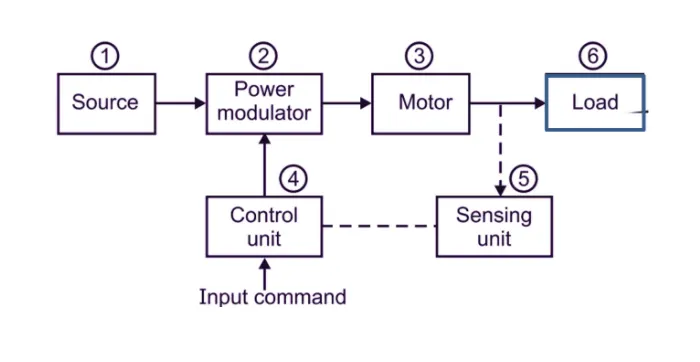
An airplane pushback vehicle is required to move airplanes away from airport terminals and towe them across the airfield for routine maintenance. The pushback vehicle must be able to generate a large towing force but it also has a high speed to travel quickly between pushback operations.
Let the wheel radius be 0.5m
Maximum torque on wheels T = wheel radius * force
= 0.5*23007
= 11503.5 N-m
Let us assume the parameters of induction motor
Input power = 690kw
Output power = 580kw
Duty cycle = output power /input power = 0.84 = 84%
The heavy duty factor for an aircraft is designed for operating in extreme local conditions
7B. File attached for the challenge named as force and power calculation