Project-1: Powertrain for aircraft in runways
1. Search and list out the total weight of various types of aircrafts.
Different types of weights of an aircraft are:
Manufacturer's empty weight (MEW):
Also called Manufacturer's Weight Empty (MWE) or Licensed Empty Weight
It is the weight of the aircraft "as built" and includes the weight of the structure, power plant, furnishings, installations, systems and other equipment that are considered an integral part of an aircraft.
This excludes any baggage, passengers, or usable fuel.
Zero-fuel weight (ZFW)
This is the total weight of the airplane and all its contents (including unusable fuel), but excluding the total weight of the usable fuel on board.
As a flight progresses and fuel is consumed, the total weight of the airplane reduces, but the ZFW remains constant.
Maximum zero fuel weight (MZFW) is the maximum weight allowed before usable fuel and other specified usable agents (engine injection fluid, and other consumable propulsion agents) are loaded.
Operating empty weight (OEW) (Roughly equivalent to basic empty weight on light aircraft)
It is the basic weight of an aircraft including the crew, all fluids necessary for operation such as engine oil, engine coolant, water, unusable fuel and all operator items and equipment required for flight but excluding usable fuel and the payload.
Payload
It is the carrying capacity of an aircraft. It includes cargo, people, extra fuel. In the case of a commercial airliner, it may refer only to revenue-generating cargo or paying passengers.
Maximum take-off weight (MTOW)
This is the maximum weight at which the pilot of the aircraft is allowed to attempt to take off.
Regulated take-off weight (RTOW)
Depending on different factors (e.g. flap setting, altitude, air temperature, length of runway), RTOW or maximum permissible take-off weight varies for each take-off. It can never be higher than MTOW.
Maximum landing weight (MLW)
This maximum weight at which an aircraft is permitted to land.
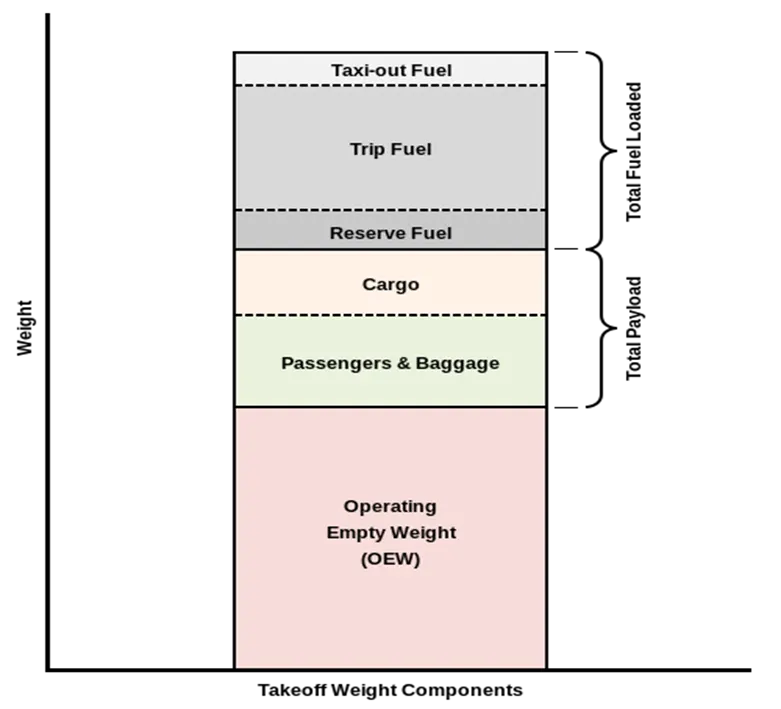
The following image depicts take-off weight components:
Maximum ramp weight (MRW)
It is also called maximum taxi weight (MTW)
It is the maximum weight authorized for manoeuvring (taxiing or towing) an aircraft on the ground.
Aircraft gross weight
It is the total aircraft weight at any moment during the flight or ground operation. This decreases during flight due to fuel and oil consumption.
Classification of Aircrafts:
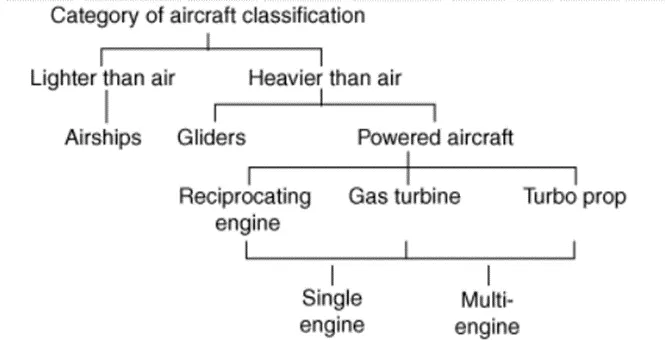
- With respect to the certification of aircraft, it means a grouping of aircraft based upon intended use or operating limitations. Examples include transport, normal, utility, acrobatic, limited, restricted and provisional.
- With respect to certification by weight, aircraft are classified as small (i.e., air craft weighing 5700 kilograms or less) or large (more than 5700 kilograms).
- With respect to wake turbulence, aircraft are classified as heavy, large and small. Heavy aircrafts have take-off weights more than 116,000 kg. Large aircraft have a certified take off weight between 18,600 kg and 116,000 kg; and small aircraft have a certified take of weight less than 18,600 kg. This classification is by the Federal Aviation Administration (FAA).
- The International civil Aviation Organisation (ICAO) classifies aircraft for this purpose as heavy, medium and light. Heavy aircraft have a maximum certified take=off weight (MCTOW) of more than 136,000 kg. Medium aircraft have a MCTOW of more than 7000 kg and less than 136,000 kg; and light aircraft have a MCTOW of 7000 kg or less.List of airliners by maximum takeoff weight
List of Airliners by maximum take off weight is listed below:
|
640,000 |
|
|
589,670 |
|
|
575,000 |
|
|
447,700 |
|
|
443,613 |
|
|
412,770 |
|
|
Antonov An-124-100M |
405,060 |
|
396,900 |
|
|
381,000 |
|
|
377,840 |
|
|
377,840 |
|
|
371,950 |
|
|
367,400 |
|
|
347,800 |
|
|
351,800 |
|
|
347,450 |
|
|
340,200 |
|
|
308,000 |
|
|
299,370 |
|
|
297,550 |
|
|
276,700 |
|
|
273,300 |
|
|
270,000 |
|
|
270,000 |
|
|
256,280 |
|
|
254,000 |
|
|
254,000 |
|
|
253,500 |
|
|
251,000 |
|
|
250,000 |
|
|
242,000 |
|
|
242,000 |
|
|
231,300 |
|
|
228,000 |
|
|
211,400 |
|
|
208,000 |
|
|
204,000 |
|
|
192,000 |
|
|
187,000 |
|
|
185,000 |
|
|
163,000 |
|
|
159,000 |
|
|
157,000 |
|
|
152,000 |
|
|
151,000 |
|
|
151,000 |
|
|
147,000 |
|
|
142,000 |
|
|
141,000 |
|
|
140,000 |
|
|
125,000 |
|
|
124,000 |
|
|
117,000 |
|
|
116,000 |
|
|
106,000 |
|
|
104,000 |
|
|
104,000 |
|
|
104,000 |
|
|
87,500 |
|
|
85,000 |
|
|
85,000 |
|
|
84,000 |
|
|
Airbus A321-100[18] |
83,000 |
|
79,000 |
|
|
78,000 |
|
|
73,000 |
|
|
72,500 |
|
|
72,500 |
|
|
71,000 |
|
|
70,700 |
|
|
70,000 |
|
|
Airbus A320-100[18] |
68,000 |
|
68,000 |
|
|
68,000 |
|
|
67,000 |
|
|
66,000 |
|
|
65,000 |
|
|
65,000 |
|
|
64,000 |
|
|
63,000 |
|
|
60,000 |
|
|
59,000 |
|
|
59,000 |
|
|
55,000 |
|
|
55,000 |
|
|
54,000 |
|
|
50,000 |
|
|
50,000 |
|
|
48,600 |
|
|
48,500 |
|
|
48,000 |
|
|
46,000 |
|
|
46,000 |
|
|
44,000 |
|
|
42,000 |
|
|
39,000 |
|
|
37,500 |
|
|
36,500 |
|
|
36,000 |
|
|
33,000 |
|
|
33,000 |
|
|
30,400 |
|
|
28,000 |
|
|
23,000 |
|
|
22,800 |
|
|
22,800 |
|
|
22,000 |
|
|
18,600 |
|
|
13,150 |
|
|
11,500 |
|
|
10,890 |
|
|
9,752 |
|
|
8,300 |
|
|
8,150 |
|
|
7,765 |
|
|
7,761 |
|
|
7,000 |
|
|
4,800 |
2. Is there any difference between ground speed and air speed?
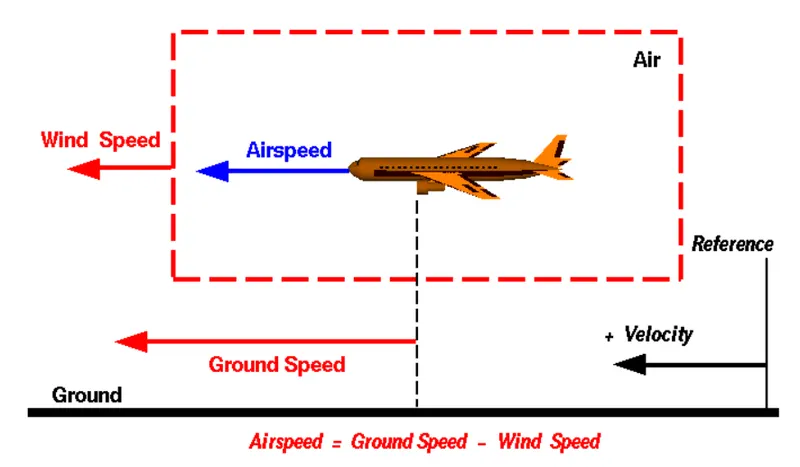
Wind Speed
For a reference point picked on the ground, the air moves relative to the reference point at the wind speed.
Ground Speed
For a reference point picked on the ground, the aircraft moves relative to the reference point at the ground speed. Ground speed is a vector quantity.
Air speed
The relative velocity between the object and the air is called air speed. It cannot be directly measured from the ground position., but must be computed from ground speed and wind speed.
Air speed = Ground speed – Wind speed (Vector difference)
3. Why is it not recommended to use aircraft engine power to move it on the ground at Airport?
It is not recommended to use aircraft engine power to move it on the ground at airport for the following reasons:
- Commercial airplanes have engines with rating from 18,000 to nearly 100,000 lb of thrust. They are provided with such thrust levels for safe take-off, flight, and landing over a wide range of temperatures, altitudes, gross weights, and payload conditions. The exhaust wake from these engines can pose hazards in commercial airport environments resulting potential for injury to people and damage to or caused by baggage carts, service vehicles, airport infrastructure, and other airplanes.
-
Taxiing (the movement of an aircraft on the ground, under its own power) requires more fuel than towing.
-
Airplanes don’t have a reverse gear. They need to go backward when they are pushed back from the gate. So, they require tugs to push the plane away from the terminal.
4. How an aircraft is pushed to runway when its ready to take off?
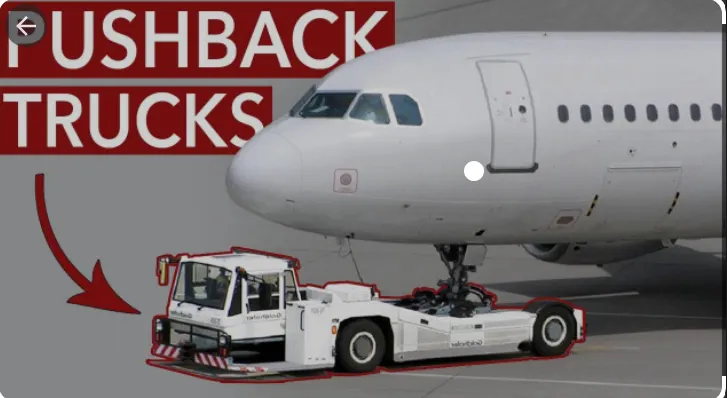
- An aircraft is pushed to run way by a procedure called pushback.
- Pushback is an airport procedure during which an aircraft is pushed backwards away from its parking position, usually at an airport gate by external power.
- Pushbacks are carried out by special, low-profile vehicles called pushback tractors or tugs.
- A pushback truck reverses the aircraft into taxiing position, pushing it with a towbar attached to the nose-wheel strut. Or, in the most modern versions, by actually lifting the wheel. That speeds up coupling and decoupling.
- The aircraft then taxis to the runway to depart.
5. Learn about take off power, tyre design, rolling resistance, tyre pressure, brake forces when landing.
Take-off Power
It is the amount of power that an engine is allowed to produce for a limited period of time for take off. The use of take-off power is ussually limited to 5 minutes for reciprocating engines and up to 2.5 min for gas turbine engines.
Tyre Design
- Tyres are one of the most important components of aircraft.
- They help to absorb the shock of landing and provide cushioning to the roughness of take-off, roll-out, and taxi operations.
- It also provides the necessary traction for braking and stopping of an aircraft.
- An aircraft tyre is designed to withstand extremely heavy loads while landing, take off, taxing, and parking.
- The number of wheels required for aircraft increases with the weight of the aircraft, as the weight of the aeroplane needs to be distributed more evenly.
- Unlike an automobile or truck tyre, it does not have to carry a load for a long period of continuous operation. However, an aircraft tyre absorbs the high impact loads of landing, and also, it’s operating at high speeds for a short time when required.
Technical aspects of the tyre
Retreading – Retreading is methods of restoring a worn tyre by renewing the tread area or by renewing the tread area plus one or both sidewalls. Repairs are included in the tyre retreading process.
Load Rating – Load rating is the maximum permissible load at a specified inflation pressure.
Ply Rating – Ply Rating is used to identify the maximum recommended load rating and inflation pressure for a specified tyre. It is an index of tyre strength.
Speed Rating – The speed rating is the maximum takeoff speed to which the tyre has been tested.
Skid Depth – Skid depth is the distance between the tread surface and the deepest groove as measured in the mould.
Aircraft tyres must have an approved speed and load rating and have sufficient clearance when retracted through landing gear to allow for tyre growth. Tyre growth is the increase in the size of the tyre due to centrifugal forces at high speed.
Aircraft tyres may be Tube-type or Tubeless. Tubeless tyres are more advantageous over tube-type. There is no longer the use of tube-type tyre in recent aviation. Nowadays all airliners are using tubeless tyres.
Aircraft tyres may be Radial or Bias. Almost all airliners are using Radial tyre. Bias is an older design, and it’s mainly used for road vehicles. Radial tyres have the word RADIAL on the sidewall. Radial tyres are more expensive than bias-ply tyres. Radial tires are in demand because of their lower life cycle cost and long-term value.
Today’s tyres are conductive. Aircraft tyres are manufactured with tread rubber with conducting compounds to permit earthing of static charges.
In early days when tyres were not sufficiently conductive, aircraft used to have a conductive strip hanging down from the axle of the landing gear. Upon landing, this strip would be the first part of the aircraft to touch the earth. This discharges any static electricity accumulated on the outer surfaces of the aircraft. Now these conductive strips are not present.
Chine tyre used on the nose wheel of aircraft as it diverts runway water away from the engine inlets.
Chines are circumferential protrusions that are moulded into the sidewall of nose tyres that deflect water sideways to help reduce excess water ingestion into the engines. Tyres may have chines on one or both sides, depending on the number of nose tyres on the aircraft.

Each tyre manufacturer produces their own designs of the tyre with different tread patterns, wear patterns, wear limits etc, and in some cases, different names for the same part of the tyre. But all tyres must meet the approved standards before being accepted by the FAA or CAA.
All commercial aircraft tyres approved under FAA Requirement Technical Standard Order (TSO) C62. A TSO is a minimum performance standard for specified materials, parts, and appliances used on civil aircraft
Rolling Resistance
The force that resists the motion of a body rolling on a surface is called the rolling resistance or the rolling friction.
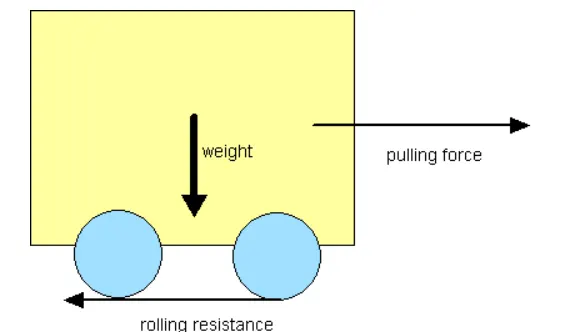
In case of aircrafts, the rolling resistance occurs between tyre and ground during landing, take-off, pushback, and taxi operations. The large tyre pressure of aircraft tyres helps to reduce the rolling resistance.
Tyre Pressure
The tyres of an airplane hit the runway at about 170 miles per hour and bear the weight of a modest office building. A typical air-liner load can handle a 38-ton load.
Tyres are typically inflated to 200 psi, roughly six times what you put in an automobile tyre, and the tyres on an F-16 fighter are pumped to 320 psi. The air pressure of tyres on different aircrafts vary.
Braking force
All modern aircraft are fitted with a braking system to assist in slowing and stopping when on the ground. Brakes are used not only to decelerate during a landing run, but also to hold the aircraft during an engine run-up, and in some cases to steer the aircraft through differential braking. Brakes are fitted to the main landing gear but not generally to the nose or tail wheel.
Large braking force is required for the aircraft to stop. Dedicated brake unit on each wheel help to stop the aircraft.
6. A. With necessary assumptions, calculate the force and power required to push / pull an aircraft by a towing vehicle.
Here the tow Truck assumed is TMX-450 and the aircraft considered is Airbus A321.
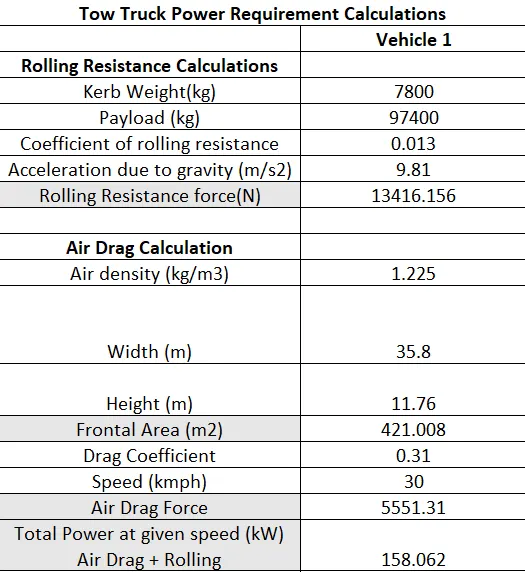
Mass of the truck (Kerb weight) = 7800kg.
Speed of the truck is assumed to be 30km/hr.
Weight of the aircraft (payload) = 97400 kg
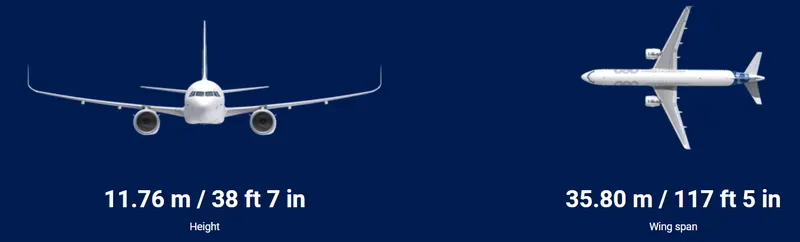
Wingspan=35.8m
Height =11.76m
Assume:
Air density((ρ) = 1.225 kg/m3
Drag coefficient (Cd) = 0.31
Rolling resistance coefficient (μrr) = 0.013
Gravitational constant (g) = 9.81 m/sec^2
Calculation of rolling resistance:
Frr = μrr * m * g
=0.013 * (7800+97400) * 9.81
= 13416.156 N
Air drag calculation
Fad = 0.5 * ρ * Cd * A * V2
= 0.5 * 1.225 * 0.31 * (35.8*11.76) * (30*5/18)2
= 5551.31 N
Acceleration force calculation
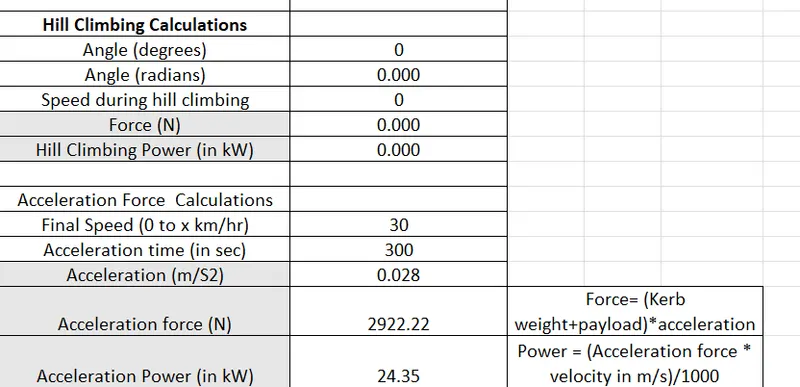
Final speed (0 to x km/hr) =30 km/hr
Assume acceleration time in seconds = 300 seconds (5 minutes)
Acceleration = (30*5/18)/(300) = 0.0278 m/sec2
Acceleration force = Mass * acceleration
= (7800+97400) * 0.0278
= 2922.22 N
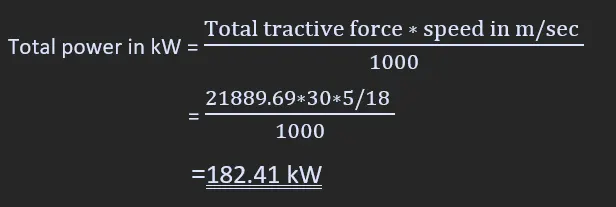
Total tractive force = 13416.156 N + 5551.31 N + 2922.22 N
= 21889.69 N
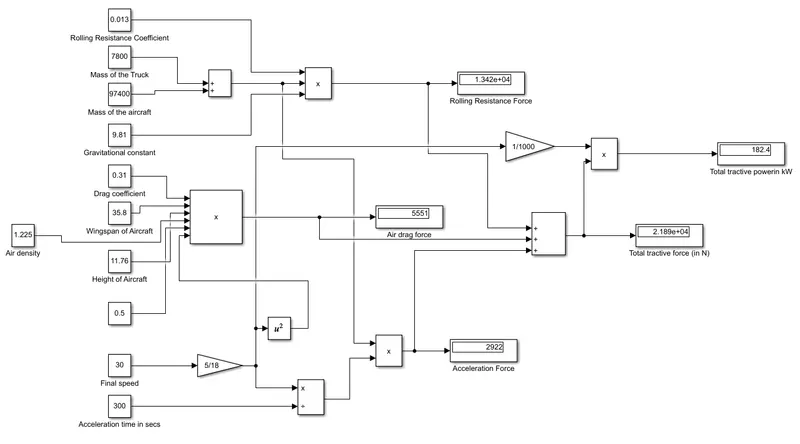
B. Develop the model for the calculated force and power using Simulink.
The simulink model for the calculated force and power is as shown below:
7. A. Design an electric powertrain with type of motor, it’s power rating, and energy requirement to fulfill aircraft towing application in Simulink. Estimate the duty cycle range to control the aircraft speed from zero to highest. Make all required assumptions. Prepare a table of assumed parameters. Draw a block diagram of powertrain.
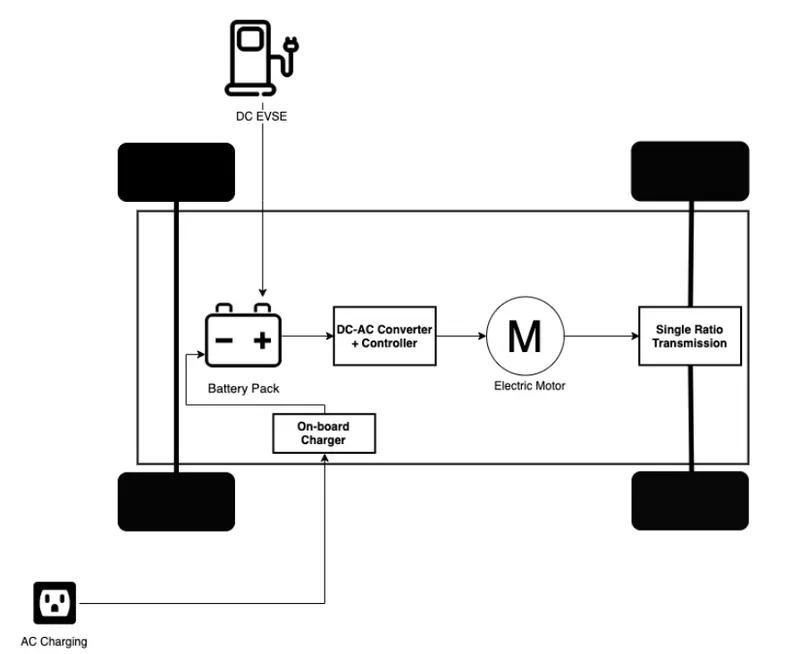
The powertrain provides power to the vehicle. Powertrain refers to the set of components that generate the power required to move the vehicle and deliver it to the wheels.
Block diagram of an electric powertrain:
Design of Electric Powertrain for towing truck TMX-450 in question 6:
Tyre specification of TMX-450 -----> 445/65 R 22.5
Radius of wheel = 532 mm
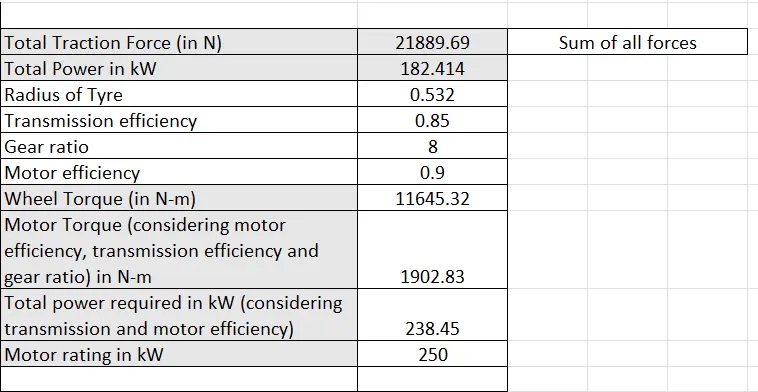
Total tractive force = 21889.69 N
Total power in kW = 182.41 kW
Assume:Gear ratio = 8
Transmission efficiency = 85%
Mototr efficiency = 90%
Torque required at the wheel = Total tractive force * radius of the wheel
= 21889.69 * 0.532
= 11645.32 N-m
Motor Torque = `(wheel torque)/(gear ratio * transmission efficiency)`
= (11645.32)/(8*.85)
= 1712.55 N-m
Considering motor efficiency,
Total motor torque required = 1712.55/0.9
= 1902.83 N-m
Total power required at the wheel = 182.41 kW
Considering transmission efficiency and motor efficiency,
Total Power required = (182.41 kW)/(0.9*0.85)
= 238.44 kW
Assuming time for towing operation as 30 min,
Energy required = 238.44 kW * 0.5hrs = 119.22 kWhr.
If we consider, the battery capacity as 300 kW,
Duty cycle for converter switches = 238.44/300 = 0.795
So the duty cycle range has to be varied from 0 to 80% to control the aircraft speed.
Simulink model of powertrain is as below:
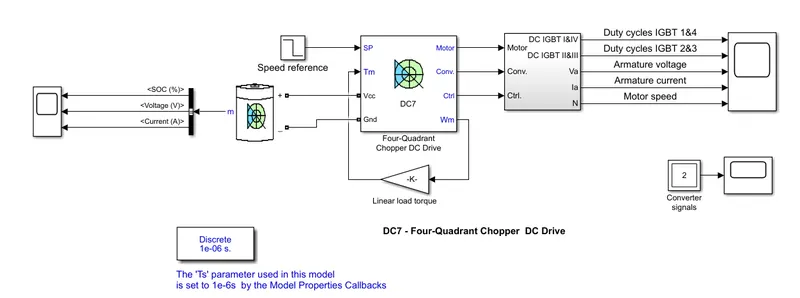
The dc power from battery is given to four quadrant chopper dc drive.
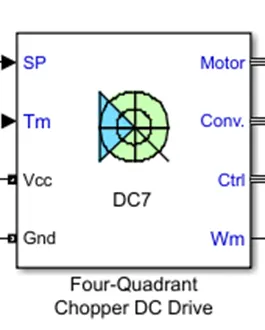
The four quadrant chopper DC drive is shown below:
The detailed model of four quadrant chopper drive is as shown below:
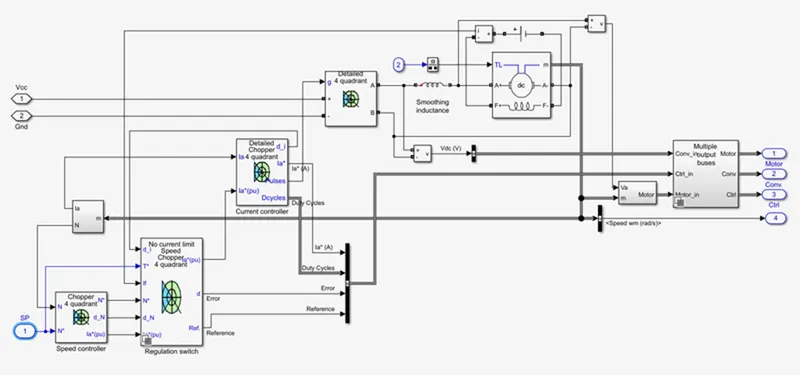
- Gate pulses to the switches are generated from a PI current controller whose current reference is set by a PI speed controller which tracks the speed reference