Project-1: Powertrain for aircraft in runways
Project 1: Power train for aircraft in runways
Part A:
1. Search and list out the total weight of various types of aircrafts?
Soln:
Manufacturer's empty weight (MEW): It is known as Manufacturer's Weight Empty (MWE) or Licensed Empty Weight. It is the weight of the aircraft "as built" and includes the weight of the structure, power plant, furnishings, installations, systems and other equipment that are considered an integral part of an aircraft; excluding any baggage, passengers, or usable fuel.
Zero-fuel weight (ZFW): This is the total weight of the airplane and all its contents (including unusable fuel), but excluding the total weight of the usable fuel on board. As a flight progresses and fuel is consumed, the total weight of the airplane reduces, but the ZFW remains constant.
Maximum zero fuel weight (MZFW): It is the maximum weight allowed before usable fuel and other specified usable agents (engine injection fluid, and other consumable propulsion agents) are loaded.
Operating empty weight (OEW): It is the basic weight of an aircraft including the crew, all fluids necessary for operation such as engine oil, engine coolant, water, unusable fuel and all operator items and equipment required for flight but excluding usable fuel and the payload.
Payload: It is the carrying capacity of an aircraft. It includes cargo, people, extra fuel. In the case of a commercial airliner, it may refer only to revenue-generating cargo or paying passengers.
Maximum takeoff weight (MTOW): This is the maximum weight at which the pilot of the aircraft is allowed to attempt to take off.
Regulated takeoff weight (RTOW): Depending on different factors (e.g. flap setting, altitude, air temperature, length of runway), RTOW or maximum permissible takeoff weight varies for each takeoff. It can never be higher than MTOW.
Maximum landing weight (MLW): This maximum weight at which an aircraft is permitted to land.
Maximum ramp weight (MRW): It is the maximum weight authorized for maneuvering (taxiing or towing) an aircraft on the ground. It is also called maximum taxi weight (MTW).
Aircraft gross weight: It is the total aircraft weight at any moment during the flight or ground operation. This decreases during flight due to fuel and oil consumption.
The following image depicts takeoff weight components.
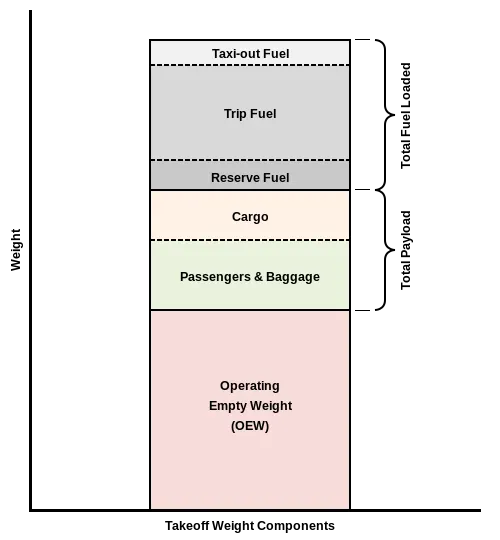
Here is a list of total weights of different types of vehicles-
|
Aircraft Weight list |
||||
|
Name |
Make |
Empty Weight (Kg) |
Maximum Take Off Weight (Kg) |
|
|
A |
Airliners |
|||
|
i |
Airbus A320 |
Airbus |
42595 |
79015 |
|
ii |
Boeing 747-8i |
The Boeing Company |
220128 |
447696 |
|
iii |
Boeing 777-300 |
The Boeing Company |
159570 |
299370 |
|
B |
Air freighter |
|||
|
i |
Antonov Mriya 225 |
Antonov |
285,000 |
640,000 |
|
ii |
Antonov 124 Ruslan |
Antonov |
181000 |
402000 |
|
iii |
C-5M |
Lockheed Martin |
172365 |
381018 |
|
iv |
Boeing C-17 Globemaster III |
The Boeing Company |
128140 |
265352 |
|
C |
Jets |
|||
|
i |
Cessna Citation CJ4 |
Textron Aviation Inc. |
4663 |
7761 |
|
ii |
Cessna Ciitatiion Longitude |
Textron Aviation Inc. |
10705 |
17917 |
|
D |
Fighter Jets |
|||
|
i |
F22 Raptor |
Lockheed Martin |
19700 |
38000 |
|
ii |
F16 Falcon |
General Dynamics |
9207 |
21772 |
|
iii |
Sukhoi Su 57 |
Komsomolosk on Amur Aircraft Plant |
18500 |
29270 |
|
E |
Turboprops |
|||
|
i |
TBM 930 |
Daher |
2097 |
3370 |
|
ii |
Cessna 208 |
Textron Aviation Inc. |
2145 |
3629 |
|
iii |
Beechcraft King Air 350i |
Textron Aviation Inc. |
4500 |
7485 |
|
F |
Propeller Aircraft |
|||
|
i |
SR22 |
Cirrus Aircraft |
5000 |
7498 |
|
ii |
Xcub |
Cub Crafters |
2680 |
5070 |
|
iii |
DA40 (NG) |
Diamond Aircraft |
4374 |
6221 |
|
G |
Helicopters |
|||
|
i |
Apache 64 |
Boeing Defense, Space & Security |
6838 |
10432 |
|
ii |
Mi 35M |
Rostvertol |
8500 |
12000 |
|
iii |
Chinook CH47 |
Boeing Rotorcraft Systems |
11148 |
22680 |
2. Is there any difference between ground speed and air speed?
Soln:
Ground speed is defined as Aircrafts relative speed to the surface of earth.
Air speed is defined as the relative speed of the airplane to the speed of the air in which it is flying.
Air speed determines whether there is enough airflow around an aircraft to make it fly; ground speed is what determines how fast an aircraft will get to its destination. It can be said as,
Ground speed = Air speed + Wind speed
Or Air speed = Ground speed – Wind speed
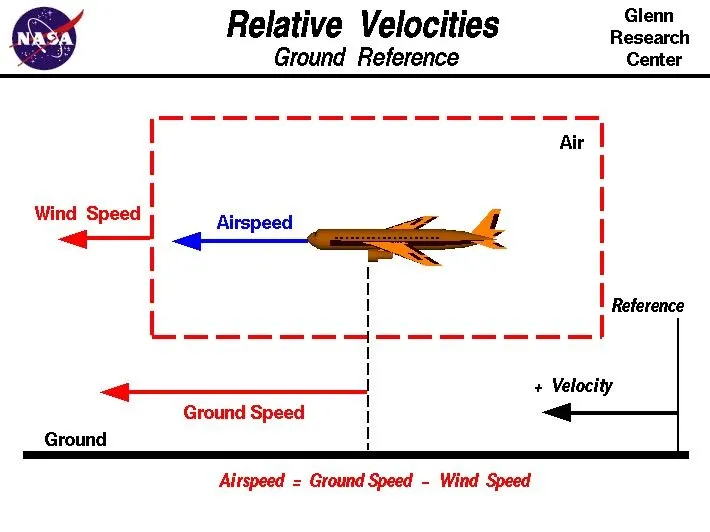
If the aircraft is flying in the same direction as the wind is blowing, the aircraft experiences tailwind, and its ground speed is higher than its airspeed. On the other hand, if the wind is blowing against the direction the aircraft is traveling in, the aircraft experiences headwind, and its ground speed is lower than its airspeed.
3. Why is it not recommended to use aircraft engine power to move it on the ground at Airport?
Soln:
Although Aircrafts can use the engine to move around in the airport but It is not recommended to use aircraft engine power. Here are some reasons why-
- Line of sight: On moving the aircraft, the pilot need to steer it. The pilot sitting in the cockpit has his eye level at around 5.5m above ground, which creates a big blindspot ahead of him. So, for moving on the ground, planes do not use engine power and rely on towing crew.
- Reverse gear: Unlike vehicles on the ground, planes don’t have reverse gear . So, to get to the runway from the airport gates, they need assistance of pushback tractors.
- Safety Hazard: Even though airplanes can use engine thrust to move in airport, it has some serious disadvantages. The thrust of the engine is very loud and it has the capacity to damage the airport buildings. Also they can suck any debris or sand into the engine which can potentially damage the engine.
- Fuel Efficiency: Aircraft burns too much fuel and responsible for huge amount of pollution. The aviation fuel is also not cheap. So, to save some cost and fuel , it is recommended not use engine power in airport. Some airliners also suggesting the use of tractors all the way to the runway
4. How an aircraft is pushed to runway when its ready to take off ?
Soln:
The process of pushing an aircraft backwards away from its parking position, usually from at an airport gate by external vehicle is called Pushback. The vehicles used for this purpose is called pushback tractors or tugs. They are powerful and low profile.
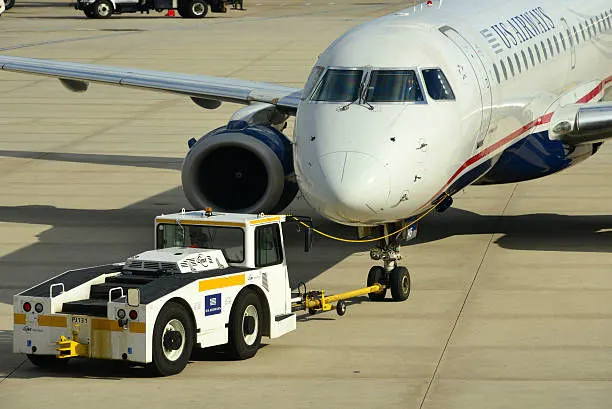
Even though many aircrafts nowadays can move backwards but they don’t do so, as it has adverse effects both on the aircrafts and people nearby. Hence, pushback is preferred to handle aircraft on ground.
When the people and baggage is loaded in the plane, the pushback tugs facilitate their movement to taxiway or runway. Once the pilot gets clearance, he then communicates with the tractor driver to start the pushback. The tug may directly attach the planes gear with the help of a tow bar, or it could be a wheel lift Tug. In towbar-less process, they scoop up the nose of the landing gear & lift it off the ground. This removes the complexity of maintaining a towbar on ramp and also saves time of connecting and disconnecting towbars.
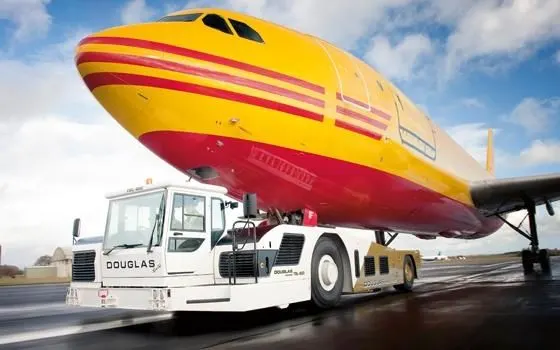
The stopping is done by the pushback tugs. Once the pushback is complete, the plane then can approach the runway using the taxiways using its own power.
5. Learn about take off power, tyre design, rolling resistance, tyre pressure, brake forces when landing?
Soln:
Take off Power:
It is defined as the amount of power that an engine is allowed to produce for a limited period for take-off. Take off power with respect to reciprocating engines, means the brake horsepower that is developed under standard sea level conditions, and under the maximum conditions of crankshaft rotational speed and engine manifold pressure approved for the normal takeoff, and limited in continuous use to the period of time shown in the approved engine specification; and with respect to turbine engines, means the brake horsepower that is developed under static conditions at a specified altitude and atmospheric temperature, and under the maximum conditions of rotor shaft rotational speed and gas temperature approved for the normal takeoff, and limited in continuous use to the period of time shown in the approved engine specification.
Tyre Design:
The aircraft tires are designed to withstand extremely heavy loads while landing, take off, taxing, and parking. With increase of the weight of the aircraft, more number of tires are required to evenly distribute the weight.
Design and Construction of Aircraft tyre-
Carcass plies also known as casing plies are used to form the tire. An aircraft tyre is constructed for the purpose it serves.
- They support the weight of an aircraft while it is on the ground.
- It also provides the necessary traction for braking and stopping of an aeroplane.
- Tyre also helps to absorb the shock of landing and provide cushioning the roughness of take-off, roll-out, and taxi operations.
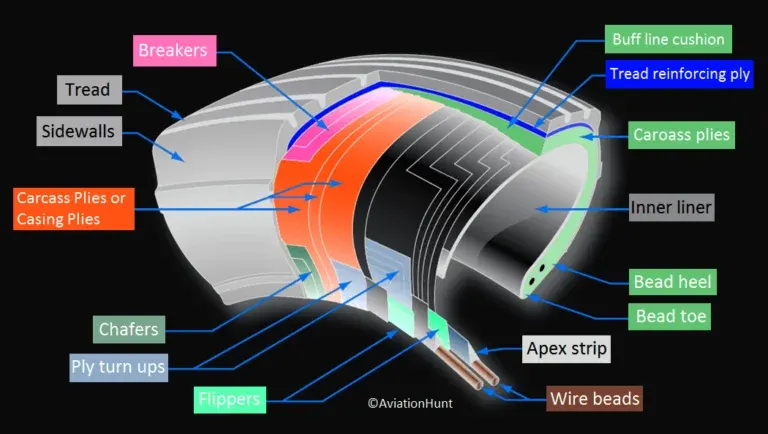
Far from an automobile or truck tyre, it does not have to carry a load for a long period of continuous operation. However, an aircraft tyre absorbs the high impact loads of landing, and, it’s operating at high speeds for a short time when required.
Rolling Resistance:
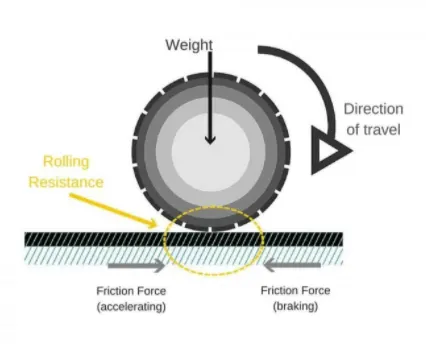
Rolling Resistance is the force that resists the motion of a body when it rolls on a surface. It is mainly caused by non-elastic effects; that is , not all the energy needed for deformation of the wheel, roadbed etc. is recovered when the pressure is removed. The Rolling resistance force is given by-
Frr=µrr*mg
Where, µrr=coefficient of rolling resistance; m= mass of the body; g= gravitational constant
Tyre pressure:
Aircraft tires usually operate at high pressures, up to 200 psi (14 bar; 1400kPa) for airliners, and even higher for business jets. The main landing gear on the Concorde was inflated to 232 psi (16.0 bar), while its tail bumper gear tires were inflated at high pressure of 294 psi.
Aircraft tires are usually inflated at high pressure to sustain the heavy loads during take-off, landing, taxing and parking. The tires are inflated with Nitrogen to minimize expansion and contraction from extreme changes in ambient temperature and pressure experienced during flight. They are typically made of nylon, and more recently a variety known as aramid.
Brake Force when landing:
Stopping an aircraft landing at over 150 mph speed is not easy task. Aircraft rely on braking systems for safe landing on runways. For example an Airbus 320 weighing around 75 tonnes, has a landing speed of 150 to 160 mph. After touching the ground the aircraft must push their brakes cautiously to bring it to halt. Braking aircrafts is achieved by-
i. Wing Spoilers: Most aircrafts use their wing spoilers to assist braking while landing. The spoilers are extendable flaps at the ends of wings. Pilots raise the spoilers to decelerate upon reaching the runway and kept raised till the plane comes to halt. The raised spoiler increases drag that slows down the plane.
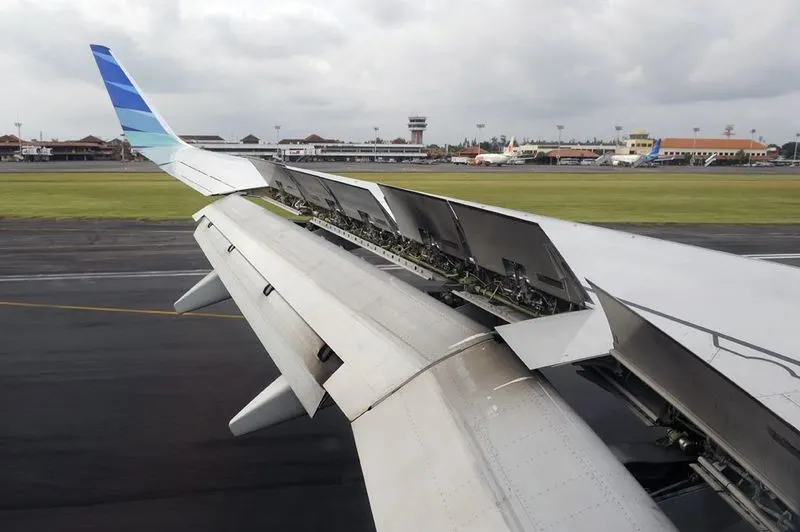
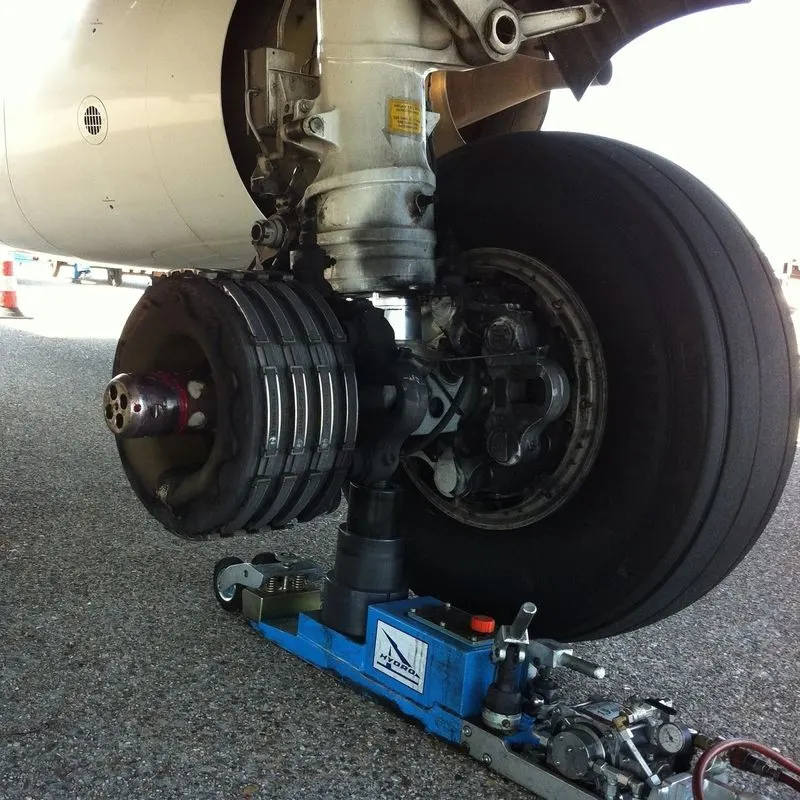
ii. Disc brakes : Aircrafts also has disc braking system just like vehicles in the ground. By design, disc brakes are static and they don’t rotate with the rotor of landing gear. The disc braking system consists of a pair of callipers that, when engaged squeezes the pads against the rotors of the landing gear. It slows down wheels , which in turn reduces speed of the aircraft to reach a halt. Disc brakes are an essential component of aircraft.
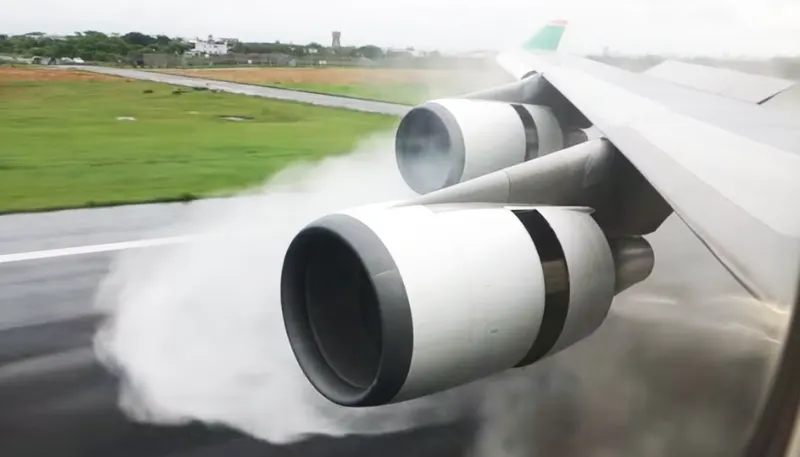
iii. Reverse Thrust : Many jet airplanes use reverse thrust for braking during landing. It reverses the direction of engine thrust. Generally thrust projects air out of the rear to move the plane forward. So in order to stop, thrust is projected out in the front. This is very effective in slowing down the aircraft after touch down.
Part B
6. A. With necessary assumptions, calculate the force and power required to push / pull an aircraft by a towing vehicle.
B. Develop the model for the calculated force and power using Simulink.
Soln:
A).
To calculate the force and power reqiured to push or pull an aircraft by a towing vehicle, following assumptions are made--
Let, a Boeing 747-8i is being towed by a towing vehicle at a speed of 6 mph.
For, Boeing 747-8i ,
Gross vehicle weight, m1= 447696 Kg
µrr = 0.013 (general value for asphalt/tarmac)
Height=19.5 m
Width = 6.1 m
Drag co-efficient, Cd=0.031
For the Towing vehicle,
Gross vehicle weight, m2= 40000 Kg;
µrr= 0.013
Cd= 0.5
Operating speed,v= 6 mph= 2.683 m/s
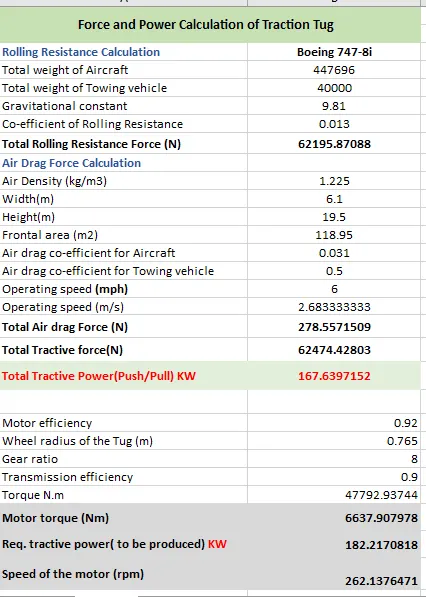
Using these parameters total force and power is calculated in excel.
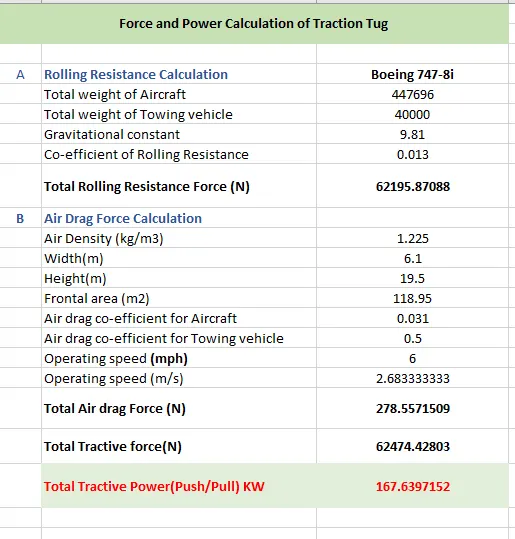
[Note: hill climb force is not calculated as most airport are pretty much flat surfaces.]
So, The total tractive force is 62474.42 N or 62.474 kN. And to perform push/pull of the aircraft at 6 mph speed the tractive power of the towing vehicle should be 167.64 KW.
B).
A simulink model is created to for calculation of force and power of an Towing vehicle. All the data are assumed as done in the above question 6A. Block diagram of the model is added below-
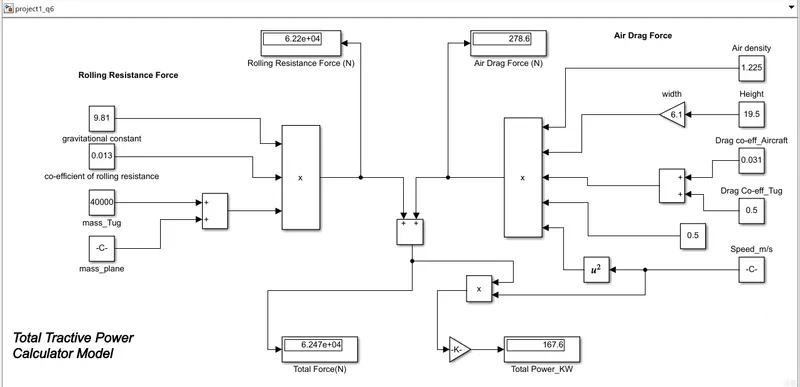
Upon entering the data similar results are achieved as excel calculator.
7. A). Design an electric powertrain with type of motor, it’s power rating, and energy requirement to fulfill aircraft towing application in Simulink.
Estimate the duty cycle range to control the aircraft speed from zero to highest. Make all required assumptions.Prepare a table of assumed parameters. Draw a block diagram of powertrain.(Hint :DC7 Block)
B). Also, Design the parameters in excel sheet.
Soln:
A).
To design the powertrain for towing operation, similar conditions are considered as discussed in the above question.
The total tractive force to push/pull the aircraft, Fte = 62474.42 N
Total tractive power at operational speed of 6 mph, Pte = 167.64 KW
Now. lets assume the radius of tyres of the pushback tug is, r = 0.765 m
Gear ratio,G= 8,
Transmission efficiency,µt = 90%
Motor efficiency,µm = 92%,
Therefore, the total torque at the wheels would be, = Fte*r = 62474.42*0.765 = 47792.9 Nm
So, motor torque = wheel torque/(G*µt) =47792.9/(8*0.9)= 6638 Nm
If we consider motor with 92% efficiency, then the total power required would be = Pte/µm =167.64/0.92 = 182.2 KW
:.speed of the motor = (power / torque) =(182.2 * 1000/6638)* 9.5493 rpm =262 rpm
Assuming the towing process lasts for 20 minutes (0.33 hr) then, total energy consumption = 182.2 *0.33 = 60.7 KWh
So, looking at the figures, we can use a 3 phase induction motor of rating 200 KW .
The diagram of the model is shown below-
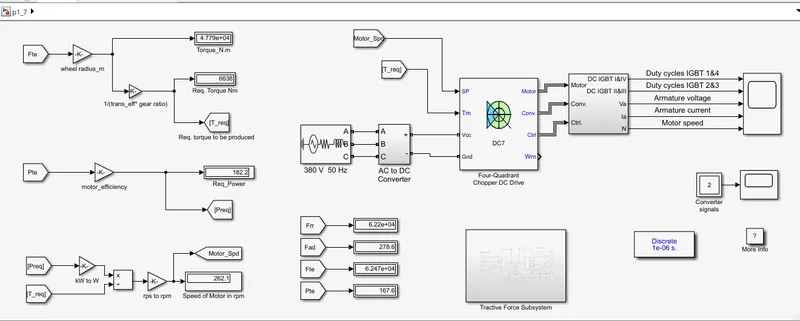
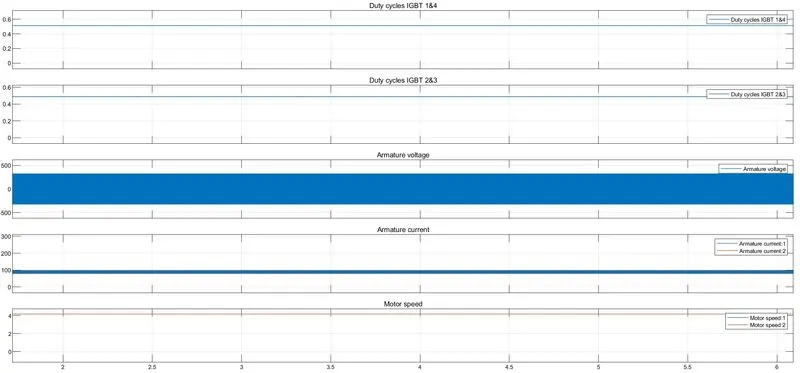
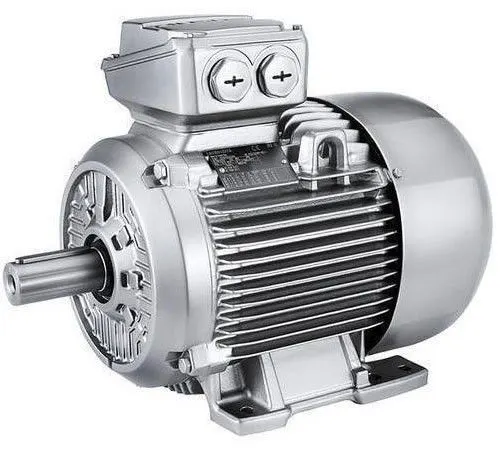
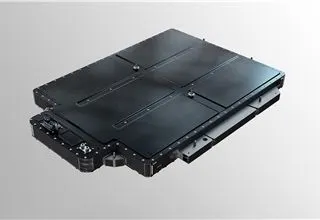
Therefore , an indulction motor with 200 KW rated capacity can be used for this purpsoe. Also, for energy we can use 75 KWh battery packs that are seen in the EVs (mostly tesla vehicle).
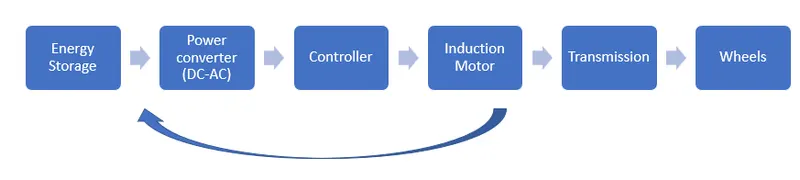
Block diagram of powertrain:
B.)
The designed parameters in excel sheet is given below-