Project-1: Powertrain for aircraft in runways
1) Aircraft Categories:
When we talk about aircraft classifications, we are talking about groups of aircraft that have similar flying characteristics when it comes to their propulsion, in-flight handling, the way of usage and the way they land.
Classifications
- Pilot certificate categories
- Aircraft categories
Pilot Certificate categories:
- Airplane – Single-engine land or sea or multi-engine land or sea. Engine-driven, fixed-wing aircraft
- Rotorcraft – Helicopter or gyroplane. Aircraft that uses a gas that is lighter than air in order to rise and remain in the air.
- Lighter-Than-Air – Balloons or airships. A powered type of aircraft that has a flexible wing, frame and wheels. The wing is not in the proper position or ready to provide lift until the aircraft is moving.
- Powered Parachutes – land or sea. Flight is maintained by one or more spinning rotors.
- Weight-Shift-Control – land or sea. Also known as a hang glider. This aircraft contains a motor but is only directionally controlled by changes in the center of gravity rather than by control surfaces.
Aircraft Categories:
- Acrobatic
- Commuter
- Experimental
- Light sport
- Limited
- Normal
- Primary
- Restricted
- Transport
- Utility
The different terms represent different weights or masses. For each flight, the weights are taken into account for several reasons.
Manufacturer's empty weight (MEW):
Also called Manufacturer's Weight Empty (MWE) or Licensed Empty Weight. It is the weight of the aircraft "as built" and includes the weight of the structure, power plant, furnishings, installations, systems and other equipment that are considered an integral part of an aircraft. This excludes any baggage, passengers, or usable fuel.
Zero-fuel weight (ZFW)
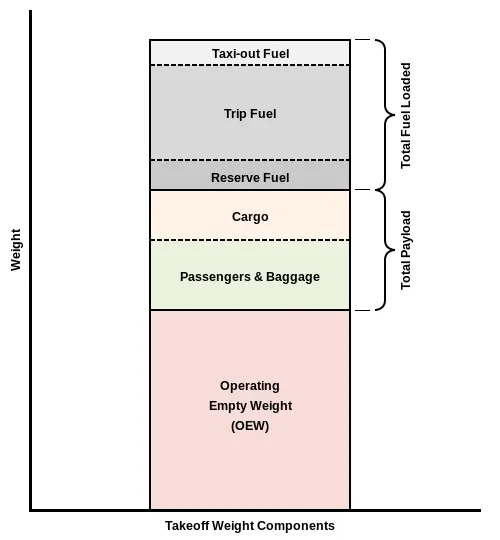
This is the total weight of the airplane and all its contents (including unusable fuel), but excluding the total weight of the usable fuel on board. As a flight progresses and fuel is consumed, the total weight of the airplane reduces, but the ZFW remains constant. Maximum zero fuel weight (MZFW) is the maximum weight allowed before usable fuel and other specified usable agents (engine injection fluid, and other consumable propulsion agents) are loaded.
It is the basic weight of an aircraft including the crew, all fluids necessary for operation such as engine oil, engine coolant, water, unusable fuel and all operator items and equipment required for flight but excluding usable fuel and the payload.
Payload
It is the carrying capacity of an aircraft. It includes cargo, people, extra fuel. In the case of a commercial airliner, it may refer only to revenue-generating cargo or paying passengers.
This is the maximum weight at which the pilot of the aircraft is allowed to attempt to take off.
Regulated takeoff weight (RTOW)
Depending on different factors such as flap setting, altitude, air temperature, length of runway, RTOW or maximum permissible takeoff weight varies for each takeoff. It can never be higher than MTOW.
This maximum weight at which an aircraft is permitted to land.
Maximum ramp weight (MRW)
It is also called maximum taxi weight (MTW). It is the maximum weight authorized for maneuvering (taxiing or towing) an aircraft on the ground.
Aircraft gross weight
It is the total aircraft weight at any moment during the flight or ground operation. This decreases during flight due to fuel and oil consumption.
The following image depicts takeoff weight components.
Various Types of Aircrafts and its weights:
Type | MTOW [kg] | MLW [tonnes] | ICAO category | FAA category |
Antonov An-225 | 6,40,000 | 591.7 | Heavy | Super |
Scaled Composites Model 351 Stratolaunch | 5,89,670 | Heavy | Super | |
Airbus A380-800 | 5,75,000 | 394 | Super | Super |
Boeing 747-8F | 4,47,700 | 346.091 | Heavy | Heavy |
Boeing 747-8 | 4,43,613 | 306.175 | Heavy | Heavy |
Boeing 747-400ER | 4,12,770 | 295.742 | Heavy | Heavy |
Antonov An-124-100M | 4,05,060 | 330 | Heavy | Heavy |
Boeing 747-400 | 3,96,900 | 295.742 | Heavy | Heavy |
Lockheed C-5 Galaxy | 3,81,000 | 288.417 | Heavy | Heavy |
Boeing 747-200 | 3,77,840 | 285.7 | Heavy | Heavy |
Boeing 747-300 | 3,77,840 | 260.32 | Heavy | Heavy |
Airbus A340-500 | 3,71,950 | 240 | Heavy | Heavy |
Airbus A340-600 | 3,67,400 | 256 | Heavy | Heavy |
Boeing 777F | 3,47,800 | 260.816 | Heavy | Heavy |
Airbus A330-900 | 3,52,000 | 251.5 | Heavy | Heavy |
Boeing 777-300ER | 3,51,800 | 251.29 | Heavy | Heavy |
Boeing 777-200LR | 3,47,450 | 223.168 | Heavy | Heavy |
Boeing 747-100 | 3,40,200 | 265.3 | Heavy | Heavy |
Airbus A350-1000 | 3,08,000 | 233.5 | Heavy | Heavy |
Boeing 777-300 | 2,99,370 | 237.683 | Heavy | Heavy |
Boeing 777-200ER | 2,97,550 | 213 | Heavy | Heavy |
Airbus A340-300 | 2,76,700 | 190 | Heavy | Heavy |
McDonnell Douglas MD-11 | 2,73,300 | 185 | Heavy | Heavy |
Airbus A350-900 | 2,70,000 | 175 | Heavy | Heavy |
Ilyushin Il-96M | 2,70,000 | 195.04 | Heavy | Heavy |
McDonnell Douglas DC-10 | 2,56,280 | 183 | Heavy | Heavy |
Boeing 787-9 | 2,54,000 | 192.777 | Heavy | Heavy |
Boeing 787-10 | 2,54,000 | 201.849 | Heavy | Heavy |
Airbus A340-200 | 2,53,500 | 181 | Heavy | Heavy |
Ilyushin IL-96-300 | 2,50,000 | 175 | Heavy | Heavy |
Airbus A330-300 | 2,42,000 | 185 | Heavy | Heavy |
Airbus A330-200 | 2,42,000 | 180 | Heavy | Heavy |
Lockheed L-1011-500 | 2,31,300 | 166.92 | Heavy | Heavy |
Boeing 787-8 | 2,28,000 | 172.365 | Heavy | Heavy |
Lockheed L-1011-200 | 2,11,400 | Heavy | Heavy | |
Ilyushin IL-86 | 2,08,000 | 175 | Heavy | Heavy |
Boeing 767-400ER | 2,04,000 | 158.758 | Heavy | Heavy |
Airbus A300-600R | 1,92,000 | 140 | Heavy | Heavy |
Boeing 767-300ER | 1,87,000 | 136.08 | Heavy | Heavy |
Concorde | 1,85,000 | 111.1 | Heavy | Heavy |
Airbus A300-600 | 1,63,000 | 138 | Heavy | Heavy |
Boeing 767-300 | 1,59,000 | 136.078 | Heavy | Heavy |
Airbus A310-300 | 1,57,000 | 124 | Heavy | Heavy |
Vickers VC10 | 1,52,000 | 151.9 | Heavy | Heavy |
Boeing 707-320B | 1,51,000 | 97.5 | Heavy | Heavy |
Boeing 707-320C | 1,51,000 | 112.1 | Heavy | Heavy |
Douglas DC-8-61 | 1,47,000 | Heavy | Heavy | |
Airbus A310-200 | 1,42,000 | 123 | Heavy | Heavy |
Airbus A400M | 1,41,000 | 122 | Heavy | Heavy |
Douglas DC-8-32 | 1,40,000 | Heavy | Heavy | |
Douglas DC-8-51 | 1,25,000 | Medium | Large | |
Boeing 757-300 | 1,24,000 | 101.6 | Medium | Large |
Boeing 707-120B | 1,17,000 | 86.3 | Medium | Large |
Boeing 757-200 | 1,16,000 | 89.9 | Medium | Large |
Boeing 720B | 1,06,000 | 79.5 | Medium | Large |
Boeing 720 | 1,04,000 | 79.5 | Medium | Large |
Tupolev Tu-154M | 1,04,000 | 80 | Medium | Large |
Tupolev Tu-204SM | 1,04,000 | 87.5 | Medium | Large |
Convair 880 | 87,500 | Medium | Large | |
Boeing 737-900 | 85,000 | 66.36 | Medium | Large |
Boeing 737-900ER | 85,000 | 71.35 | Medium | Large |
Boeing 727-200 Advanced | 84,000 | 70.1 | Medium | Large |
Airbus A321-100 | 83,000 | 77.8 | Medium | Large |
Boeing 737-800 | 79,000 | 65.32 | Medium | Large |
Boeing 727-200 | 78,000 | 68.1 | Medium | Large |
McDonnell-Douglas MD-83 | 73,000 | 63.28 | Medium | Large |
Boeing 727-100 | 72,500 | 62.4 | Medium | Large |
Boeing 727-100C | 72,500 | 62.4 | Medium | Large |
McDonnell-Douglas MD-90-30 | 71,000 | 64.41 | Medium | Large |
de Havilland Comet 4 | 70,700 | Medium | Large | |
Boeing 737-700 | 70,000 | 58.06 | Medium | Large |
Airbus A320-100 | 68,000 | 66 | Medium | Large |
Boeing 737-400 | 68,000 | 54.9 | Medium | Large |
de Havilland Comet 3 | 68,000 | Medium | Large | |
Boeing 377 | 67,000 | Medium | Large | |
Boeing 737-600 | 66,000 | 54.66 | Medium | Large |
Airbus A220-300 | 65,000 | 57.61 | Medium | Large |
Hawker Siddeley Trident 2E | 65,000 | Medium | Large | |
Airbus A319 | 64,000 | 62.5 | Medium | Large |
Boeing 737-300 | 63,000 | 51.7 | Medium | Large |
Boeing 737-500 | 60,000 | 49.9 | Medium | Large |
Airbus A220-100 | 59,000 | 50.8 | Medium | Large |
Airbus A318 | 59,000 | 57.5 | Medium | Large |
Boeing 717-200HGW | 55,000 | 47.174 | Medium | Large |
Douglas DC-7 | 55,000 | Medium | Large | |
de Havilland Comet 2 | 54,000 | Medium | Large | |
Boeing 717-200BGW | 50,000 | 46.265 | Medium | Large |
de Havilland Comet 1 | 50,000 | Medium | Large | |
Douglas DC-6A | 48,600 | Medium | Large | |
Douglas DC-6B | 48,500 | Medium | Large | |
Embraer 190 | 48,000 | 43 | Medium | Large |
Caravelle III | 46,000 | Medium | Large | |
Fokker 100 | 46,000 | 39.95 | Medium | Large |
Douglas DC-6 | 44,000 | Medium | Large | |
Avro RJ-85 | 42,000 | 36.74 | Medium | Large |
Handley Page Hermes | 39,000 | Medium | Large | |
Embraer 175 | 37,500 | 32.8 | Medium | Large |
Bombardier CRJ900 | 36,500 | 33.345 | Medium | Large |
Embraer 170 | 36,000 | 32.8 | Medium | Large |
Bombardier CRJ700 | 33,000 | 30.39 | Medium | Large |
Douglas DC-4 | 33,000 | Medium | Large | |
Vickers Viscount 800 | 30,400 | Medium | Large | |
Bombardier Q400 | 28,000 | 28.01 | Medium | Large |
Bombardier CRJ200 | 23,000 | 21.319 | Medium | Large |
ATR 72-600 | 22,800 | 22.35 | Medium | Large |
Saab 2000 | 22,800 | 21.5 | Medium | Large |
Embraer ERJ 145 | 22,000 | 19.3 | Medium | Large |
ATR 42-500 | 18,600 | 18.3 | Medium | Small |
Saab 340 | 13,150 | 12.93 | Medium | Small |
Embraer 120 Brasilia | 11,500 | 11.25 | Medium | Small |
BAe Jetstream 41 | 10,890 | 10.57 | Medium | Small |
Learjet 75 | 9,752 | 8.709 | Medium | Small |
Pilatus PC-24 | 8,300 | 7.665 | Medium | Small |
Embraer Phenom 300 | 8,150 | 7.65 | Medium | Small |
Beechcraft 1900D | 7,765 | 7.605 | Medium | Small |
Cessna Citation CJ4 | 7,761 | 7.103 | Medium | Small |
de Havilland Hercules | 7,000 | Medium | Small | |
Embraer Phenom 100 | 4,800 | 4.43 | Light | Small |
2) Ground speed and Air Speed:
Ground Speed:
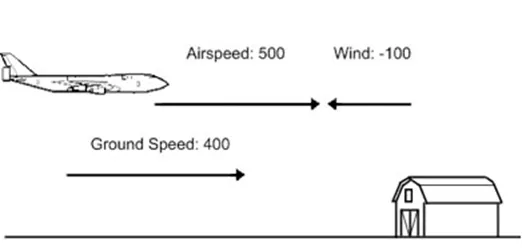
Ground speed is the actual speed that an aircraft travels over the ground, and is also referred to as shadow speed. Ground speed determines how fast an aircraft will get to its destination. Ground speed combines the aircraft’s air speed and the wind speed relative to the aircraft’s direction of flight. An aircraft’s air speed is determined not by how much distance it covers in a set time, but by a combination of its forward speed and the speed of the wind that is blowing towards the aircraft. If the aircraft is flying in the same direction as the wind is blowing, the aircraft experiences tailwind, and its ground speed is higher than its airspeed. On the other hand, if the wind is blowing against the direction the aircraft is traveling in, the aircraft experiences headwind, and its ground speed is lower than its airspeed. A headwind will detract from an aircraft’s Ground Speed, while a tailwind will increase it.
Air Speed:
Air speed is the speed of air craft with respect to the speed of wind. Airspeed determines whether the there is enough airflow around the aircraft to make it fly.
Air speed = Ground speed - Wind speed.
Pilots commonly use three different types of airspeed:
- Indicated airspeed
- Calibrated airspeed and
- True airspeed.
Indicated airspeed:
Indicated airspeed is an airspeed that is calculated directly off an aircraft’s pitot-static system. It’s the calculated off the aircraft’s dynamic pressure – the difference between its total pressure and static pressure. The dynamic pressure depends not only on the aircraft’s speed, but also on the density of the air it is flying in. As such, the higher the aircraft flies – and the lower the air density as a result – the bigger the difference between indicated and true airspeed.
Calibrated airspeed:
Calibrated airspeed is indicated airspeed corrected for instrument and positional errors. At certain airspeeds and with certain flap settings, the installation and instrument errors may total several knots. This error is generally greatest at low airspeeds, with nose high pitch attitudes. When flying at sea level under International Standard Atmosphere (ISA) conditions (15 degrees Celsius, 29.92 inches of mercury, 0% humidity), calibrated airspeed is the same as true airspeed. If there is no wind it is the same as ground speed. If one of the things it’s adjusted for is the flap position. The reason for that is that at different flap positions, air flows differently around the pitot-static system and affects the indicated airspeed readings.
True airspeed:
True airspeed is the speed of your aircraft relative to the air it's flying through. As you climb, true airspeed is higher than your indicated airspeed. Pressure decreases with higher altitudes, so for any given true airspeed, as you climb, fewer and fewer air molecules will enter the pitot tube. Because of that, indicated airspeed will be less than true airspeed. In fact, for every thousand feet above sea level, true airspeed is about 2% higher than indicated airspeed. So at 10,000 feet, true airspeed is roughly 20% faster than what you read off your airspeed indicator. Many aircraft, such as those with gas turbine engines, can reach a higher TAS at higher altitudes because their engines are more efficient at higher altitudes.
3) Aircraft engine power is not recommended to use to move on ground at airport:
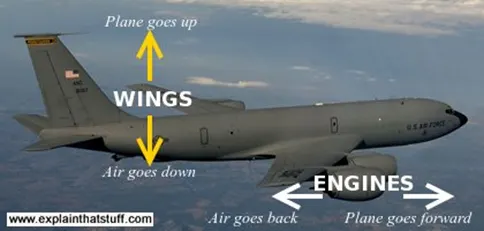
In order to understand this, we have to understand how the aircrafts move. Jet engines, which are long metal tubes burning a continuous rush of fuel and air, are far noisier (and far more powerful) than traditional propeller engines. Engines are mot only the key to making a plane fly. A plane's engines are designed to move it forward at high speed. That makes air flow rapidly over the wings, which throw the air down toward the ground, generating an upward force called lift that overcomes the plane's weight and holds it in the sky. So it's the engines that move a plane forward, while the wings move it upward.
How do aircraft move or fly?
Flight requires two things: thrust and lift. Thrust is the forward motion provided by a propeller or jet engine. (A propeller, by the way, uses the same principles discussed below to create lift, but it uses that lift to move the plane forward instead of up.)
Lift
Lift is a lot trickier than thrust. An airplane wing has a special shape, called an airfoil, that bulges more on top than on the bottom. That shape aids in flight, but is not the key. When air meets the wing, it splits into two streams, top and bottom. The two streams meet up again in the back, as depicted here, because the air passing over the top has to travel farther than the air going underneath, so it is forced to move faster
Faster-moving air has less pressure (this is often called the Bernoulli principle). So the area above the wing is often said to have less pressure than the area below the wing, creating lift. Newton's laws are typically preferred over the Bernoulli principle to explain lift. Air flowing over the wing is ultimately deflected downward by the angle of the wing, and Newton said there has to be an equal and opposite reaction, so the wing is forced upward.
Drag
Two forces work against flight: drag and gravity.A wing has to be designed not only to produce lift, but also to minimize the friction with passing air, which causes drag.
Every airplane has a specific takeoff speed, where lift overcomes gravity. That critical speed changes based on how much weight a particular flight packs. The planes propeller or jet engine, meanwhile, has to work to provide enough thrust to overcome drag.
Why it is not recommended to use the aircraft engine to move in ground at airport:
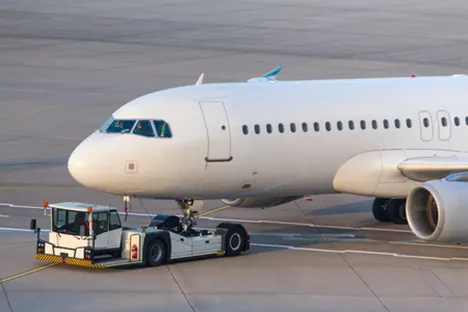
There is difference between the ground running while takeoff and landing in runways with ground running at the airport during the parking and maintenance. Airplanes in general, do not reverse and are usually pushed back by the pushback tugs.
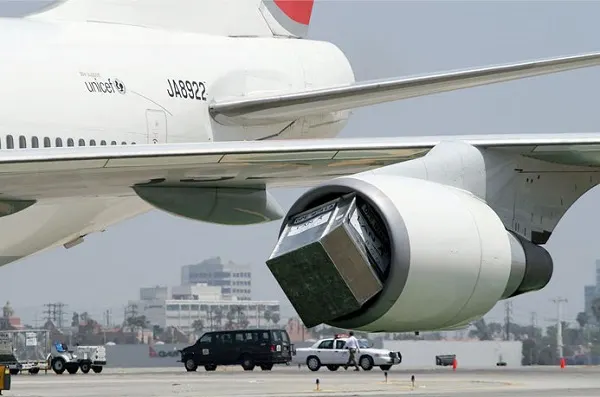
Under the norms, after the aircraft is pushed back into the bay by a tow truck, chocks have to be put on by the ground staff to stop the wheels from moving even if the aircraft engines get started inadvertently. In this case, no chocks were placed on the wheels. So, as soon as the pilot started the engine - again without following norms, like waiting for an all-clear signal from the ground engineers - the wheels of the plane moved forward and the engine suck in the technician standing ahead.
Planes move by pulling or pushing themselves through the air, rather than by applying engine power to spin their wheels, and thus have no forward or reverse gears. Like ground vehicle engines, the aircraft's engines can't run backwards. The vehicles obviously do not have the strength to push the plane. However, all they have to do is lift the plane and overcome the inertia.
Aircrafts can use the thrusters in the reverse direction to move the aircraft from the parking stand. But it is not recommended. Because Commercial airplanes are equipped with engines rated from 18,000 to nearly 100,000 lb of thrust.. When modern jet engines are operated at rated thrust levels, the exhaust wake can exceed 375 mi/h (325 kn or 603 km/h) immediately aft of the engine exhaust nozzle. However, the exhaust wake from these engines can pose hazards in commercial airport environments. Operators and airport authorities must carefully consider these hazards.
Hazards:
- Jet blast
- Propulsion failure
- Serious injury to people
- Damage to baggage carts
- Damage to service vehicles
- Damage to airport infrastructure, and other airplanes.
4) Procedures to move Aircrafts to runways before takeoff:
As discussed above about the moving of aircraft and its hazards while moving on ground on its own engine power by using the reverse thrust, this procedure is not followed. This procedure is called taxiing.
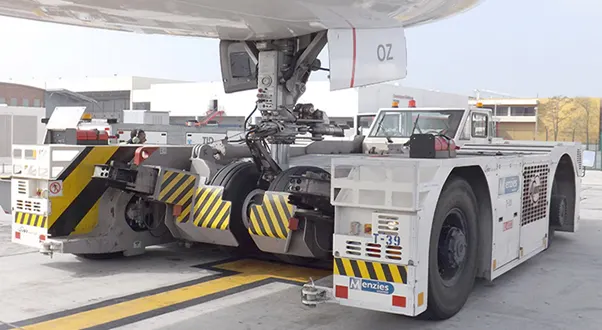
The aircrafts can be pushed or moved to the runways by Towing and Tug.
Towing:
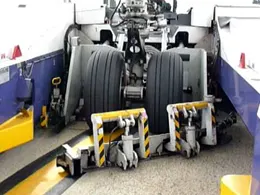
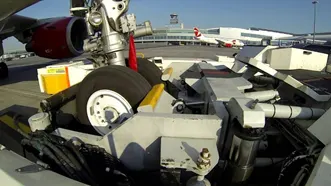
Movement of large aircraft about the airport, flight line, and hangar is usually accomplished by towing with a tow tractor also called as tug. In the case of small aircraft, some moving is accomplished by hand pushing on the correct areas of the aircraft.
Towing aircraft can be a hazardous operation, causing damage to the aircraft and injury to personnel, if done recklessly or carelessly. However, specific instructions for each model of aircraft are detailed in the manufacturer’s maintenance instructions and are to be followed in all instances.
Before the aircraft to be towed is moved, a qualified person must be in the flight deck to operate the brakes in case the tow bar fails or becomes unhooked. The aircraft can then be stopped, preventing possible damage.
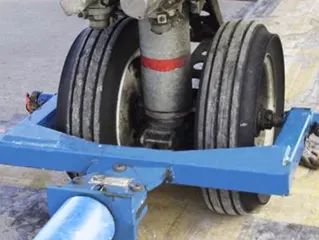
When towing the aircraft, the towing vehicle speed must be reasonable, and all persons involved in the operation must be alert. When the aircraft is stopped, do not rely upon the brakes of the towing vehicle alone to stop the aircraft. The person in the flight deck must coordinate the use of the aircraft brakes with those of the towing vehicle. The vehicles obviously do not have the strength to push the large plane. However, all they have to do is lift the plane and overcome the inertia.
5) Takeoff power, Tyre design, Rolling Resistance, Tyre pressure, Brake forces when landing:
Takeoff Power:
Takeoff is the phase of flight in which an aircraft leaves the ground and becomes airborne to safe altitude away from obstacles. For aircraft traveling vertically, this is known as liftoff.
For aircraft that take off horizontally, this usually involves starting with a transition from moving along the ground on a runway. For balloons, helicopters and some specialized fixed-wing aircraft (VTOL aircraft such as the Harrier), no runway is needed.
The power required to for the vehicle to become airborne. For light aircraft, usually full power is used during takeoff. Large transport category (airliner) aircraft may use a reduced power for takeoff, where less than full power is applied in order to prolong engine life, reduce maintenance costs and reduce noise emissions.
The speeds needed for takeoff are relative to the motion of the air. Typical takeoff air speeds for jetliners are in the range of 240–285 km/h (130–154 kn; 149–177 mph). Light aircraft take off at around 100 km/h (54 kn; 62 mph). Ultralights have even lower takeoff speeds. For a given aircraft, the takeoff speed is usually dependent on the aircraft weight; the heavier the weight, the greater the speed needed.
Tyre Design:
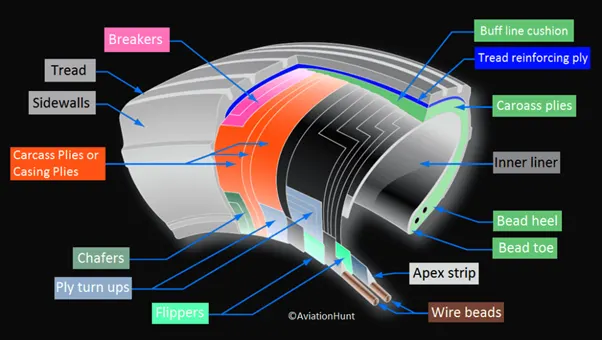
When it comes to safety, tyres are one of the most important components of aircraft. They help to absorb the shock of landing and provide cushioning. It also provides the necessary traction for braking and stopping of an aircraft. An aircraft tyre is designed to withstand extremely heavy loads while landing, take off, taxing, and parking. The number of wheels required for aircraft increases with the weight of the aircraft, as the weight of the aeroplane needs to be distributed more evenly.
Carcass plies are used to form the tire. Aircraft tyres are not in use for longer period of time like cars but it should have its huge withstanding capacity. It also operates at huge weight and high speed of nearly 250Kmph during takeoffs and landing.
Important Terms:
Retreading:
Retreading is methods of restoring a worn tyre by renewing the tread area or by renewing the tread area plus one or both sidewalls. Repairs are included in the tyre retreading process.
Load Rating:
Load rating is the maximum permissible load at a specified inflation pressure.
Ply Rating :
Ply Rating is used to identify the maximum recommended load rating and inflation pressure for a specified tyre. It is an index of tyre strength.
Speed Rating:
The speed rating is the maximum takeoff speed to which the tyre has been tested.
Skid Depth:
Skid depth is the distance between the tread surface and the deepest groove as measured in the mould.
Aircraft tyres must have an approved speed and load rating and have sufficient clearance when retracted through landing gear to allow for tyre growth. Tyre growth is the increase in the size of the tyre due to centrifugal forces at high speed
Aircraft tyres may be Tube-type or Tubeless:
Tubeless tyres are more advantageous over tube-type. There is no longer the use of tube-type tyre in recent aviation. Nowadays all airliners are using tubeless tyres. Tubeless that are meant to be used without a tube has the word TUBELESS on the sidewall of the tyre.
Aircraft tyres may be Radial or Bias:
Almost all airliners are using Radial tyre. Bias is an older design, and it’s mainly used for road vehicles. Radial tyres have the word RADIAL on the sidewall. Radial tires are more expensive than bias-ply tyres. Radial tires are in demand because of their lower life cycle cost and long term value.
Conductive aviation tyres:
Today’s tyres are conductive. Aircraft tyres are manufactured with tread rubber with conducting compounds to permit earthing of static charges. In early days when tyres were not sufficiently conductive, aircraft used to have a conductive strip hanging down from the axle of the landing gear. Upon landing, this strip would be the first part of the aircraft to touch the earth. This discharges any static electricity accumulated on the outer surfaces of the aircraft. Now you don’t see them anymore.
Chines in aviation tyre:
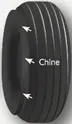
Chines are also called deflectors. Chine tyre used on the nose wheel of aircraft, specially fuselage-mounted jet engines. It diverts runway water away from the engine inlets.
Chines are circumferential protrusions that are moulded into the sidewall of nose tyres that deflect water sideways to help reduce excess water ingestion into the engines. Tyres may have chines on one or both sides, depending on the number of nose tyres on the aircraft.
Rolling Resistance:
Rolling resistance of aircraft tyres are majorly depends on weight of the aircraft, tyre pressure, aerodynamic forces, tread construction of tyres. They are called as rolling friction or rolling drag resisting the motion when a body moves in a surface.
In addition to the forces by weight, lift, drag, thrust rolling resistance force caused by friction between ground and tyre.
The rolling resistance force is given by,
R=Cr(W-L)
where, W-Force due to weight.
L-Force due to lift.
Cr-Rolling resistance coefficient.
Tyre pressure:
Each of the twelve Boeing 777-300ER main tires is inflated to 220 psi (15 bar; 1,500 kPa), weighs 120 kg (260 lb), has a diameter of 134 cm (53 in) and is changed every 300 cycles while the brakes are changed every 2000 cycles. Aircraft tires generally operate at high pressures, up to 200 psi (14 bar; 1,400 kPa) for airliners, and even higher for business jets. The main landing gear on the Concorde was typically inflated to 232 psi (16.0 bar), whilst its tail bumper gear tires were as high as 294 psi (20.3 bar). The high pressure and weight load on the Concorde tyres were a significant factor in the loss of Air France Flight 4590.
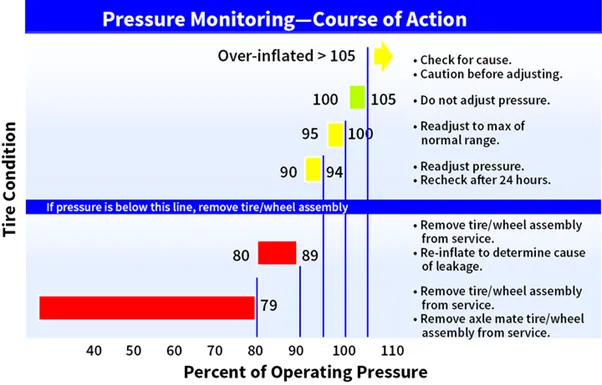
- Check inflation pressure daily or before first flight when tyres are cool. Tyre pressures should always be checked with the tyre at ambient temperatures as they can rise in excess of 93°C above ambient during operation. A temperature change of 3°C produces approximately 1% pressure change. It can take up to 3 hours or more after a flight for tyre temperatures to return to ambient. A tyre/wheel assembly can lose as much as five percent (5%) of the inflation pressure in a 24-hour period and still be considered normal. Tyre pressures change on a daily basis.
- When tyres are going to be subjected to ambient temperature differences between two locations in excess of 27°C, inflation pressures should be adjusted to the colder temperature prior to takeoff.
- Nitrogen should be used for tyre inflation as it will not sustain combustion and will reduce degradation of the liner material, casing plies and wheel due to oxidation. Appropriate regulatory agency requirements for nitrogen inflation should be followed.
- It must be determined if “loaded” or “unloaded” pressure has been specified by the aircraft manufacturer. When a tyre is under load, the gas chamber volume is reduced due to tyre deflection. Therefore, if unloaded pressure has been specified, that number should be increased by 4% to obtain the equivalent loaded inflation pressure. The opposite is true as well: if loaded pressure has been specified, that number should be reduced by 4% if the tyre is being inflated while unloaded.
- Excess inflation pressure should never be bled off from hot tyres. All adjustments to inflation pressure should be performed on tyres cooled to ambient temperature.
- To prevent one tyre on a gear from carrying extra load, all tyres on a single gear should be inflated equally. The mate tyre(s) will share the load, allowing individual tyres to run underinflated or overloaded if pressures are unequal, because all tyres on the gear will deflect identically.
- Inaccurate gauges are a major source of improper inflation pressures. Gauges should be checked periodically and recalibrated as necessary.
Brake forces when Landing:
The brakes used in the aircrafts are
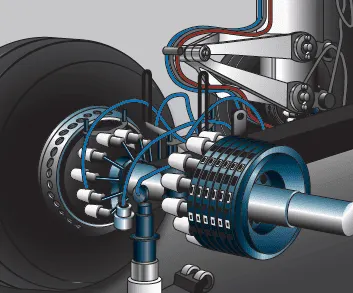
- Disc brake:
A disc brake is type of brake that uses the calipers to squeeze pairs of pads against the disc or a rotor to create friction. The energy of the motion is converted to waste heat. Hydraulically actuated disc brakes are most commonly used.
Force: Frictional force
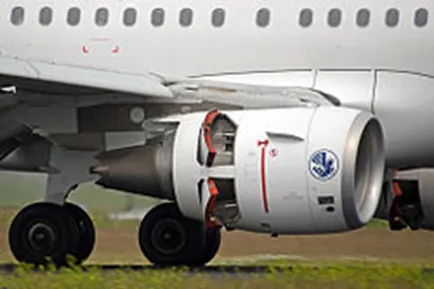
- Thrust reversal:
It is the temporary diversion of an aircraft engine thrust for it to act against the forward travel of the aircraft providing deceleration. It is used in propeller driven aircraft through reversing the controllable pitch propellers to negative angle. It is the emergency brake.
Force: Drag
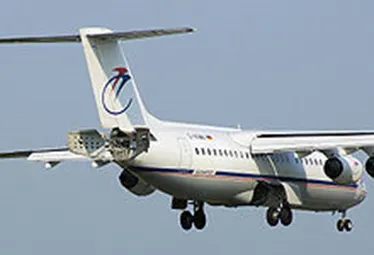
- Air brake:
Air brakes are a type of flight control surface used on an aircraft to increase the drag on the aircraft. When not used, it is used to decrease the drag.
Force: Drag
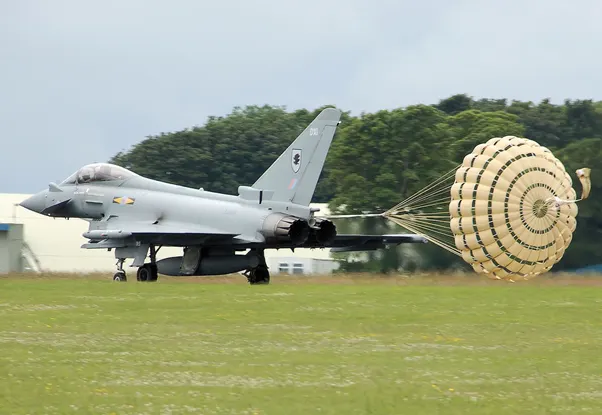
- Drogue Parachute:
Drogue parachute is a parachute designed for deployment from a rapidly-moving object. It can be used to decrease speed, to provide control and stability. It is used for emergency landing.
Force: Drag
6) A) Calculation of force and power of the towing vehicle to push or pull the Aircraft:
Forces:
- Rolling resistance force for both Tug and aircraft
- Air drag force for both Tug and aircraft.
- Acceleration force is neglected because tug moves at the slow speeds upto 10 kmph.
Formulas used:
Rolling resistance force = µr*m*g
Air Drag Force = 0.5*ρ*Cd*A*v^2
where, µr = Coefficient of rolling resistance
m = mass
g = gravitational force
ρ = Air density
Cd = Drag coefficient
A = Frontal Area
v = Velocity.
Assumptions:
For Tug vehicle,
µr = 0.001
m = 59000
g = 9.8 m/s
Cd = 1.1
A = 2m^2
ρ = 1.25
v = 10kmph = 2.77m/s
For Aircraft,
µr = 0.004
m = 447700 kg
Cd = 0.04
A = 25m^2
v = 10kmph = 2.77m/s
Calculations:
Rolling resistance force of Tug = µr*m*g
= 0.001*59000*9.8
= 578 Nm
Rolling resistance force for aircraft = µr*m*g
= 0.004*447700*9.8
= 17549.84 Nm
Air drag force for Tug = 0.5*ρ*Cd*A*v^2
= 0.5*1.25*1.1*2*2.77^2
= 10.55 Nm
Air drag force for aircraft = 0.5*ρ*Cd*A*v^2
= 0.5*1.25*0.04*20*2.77^2
= 3.83 Nm
Total force = 578 + 17549.84 + 10.55 + 3.83
Total force = 18142.22 Nm
Power = Force * Velocity
= 18142.22 * 2.77
= 50253.94 Watts
Power = 50.25 kW
6(B) Model for above calculation:
Simulink model for the calculation of force and power of the towing vehicle to push or pull the aircraft.
Model:
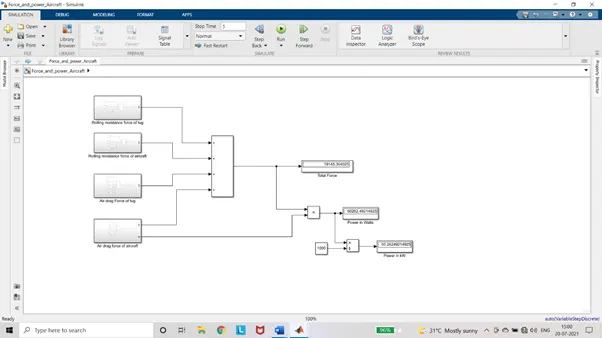
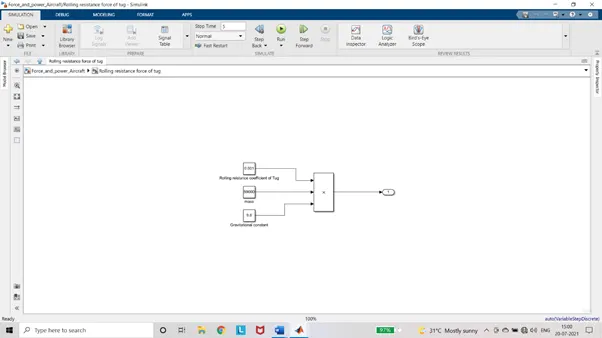
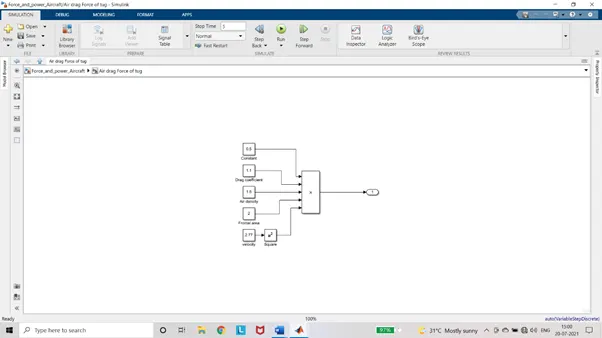
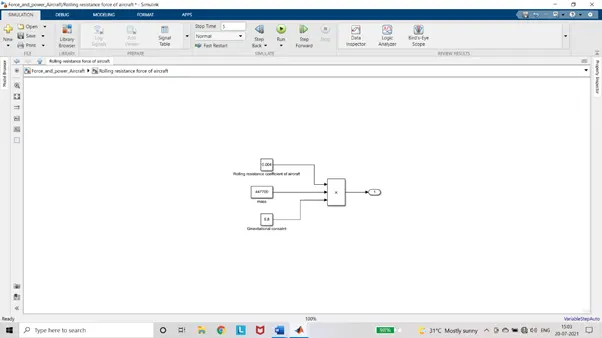
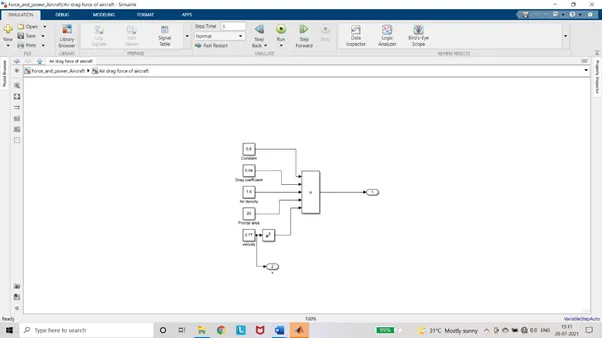
Matlab simulink file and the images are attached in the drive link.
Result:
The force and power of the Towing vehicle of the aircraft are 18145.304Nm and 50.26kW
7) (A) Design a powertrain for tug vehicle on operation to pull/push aircraft.
Introduction:
The power train of a vehicle consist of three main systems.
- Battery.
- Converter unit.
- DC Motor
For design a power train first we have to calculate the load power, required motor power and then battery power.
Load Power is calculated from the previous model.
Load power = 50.25439 kW.
Let us consider the efficiency of the motor be 89%.
And in the Ideal case the efficiency of the vehicle is 100%
Input Power of the motor to compensate the load power and the efficiency is 50.25439/0.89 = 56.46575kW.
Let us design the motor of 75kW.
Duty cycle for the motor is 56.46575/75 = 0.7528.
Then we have to consider about the controller. We here use the battery source. So DC-DC power converters are used.
Let us assume that the towing vehicle operates for 15minutes.
Energy Required = 56.46575 * 10/60 = 18.82kWh.
Let us take the 24V 140Ah Battery system.
Energy in Ah = 18.82*1000/V = 18.82*1000/24 = 784.24Ah
In order to meet this energy we have to use 7 batteries of 24V 140Ah system.
7(B) Excel sheet with parameters is attached.
Drive link:
https://drive.google.com/drive/folders/18KpRhksaLIMiesDf93fD-hA3ugAgmJFM?usp=sharing