Project-1: Powertrain for aircraft in runways
AIRCRAFTS --
These are the vehicles used as a medium of aerial locomotion. These vehicles fly by taking the air suport which is used to balance the downwards gravity.
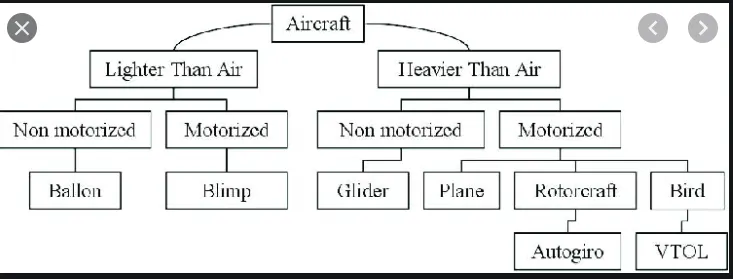
Aircrafts can be classified into various types based on the various modes of classification, which are;-
Weight and the weight Balancing have a very significant effect in the handlng of aircrafts. Take for example, if the aircraft becomes too heavy then it may not take off as sufficient lift force cannot be generated moreover, if somehow we are able to do take off then also it would be difficult for the ongoing operations to maintain the aerial stability of the aircraft and in some worse case it may lead to fatal conclusion. Therefore, it is very vital to do a careful study of weight balacing of aircrafts.
Calculation of aircraft weight and balance
During this calculation every part of an aircraft signifies its importance.
We have taken a simple demo of calculation of weight of airplane:-
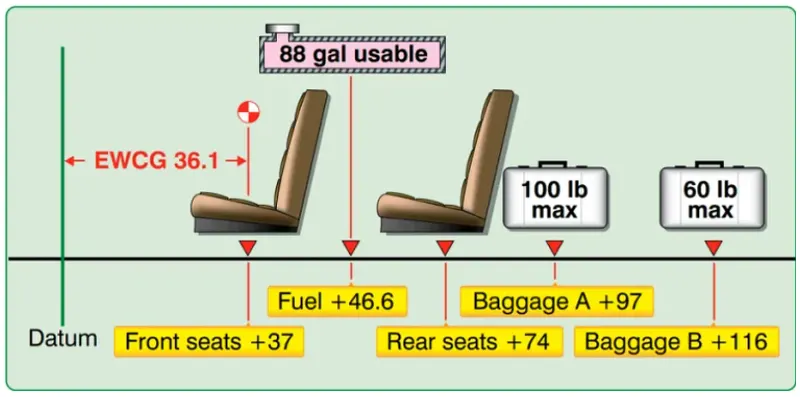
We have an airplane with two rows of seats, 88 gallons of usable fuel, and two baggage areas, each of which includes the distance from the Datum (Arm). The location of the empty weight center of gravity (EWCG) is shown and also includes its Arm.
To calculate weight and balance,we sum the weight of our passengers, baggage, and fuel into the appropriate locations. Then multiplying the weight by the Arm to determine the Moment. When we have done so for every location, we will divide the Total Moment by the Total Weight and in this way the total weight is computed.
Here a list is created for weight of differnt types of aircrafts:-
| Type | MTOW [kg] | MLW [tonnes] | TOR [m] | LR [m] |
|---|---|---|---|---|
| Antonov An-225 | 640,000 | 591.7 | 3500 | |
| Scaled Composites Model 351 Stratolaunch | 589,670 | 3660 | ||
| Airbus A380-800 | 575,000 | 394 | 3100 | 1930 |
| Boeing 747-8F | 447,700 | 346.091 | 3100 | 1800 |
| Boeing 747-8 | 443,613 | 306.175 | 3100 | |
| Boeing 747-400ER | 412,770 | 295.742 | 3090 | |
| Antonov An-124-100M | 405,060 | 330 | 2520 | 900 |
| Boeing 747-400 | 396,900 | 295.742 | 3018 | 2179 |
| Lockheed C-5 Galaxy | 381,000 | 288.417 | 2530 | 1494 |
| Boeing 747-200 | 377,840 | 285.700 | 3338 | 2109 |
| Boeing 747-300 | 377,840 | 260.320 | 3222 | 1905 |
| Airbus A340-500 | 371,950 | 240 | 3050 | 2010 |
| Airbus A340-600 | 367,400 | 256 | 3100 | 2100 |
| Boeing 777F | 347,800 | 260.816 | 2830 | |
| Airbus A330-900 | 352,000 | 251.5 | 3100 | |
| Boeing 777-300ER | 351,800 | 251.29 | 3100 | |
| Boeing 777-200LR | 347,450 | 223.168 | 3000 | |
| Boeing 747-100[7] | 340,200 | 265.300 | ||
| Airbus A350-1000 | 308,000 | 233.5 | ||
| Boeing 777-300 | 299,370 | 237.683 | 3380 | |
| Boeing 777-200ER | 297,550 | 213.00 | 3380 | 1550 |
| Airbus A340-300 | 276,700 | 190 | 3000 | 1926 |
| McDonnell Douglas MD-11 | 273,300 | 185 | 2990 | 1890 |
| Airbus A350-900 | 270,000 | 175 | 2670 | 1860 |
| Ilyushin Il-96M | 270,000 | 195.04 | 3115 | 2118 |
| McDonnell Douglas DC-10 | 256,280 | 183 | 2990 | 1890 |
| Boeing 787-9 | 254,000 | 192.777 | 2900 | |
| Boeing 787-10 | 254,000 | 201.849 | ||
| Airbus A340-200 | 253,500 | 181 | 2990 | |
| Ilyushin IL-96-300 | 250,000 | 175 | 2600 | 1980 |
| Airbus A330-300 | 242,000 | 185 | 2500 | 1750 |
| Airbus A330-200 | 242,000 | 180 | 2220 | 1750 |
| Lockheed L-1011-500 | 231,300 | 166.92 | 2636 | |
| Boeing 787-8 | 228,000 | 172.365 | 3300 | 1695 |
| Lockheed L-1011-200 | 211,400 | |||
| Ilyushin IL-86 | 208,000 | 175 | ||
| Boeing 767-400ER | 204,000 | 158.758 | 3414 | |
| Airbus A300-600R | 192,000 | 140 | 2385 | 1555 |
| Boeing 767-300ER | 187,000 | 136.08 | 2713 | 1676 |
| Concorde | 185,000 | 111.1 | 3440 | 2220 |
| Airbus A300-600 | 163,000 | 138 | 2324 | 1536 |
| Boeing 767-300 | 159,000 | 136.078 | 2713 | 1676 |
| Airbus A310-300 | 157,000 | 124 | 2290 | 1490 |
| Vickers VC10 | 152,000 | 151.9 | ||
| Boeing 707-320B | 151,000 | 97.5 | ||
| Boeing 707-320C | 151,000 | 112.1 | ||
| Douglas DC-8-61 | 147,000 | |||
| Airbus A310-200 | 142,000 | 123 | 1860 | 1480 |
| Airbus A400M | 141,000 | 122 | 980 | 770 |
| Douglas DC-8-32 | 140,000 | |||
| Douglas DC-8-51 | 125,000 | |||
| Boeing 757-300 | 124,000 | 101.6 | 2550 | 1750 |
| Boeing 707-120B | 117,000 | 86.3 | ||
| Boeing 757-200 | 116,000 | 89.9 | 2347 | 1555 |
| Boeing 720B | 106,000 | 79.5 | ||
| Boeing 720 | 104,000 | 79.5 | ||
| Tupolev Tu-154M | 104,000 | 80 | ||
| Tupolev Tu-204SM | 104,000 | 87.5 | 2250 | |
| Convair 880 | 87,500 | |||
| Boeing 737-900 | 85,000 | 66.36 | 2500 | 1704 |
| Boeing 737-900ER | 85,000 | 71.35 | 2804 | 1829 |
| Boeing 727-200 Advanced | 84,000 | 70.1 | ||
| Airbus A321-100 | 83,000 | 77.8 | 2200 | 1540 |
| Boeing 737-800 | 79,000 | 65.32 | 2308 | 1634 |
| Boeing 727-200 | 78,000 | 68.1 | ||
| McDonnell-Douglas MD-83 | 73,000 | 63.28 | ||
| Boeing 727-100 | 72,500 | 62.4 | ||
| Boeing 727-100C | 72,500 | 62.4 | ||
| McDonnell-Douglas MD-90-30 | 71,000 | 64.41 | 2165 | 1520 |
| de Havilland Comet 4 | 70,700 | |||
| Boeing 737-700 | 70,000 | 58.06 | 1921 | 1415 |
| Airbus A320-100 | 68,000 | 66 | 1955 | 1490 |
| Boeing 737-400 | 68,000 | 54.9 | 2540 | 1540 |
| de Havilland Comet 3 | 68,000 | |||
| Boeing 377 | 67,000 | |||
| Boeing 737-600 | 66,000 | 54.66 | 1796 | 1340 |
| Airbus A220-300 | 65,000 | 57.61 | 1890 | 1494 |
| Hawker Siddeley Trident 2E | 65,000 | |||
| Airbus A319 | 64,000 | 62.5 | 1850 | 1470 |
| Boeing 737-300 | 63,000 | 51.7 | 1939 | 1396 |
| Boeing 737-500 | 60,000 | 49.9 | 1832 | 1360 |
| Airbus A220-100 | 59,000 | 50.80 | 1463 | 1356 |
| Airbus A318 | 59,000 | 57.5 | 1375 | 1340 |
| Boeing 717-200HGW | 55,000 | 47.174 | 1950 | |
| Douglas DC-7 | 55,000 | |||
| de Havilland Comet 2 | 54,000 | |||
| Boeing 717-200BGW | 50,000 | 46.265 | 1950 | |
| de Havilland Comet 1 | 50,000 | |||
| Douglas DC-6A | 48,600 | |||
| Douglas DC-6B | 48,500 | |||
| Embraer 190 | 48,000 | 43 | 2056 | 1323 |
| Caravelle III | 46,000 | |||
| Fokker 100 | 46,000 | 39.95 | 1621 | 1350 |
| Douglas DC-6 | 44,000 | |||
| Avro RJ-85 | 42,000 | 36.74 | ||
| Handley Page Hermes | 39,000 | |||
| Embraer 175 | 37,500 | 32.8 | 2244 | 1304 |
| Bombardier CRJ900 | 36,500 | 33.345 | 1778 | 1596 |
| Embraer 170 | 36,000 | 32.8 | 1644 | 1274 |
| Bombardier CRJ700 | 33,000 | 30.39 | 1564 | 1478 |
| Douglas DC-4 | 33,000 | |||
| Vickers Viscount 800 | 30,400 | |||
| Bombardier Q400 | 28,000 | 28.01 | 1219 | 1295 |
| Bombardier CRJ200 | 23,000 | 21.319 | 1918 | 1479 |
| ATR 72-600 | 22,800 | 22.35 | 1333 | 914 |
| Saab 2000 | 22,800 | 21.5 | 1300 | |
| Embraer ERJ 145 | 22,000 | 19.3 | 2270 | 1380 |
| ATR 42-500 | 18,600 | 18.3 | 1165 | 1126 |
| Saab 340 | 13,150 | 12.930 | 1300 | 1030 |
| Embraer 120 Brasilia | 11,500 | 11.25 | 1560 | 1380 |
| BAe Jetstream 41 | 10,890 | 10.570 | 1493 | 826 |
| Learjet 75 | 9,752 | 8.709 | 1353 | 811 |
| Pilatus PC-24 | 8,300 | 7.665 | 893 | 724 |
| Embraer Phenom 300 | 8,150 | 7.65 | 956 | 677 |
| Beechcraft 1900D | 7,765 | 7.605 | 1036 | 853 |
| Cessna Citation CJ4 | 7,761 | 7.103 | 1039 | 896 |
MTOW = Maximum take-off weight, MLW = Maximum landing weight, TOR = Take-off run, LR = Landing run
The concept of relative velocity is very important in order to generate considerable lift force to drive the aircrafts. The lift force is directly proportional to square of the relative velocity of aircraft and wind speed.
Now we will see seperately about wind ground and air speed.
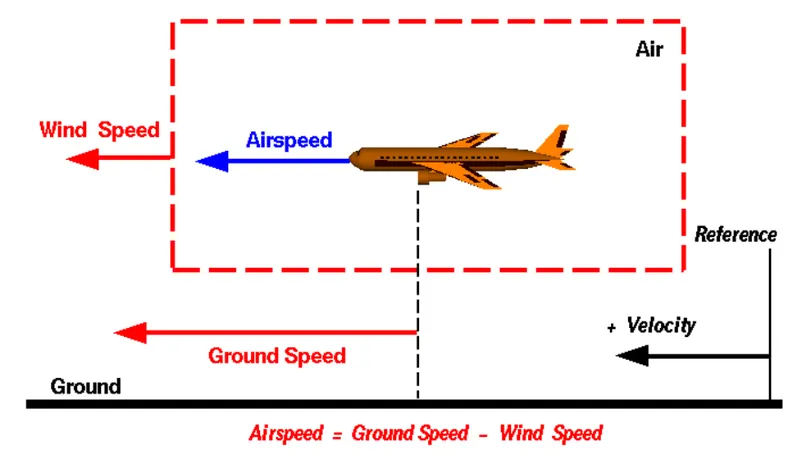
For a reference point situated on the ground, the air moves wrt. reference point at the wind speed. We observed that the wind speed is a vector and has both a magnitude and a direction.
For a reference point picked on the ground, the aircraft moves relative to the reference point at the ground speed. Ground speed is also a vector quantity.
Airspeed is the relative velocity between aircraft and the wind speed.
Airspeed= Ground Speed - Windspeed
3. Importance of towing of Aircrafts at airports:-
(i) The primary advantage of using the toeing reduces the cost of fuel. The aeroplane fuels are costlier than the general gasoline being used in day to day vehicles, compels us to do an economic use of it.
(ii) The other tempting reason is that towing allowing us to park the giant aircrafts as way the situation demands. It become so burdensome and hurculean task to park or settle the huge aircrafts at desired locations. So, this demand is fulfilled by just towing them.
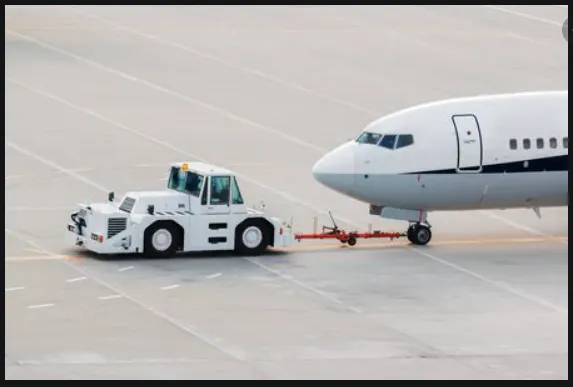
(iii) Planes move by pulling or pushing themselves through the air, rather than by applying engine power to spin their wheels, and thus have no forward or reverse gears.
So therefore these important needs , the engine power is not used to move aircrafts on ground.
4.
The whole ground locomotion process is achieved by the help of towing tractors. These are especially designed high power tractors used for locomotion of huge aeroplanes.
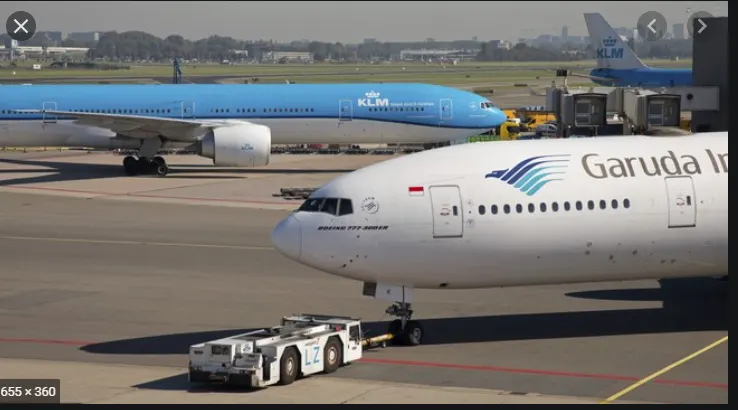
When the plane is ready to take off, they are taken to the initial region of the runway to initiate the take-off process.
From there, the planes take a giant speed up to achieve the minimum take off speed, an finally take off is achieved.
5. Discussion on Take-off Power:-
On take-off, in order to position the aircraft to a safe height away from terrain and obstacles (i.e. a flight path of maximum height and minimum ground distance desired), the engine thrust is set to a very high ‘take-off power’ setting (although this is not necessarily full power) and the aircraft attitude is pitched up to maintain a specific speed. Once the ‘safe height’ is reached the engine thrust can therefore be reduced to a more appropriate and efficient setting and the aircraft flight path can be changed to a more appropriate flight path.
Discussion on tyre design of aircrafts:-
The tyres play a crucial in the whole mechanical mobility process of aircrafts. The tyres of aircrafts are designed more metaculously to withstand a very high pressure and temperature gradients. It also signifies its importance in the braking process as more advanced and highly engineered applies an efficient braking. The number of wheels for any aircrafts depends on the amount of weight it has to carry.
A simple schematic of aircrafts tyres are given below:-
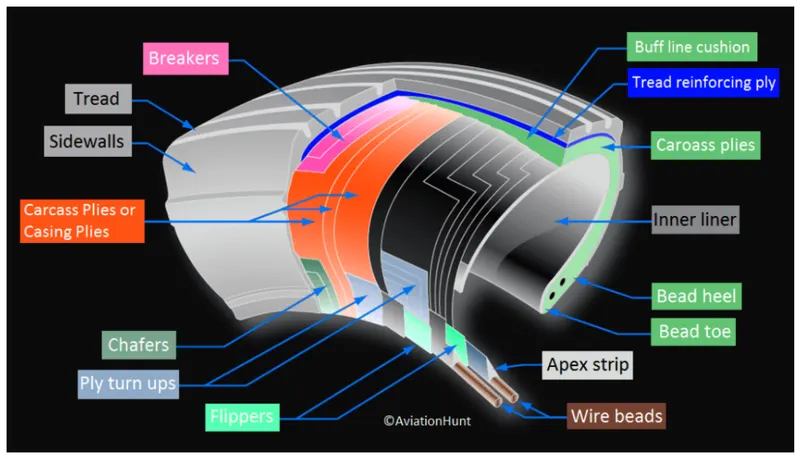
Aircraft tires generally operate at high pressures, up to 200 psi (14 bar; 1,400 kPa) for airliners, and even higher for business jets.
Each of the twelve Boeing 777-300ER main tires is inflated to 220 psi (15 bar; 1,500 kPa), weighs 120 kg (260 lb), has a diameter of 134 cm (53 in) and is changed every 300 cycles while the brakes are changed every 2000 cycles.Each tire is worth about $5,000. Aircraft tires generally operate at high pressures, up to 200 psi (14 bar; 1,400 Kpa) for airliners, and even higher for business jets. The main landing gear on the Concorde was typically inflated to 232 psi (16.0 bar), whilst its tail bumper gear tires were as high as 294 psi (20.3 bar). The high pressure and weight load on the Concorde tyres were a significant factor in the loss of Air France Flight 4590.
Braking system of aircrafts on landing:-
The braking is a very important aspect in the engineering of aircrafts. The very high speed of aircrafts need to be stumbled to zero through a very careful process. With these things keeping in mind , three types of braking system are included in aircrafts which are:-
(i) Ground spoilers (ii) Disc brakes (iii) Reverse thrust
Ground spoilers
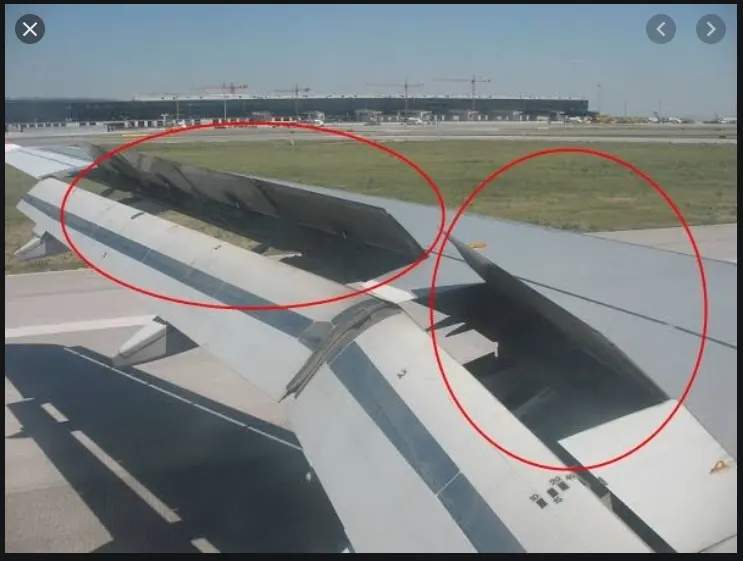
After touching down, the spoilers take a fully vertical shape by standing straight and out of the wings. In many cases, an additional ground spoiler, which is closer to the fuselage, is used as well. The main application of an aircraft spoiler is to cut the lift and provide some sort of a drag. The rest is done by disc brakes and reverse thrusters.
Disc Brakes
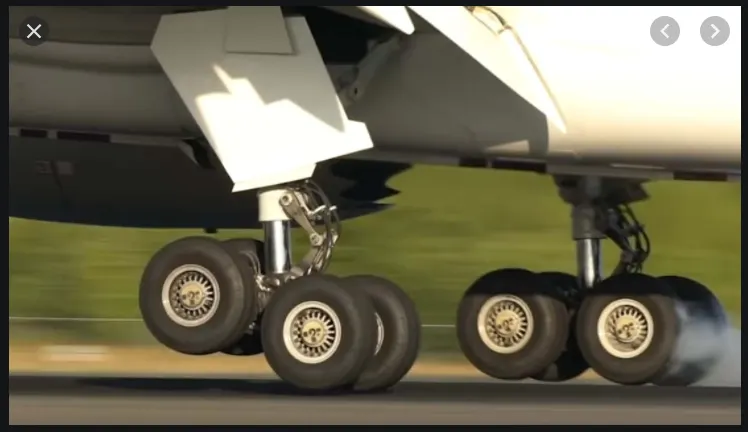
These are the brakes applied by the wheels just as common in general cars and bikes. But here comes a crucial methodology ,that at which extend it should be applied. Applying it more than a certain extent can skid the aircrafts ehich can result into overturning of planes.
Reverse Thrust
In this process the turbofans are just compelled to run in reverse direction with the power of engine. This technique is generaly not applied in small or lite aircrafts but it become a very crucial method in heavy crafts , such as Boeing, due to requirement of high braking force.
So by cummulative mixing of these threee type of technique proper braking is achieved in aircrafts.
Part B:-
The towing of aeroplane is done by specialy designed high torque tractors to move the aeroplanes at their respective places.
We are going to calculate the force which will be applied by the tractors for a general aeorplane to tow it.
Assumptions:-
(i) The road is horizontal, i.e gradeability is zero.
(ii) Coefficient of friction remains constant during the motion for tractor as well as aeroplane.
(iii) The aeroplane will be moved very slowly and which constant velocity,i.e acceleration=0
Let for our general case, BOEING 377 be our test vehicle
For finding out the values of different parameters , we have gone through various documentations and finally these are the sources from which informatopn have been gathered:-
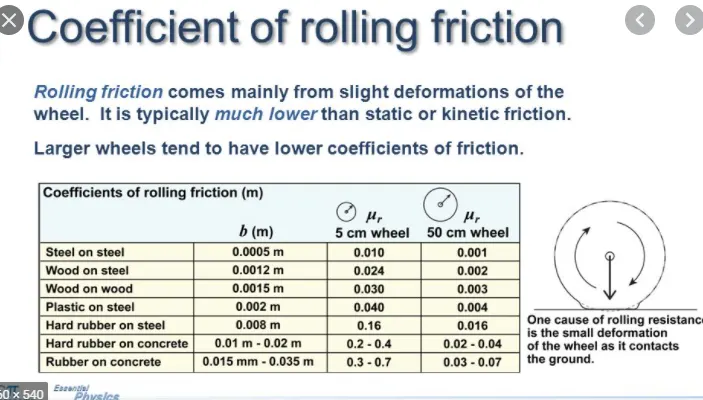
Weight of aeroplane,M1= 67000 Kg
Weight of tractor,M2=54000 Kg
Friction coeff. between aeroplane and road,`mu1`=0.018
friction coeff, between tractor and road `mu2`= 0.
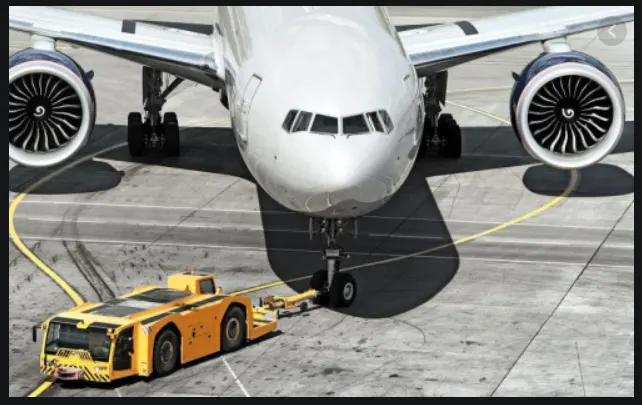
Friction fprce between road and aeroplane,F1 = `mu1*M1*g`
=`0.018*67000*9.8`
Therefore, F1= 11,818.80 N
Friction force between road and tractior,F2= `mu2*M2*g`
= `0.02*54000*9.8`
Therefore, F2= 10,584 N
Now, for air drag force:-
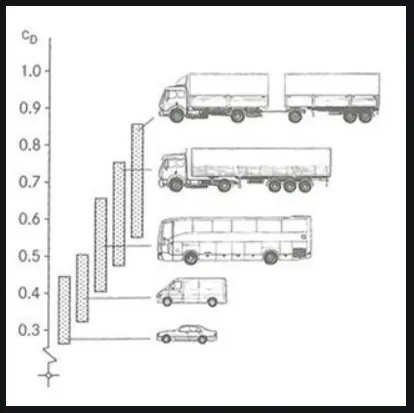
We know ,
`F3= 0.5*rho*A.v^2.Cd`
For general porposes, thses locomotives run at a average speed of 3 m/s.
F3= `0.5*21*1.225*0.15*3^2=17.364 N`
F4= `0.5*6*1.225*0.44*3^2=14.553 N`
`Total force required, F= F1+F2+F3+F4`
`F= 22,434.717 N`
Power= force*velocity
`22434.717*3`
P= 67304.151 Watt
6. b
A simulink model is framed in simulink by using constant , add,product and display blocks. The same equations are used to frame the model as are ued above.
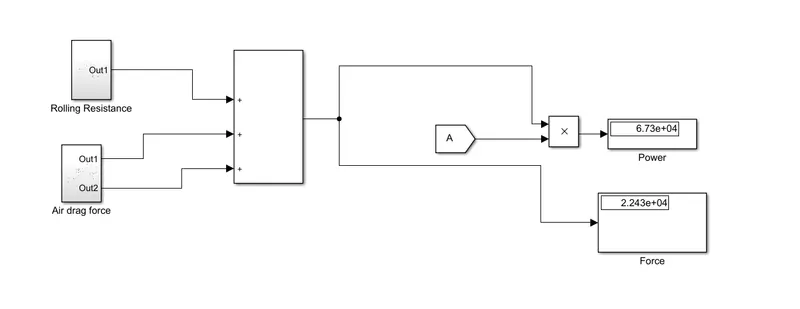
7 Design of a simulink model for Electric powertrain of the towing tractor
To develop a heavy duty electric tractor we simply move from running DC motor on a regulated dc upply.The H-bridge controller is used b to regulate the the running of dc motor.
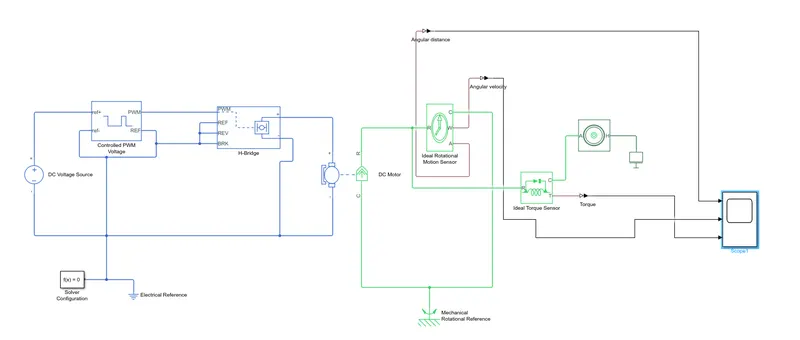
This model is developed on a simple concept of mechanical powertrain which could be understood from underlying block model:-
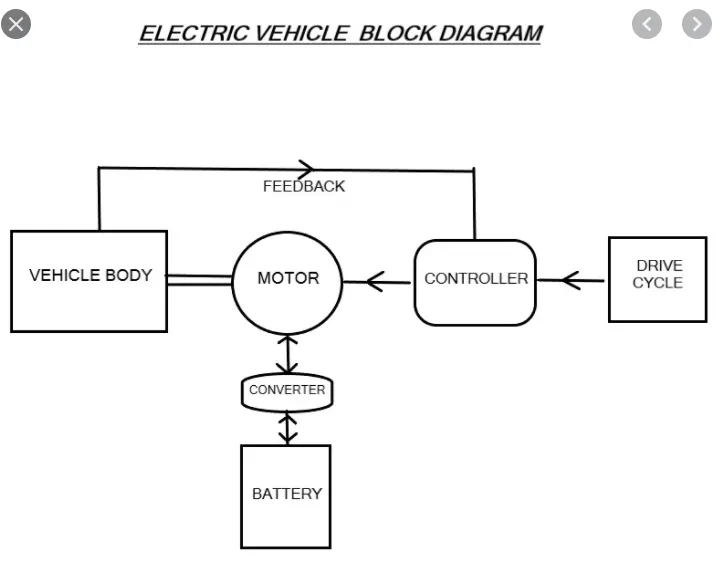
All the paramerters that are used are listed in a excel sheet which has been attached akongwith the model.
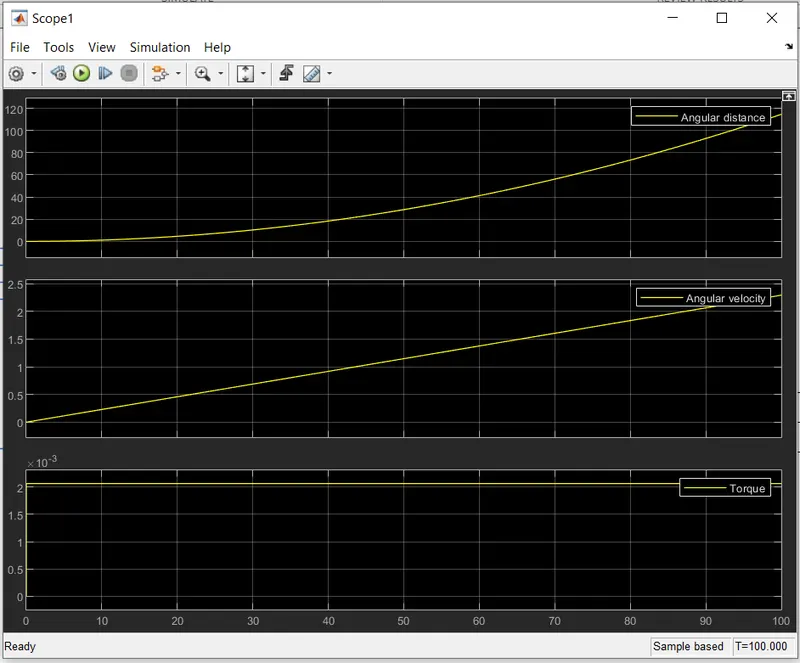
The results can be visualised of yhe model from the obtaines graphs.
References:-
2. https://en.wikipedia.org/wiki/List_of_airliners_by_maximum_takeoff_weight
4. https://www.engineeringtoolbox.com/plane-pull-force-people-d_2083.html