Project 1 Mechanical design of battery pack
1. The objective is to prepare a detailed battery pack drawing along with its enclosure.
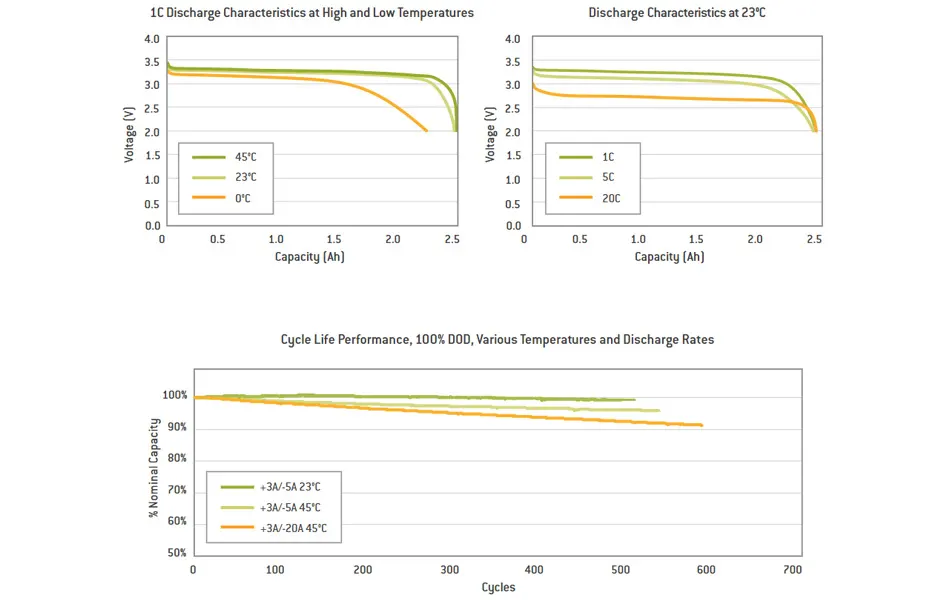
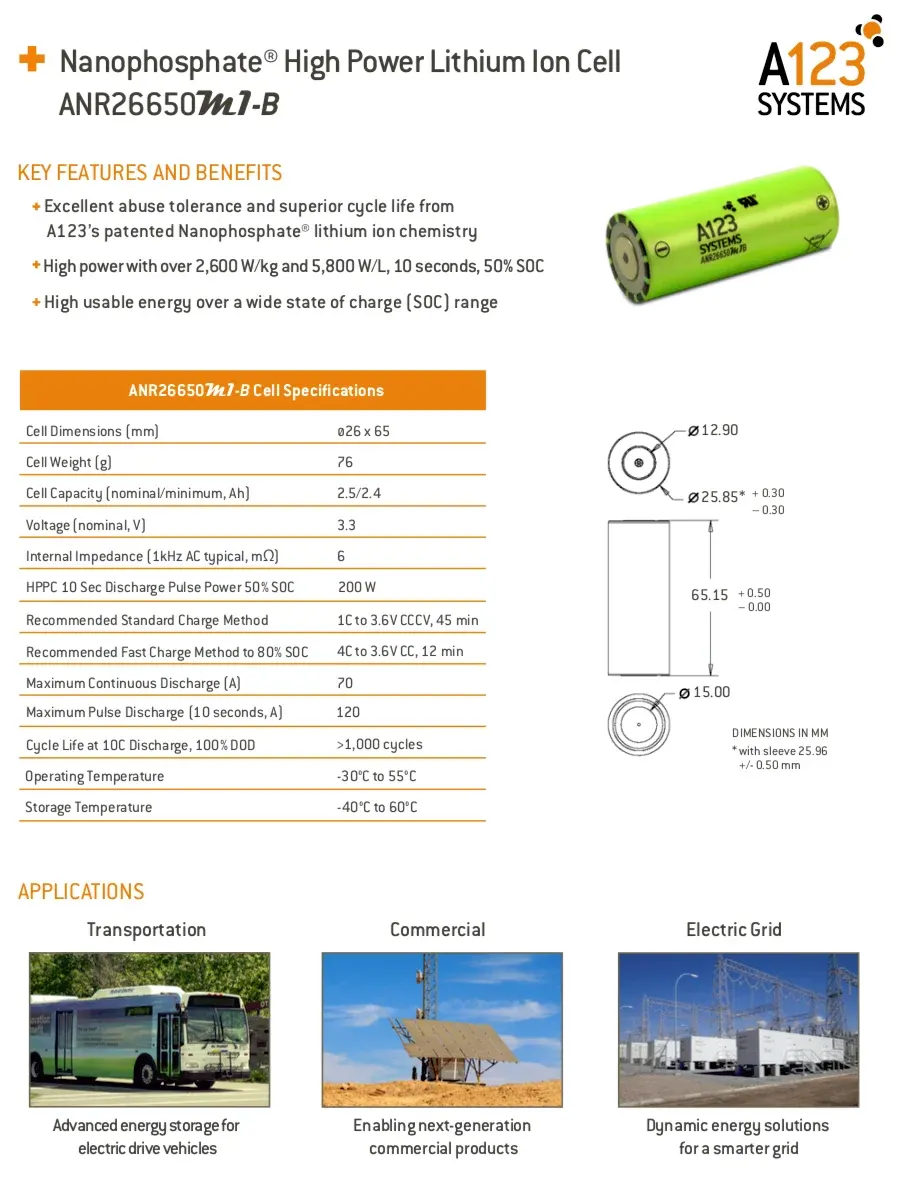
Nanophosphate High Power LithiumIon Cell ANR26650M1-B
Applications
- COMMERCIAL SOLUTIONS
Advanced lead-acid replacement batteries for:
+ Datacenter UPS
+Telecom backup
+IT backup
+Autonomously guided vehicles (AGVs)
+ Industrial robotics and material handling equipment
- GOVERNMENT SOLUTIONS
+ Military vehicles
+ Military power grids
+Soldier power
+ Directed energy
- GRID SOLUTIONS
+ Frequency regulation
+ Renewables integration
+ Reserve capacity
+ Transmission and distribution
- TRANSPORTATION SOLUTIONS
Hybrid, plug-in hybrid, and electric vehicle battery systems for:
+Commercial vehicles
+ Off-highway vehicle
ANR26650M1-B Cell Specifications:
| Cell Dimensions |
26 x 65 mm |
| Cell Weight |
76g |
| Cell Capacity (nominal/minimum) (0.5C Rate) | 2.5/2.4 Ah |
| Voltage (nominal) | 3.3V |
| Internal Impedance (1kHz AC typical) | 6mΩ |
| Power* | 2600 W/kg |
| Recommended Standard Charge Method | 2.5A to 3.6V CCCV, 60 min |
| Recommended Fast Charge Method to 80% SOC | 10A to 3.6V CC, 12 min |
| Maximum Continuous Discharge | 50A |
| Maximum Pulse Discharge (10 seconds) | 120A |
| Cycle Life at 20A Discharge, 100% DOD | >1,000 cycles |
| Operating Temperature | -30°C to 55°C |
| Storage Temperature | -40°C to 60°C |
Battery Pack:
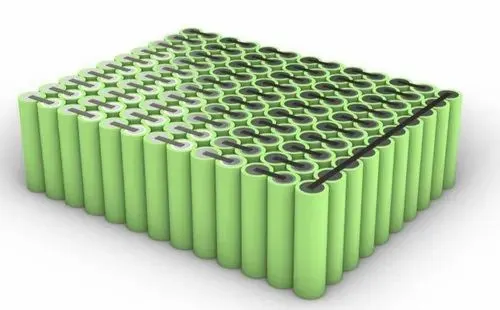
A battery pack is a set of individual cells configured in series, parallel, or a mixture of both to deliver the desired voltage, capacity, and power density.
Battery Management System:
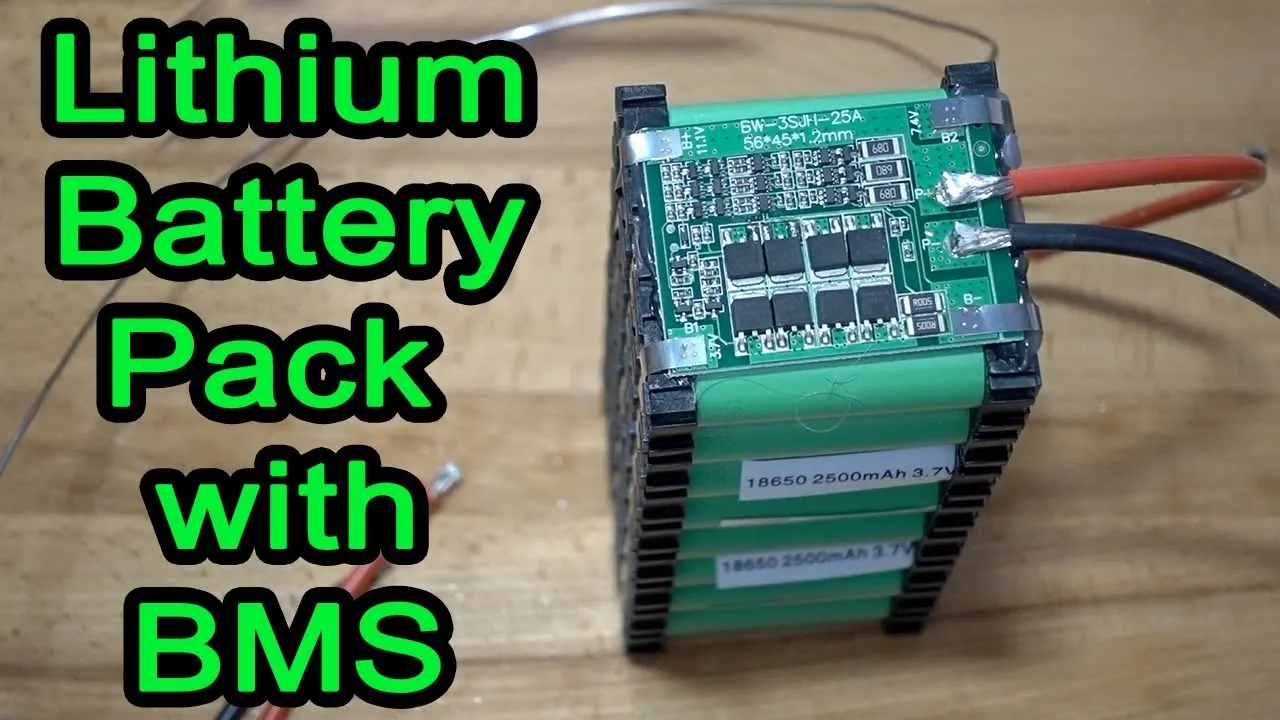
A Battery Management System(BMS) is an electronic system that manages a battery pack by protecting the battery, monitoring its temperature, SoC, etc.., and keeping the battery pack safe.
Mechanical design of battery pack:
The high voltage battery is one of the important parameters in an electric vehicle. There are some important aspects to keep in consideration while designing the mechanical design namely,
- Chemistry
- Voltage
- Average energy consumption of the vehicle
- Vehicle Range
A cell consists of some components,
- Anode
- cathode
- Separators
- Terminals
- Electrolyte
Battery calculation:
Battery pack capacity: 18 kWh
Voltage : 400V
Number of cells = energy/ (Voltage * capacity)
Number of cells = 18000/ (3.3 * 2.5)
= 2182
So, we need total of 2182 cells to get 18kWh energy and we need to find how to configure it.
- In a series connection, the capacity remains the same and voltage will be the sum of individual cell voltage.
- In a parallel connection, the voltage remains the same and capacity will be the sum of individual cell voltage.
We need the battery pack voltage to be 400V and individual cells to have a voltage of 3.3V.
Number of series cells = Voltage required / Nominal voltage of cell
= 400 / 3.3
= 121.21
So, we need almost 122 cells to be configured in series to attain a pack voltage of 400V.
Number of parallel cells = Total cell/Number of series cell
= 2182/122
= 17.8
So, we need 18 cells to be configured in parallel.
The battery pack is to be configured as 122S 18P.
By constructing the battery pack with this architecture, then the voltage will be 400V and the capacity will be 45Ah.
The 45Ah is the amount of charge which is going to be supplied in an hour which is also referred to as the C rate.
Now, let's calculate the range with this battery pack,
Range = Capacity/energy consumed per kilometre
= 18000 / 100
= 180 km
With a 122S 18P battery pack and 100Wh/km energy consumption, the range of the EV is 180 km.
Battery Dimension:
ANR26650 cell has 26mm diameter and 65mm height. With these specs, we can design a battery casing that protects the battery pack from external hazards.
Length of casing = number of cells in series * ( cell diameter + margin at both sides of the cell) + clearance at the side
L = 122*(26+4) +60
L = 3720 mm
The breadth of casing = number of cells in parallel * ( cell diameter + margin at both sides of the cell) + clearance at the side
B = 18*(26+4) + 60
B = 600 mm
Height of casing = height of cell + margin for wiring, cell holders, metal strips
H = 65 + 35
H = 100 mm.
Height = 100 mm
Length = 3720 mm
Breadth = 600 mm
Weight of battery pack:
cell weight = 76g
Total weight = 2182
Battery pack = cell weight * total cells + weight of accessories
Weight = ( 76 * 2182 ) + 4.5
Weight = 170.3 kg
Charging Specifications:
Recommended Standard charge = 2.5 Amps
Maximum charge rate = 10 Amps
Temperature = 0 to 55°C
Discharging Specifications:
Maximum continuous discharge current = 45A
Minimum Voltage = 2 Volts
Temperature = -30 to 55°C