Project 1 Mechanical design of battery pack
What is a cell ?
A cell is a single anode and cathode separated by an electrolyte that is used to generate voltage and current. A battery can consist of one or more cells. One cell, for example, is an battery.
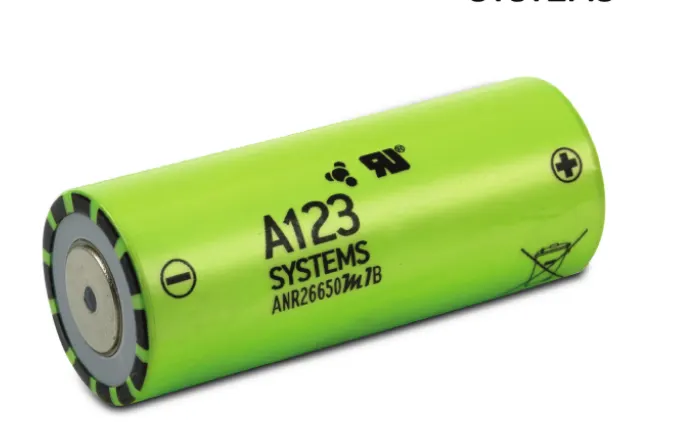
Battery and battery packs
Batteries are made up of one or more cells whose chemical reactions produce an electron flow in a circuit. Every battery has three basic components: an anode (the '-' side), a cathode (the '+' side), and some kind of electrolyte (a substance that chemically reacts with the anode and cathode).
When a battery's anode and cathode are connected to a circuit, a chemical reaction occurs between the anode and the electrolyte. This reaction sends electrons through the circuit and back to the cathode, where another chemical reaction occurs. When the material in the cathode or anode is depleted or no longer usable in the reaction, the battery is unable to produce electricity
Battery packs are any number of individual batteries connected in series or parallel to power electronic devices. Because of their high power density, lithium ion batteries are the most commonly used type of battery in battery packs. Battery packs are used in a variety of applications, including phones, lawn mowers, and automobiles.
ANR26650M1-B specification
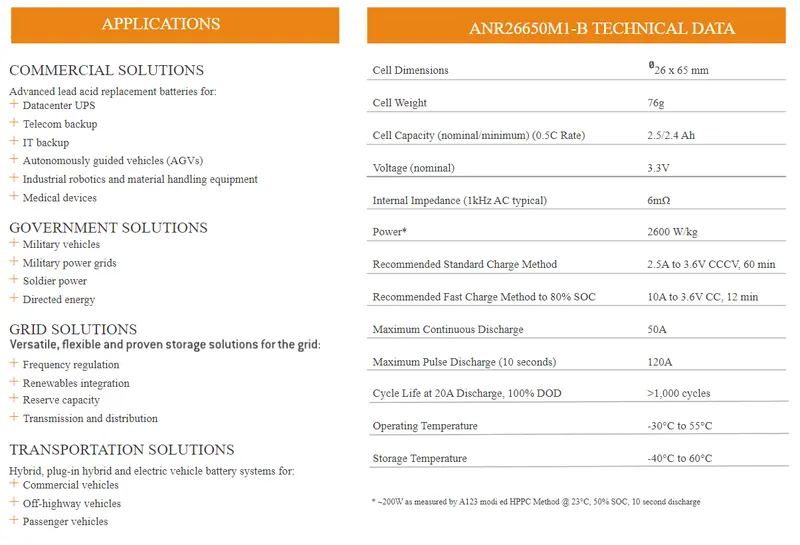
Here we are using the cell of chemistry type LiFePO4(Lithium iron phosphate).so,the characteristics of LiFePO4 is quite different than other cell chemistries which are explained in detail.
Lithium iron phosphate has a cathode of iron phosphate and an anode of graphite. It has a specific energy of 90/120 watt-hours per kilogram and a nominal voltage of 3.20V or 3.30V. The charge rate of lithium iron phosphate is 1C and the discharge rate of 1-25C.
Calculation as per assumptions:- 18kWh Battery Pack
calculation for designing an 18kWh battery pack, basically 18kWh is energy require to achieve the vehicle its proper range. It is depending upon the voltage (V) parameter and ampere-hour or capacity (Ah).
Here we design a high voltage battery pack for an electric vehicle to achieve its range up to 220 km. For this calculation, I assumed 145.2 V a nominal voltage for series connection.
Basically,the value of the volume of the cell is used to find out the total volume of the battery pack.
- Single Cell Energy (Wh)
= Cell Capacity (Ah) x Cell Voltage (V)
= 2.6 x 3.3
= 8.58 Wh
The value of a single cell is used to calculate the total energy of the battery pack.
-Single Cell Energy Density
Volumetric energy (Wh/m^3) = Single Cell Energy / Volume of each cell
= 8.58 Wh / 0.03451 m^3
= 248.62 Wh/m^3
Gravimetric energy (Wh/kg) = Single Cell Energy / Single Cell Mass
= 8.58 Wh / 0.076 kg
= 112.89 Wh/kg
Calculation of High Voltage Battery Pack
For design and calculation of battery pack here, I assume a vehicle to achieve 250 km in 18 kWh battery pack. Also, I assume 145.2 nominal voltage for series connection.
So,
Vehicle Range = 250 KM (assumed)
Battery Pack capacity = 18.121 kWh or 18120.96 Wh (For better and accurate calculation here I change kWh)
Now,
We will calculate per km average energy = 18120.96 / 250
= 72.483 Wh/km
Therefor,
Battery Pack total energy = Average energy x km
= 72.483 x 250
= 18120.96 Wh or 18.120 kwh
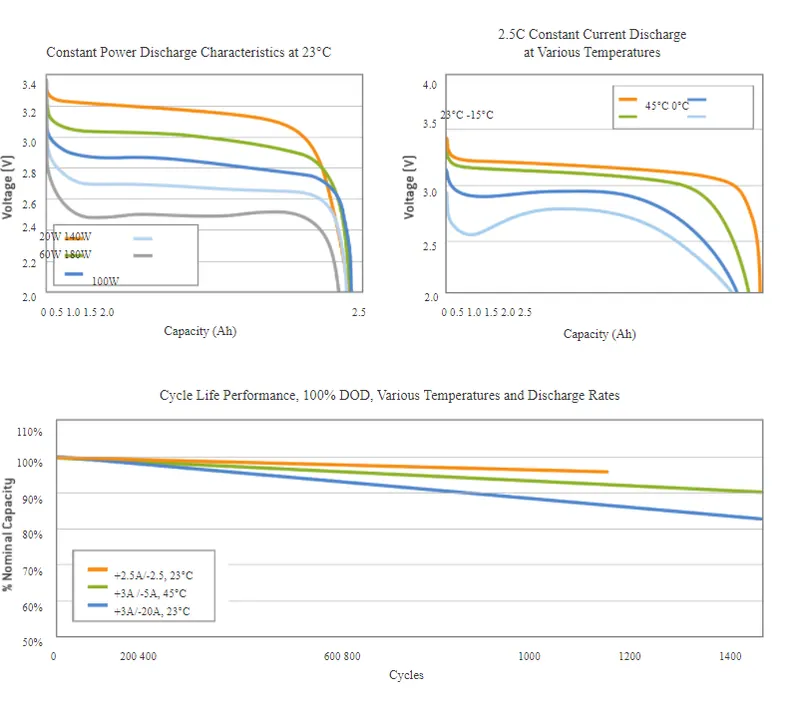
Discharge characteristics of LiFePO4 (Lithium iron phophate cell )
Detailed Battery pack drawing along with enclosure for a capacity of 18 KWh of cell model ANR26650M1-B
Battery Pack Design
A battery pack's purpose is to provide a convenient integrated power source for portable applications. The pack may perform several functions, including the following:- It allows higher voltage or higher capacity batteries to be built up from low voltage, low capacity cells.
In a single convenient pack, it houses a cell or a bank of cells as well as the associated interconnections.Within the pack, it houses any necessary monitoring and electronic protection devices or circuits.
Additional circuitry such as indicator lights, heaters, cooling ducts, and solar panels can be accommodated.
It corresponds to and meshes with the cavity in the product that the battery is intended to power, providing both electrical and mechanical interfaces.It can provide distinct electrical and mechanical interfaces to ensure battery compatibility with the intended product as well as charger compatibility with the battery.
detailed battery pack drawing along with its enclosure.
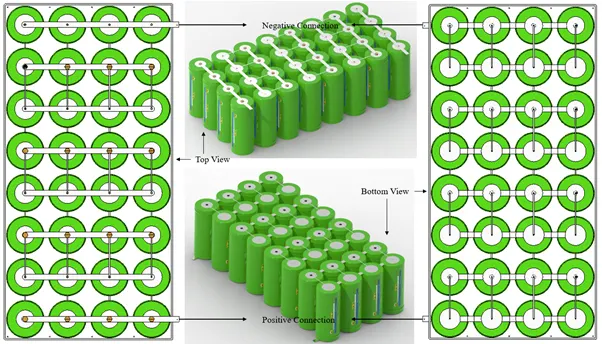
Mechenical Connection :
Design mechanical interconnects to prevent accidental short circuits. Size these mechanical interconnects to carry the expected maximum rated current for both the maximum time and ambient temperature in which the pack is expected to operate.
Cell Interconnects :
Size cell interconnects for the expected maximum current carrying capability. Improperly sized tabs could heat up excessively, resulting in even higher resistivity. For reliable welded connections at the terminals, A123 Systems recommends either pure nickel tabs or nickel-clad copper tabs. In addition, other alloys afford both the weldability, strength and low resistance, which are all desirable features of a good interconnection. Cell interconnects (tabs) should be neither soldered on the end caps nor attached using extreme heat. A123 Systems recommends tabs be resistance or laser-welded to both ends of the cells. Resistance welding provides a constant current for a specified period of time through a salient feature in the weld tab. These parameters can be specified and regulated for a consistent high-quality weld every time.
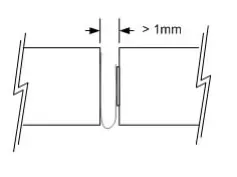
The Gap Between Each Cell :
The cell vents, located on the end cap(s) of the cells (on the POSITIVE side of the cell), should not be blocked by any mechanical means. Blocking the cell vent and then sufficiently abusing the cell so as to build up pressure in the cell prevents the cell from properly venting. An ESS designed to install cells end-to-end needs at least 1 mm of space between the cells to allow the vent to open under fault conditions.
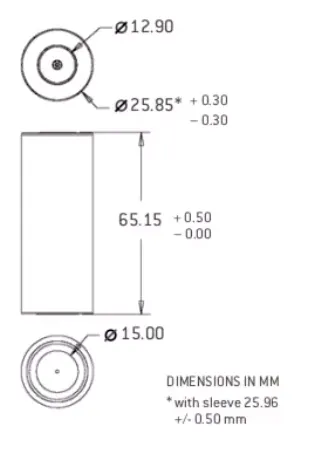
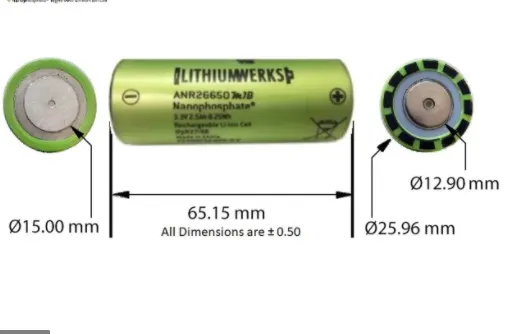
Battery Dimmensions :
Series Strings:
Cells combined in series strings can achieve higher operating voltages by connecting the positive terminal of one cell to the negative terminal of the next cell. Connect strings of series cells using their current collection tabs in a manner similar to that illustrated in Figure.
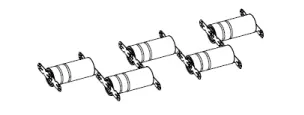
Parallel Strings :
Cells combined in parallel strings can achieve higher operating capacities by connecting like-polarity terminals of adjacent cells to each other. Connect strings of parallel cells using their current collection tabs in a manner similar to that illustrated in Figure .
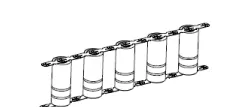
we Using Cyclindrical cell :
Cylindrical cells are the most common cell type in use today. This design allows for better automation processes and techniques that increase consistency and lower cost.
Compared to prismatic cells, cylindrical cells can be produced much faster so more KWh per cell can be produced every day equaling lower $ per KWh. The electrodes in a cylindrical cell are wound tightly and encased in a metal casing, This minimizes electrode material from breaking up from the mechanical vibrations, thermal cycling from charging and discharging and mechanical expansion of the current conductors inside from thermal cycling. Many cells are combined in series and in parallel to increase voltage and capacity of the battery pack
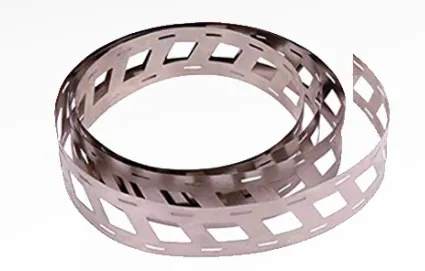
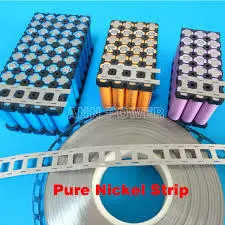
Nickel Strips
Nickel strip is generally used in battery building. Its due to its efficiency of usage in spot welding and soldering as well its high corrosion resistance over time. It has good properties and excellent resistance to many corrosive environments. The pure nickel will never get rust after it applied to battery packs. It won’t affect the current transfer between batteries.
Pure nickel strips are the material you want, but many vendors swap out it for nickel-plated steel strips, which are poorer and have greater resistance – not suitable for most battery projects.
100% pure nickel strip. verify all of our strips to assure that you are getting the high-quality pure nickel. It also solder incredibly quickly, so you can weld them onto your existing busbar connections to raise the supply of current you can pull through the busbars. The benefits are nearly limitless!
If one cell goes bad, the impact on the entire pack is low. With prismatic cells if one cell goes bad it can compromise the whole battery pack. Cylindrical cells radiate heat and control temperature more easily than prismatic cells.
Conclusion :
As a result, all of the questions are completed in according with the conditions specified ,and required file are attached