Project 1 Mechanical design of battery pack
Introduction to Battery Technology for Electric Vehicle - Challenges
Project 1 Mechanical design of battery pack
Aim:-
Battery pack capacity: 18 kWh
Cell: ANR26650M1-B
Prepare a detailed battery pack drawing along with its enclosure. State your assumptions.
Solution:-
Given:
Battery pack capacity: 18 kWh
Cell: ANR26650M1-B
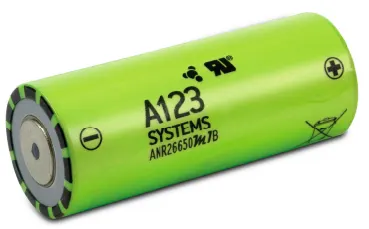
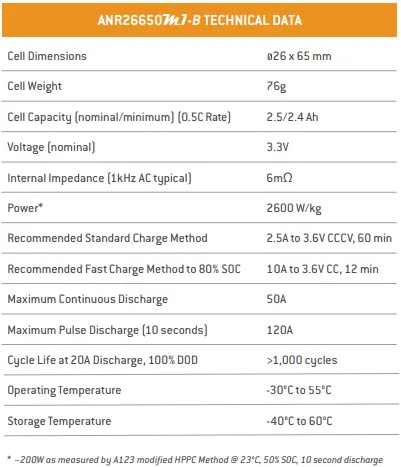
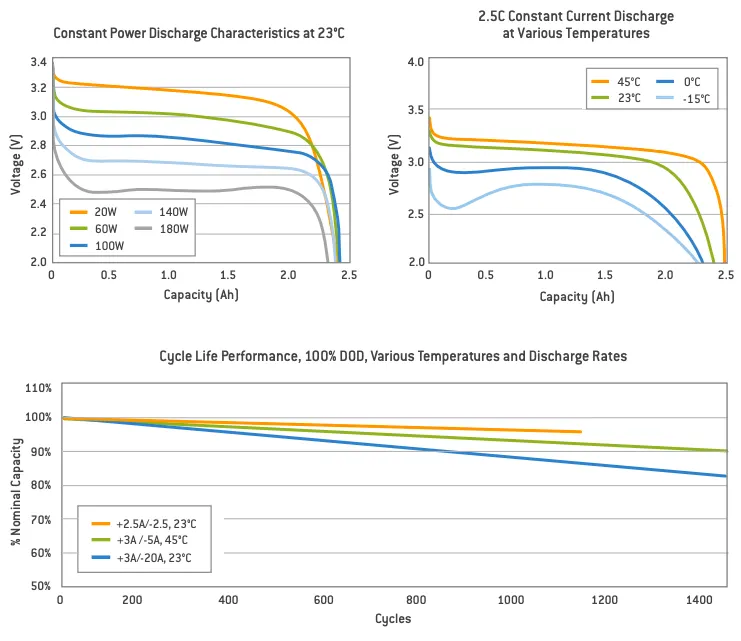
A123’s high-performance Nanophosphate® lithium iron phosphate (LiFePO4) battery technology delivers high power and energy density, excellent safety performance, and extensive life cycling in a lighter, more compact package. Our cells have a low capacity loss and impedance growth over time as well as high usable energy over a wide state of charge (SOC) range, allowing our systems to meet end-of-life power and energy requirements with minimal pack oversizing.
Assumptions:
- Series and Parallel Configuration: We'll assume a series-parallel configuration for the battery pack. This means multiple cells will be connected in series to achieve the desired voltage, and then these series strings will be connected in parallel to increase the overall capacity.
- Enclosure Design: Since no specific requirements or constraints are mentioned, we'll assume a rectangular enclosure for the battery pack, considering factors like cell arrangement, cooling, and safety.
- Enclosure Shape: The battery pack enclosure is assumed to have a rectangular shape for simplicity.
- Enclosure Material: The enclosure can be made of a suitable lightweight and durable material like plastic or aluminum.
- Cell Arrangement: The battery pack will consist of multiple ANR26650M1-B cells arranged in a series-parallel configuration.
- Cooling System: A cooling system, such as a heat sink or fans, may be incorporated to dissipate heat generated during operation.
- Safety Features: The battery pack enclosure is assumed to include safety features like insulation, protection circuits, and secure cell connections.
- Electrical Connections: Proper electrical connections, such as busbars or connectors, will be used to interconnect the cells in the desired configuration.
- Mounting: The battery pack may have mounting brackets or slots for easy installation and integration into the target system or device.
Now, let's calculate the various parameters based on the provided information:
1. Number of Cells in Series: To calculate the number of cells required in series, we'll divide the battery voltage (72 V) by the nominal voltage of each cell (3.3 V):
Number of cells in series = Battery voltage / Nominal voltage = 72 V / 3.3 V
= 22
The formula P = V * I represents the relationship between power (P), voltage (V), and current (I) in an electrical circuit. This formula is known as the power equation.
- P represents the power in watts (W), which is the rate at which energy is transferred or consumed in the circuit.
- V represents the voltage in volts (V), which is the electrical potential difference across the circuit.
- I represents the current in amperes (A), which is the flow of electric charge through the circuit.
According to the formula, the power (P) can be calculated by multiplying the voltage (V) by the current (I).
P = V * I
18000 = 72 * I
Number of cells in parallel = 250 Ah / 2.4
= 104
3. Total Number of Cells: To calculate the total number of cells in the battery pack, we'll multiply the number of cells in series by the number of cells in parallel:
Total number of cells = Number of cells in series * Number of cells in parallel = 22 * 104
4. Energy Consumption: The energy consumption can be calculated by multiplying the battery pack capacity by the battery voltage:
Energy consumption = Battery pack capacity * Battery voltage = 250Ah * 72 V = 18000 Wh
- Powertrain energy consumption: 100 Wh/km
- Powertrain efficiency: 70% (0.7)
5. To calculate the range,
Range (in kilometers) = Battery pack capacity (in Wh) / (Powertrain energy consumption (in Wh/km) * Powertrain efficiency)
Range = 18,000 Wh / (100 Wh/km * 0.7)
Range ≈ 257 kilometers
Therefore, based on the provided powertrain energy consumption and efficiency, the battery pack's estimated range would be approximately 257 kilometers.
Construction of a Battery Pack
The construction of a battery involves assembling individual cells and connecting them to create a functional power source. Here's a detailed explanation of the battery construction process:
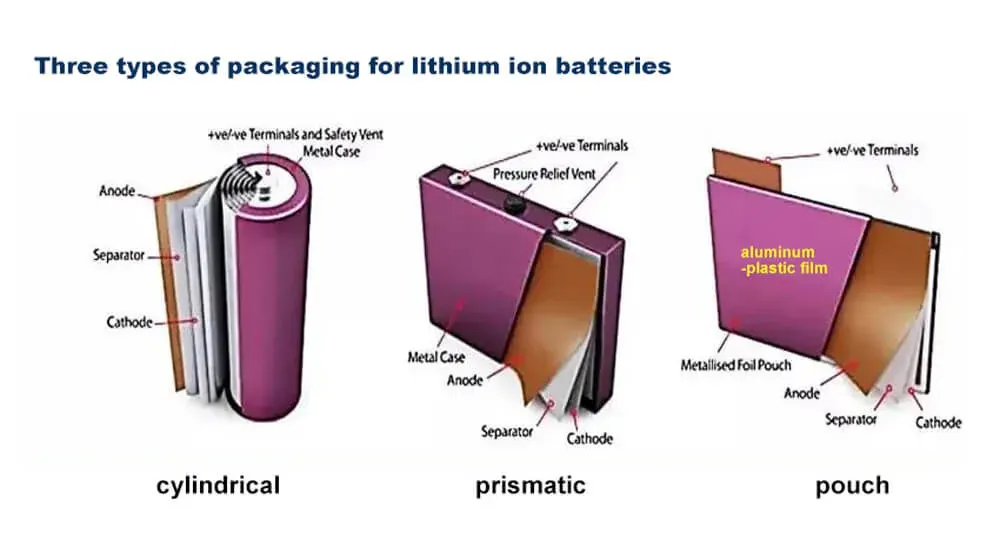
1. Battery Cell Selection:
- Determine the type of battery cell based on your specific application requirements, such as lithium-ion, lead-acid, nickel-cadmium, or others.
- Consider factors like capacity, voltage, energy density, cycle life, and environmental conditions.
2. Gather Materials and Tools:
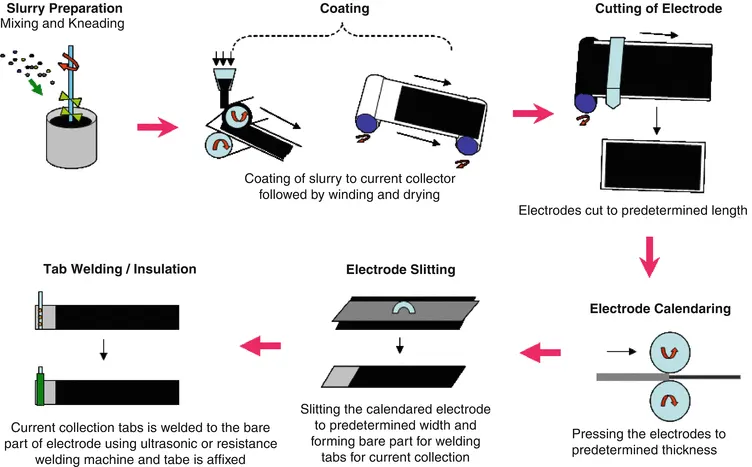
- Acquire the necessary materials, including battery cells, battery management system (BMS) components (if applicable), battery enclosure, connectors, terminals, wiring, insulation materials, and safety equipment.
- Ensure you have the appropriate tools for cell connections, such as a spot welder, soldering equipment, or other suitable methods.
3. Preparing Battery Enclosure:
- Select a suitable enclosure or housing for the battery pack, considering factors like size, shape, material, and thermal management requirements.
- Ensure the enclosure provides proper insulation, protection against physical damage, and ventilation if necessary.
4. Cell Preparation:
- Inspect the battery cells for any physical damage, leaks, or other issues. Discard any damaged cells.
- Apply insulation materials, such as insulating tape or sleeves, to the terminals of the battery cells to prevent short circuits.
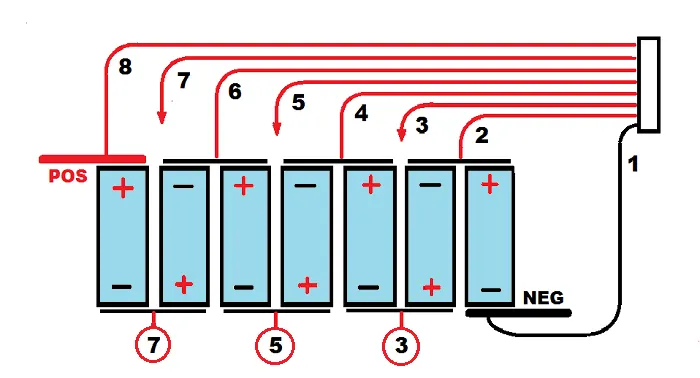
5. Cell Connections:
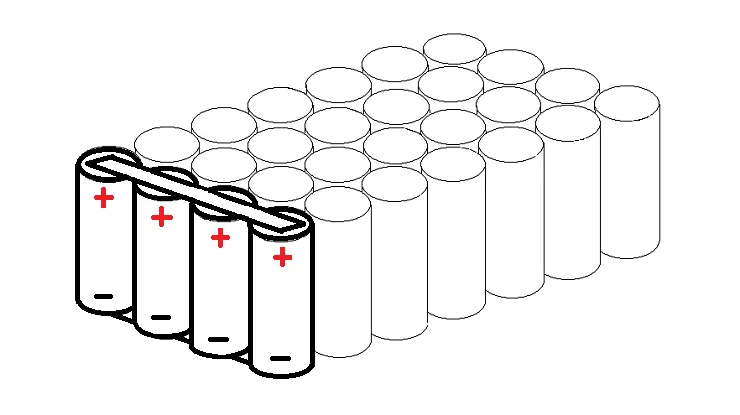
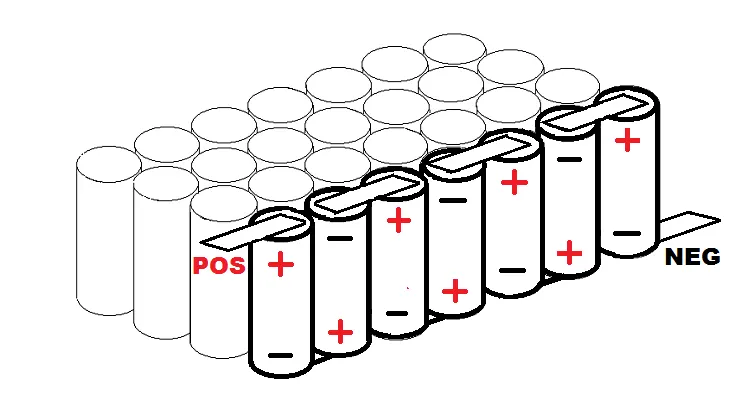
- Determine the desired series and parallel connections based on the desired voltage and capacity requirements.
- Connect the battery cells in the chosen configuration using appropriate methods. This can include spot welding, soldering, or using specialized connectors.
- Ensure proper polarity and secure connections between cells, maintaining low-resistance pathways.

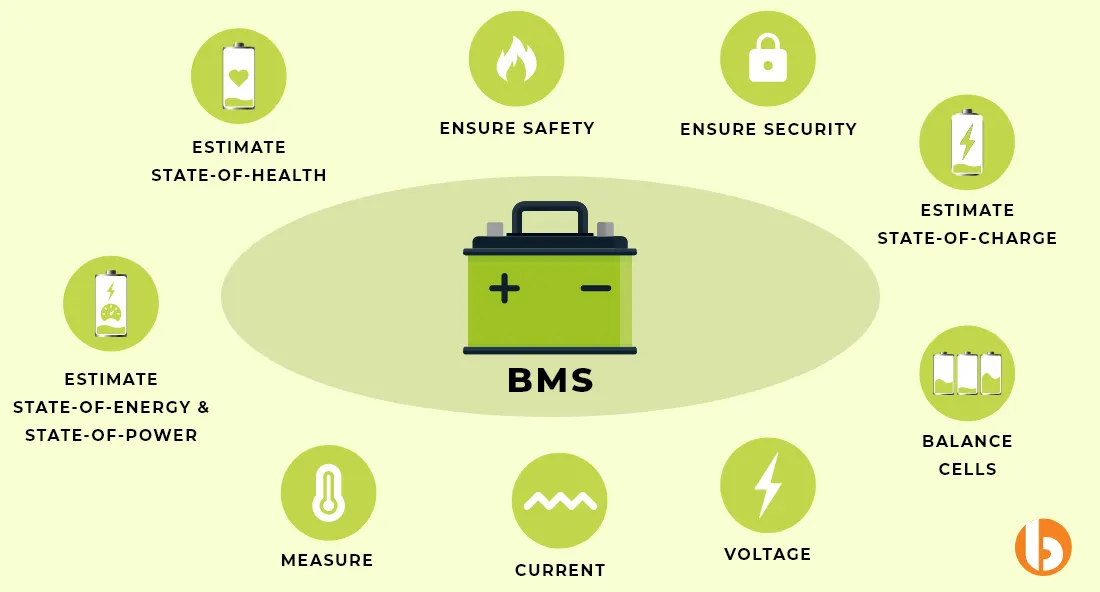
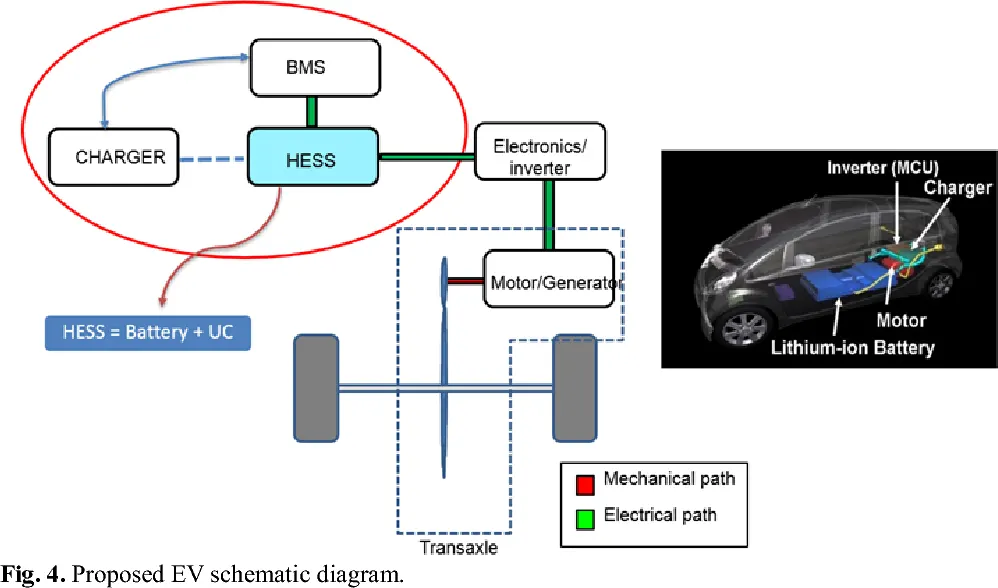
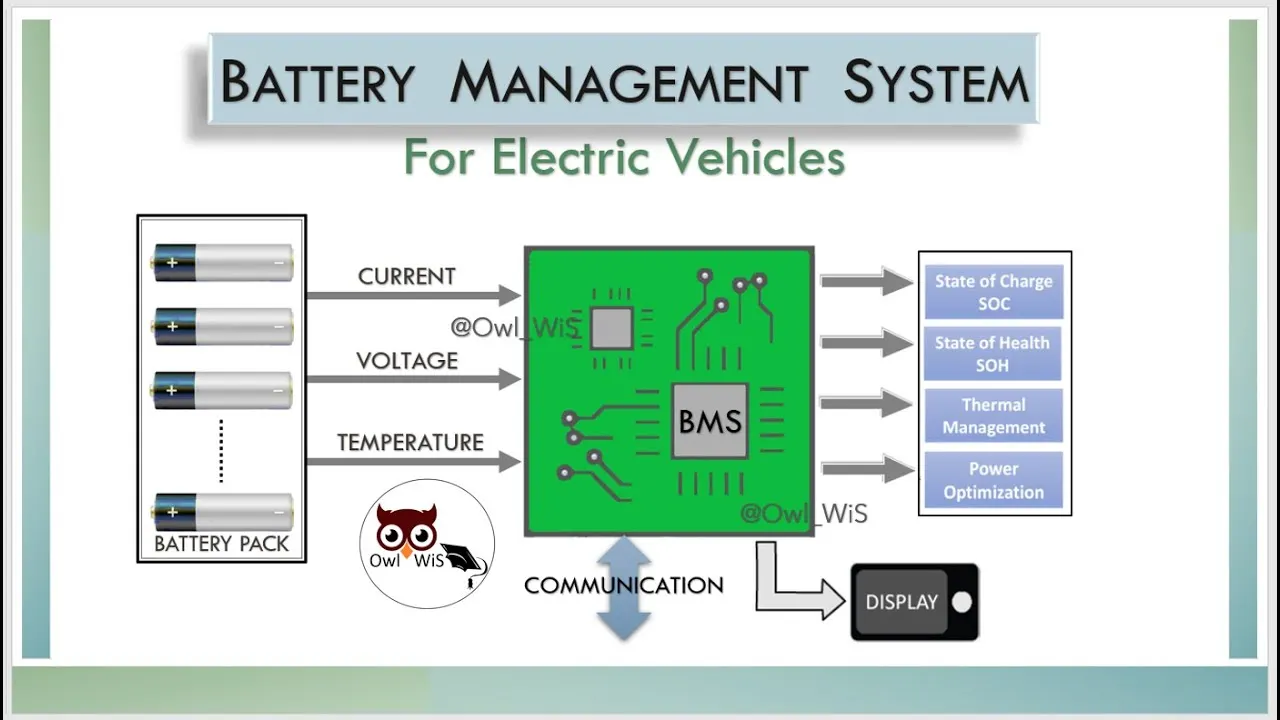
6. Battery Management System (BMS) Integration:
- Install a battery management system if required for your battery type.
- Connect the BMS components, such as the control board and sensors, to monitor and protect the battery.
- Ensure the BMS is properly calibrated and connected to the cell terminals.
7. Wiring and Connections:
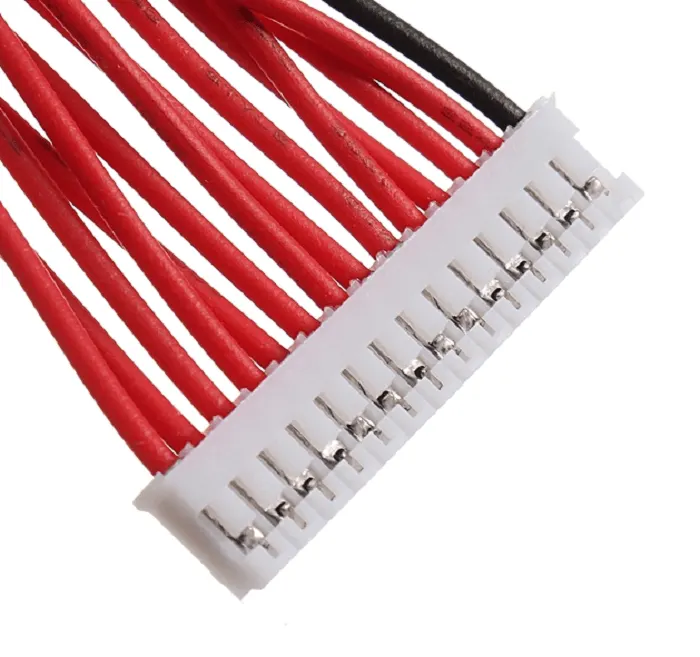
- Connect the battery pack to external terminals or connectors based on your application's requirements.
- Use appropriate wiring, such as thick gauge wires capable of handling the expected current.
- Incorporate safety features like fuses, circuit breakers, or surge protection devices if necessary.
8. Insulation and Final Assembly:
- Insulate exposed terminals and connections using insulation materials like heat shrink tubing or insulating tape.
- Securely place the assembled battery pack inside the chosen enclosure, ensuring proper alignment and fit.
- Fasten the enclosure using screws, clips, or other suitable methods to ensure a secure and robust construction.

9. Testing and Quality Assurance:
- Perform a thorough inspection of the battery pack, checking for any loose connections, damaged cells, or potential issues.
- Verify the voltage levels and the functionality of the battery management system (if present).
- Conduct a test run to evaluate the performance and safety of the battery pack, ensuring it meets the desired specifications and requirements.