Project 1 Mechanical design of battery pack
Battery pack capacity: 18 kWh
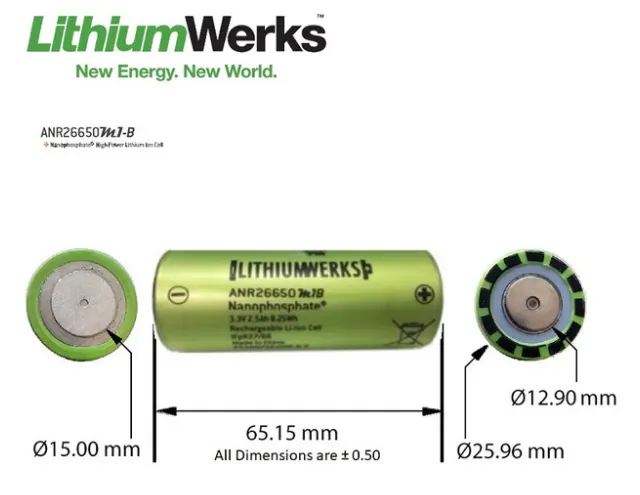
Cell: ANR26650M1-B
Nanophosphate High Power Lithium-ion Cell:
A123’s high-performance Nanophosphate lithium iron phosphate (LiFePO4) battery technology delivers high power and energy density combined with excellent safety performance and extensive life cycling in a lighter weight, more compact package. These cells have low capacity loss and impedance growth over time as well as high usable energy over a wide state of charge (SOC) range, allowing the systems to meet end-of-life power and energy requirements with minimal pack oversizing.
Applications:
Commercial use of this cell includes:
- Telecom Backup
- Datacenter UPS
- IT backup
- Autonomous Guided Vehicles (AGVs)
- Industrial robotics
- Material handling equipments
- Medical devices
Military use of this cell includes:
- Military vehicles
- Military power grids
- Soldier power
- Directed energy
Also used for grid solutions such as:
- Frequency regulation
- Renewables integration
- Reserve capacity
- Transmission and distribution
Hybrid, plug-in hybrid and electric vehicle battery systems for:
- Commercial vehicles
- Off-highway vehicles
- Passenger vehicles
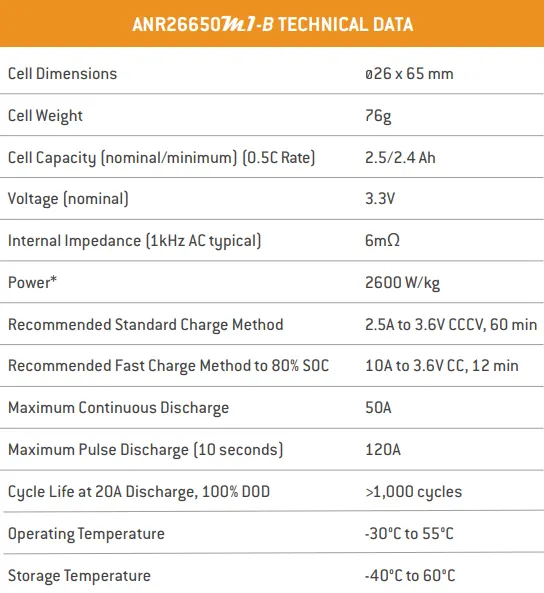
Technical data of ANR26650M1-B:
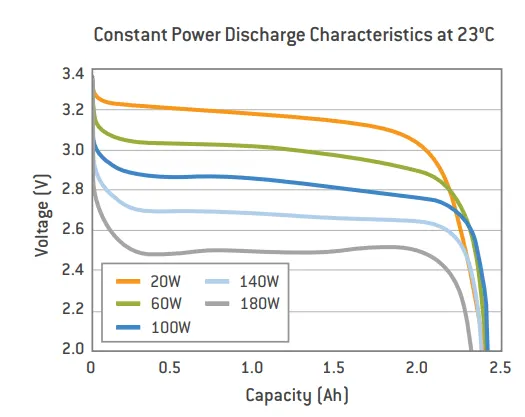
Discharge Characteristics:
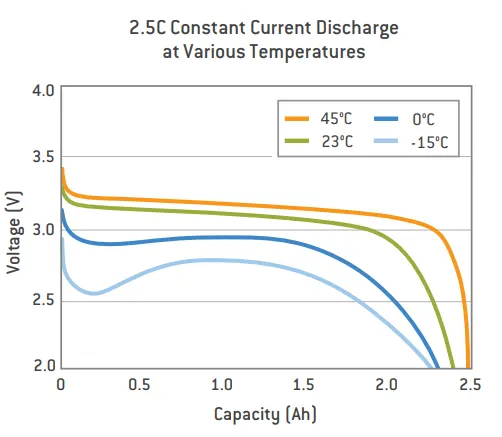
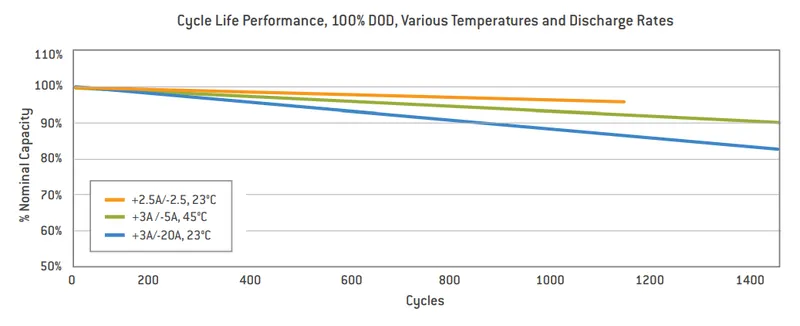
Features
The ANR26650M1-B is the next generation of A123 Systems’ pioneering 26650 cylindrical cell, now with greater power and energy density and lower impedance. This versatile lithium ion cell is suitable for a wide variety of applications and system designs. Proven performance in the toughest conditions, combining durability, reliability, and safety, the ANR26650 cell offers an excellent combination of price-performance.
Nanophosphate® LiFePO4 Benefits
- Cycle Life at 1C/1C, 100% DOD, > 4000 cycles
- Safety: Excellent abuse tolerance and environmentally friendly.
- Life: Excellent calendar life, 10X cycle life vs. conventional lithium ion
Designing of Battery Pack:
Battery pack capacity = 18 kWh
Assume, Voltage (to run the vehicle) = 400 V
Total Number of cells required = battery pack capacity / single cell energy
= 18000 / (nominal voltage * capacity of single cell)
= 18000 / (3.3 * 2.5) = 2182 Cells
From this 2182 cell we need to find the series - parallel configuration. In series the capacity reminds the same and voltage will be the sum of individual cell voltage whereas in parallel the voltage remains the same and capacity will be sum of individual cell capacity.
Hence to run the vehicle at 400 V, we can get the number of series cells required at 3.3 V nominal value.
Number of cells in series = 400 / 3.3 = 122 cells.
122 cells connected in series generates 400 V and the capacity of the whole module will be 2.5 Ah.
Now, to find out the number of cells connected in parallel:
Number of cells in parallel = total cell / cells in series = 2182 / 122 = 18 cells.
Hence we take 18 cells in each row eventhough it exceeds the required capacity.
Cell architecture will be 122S18P.
Then Battery capacity in parallel will be = 18 * 2.5 = 45 Ah.
Range of the vehicle can be find out by assuming the power train energy consumption as 100 Wh/km. Then,
Range = Capacity/energy consumed = 18000 / 100 = 180 km.
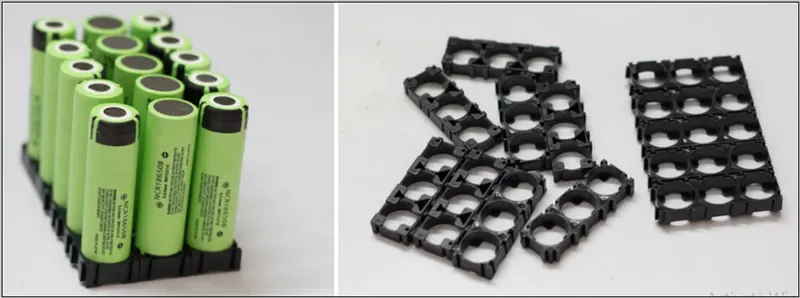
ANR26650 cell has a diameter of 26mm and a height of 65mm. Hence to find out the battery casing for the battery pack:
Length of casing = number of cells in series * (cell diameter + gap between cells on either side(4mm)) + clearence at side(diameter of edged cell+margin)
L = 122 * (26+4) + (2*(26+4 )) = 3720 mm
Width of casing = number of cells in parallel * (cell diameter + gap between cells on either side(4mm)) + clearence at side(diameter of edged cell+margin)
W = 18*30 + 60 = 600 mm
Height of the casing = heigh of the cell + (margin for wiring, cell holders and metal strips)
H = 65+35 = 100 mm
Hence for the battery pack the casing dimesion is 3720mm*600mm*100mm.
Weight of the battery pack = number of cell * cell weight + weight of accessories = 76*2182 + 4.5 = 170.3 Kg.
Hence weight of the battery pack is 170.3 Kg.
Battery Enclosures:
A battery enclosure is a box designed to protect batteries from potential weather and battery mishaps. They can be designed for indoor or outdoor use, and may include room for electronics. Specific designs allow for pole, wall, or ground mounted systems. The specific type of battery enclosure design is different given the application and requirements of the project. The features and functions differ depending on the location and needs of the system. In general, all battery enclosures should be vented. Passive venting should be adequate and active venting, like a fan, should only be required in rare cases.