Project 1 Mechanical design of battery pack
To prepare a detailed battery pack with capacity of 18 kWh drawing along with its enclosure. State your assumptions
Battery information
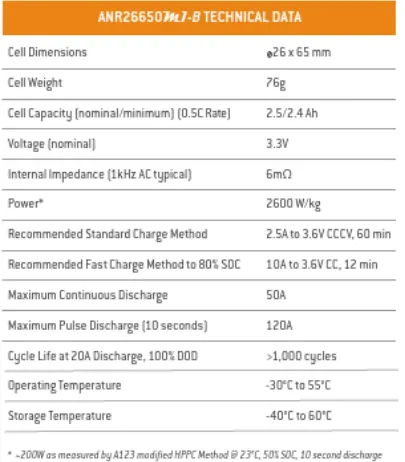
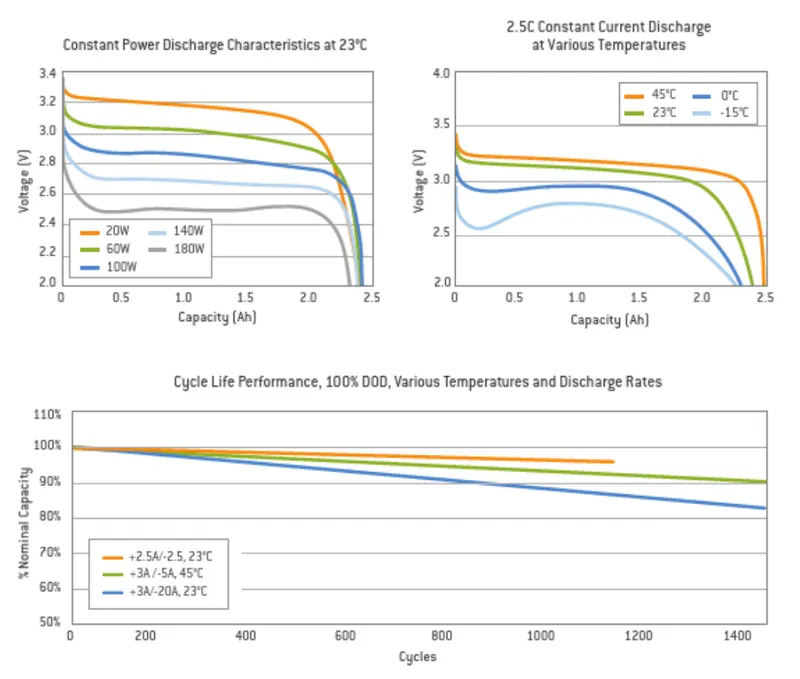
- A123's high-performance Nanophosphate lithium iron phosphate(LiFePO4)battery technology delivers high power and energy density combined with excellent safety performance and extensive life cycling in a lighter weight,more compact package.
- Our cells have low capacity loss and impedance growth over time as well as high usable energy over a wide state of charge(SOC)range, allowing our systems to meet end-of-life power and energy requirements with minimal pack oversizing.
- Applications
- COMMERCIAL SOLUTIONS
- Datacenter UPS
- Telecom backup
- IT backup
- Autonomously guided vehicles(AGVS)
- Industrial robotics and material handling equipment
- Medical devices
- GOVERNMENT SOLUTIONS
- Military vehicles
- Military power grids
- Soldier power
- Directed energy
- GRID SOLUTIONS
- Versatile,flexible and proven storage solutions for the grid:
- Frequency regulation
- Renewables integration
- Reserve capacity
- Transmission and distribution
- TRANSPORTATION SOLUTIONS
- Hybrid,plug-in hybrid and electric vehicle battery systems for:
- Commercial vehicles
- Off-highway vehicles
- Passenger vehicles
- COMMERCIAL SOLUTIONS
Battery pack for EV
- Given
- Energy = 18 kWh
- From the battery specifications we can find
- Capacity of the battery = 2.5 Ah
- Nominal voltage of the battery = 3.3 V
- From that we are assuming that the battery voltage should be 500 V
- No of cells needed (N)
- N = Energy / (Nominal voltage * Capacity of the battery)
- N = 18000 / (3.3 * 2.5)
- N = 2181.8
- Number of cells are cannot be in decimal so by rounding the cells we can get
- N= 2182
- Series parallel configuration of EV battery pack
- Cells in series (Ns) = Voltage required / nominal volatge
- Ns = 500 / 3.3 = 151.5
- Ns = 152 needed to be connected in series
- With the help of 152 series configuration of cells we can achieve 500 V
- Cells in parallel (Np) = Total cell (N) / No of series cells (Ns)
- Np = 2182 / 152 = 14.3
- Np = 15 nedded to be connected in parallel for the battery pack
- The architecture of the battery is 152S15P
- This combination of cells is higher than required cells (2182) , which exceeds the required amount of cells.
- Battery pack capacity
- For series combination only the voltage is added and the current remains same.
- For paralled configuration the volatge reamins same anfd the current gets added.
- So the capacity of the battery is = Number of cells in parllel (Np) * Battery capacity
- Capacity of the pack = 15 * 2.5
- Capacity of the pack = 37.5 Ah
- The battery packs delivers 37.5 A for an hour with an 0.5 C rate
- Lets assume the powertarin effiency to 85 % so the vehicle consumes 90 Wh/km
- Range = Energy delivered by the pack / Energy consumed per kilometer = 18000/90
- Range = 200 km
- So the battery pack can deliver upto 200 km per charge
- Charging time of the battery pack
- The capacity of the battery is 37.5 Ah
- The Charging current for 37.5 Ah pack
- Charging current for 37.5 Ah Battery = 37.5 x (10/100) = 3.75 Amperes
- But due to losses, we can take 3.75 - 4.5 Amperes for charging purpose.
- Charging time required
- Charging current = 4.5 A
- We took 4.5 Amp for charging purpose,
- Then charging time for 37.5 Ah battery = 37.5 / 4.5 = 50 minutes .
- Thermal management of the pack
- Indirect liquid cooling
- To avoid the short-circuit issue, indirect methods are effective to avoid electrical conduction with cells while maintaining high thermal diffusion
- The addition of electrical resistance may resist thermal diffusion. But its effects on cooling is not significant.
- Some EV manufacturers such as General Motors, and Tesla are using indirect cooling in their cars.
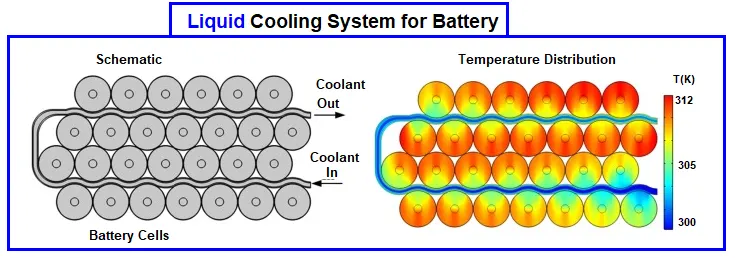
- Indirect liquid cooling
- Battery pack Enclosure
-
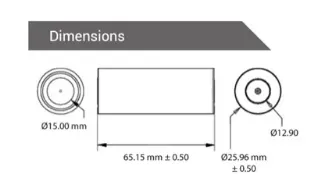
- For the ANR26650 the length of the battery is 65.15 mm and the diameter of the battery is 25.96 mm
- Lets assume that clearnce of the cell sholud be 65 mm
- Length of the casting (L) = no of cells at series * (cell diameter + margin at both sides of the cell ) + clearance at side (diameter of edged + margin)
- L = (152 * (26.01+4)) + 65
- L = 4626.5 mm
- Breadth of casting (B) = no of cells at parallel * (cell diameter + margin at both sides of the cell ) + clearance at side (diameter of edged + margin)
- B = (15 * (26.01+4)) + 65
- L = 515.2 mm
- Height of the encloser = Height of cell+margin for wiring,Cell holders and metal strips
- H = 65.15 + 40
- H = 105 mm
-
- Weight of the pack (W)
- Pack weight = weight of each cell * total nop of cells
- Pack weight = 76 * 2182
- Pack weight = 166 kg
- W = Pack weight + (Enclosure weight + metal straps)
- W = 166 + (0.5+3)
- W = 169.5 kg
- Assembling the ANR26650M1-B Cells
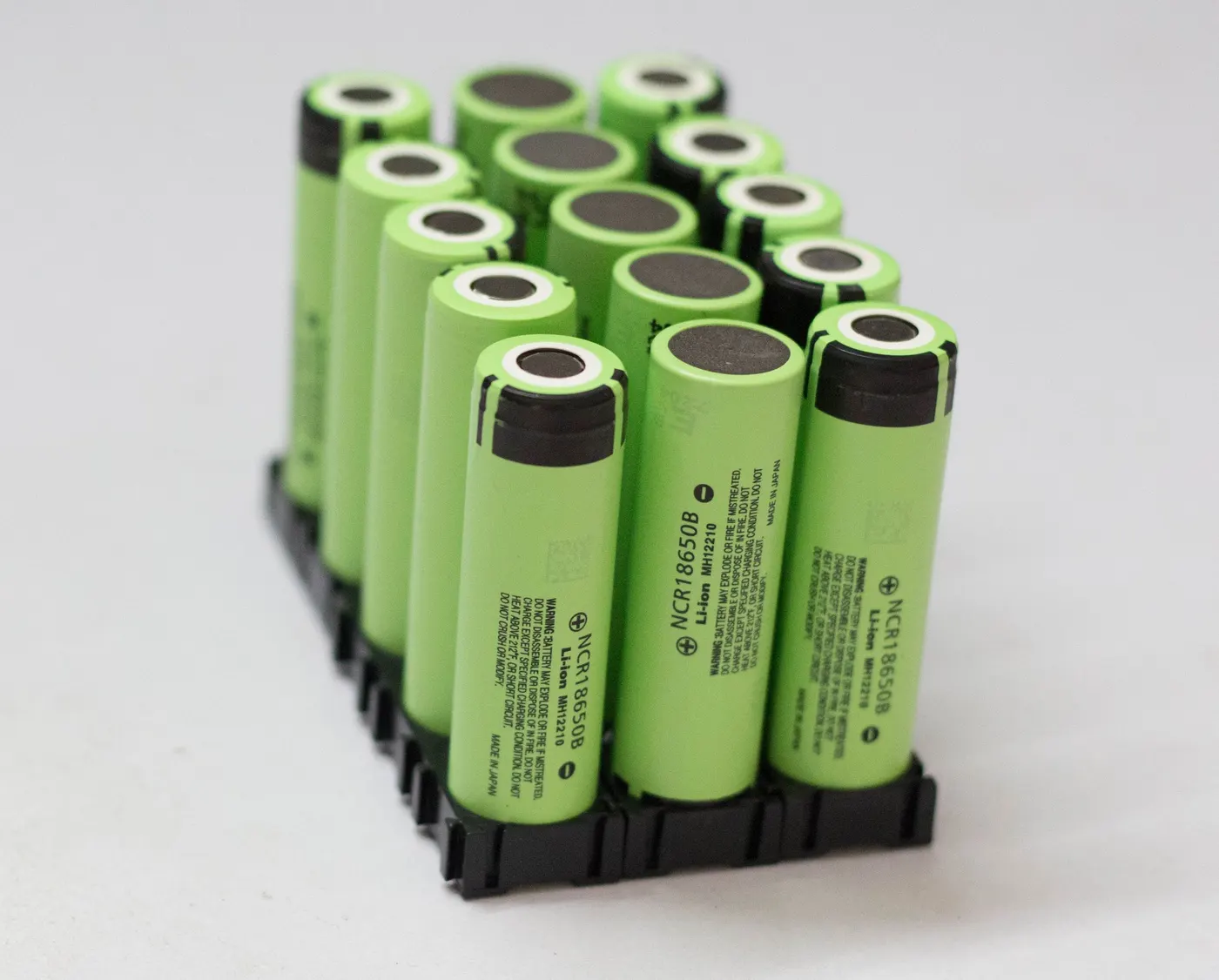
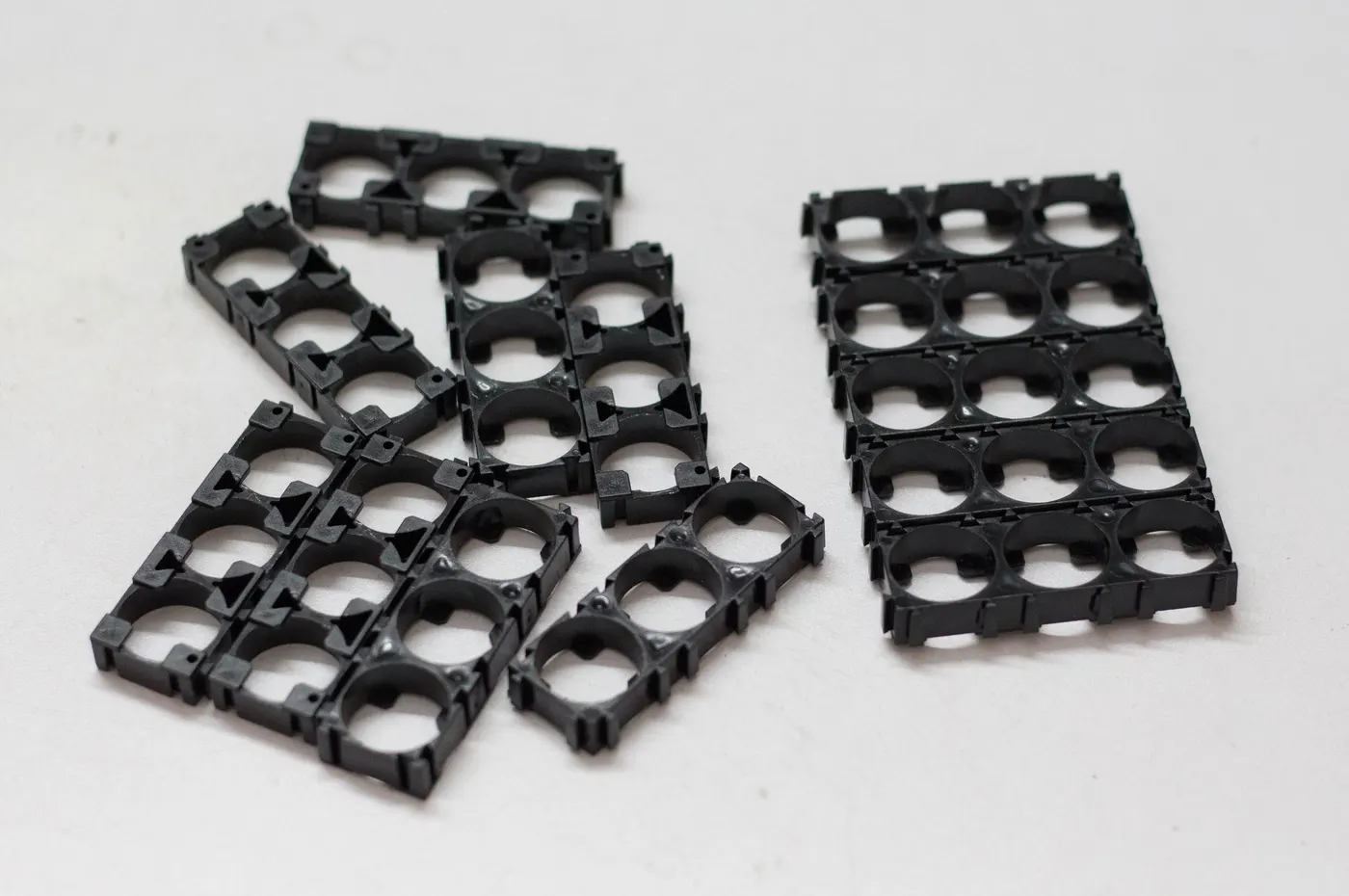
- From the previous step, it is clear that our battery pack is made up of 152S15P ( 15 x 3.3V = 500V ), and each parallel group has 152 cells
- We can assemble the cells to make the pack by using hot glue or by using a plastic ANR26650M1-B battery holder.
- We can make a custom pack of any size according to your requirement . It is obtained from Battery pack Enclosure
- It provides space between the cells, which allow fresh air to pass and the battery gets cooled easily.
- It makes your battery pack solid and reliable.
- It provides safety anti-vibration to your battery pack
- Choosing the right componemts for encloser
- Metal strips
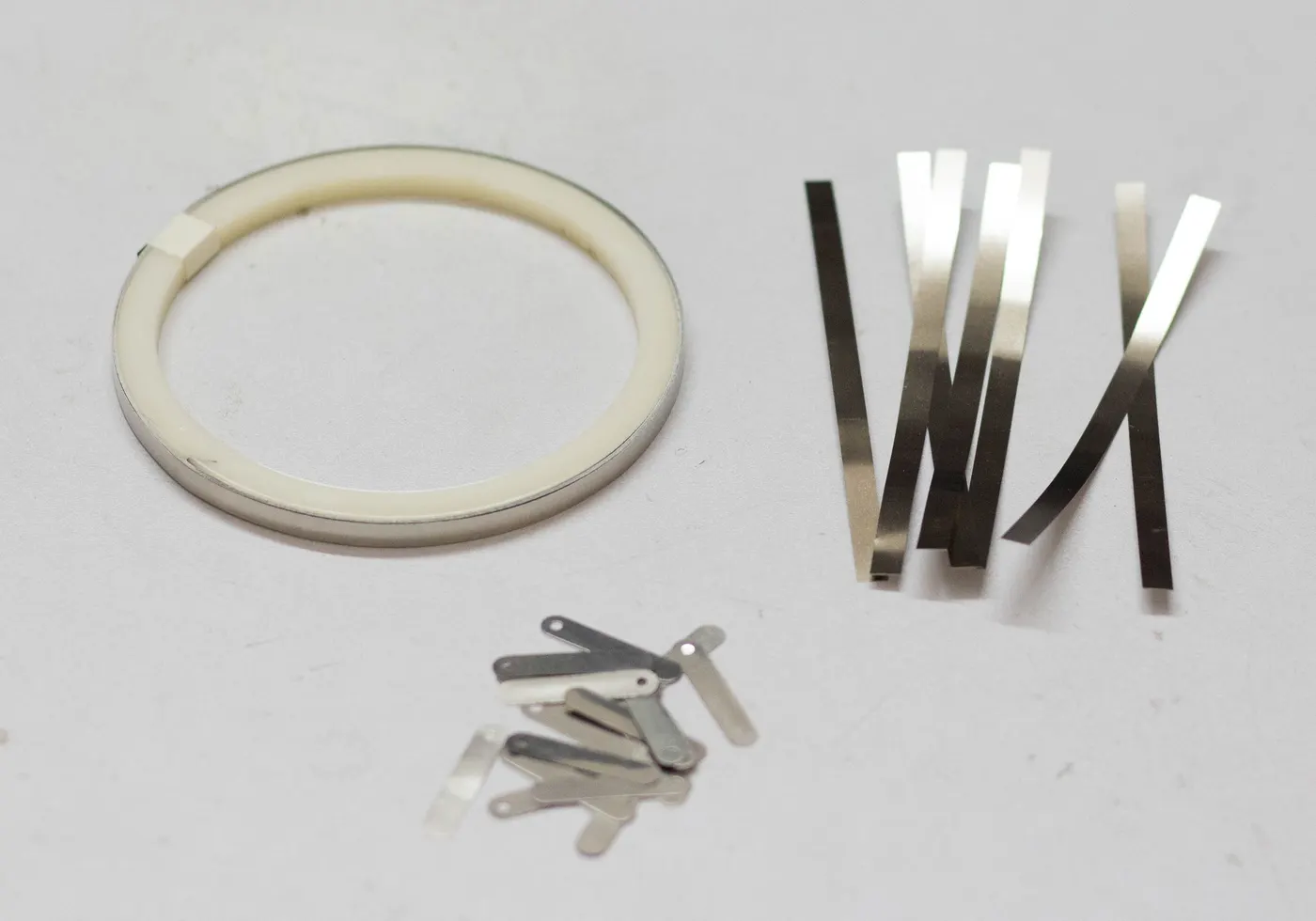
- To make the battery pack, you have to connect the 2182 cells together by means of Nickel strips or thick wire.
- Generally, Nickel strips are widely used for this.
- In general two types of nickel, strips are available in the market:
- Nickel-plated steel strips
- Pure nickel strips.
- I will suggest buying a pure nickel.
- It is a little bit costlier than nickel-plated steel, but it has much lower resistance.
- Low resistance means, less heat generation during the charging and discharging, which leads to longer useful battery life.
- Nickel strips come with different dimensions and lengths. Choose the strips according to the current rating.
- Metal strips


- Spot Welding Vs Soldering
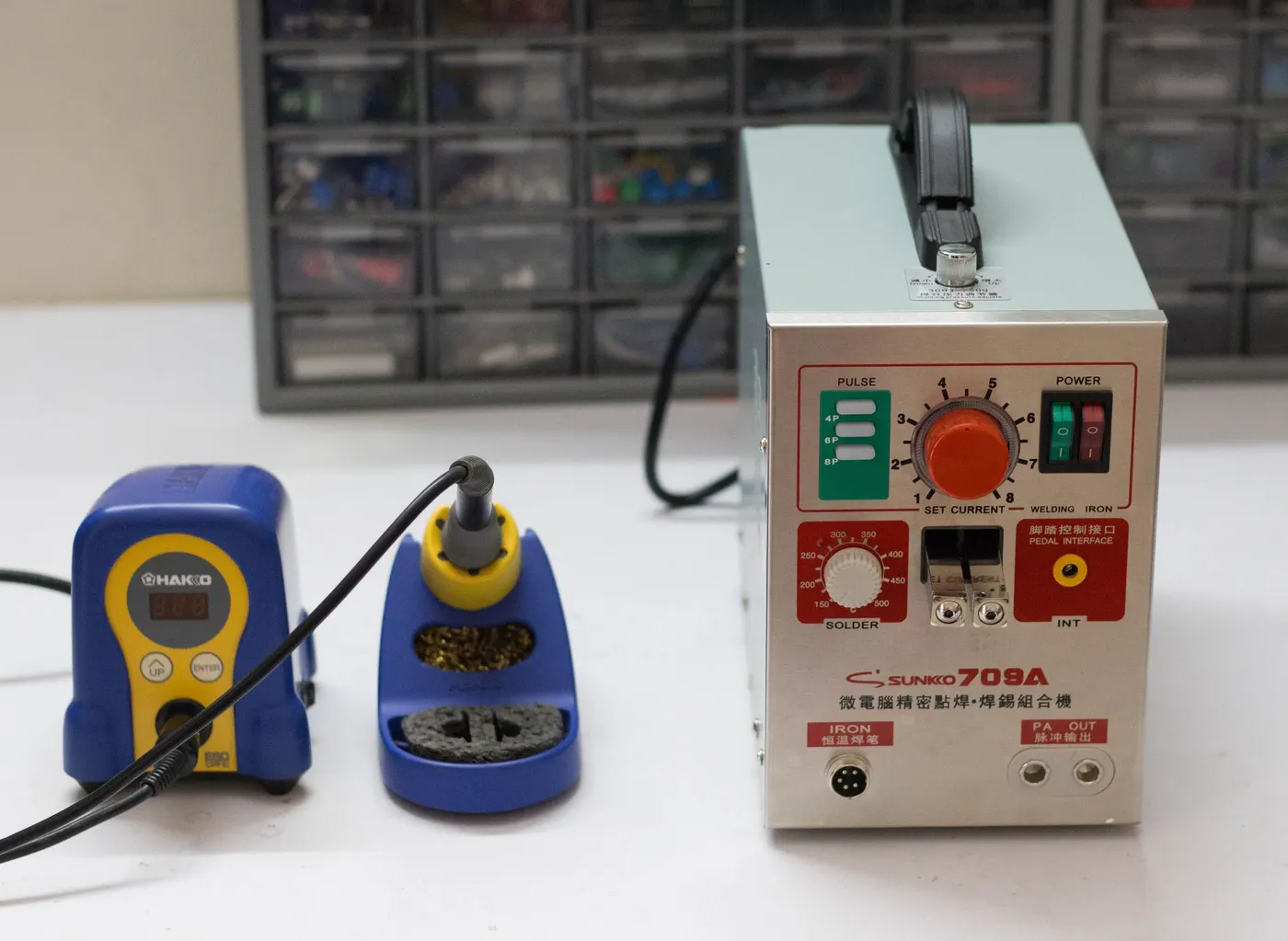
- We have two options two connect the ANR26650M1-B cells together
- Soldering
- Spot Welding
- The best choice is always Spot welding, but Spot Welder is much costlier than a good quality Soldering Iron.
- Soldering :
- We should know why Spot welding is preferred over soldering, the problem with soldering is that you apply a lot of heat to the cell and it doesn’t dissipate very quickly.
- This enhances the chemical reaction in the cell which damages the cell's performance.
- Ultimately you will lose some capacity and life the cells.
- Spot Welding :
- The reason we spot weld because it securely joins the cells together without adding much heat to them.

Referernce
- I reffered those following articles