Project 1 Mechanical design of battery pack
Aim: To design the battery pack of 18kWh using the ANR26650M1-B cells for EV.
Live Batch - EV 20
Formulae:
- Power = Voltage*Current (W)
- Energy = Power(W) * Time(h). (Wh)
- Specific energy density = Battery pack energy / Weight of the battery pack (Wh/kg).
- Volumetric Energy Density = Battery pack capacity / Volume of the battery pack(Wh/L).
Objective of the project:
- To calculate the cells requried for the 18kWh energy output.
- Considering the voltage and current values for the EV.
- Decide the parallel and series connection configuration that to provide the rated current and voltage.
- Calculate the charge and discharge current of the battery pack.
- Design the casing for the housing of the battery pack.
- Calculate the Energy density of the pack.
Assumptions:
- Voltage of the battery pack is 500 volts (explained below).
Content of the body:
Data sheet of ANR26650M1-B cell:
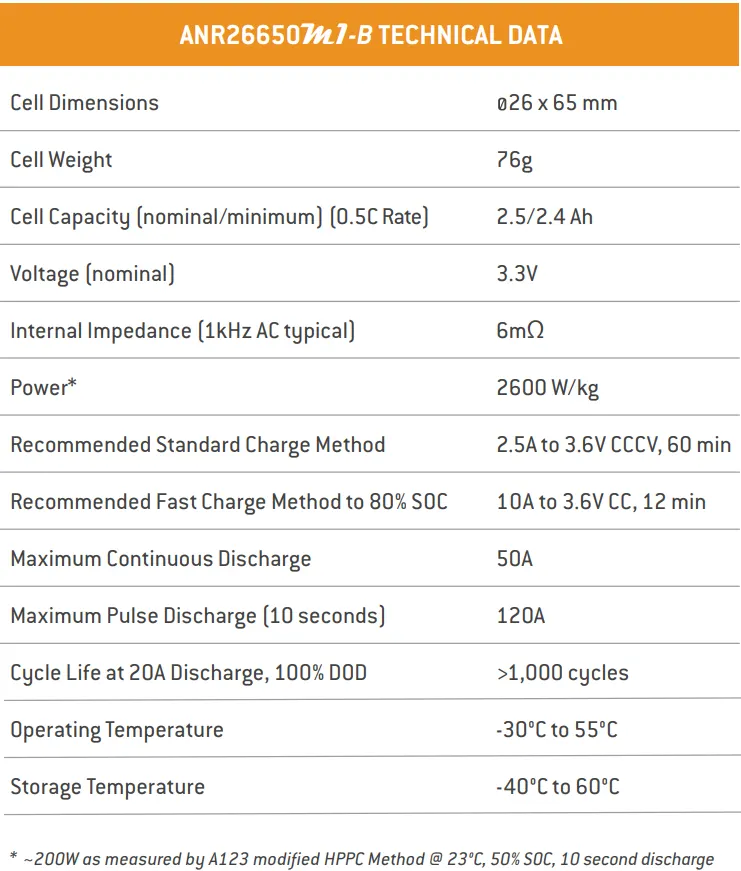
Characteristics of the ANR26650M1-B cells:
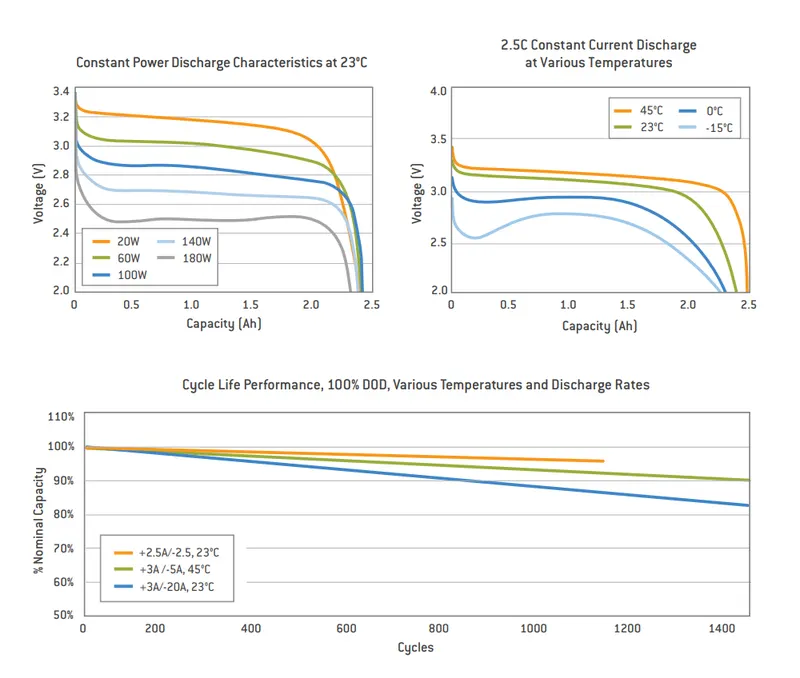
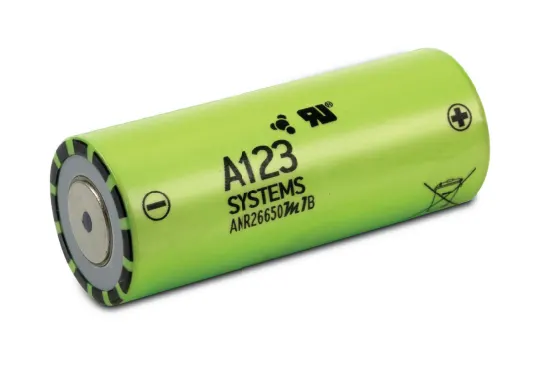
Specifications of Cell: ANR26650M1-B:
| Nominal Voltage (volts) | Current (Amps) | Capacity (Ah) | C-Rate | Operating Temperature (degree celsius) | Life cycle |
| 3.3 | 1.25 | 2.5 | 0.5 | -30 to 55 | >1000 cycles |
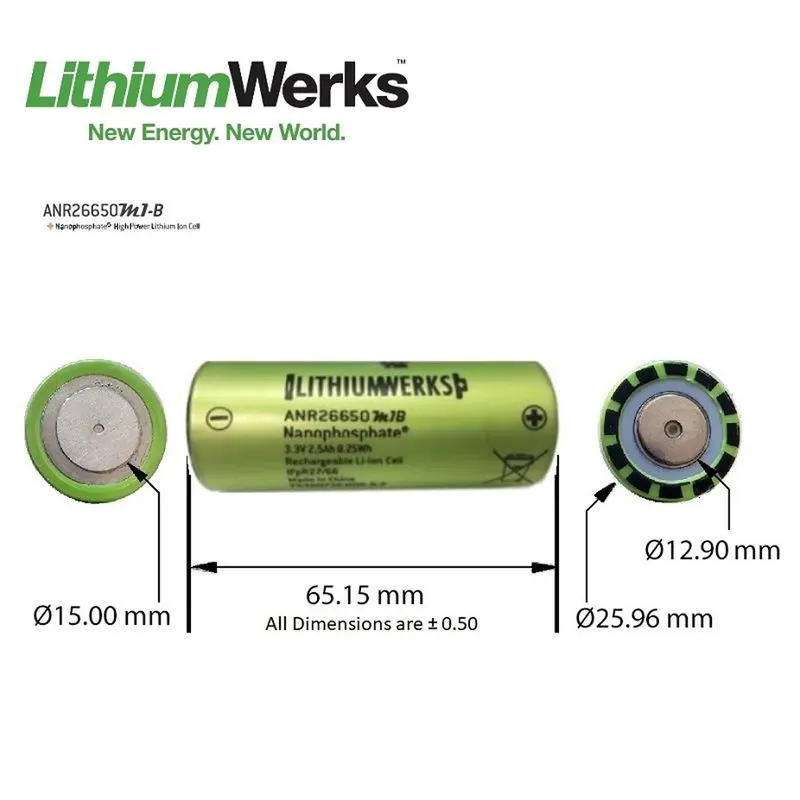
Dimensions of Cell: ANR26650M1-B:
| Parameters | Length (mm) | Diameters (mm) | Weight (g) |
| Cell: ANR26650M1-B | 65.15 | 26 | 76 |
The specifications, properties and characteristic data is provided above.
Types of cells use in automotive battery applications:
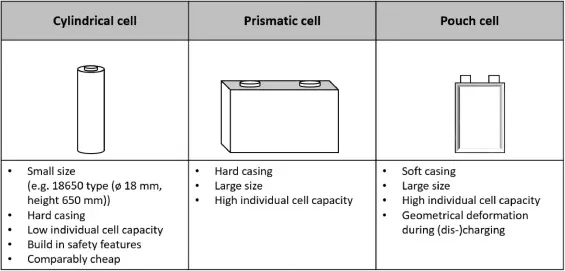
- The above table represents the different cell types used in automotive battery applications: cylindrical cell, prismatic cell, pouch cell respectively.
Spacing for cooling:
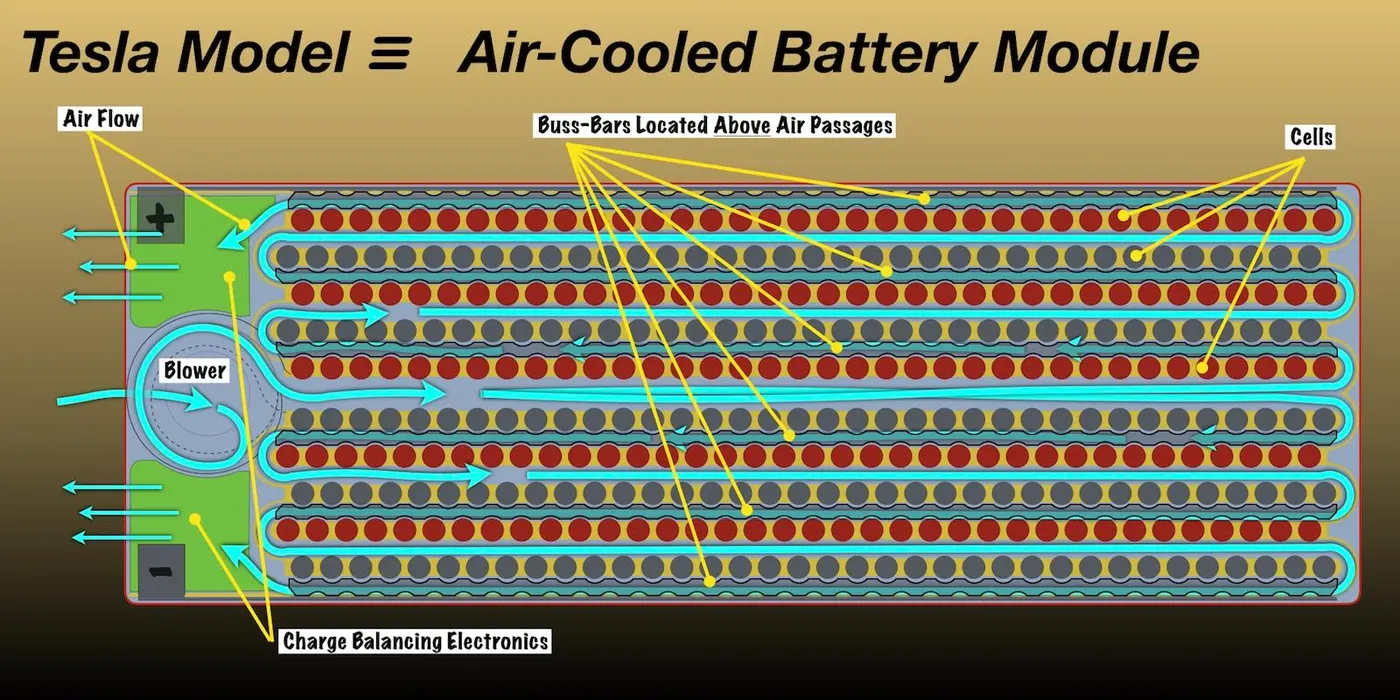
- The above images represents the spacing and cooling systems provided for the battery pack.
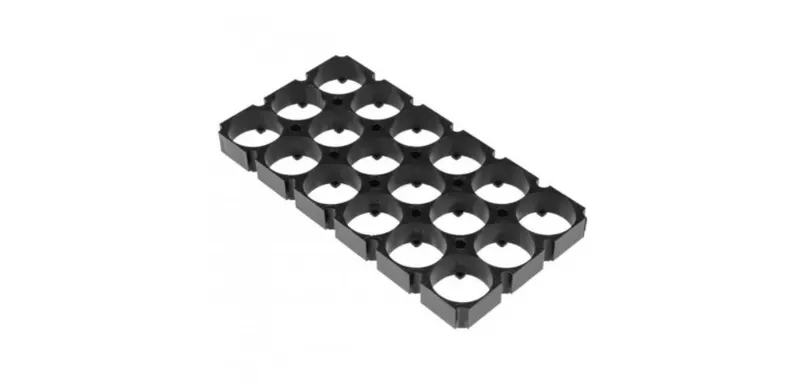
- The above image represetns the slots to hold the cells in place and to provide support.

- The above images represents the spacing and casing provided for cooling vents, support and shock absorbing for batteries (taken as 2mm for each side of cell).
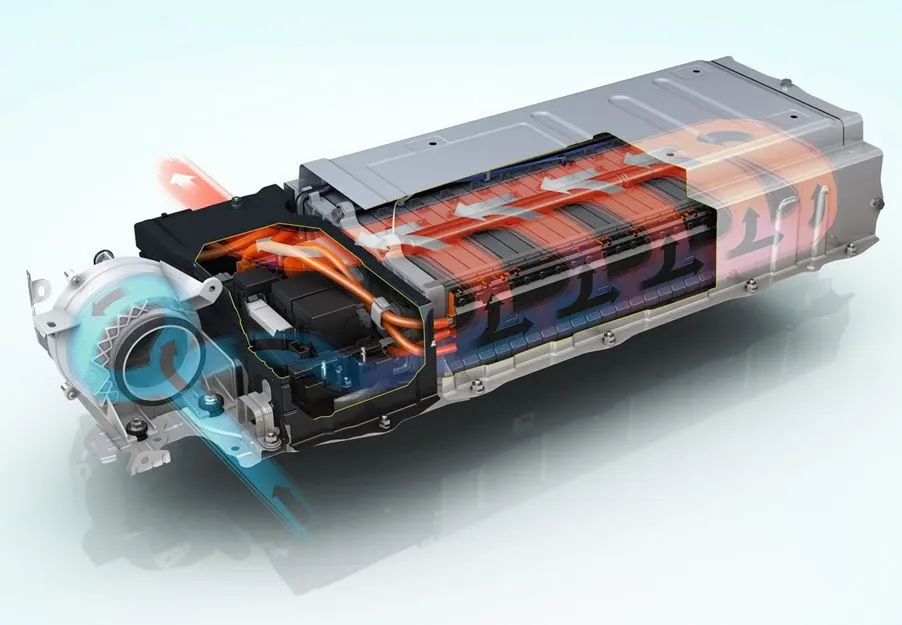
- The above system represents the Cooling system and battery pack.
Battery packing components:
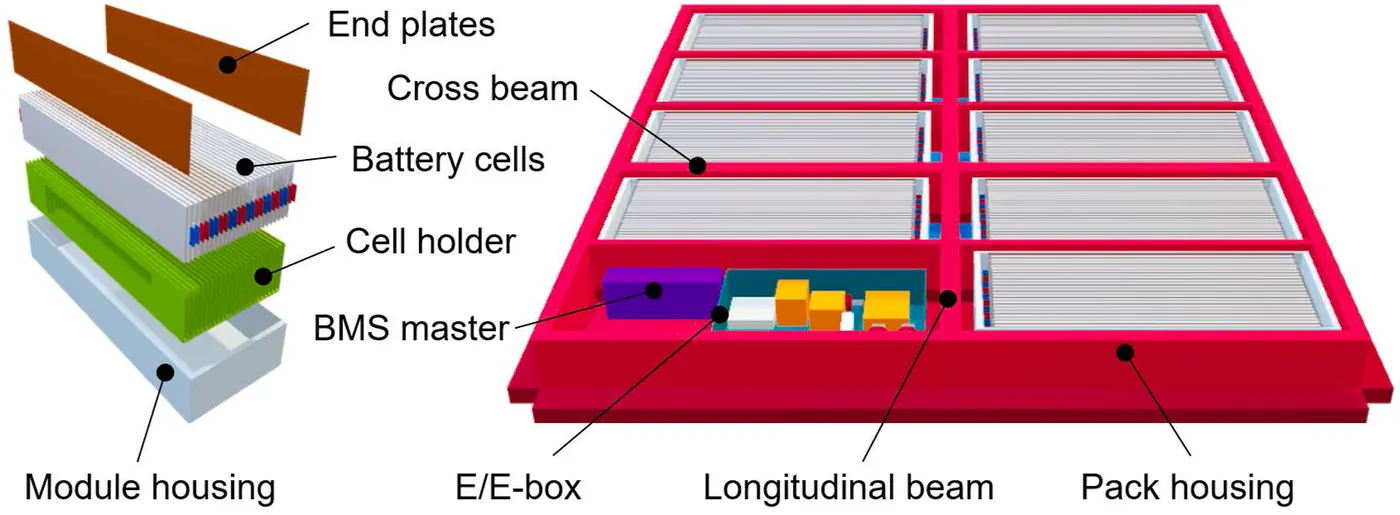
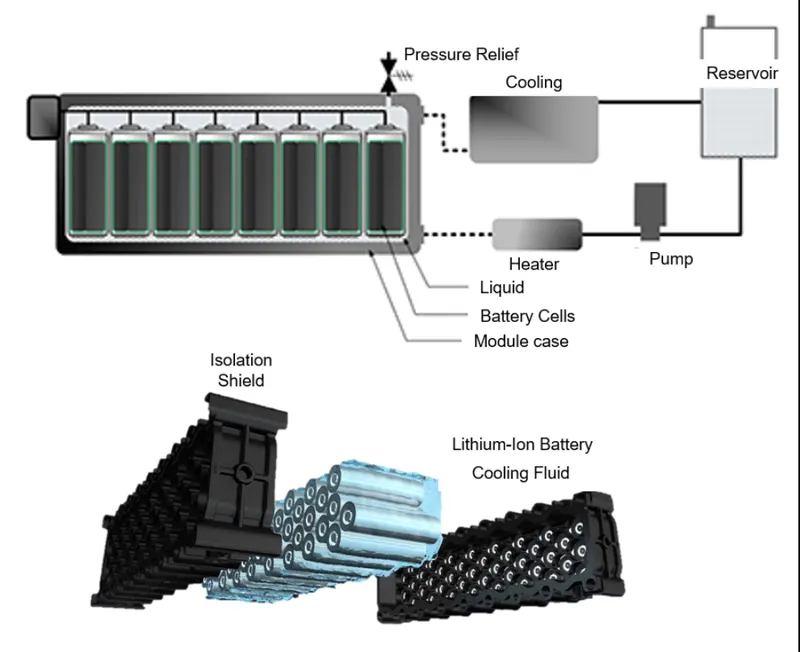
- The above images represents the cooling system provided for the various battery pack.
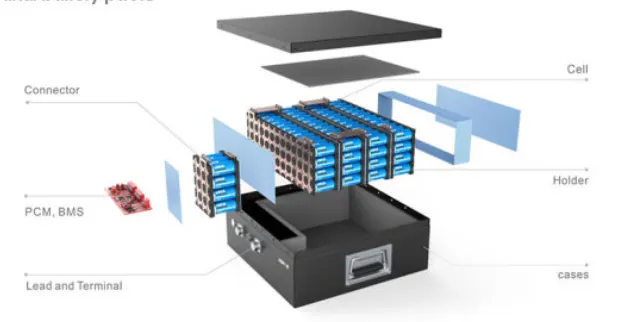
- The above image shows the packing of cells and its components.
As the batteries are connected in series the voltage incresases to the number of cell in series.
If the batteries are connected in parallel the capacity(Ah) increases to the number of cell in parallel.
There are various parameters which influence the battery pack modelling directly like power requried, range, charging speed, efficiecy, safety, size weight of the vehicle, assuming the normal condition the calculations are done for the battery pack of energy capacity 18 kWh.
The space between the cell for cooling is given for th purpose to dessipate the generated heat generated by the cells.
There are various types of cooling, most of them use air cooling or liquid cooling.
The slots/casing to hold cells are used for two main purposes one for support and other for shock absorption to prevent any damage to the cells.
Spot welding is used to join the terminals of the cells with nickel plated strip.
The whole setup with all the necessary contents (BMS,Cooling system) are packed so to avoid any water contact to make them water proof(IP67).
Calculations:
- The operating battery pack voltage of EV is from 200 - 800 volts.
- Taking the median value for the calculation i.e. 500 volts.
- As we have voltage requried and voltage we can calculate the Battery pack power, as Power = Voltage * Current. (W) and Power = Energy/voltage.
- Power capacity = VI
- Energy = Power capacity * Time
- Energy = V * I * T
- T * I = Energy/V = 18 / 500 = 36 Ah.
- Current capacity pack = 36 Ah.
- Calulating the cell in series to attain 500 volts:
- Nominal voltage = 3.3 volts.
- Number of cells in series = Pack voltage / Individual cell voltage = 500/3.3 = 151.51 ~ 152 cells.
- Ns = 152 cells.
- Total number cells requried to achieve the requried capacity:
- Individual cell capacity = 2.5 Ah.
- Pack capacity = 36 Ah.
- Number of cell = Pack capacity/Individual cell capacity = 36/2.5 = 14.4 ~ 15.
- Np = 15 cells.
- Total number of cells =Ns * Np = 152 * 15 = 2280 number of cells.
- Configuration of Battery pack is 152S15P.
- Charging current:
- C-Rate of the battery = 0.5C.
- Charging current = C-Rate * Maximum capacity = 0.5 * 36Ah = 18 Amps.
- To charge the battery pack from 0 to 100% SOC from 18 Amps charger it will take 2 hours to charge the battery of capacity 36 Ah.
- It will take 2 hours to charge the battery with 0.5 C-Rate.
- Discharge current:
- With 0.5 C-Rating:
- Discharge current = C-Rate * Maximum capacity = 0.5 * 36 = 18 Amps.
- Discharge current available at default C-Rate is 18 Amps.
- It will take 2 hours to discharge the battery with 0.5 C-Rate.
Mechanical Design:
- Weight of the battery pack
- = Individual cell weight * Number of cells.
- Weight of the battery pack = 76grams * 2280 = 173280 = 173.2 kilograms.
- Dimensions calculation:
- Length of the pack:
- Length of the battery casing(L) = Number of cells in series * (cell diameter + Individual spacing(casing + cooling)).
- Spacing = 2mm on each side of cell.
- L = 152 * (26 + 4) = 4560mm = 4.56 meters.
- Length of the battery casing = 4.56 meters.
- Width of the pack:
- Width of the pack(w) = Number of sets in series * ( cell diameter + Spacing)
- w = 15 * ( 26 + 4) = 450mm = 0.45meters.
- Width of the pack(w) = 0.45 meters.
- Area requried:
- Area requried(A) = L * w = 4.56*0.45 = 2.052 square meters.
- Volume of the pack:
- Volume of the pack = Area requried * cell height.
- Volume of the pack = 2.052 * 0.06515 = 0.133 cubic meters.
- Volume of the pack = 0.133 cubic meters = 133.3 liters
- Length of the pack:
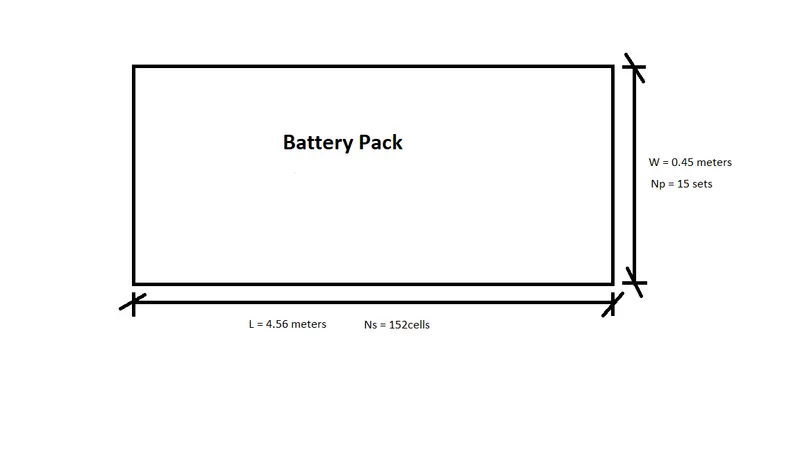
Energy desity calculations:
- Specific Energy Density:
- Specific energy density = Battery pack energy / Weight of the battery pack.
- Specific energy density = 18000/173.2 = 103.9 Wh/kg.
- Volumetric Energy Density:
- Volumetric Energy Density = Battery pack capacity / Volume of the battery pack.
- Volumetric Energy Density = 18000/133.3 = 135.03 Wh/L
Cost of the battery pack:
- Each cell costs $6.55.
- Total number of cells = 2280.
- Total cost of the cells = Total number of cells * Cell cost = 2280 * 6.55 = $14934.
Results:
The results are tabulated below:
| Properties | Cell: ANR26650M1-B |
| Voltage (volts) | 500 |
| Current capacity (Amps-hrs) | 36 |
| Number of cell in series | 152 |
| Number of cell sets in parallel | 15 |
| Total number of cells | 2280 |
| C-Rate | 0.5 |
| Charge current (Amps) | 18 |
| Discharge current (Amps) | 18 |
| Charge Time (with 0.5C) | 2 Hours. |
| Specific energy density (Wh/kg) | 103.9 |
| Volumetric energy density (Wh/L) | 135.03 |
| Length of battery pack (m) | 4.56 |
| Width of the battery pack (m) | 0.45 |
| Area requried for battery pack (sq mtr) | 2.052 |
| Volume of the battery pack (cubic mtr/Liters) | 0.133.3/133.3 |
Conclusions:
- The batterypack for energy capacity 18kWh is designed and the following parameters are explained and tabulated above.
References:
- M. Kerler, P. Burda, M. Baumann and M. Lienkamp, "A concept of a high-energy, low-voltage EV battery pack," 2014 IEEE International Electric Vehicle Conference (IEVC), 2014, pp. 1-8, doi: 10.1109/IEVC.2014.7056185.
- John Warner,
Chapter 3 - Basic Terminology,
Editor(s): John Warner,
The Handbook of Lithium-Ion Battery Pack Design,
Elsevier,
2015,
Pages 23-33,
ISBN 9780128014561,
https://doi.org/10.1016/B978-0-12-801456-1.00003-8
(https://www.sciencedirect.com/science/article/pii/B9780128014561000038)
Keywords: Acronyms; CARB; Definitions; EV; Terminology - John Warner,
Chapter 4 - Battery Pack Design Criteria and Selection,
Editor(s): John Warner,
The Handbook of Lithium-Ion Battery Pack Design,
Elsevier,
2015,
Pages 35-49,
ISBN 9780128014561,
https://doi.org/10.1016/B978-0-12-801456-1.00004-X
(https://www.sciencedirect.com/science/article/pii/B978012801456100004X)
Keywords: Battery design; Concept; Engineering; Formula; Lithium-ion - Florian Pampel, Stefan Pischinger, Moritz Teuber,
A systematic comparison of the packing density of battery cell-to-pack concepts at different degrees of implementation,
Results in Engineering,
Volume 13,
2022,
100310,
ISSN 2590-1230,
https://doi.org/10.1016/j.rineng.2021.100310