Project 1 Mechanical design of battery pack
AIM: To develop a mechanical design of a battery pack of capacity 18KWh using cell ANR26650M1-B.
THEORY:
Battery:
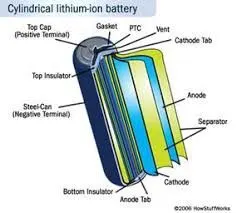
The battery considered for the construction of the battery pack is Lithium Ion Battery. This is considered as the battery of future. Its negative electrode is lithiated carbon intercalation material instead of metallic lithium and its positive electrode is lithiated transition metal intercalation oxide. The electrolyte is either liquid organic solution polymer and each cell has a nominal voltage between 3.5 – 4V.
All batteries have positive and negative terminals, marked (+) & (-) respectively, and two corresponding electrodes. The electrodes must not touch each other, and are separated by the electrolyte, which facilitates the flow of electric charge between the electrodes. A collector conducts the charge to the battery’s exterior and through the load.
Basic Parameters of Battery:
#Capacity: The capacity of the battery or cell is defined as the amount of energy that it can deliver in a single discharge. It is measured in "amp-hour" and "watt-hours" as this is also the measure of power it can supply.
#Cell Voltage: Potential difference between the cell terminal. It is differentiated into Maximum, Minimum and Nominal voltages. Usually, nominal voltage is taken for calculation and design.
#Charge Capacity: It is often referred to as the charge capacity as this is the amount of charge the battery can hold.
#Charge Rate (C-Rate): It is the rate of charge or discharge of a battery relative to its rated capacity.
#Constant Current Charge: This refers to a charging process where the level of current is maintained at a constant level regardless of the voltage of the battery or cell.
#Constant Voltage Charge: This refers to a charging process where voltage applied to a battery is held at a constant value over the charge cycle regardless of the current drawn.
#Cycle Life: The cycle life of batteries is the number of charge and discharge cycles that a battery can complete before losing performance.
#Cut-off Voltage: It is defined as the voltage at which the discharge is terminated by any battery management system. This point may also be referred to as End-of-Discharge voltage.
#Deep Cycle: A charge discharge cycle in which the discharge is continued until the battery is fully charged. This is normally taken as the point at which it reaches its cut-off voltage, typically 80% of discharge.
#End of Life(EoL): It is reached when the battery cannot perform according to its predefined minimum specifications.
#State of Health(SoH): It measures the percentage of useful life remaining before the battery reaches EoL.
#Rated Capacity: It is the total charge that can be obtained from a fully charged battery under specified discharge conditions.
#Self Discharge: Usually batteries and cells lose their charge over a period of time. The quantity varies from battery to battery.
#Specific Power: It is the gravimetric power density expressed in Watts per Kg.
#State of Charge(SOC): State Of Charge(SOC), is the equivalent of a fuel gauge for a battery.
#Depth of Discharge(DOD): indicates the percentage of the battery that has been discharged relative to the overall capacity of the battery.
Battery Pack:
A battery pack is a set of any number of (preferably) identical batteries or individual battery cells. They may be configured in a series, parallel or a mixture of both to deliver the desired voltage, capacity, or power density.
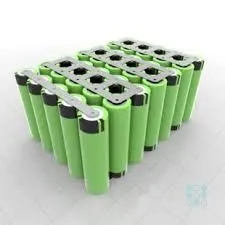
Simply put, cells, modules and packs are units of gathered batteries. A cluster of cells make up a module and a cluster of modules make up a pack. Ultimately, in an electric vehicle, one form of battery is installed: a pack.
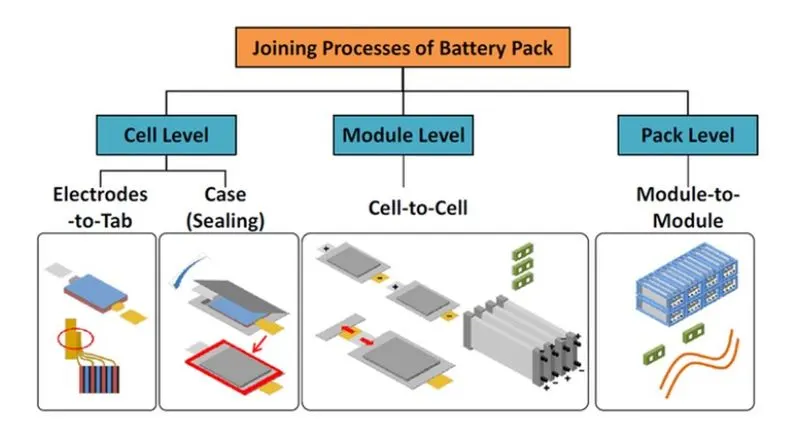
Components of a battery pack include the individual batteries or cells, and the interconnection which provide electrical conductivity between them. Rechargeable battery packs often contain a temperature sensor, which the charger uses to detect the end of charging. Interconnections are also found in batteries, as they are the part which connects each cell. Commonly, batteries are arranged in series strings.
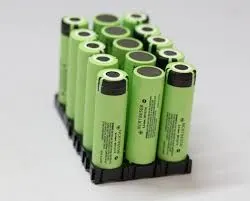
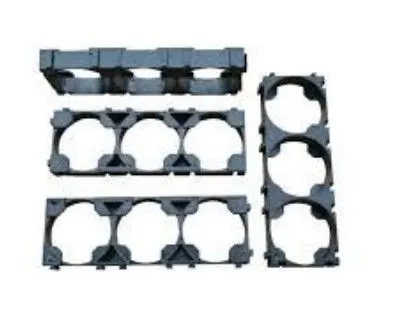
A new type of battery, called a smart battery, provides the computer with information about its power status so that the computer can conserve power intelligently.
Battery packs are constructed from two or more individual cells or batteries. There are 2 basic types of battery packs: primary and secondary or rechargeable. Primary batteries are disposable, non-rechargeable devices. They must be replaced once their energy supply is depleted. Secondary batteries contain active material that can be regenerated. When the energy produced by these industrial batteries drops below optimum efficiency, they may be recharged according to various methods, depending on the battery construction. Secondary batteries are useful in applications where frequently replacing disposable batteries is more costly, such as in electric vehicles, handheld power tools and automobile starters.
When a battery pack is inserted into an electric device, the device completes the circuit between the 2 terminals and triggers electrochemical reactions within the battery. The anode of the battery undergoes an oxidation reaction with the electrolyte and releases electrons, while the cathode undergoes a reduction reaction and absorbs the free electrons. The product of these 2 reactions is electricity, which is channeled out of the battery, summed by the battery pack and into the device.
When a secondary battery pack is recharged, its electrodes undergo an opposite process to the discharge action described above. As the battery charger passes electricity through the battery pack. When the battery is fully charged, it can be connected to a load and discharged again.
# Advantages:
* Ease of swapping in or out of the device.
* Allows multiple packs to deliver extended runtimes, freeing up the device for continued use while charging the removed pack separately.
* Flexibility of their design and implementation, allowing the use of cheaper high-production cells or batteries to be combined into a pack for any application.
* At the end of product life, batteries can be removed and recycled separately, reducing the total volume of hazardous waste.
# Disadvantages:
* When servicing a battery pack as they pose a danger as potential chemical, electrical and fire risks
Calculating SOC:
State Of Charge(SOC), is the equivalent of a fuel gauge for a battery. SOC cannot be determined by a simple voltage measurement, because the terminal voltage of a battery may stay substantially constant until it is completely discharged. In some types of battery, electrolyte specified gravity may be related to state of charge but this is not measurable on typical battery pack cells, and is not related to SOC on most battery types. Most SOC methods take into account voltage and current as well as temperature and other aspects of the discharge and charge process to in essence count up or down within a pre-defined capacity of a pack. More complex state of charge estimation systems take into account the Peukert effect which relates the capacity of the battery to the discharge current.
Calculating Battery lifetime:
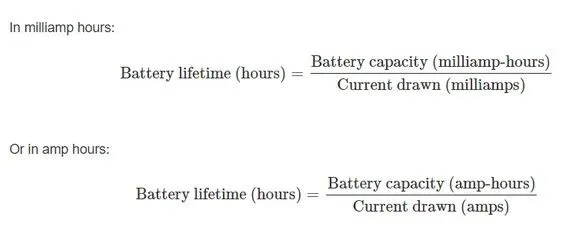
Calculating Battery lifetime:

Where,
V = Voltage(volts); I = Current(amps); and T = Time for which current flows before battery is exhausted.
CELL Used:
ANR26650M1-B, LithiumWerks Nanophosphate, Lithium Iron Phosphate(LiFePO4) (Formerly A123), 3.3 V, 2.5 Ah Cylindrical Battery.
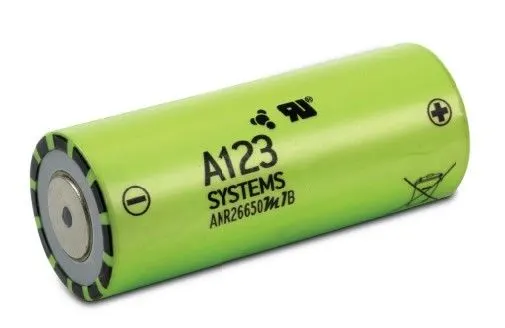
Specifications:
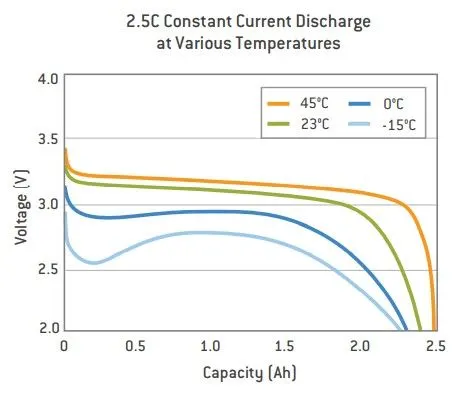
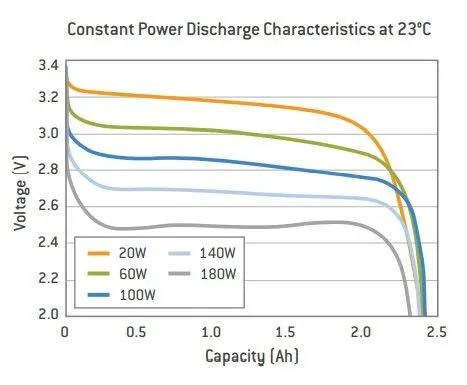
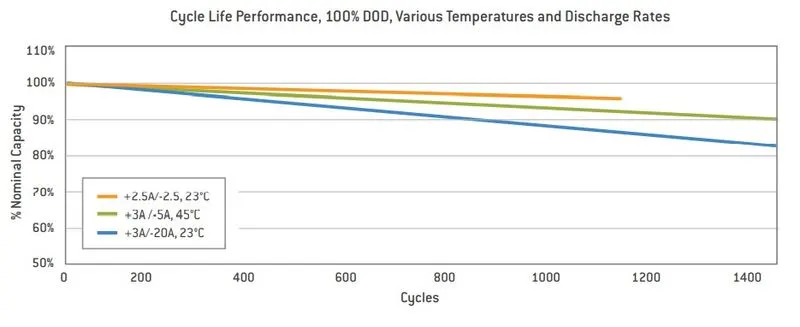
The following data is provided by the manufacturer in thier data sheet.
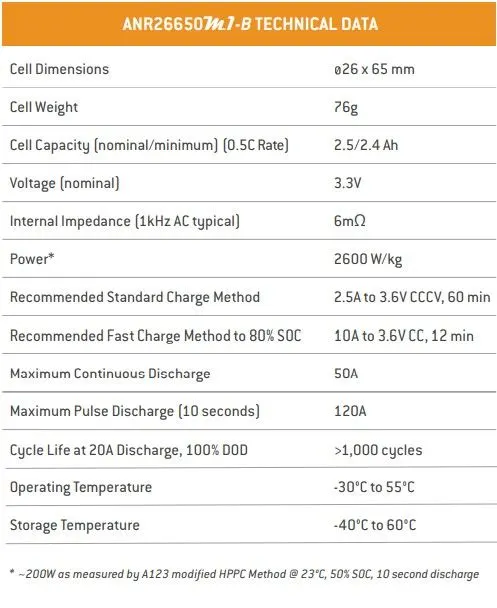
The LithiumWerks ANR26650M1-B is the next generation of A123 Systems’ pioneering 26650 cylindrical cell, now with greater power and energy density and lower impedance. This versatile lithium ion cell is suitable for a wide variety of applications and system designs.
These cells are capable of delivering very high power due to its use of patented Nanophosphate battery technology as it offers stable chemistry, faster charging, consistent output, excellent cycle life and superior cost performance over a wide range of temperatures and conditions.
Cylindrical Cell Applications:
* Portable High power devices.
* Stationary battery backup systems.
* Grid stabilization energy storage systems.
* Commercial truck and bus hybrid electric vehicles (HEVs).
Calculation for battery pack:
Battery energy = 18KWh
*Number of cells(N) = {energy / (nominal voltage * capacity)}
N = {18000 / (3.3 * 2.5)}
N = {18000/8.25} = 2,181.81 ~ 2,182
Minimum of 2182 cells will generate the desires energy of 18KWh.
Assuming that the voltage required by the battery to run the vehicle is 360V
We know that in series configuration, capacity remains the same and voltage will be the sum of individual cell voltage. In case of parallel configuration, the voltage remains the same and capacity accumulates.
Number of series cells required to produce 360V (Ns) = {voltage required / nominal voltage of one cell}
Ns = {360 / 3.3} = 109.09 ~ 110
110 cells are connected in series will generate 360 voltage and the capacity of the module is 2.5Ah. This connection of 110 cells in series connection is called as battery module.
Number of battery modules to be in parallel connection (Np) = {total number of cells / number of cells in series[Ns]}
Np = {2182 / 110}
Np = 19.83 ~ 20
We need 20 battery modules (connected in series) to be connected in parallel to make up the battery pack.
Thus, 110s20p cell architecture is used to construct the battery pack. Although, it is exceeding the required quantity of required cells it is negligible.
Calculation for battery capacity:
We know that the parallel configuration of cells multiplies individual cell capacity.
Capacity = { Number of cells connected in parallel * individual cell capacity}
Capacity = {20 * 2.5}
Capacity = 50Ah
Calculation for current supplied by the battery:
With the 50Ah capacity of the battery. It means that it is going to supply 50A current for 1 hour. Thus, making the C-rate as 50A.
Calculation for range offered by the battery:
Assuming, the power train energy consumption = 100Wh/km without any losses
Range = { Capacity / energy consumed per km}
Range = { 18000 / 100}
Range = 180 km
So, the vehicle will be able to cover around 180km with the considered parameters.
Calculation for battery pack volume :
To find the overall total volume required to make the battery pack (110s20p)
For single module,
-> Length = { (number of cells in row * [cell diameter + margin at both sides of cell]) + clearance at side}
Length = { (110 * [26+5])+ (2*[26+5])}
Length = {3,410 + 62} = 3,472mm = 3.47m
-> Breadth = { Cell diameter + margin of both side of cells + clearance}
Breadth = {26+5+62} = 93mm = 0.093m
-> Height = { height of cell + connecting strip/wires thickness}
(assuming the thickness of connecting strips both sides together as 35mm)
Height = {65+35} = 100mm = 0.1m
-> Thus, volume required for one module = {3.47 * 0.093 * 0.1} = 0.0322 m^3
-> Total volume for pack = { no. of parallel connections * volume of one module}
Total volume of pack = { 20 * 0.0322} = 0.644m^3
We can use almost use approximately 1m^3 of volume can be used for the space for battery pack considering other extra accessories attached for performance improvement.
CONCLUSION:
Thus the mechanical design for 18KWh battery pack is made with 110s20p successfully.