Project 1 Mechanical design of battery pack
AIM:
Battery pack capacity: 18 kWh
Cell: ANR26650M1-B
Prepare a detailed battery pack drawing along with its enclosure. State your assumptions.
Nanophosphate® High Power LithiumIon Cell ANR26650M1-B
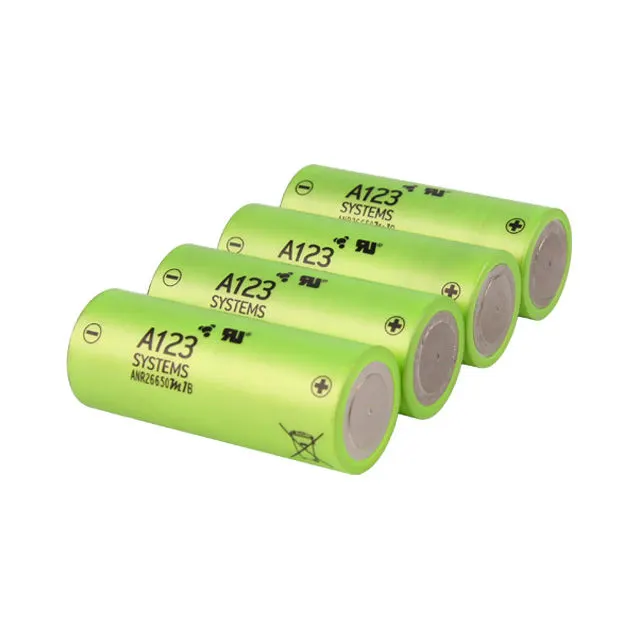
A123’s high-performance Nanophosphate® lithium iron phosphate (LiFePO4) battery technology delivers high power and energy density combined with excellent safety performance and extensive life cycling in a lighter weight, more compact package. Our cells have low capacity loss and impedance growth over time as well as high usable energy over a wide state of charge (SOC) range, allowing our systems to meet end-of-life power and energy requirements with minimal pack oversizing.
COMMERCIAL SOLUTIONS
Advanced lead acid replacement batteries for:
- Datacenter UPS
- Telecom backup
- IT backup
- Autonomously guided vehicles (AGVs)
- Industrial robotics and material handling equipment
- Medical devices
GOVERNMENT SOLUTIONS
- Military vehicles
- Military power grids
- Soldier power
- Directed energy
GRID SOLUTIONS
Versatile, flexible and proven storage solution for the power grid.
- Frequency regulation
- Renewables integration
- Reserve capacity
- Transmission and distribution
TRANSPORTATION SOLUTIONS
Hybrid, plug-in hybrid and electric vehicle battery systems for:
- Commercial vehicles
- Off-highway vehicles
- Passenger vehicles
| ANR26650M1-B TECHNICAL DATA | |
| Cell Dimensions | 26 x 65 mm |
| Cell Weight | 76g |
| Cell Capacity (nominal/minimum) (0.5C Rate) | 2.5/2.4 Ah |
| Voltage (nominal) | 3.3V |
| Internal Impedance (1kHz AC typical) | 6mΩ |
| Power* | 2600 W/kg |
| Recommended Standard Charge Method | 2.5A to 3.6V CCCV, 60 min |
| Recommended Fast Charge Method to 80% SOC | 10A to 3.6V CC, 12 min |
| Maximum Continuous Discharge | 50A |
| Maximum Pulse Discharge (10 seconds) | 120A |
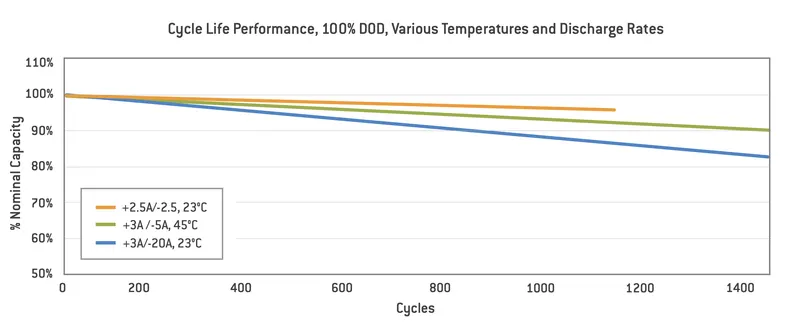
| Cycle Life at 20A Discharge, 100% DOD | >1,000 cycles |
| Operating Temperature | -30°C to 55°C |
| Storage Temperature | -40°C to 60°C |
ABOUT THE CELL:
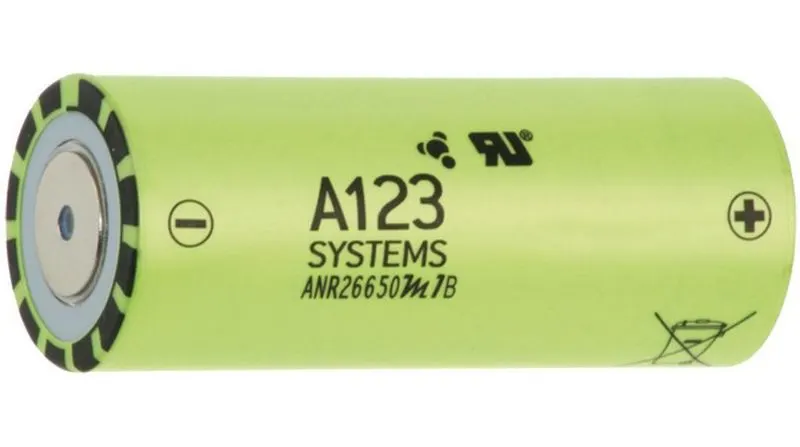
he ANR26650M1-B is the next generation of A123 Systems’ pioneering 26650 cylindrical cell, now with greater power and energy density and lower impedance. This versatile lithium ion cell is suitable for a wide variety of applications and system designs.
ABOUT BATTERY PACK
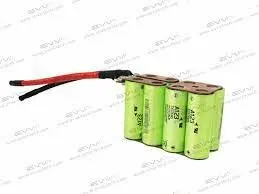
A battery pack is a set of any number of preferable identical batteries or individual battery cells.They may be configured in a series, parallel or a mixture of both to deliver the desired voltage, capacity or power density.
MECHANICAL DESIGN OF A BATTERY PACK:
The high voltage battery is one of the component of a battery electric vehicle. The battery parametes have a significant influence on the other components and the attributes of the vehicle like:
- maximum traction motor torque
- maximum regeneration braking torque
- vehicle range
- vehicle total weight
- vehicle price
Pretty much all the apects of an electric vehicle depends on the parameter of high voltage battery. For our electric vehicle battery design we are going to start from 4 core input parameters.
- chemistry
- voltage
- averege energy consumption of the vehicle on a driving cycle
- vehicle range
A battery consists of one or more electrochemical cells which are converting chemical energy into electricwl energy during discharging and elecrical energy into chemical energy while charging. The type of elements contained within a battery and the chemical reactions during discharging and charging events define the chemistry of the battery.
A battery cell contains 5 major components:
- electrode
- seperators
- terminals
- electrolyte
- case/enclosure
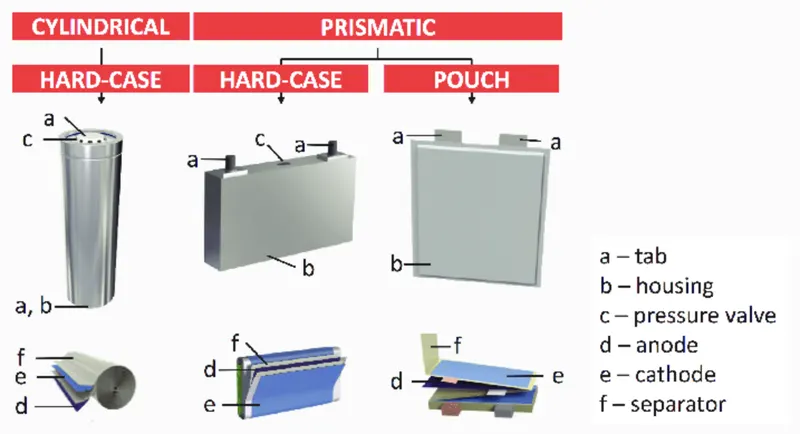
Individual battery cells are grouped together ito a single mechanical and electrical unit called a battery module. The modules are elctrcally connected to form a battery pack.
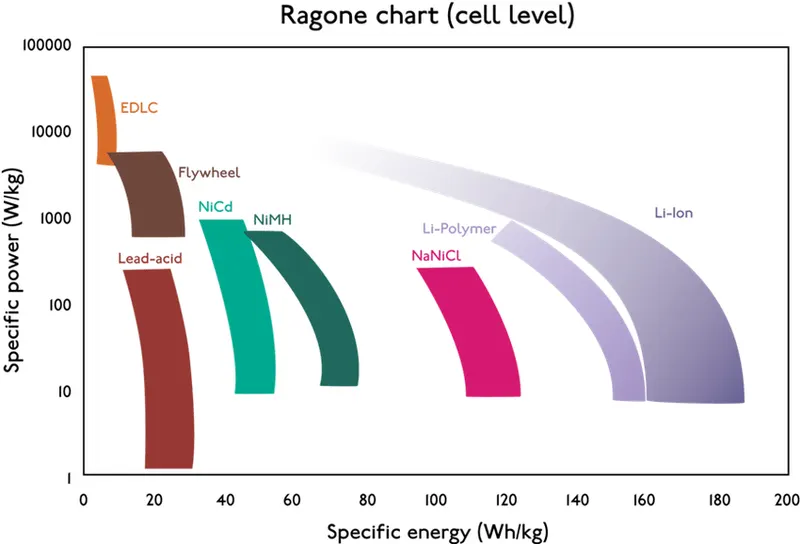
There are several types of battery used in hybrid and electric vehicle ppulsion system, but we are going to consider only Lithium-ion cells. The main reason is that Lithium-ion batteries have hiher specific energy and specific power compareed with the other type of batteries.
EV DESIGN-BATTERY CALCULATIONS:
ASSUMPTIONS:
Battery energy = 18kwh
Voltage to run the vehicle = 400V
(1) Energy = 18kWh
(2) No. of cells (N)= energy/(nominal voltage*capacity)
N = 18000/(3.3*2.5)
N = 2182
We need a minimum of 2182 cells to get 18kWh energy, now based on that, we need to decide configuration - series and parallel. In series configuration capacity remains same and voltage will be the sum of individual cell voltage.
In a parallel configuration, the voltage remains the same and the capacity accumulates.
We assumed that 400V are needed to run the vehicle.
The nominal voltage of one cell is 3.3V.
No. of series cell required to required to produce 400V (Ns) = voltage required/nominal voltage of one cell
Ns = 400/3.3
Ns = 121.21 = 121
121 cells are connected in series will generate 400 voltage and the capacity of the whole module will be 2.5 Ah
Now we need to find the number of cells which will be connected in parallel configurtation
Np( number of cells in parallel) = Total cells/Ns
Np = 2182/121 = 18.03 = 18
Hence we take 18 cells for each parallel row, although it is exceeding the required capacity, that is negligible.
Cell architechture = 121series and 18 parallel = 121S18P
(3) Battery Capacity:
We know parallel configured cell multiplies individual cell capacity so,
Capacity = parallel cell rowze of the battery casig*individual cell capacity
Capacity = 18*2.5 = 45Ah
(4) Current supplied by the battery:
We have already calculated battery capacity which is 45Ah meaning it is going to supply 45A current per hour, otherwise known as C-rate.
(5) Range:
Powertrain energy consumption = 100 Wh/km at 70% power efficiency.
Range = Capacity / energy consumed per kilometer
Range = 18000/ 100 = 180 Km
(6) Internal Ressitance of battery:
The entire ressitance encountered by a current as if it is flows through a battery from the negetive terminal to positive terminal known as internal ressistance of the battery.
(7) Battery dimensions:
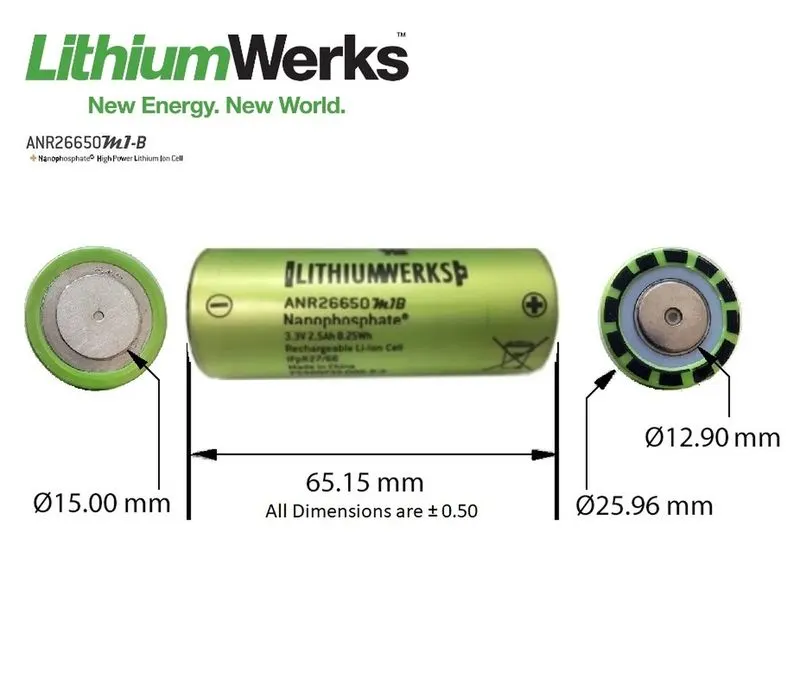
ANR26650 cell has 26mm diameter and 56mm height. On the basis of that we need to decide battery size of the battery casing.
Length of Casing (L) = nuber of cell at series*(cell diameter(26) + margin at both sides(4) + clearance at side(diameter of edged cell + margin)
L = 121*30 + 60 = 3690 mm
Breadth of casting (B) = nuber of cell at parallel*(cell diameter(26) + margin at both sides(4) + clearance at side(diameter of edged cell + margin)
Height of casing (H) = 65 + 35 (Height of cell + Margin for wiring, Cell holders and metal strips) = 100mm
(8) Weight of battery pack:
Cell weight = 76g
Number of cells. = 2182
Battery pack weight. = No. of cells*cell weight + weight of accessories = 76*2182+4.5 = 170.3 kg
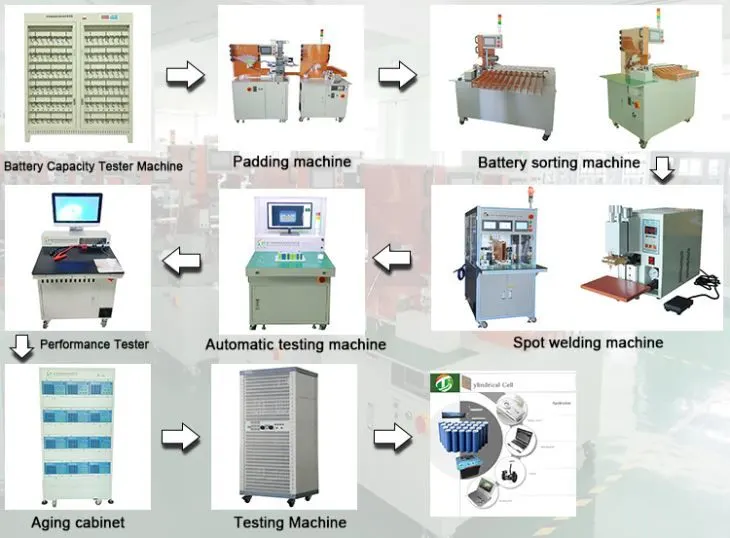
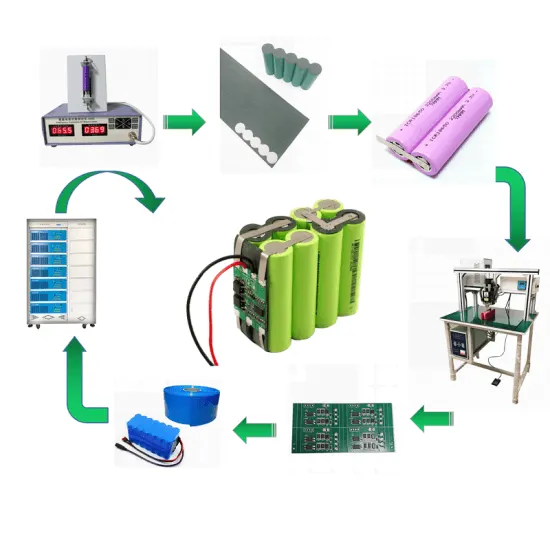
Cylindrical Battery Pack Assembly Equipment:
| Product Name |
Description |
|
Automatic Cylidrical Battery PVC Heat Shrink Wrapping Machine |
Film speed 50~70pcs /MIN Film preceision:`pm`0.1MM |
|
512 Channel Battery Tester |
5V 2A/3A/5A/6A 512 Channel Battery Tester optional |
|
Battery Labeling Insulation Paper Sticking/Pasting Machine |
Sticker Materials: Barely paper/PVC Barely paper maximum 350mm ; Scroll internal Diameter 72-75mm |
|
Battery Sorting Machine |
(5/6/9/1/13/22 Channel Battery Sorter Optional) Data record function is selectable |
|
Manual Spot Welding Machine |
Pneumatic AC spot welding Machine (SIngle welding point or Double welding point) |
|
Manual Spot Welding Machine |
AC pedal Manual Spot Welding Machine |
|
Manual Spot Welding Machine |
DC pedal Manual Spot Welding Machine |
|
Manual Spot Welding Machine |
5000A/8000A pneumatic Inverter DC Spot welding Machine |
|
Automatic Spot Welding Machine |
Double Side Spot Welding Machine |
|
1-24 series or 1-32 series BMS Tester |
Over-Discharge Protection Current:0 -120A Over-Charge Protection Current: 0-50A Overcharge/Overdischarge voltage:0.5-5V |
|
Battery Comprehensive Tester |
100V 120A 18650 Battery Comprehensive Tester |
|
Aging Machine |
30V 10A Charging 20A Discharging Aging Machine |
|
Aging Machine |
70V 5A Charging 10A Discharging Aging Machine |
|
Aging Machine |
100V 10A Charging 20A Discharging Aging Machine |