Project 1 Mechanical design of battery pack
Aim:-To develope a battery pack of 18KW using ANR26650M1-B cells along with there mechnical design
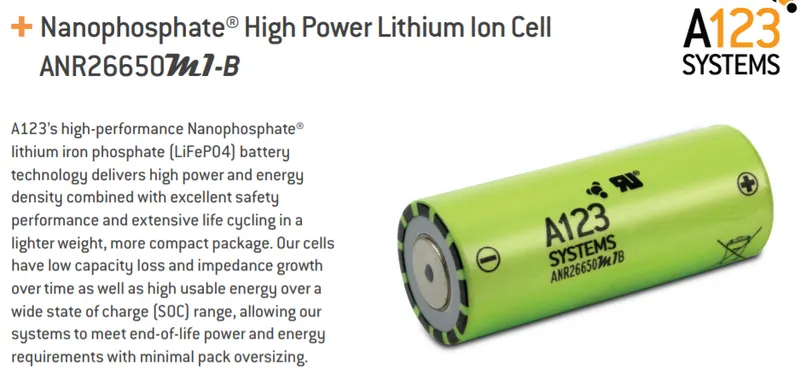
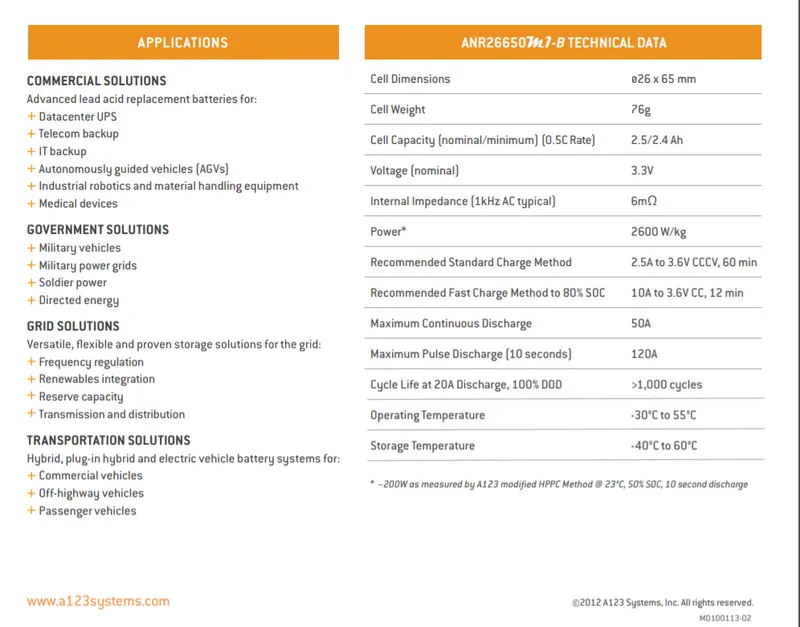
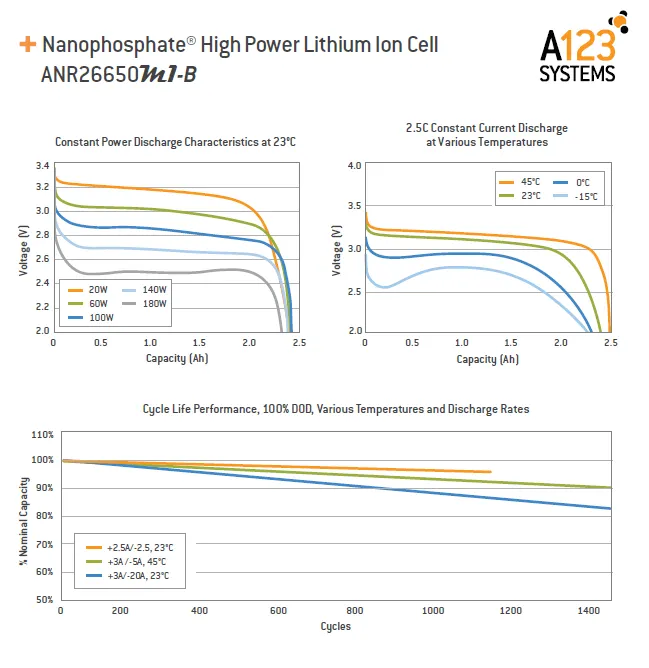
Dimensions:
Now we must calculate to determine how much space of volume the cell will take in the to have the capacity of 18kw.
a)Cell energy=3.3*2.5
=8.25Wh
b)Cell Volume=π *r*r*h
=3.14*0.013*0.13*0.065
=0.0344929 m^3
c)
Cell energy density=cell energy/cell volume
=8.25/0.0344929 Wh/m^3
=239.17 wh/m^3
lets consider 60 cells connected in series a and 40 cells connected in parallel.
So the total number of cells required =60*40=2400 cells
Voltage of the pack=3.3*60=198
current capacity of the battery pack=40*2.5
=100Ah
The total energy of the battery pack=198*100=19.8KwH.
Total volume =0.0344929*2400
=82.78296m^3
total weight of the battery=2400*0.082kg=196.8kg
Now we know the weight and volume of the battery pack of 18kw .So, we will construct the battery pack.
A battery consists of one or more electrochemical cells (battery cells) which are converting chemical energy into electrical energy (during discharging) and electrical energy into chemical energy (during charging).There are several types of batteries (chemistry) used in hybrid and electric vehicle propulsion systems but we are going to consider only Lithium-ion cells. The main reason is that Li-ion batteries have higher specific energy [Wh/kg] and specific power [W/kg] compared with other types.
There are 3 types of cells:Cylindrical,prismatic and pouch.
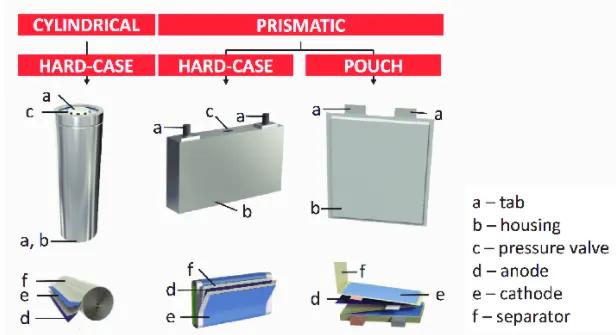
There are 3 steps for the construction of the battery pack.
1)Battery holding and providing the spacing between the batteries.
2)Connecting the batteries with the strips (Series or Parallel)
3)making and manufacturing the battery enclosure housing with the thermal managment system and BMS
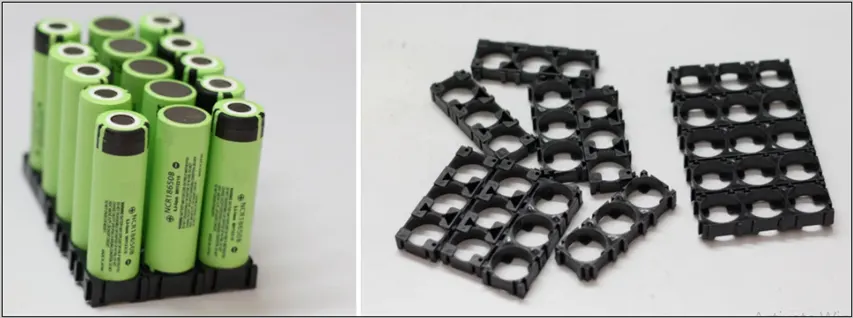
Each of the cells are now need to be connected so that it could form a big battery module.There must be minimum of 1mm spacing between each cells to allow the vent to open under the fault condition.Holders will make it easy to place the contact plate between the cells.
When the cells are placed in the holders ,then the cells need to be connect in the proper manner in series or parallel.Usually a nickle strip is used between the cells to make the contact.it is generally used in battery building.Its due to its efficiency of usage in spot welding and soldering as well its high corrosion resistance over time.It has good properties and excellent resistance to many corrosive environments.pure nickel will never get rust after its applied to battery packs.
Battery enclosure and thermal managment of battery and BMS
The battery encolsure is the final protection of the battery.So the battery enclose must be very strong and light in weight.In the case of any accident the batteries has the tendentcy of catch fire if it get leaked during the car crash,so the battery module is enclosed in a very strong enclosure due to ensured safety.The weight should be less so we can get the best possible range.In this metal housing there is a temperature managment system provided to cool and heat the batteries when there is a need to get the best performace out of them.
BMS:
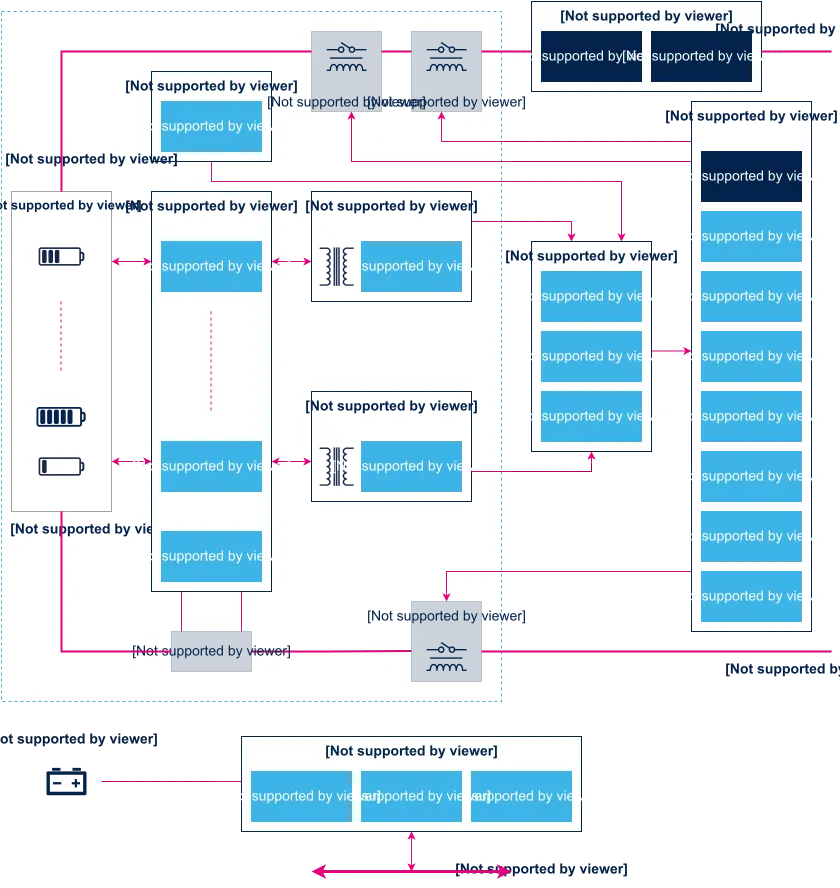
The Battery Management System (BMS) manages stored power in an on-board high voltage (HV) battery and delivers power to the rest of the vehicle. Main functions include cell balancing, cell health and wear leveling, charge and discharge monitoring and safety assurance.BMS continuously monitors the voltage of the pack as well as individual battery cells and controls the supply of the current to avoid overcharging. BMS can enforce the limits of maximum charge or discharge current according to temperature.
Conclusion:
Thus we have studied how to model a battery pack for 18kw battery.