Project 1 Mechanical design of battery pack
Project : Mechanical Design of Battery Pack
Aim : To design a 18 KWH Battery Pack with the cell ANR26650M1-B
Soln:
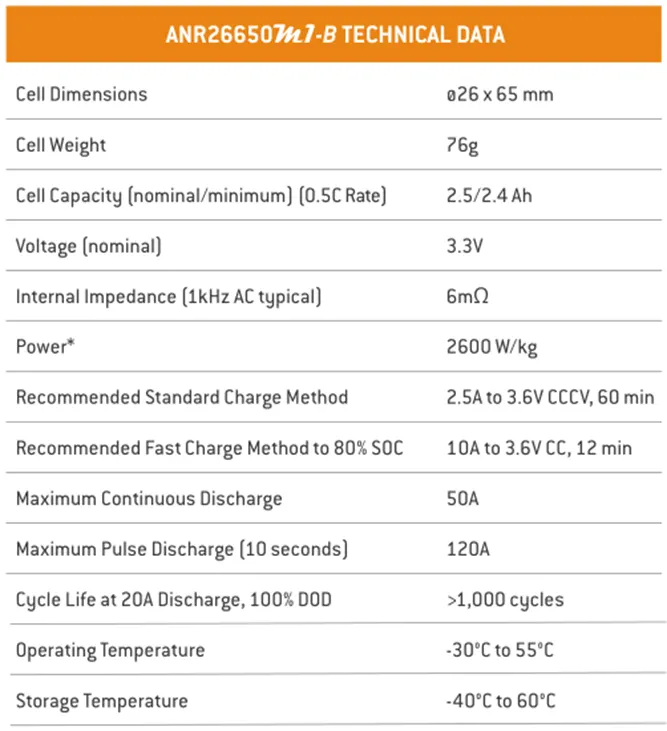
To design the battery pack the cell under usage is ANR26650M1-B , manufactured by A123 systems. It is a lithium iron phosphate (LiFePO4) cell with diameter 26 mm and width 65 mm. The cell datasheet is given below.
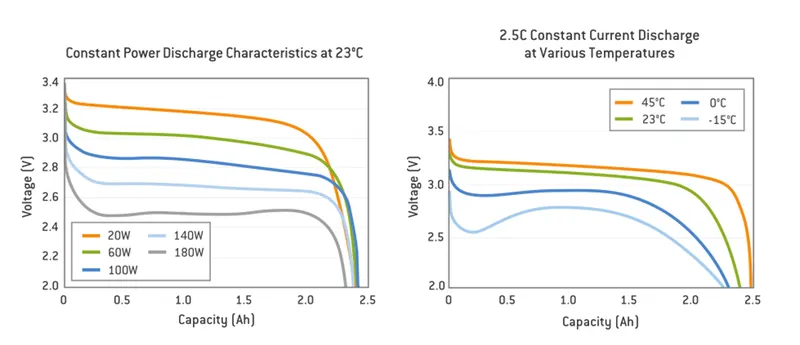
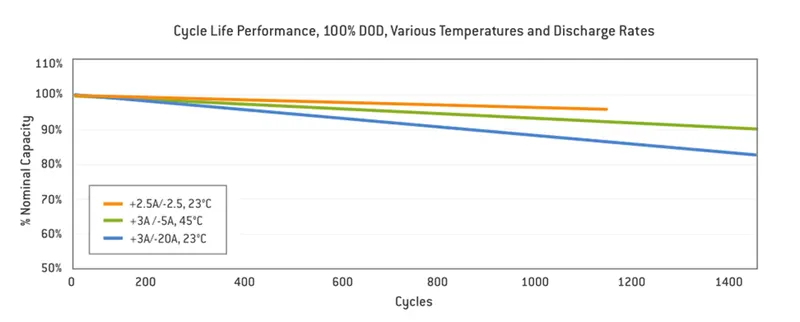
The discharge plots of the cell provided by the manufacturer is given below.
From the technical data,
Nominal voltage = 3.3 V ; Nominal capacity = 2.5 Ah
The energy of a single cell = 3.3 * 2.5 Wh = 8.25 Wh
Volume of cell = π * (0.013)2*0.065 = 0.000033465 m3 = 0.033465 L
:.The energy density = 8.25 / 0.033465 = 246.52 Wh/L
And Specific energy of the cell = 8.25 / 0.076 = 108.55 Wh/kg
Now,
A number of combination can be made in order to make a 18 KWh capacity battery pack. Here it is tried to make pack of high enough voltage and with decent current capacity.
We have gone with 266.67 V and 67.5 Ah capacity. [266.67 x 67.5 = 18 KWh ]
No. of cells in series = 266.67/3.3 = 80.8 ~ 81 cells
No. of cells in parallel = 67.5/2.5 = 27 cells
So, the overall configuration of the battery pack would be 81S27P.
:. Total no. of cell would be = 81 * 27 = 2181
Also , the total weight of the cells in the battery pack would be = 0.076 *2181 = 165.756 kg.
Now, To ease the process of connecting the cells, it is better to connect them in small groups commonly known as modules. Looking at the overall config. the modules can be made of 9S3P combination.
Hence , capacity of single module = (9*3.3) * (3*2.5) Wh = 222.75 Wh
So total no. of module required for the battery pack = 18000 / 222.75 = 81
The connection of the cells can be made as the figures below-
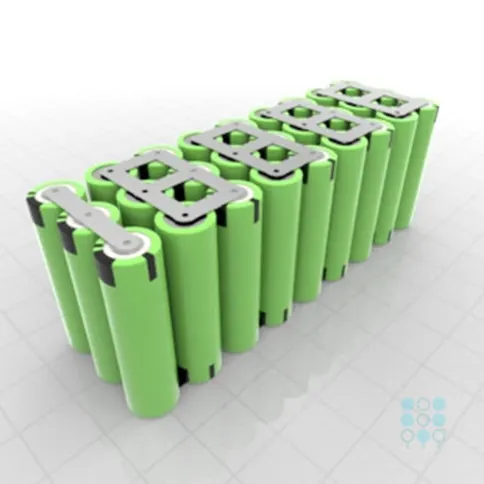

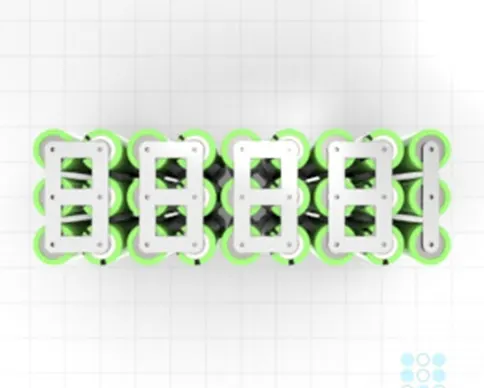
(i) isometric view (ii) top view (iii) bottom view
Assembling of Battery Pack :
For assembling the battery pack , we would require cell holders , metal strips and enclosures for the battery module.
- Cell holders : They serve two purposes- one is to hold the cells securely and other is to provide a uniform spacing between cells for ventilation. Cell holders are mostly made of plastic (ABS).
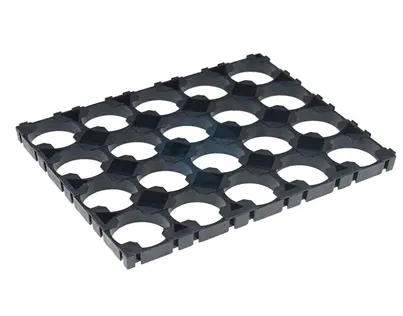
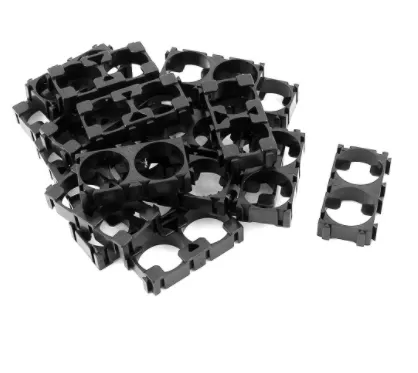
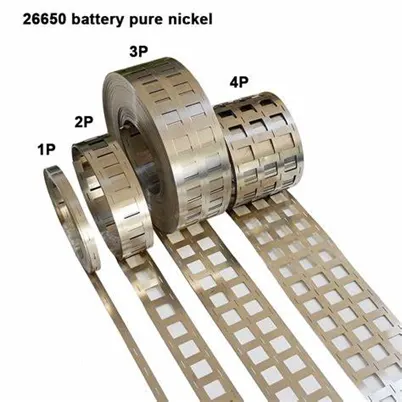
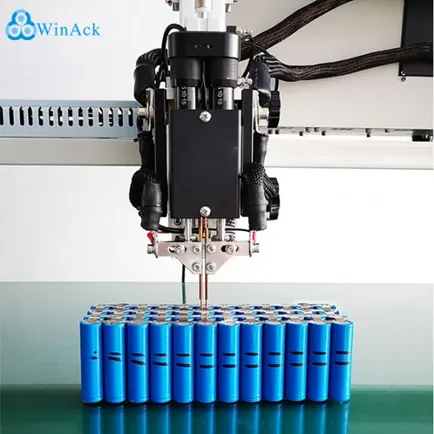
- Metal strips : Metal strips are used to actually connect the cells. Most commonly Nickel strips are used for this purpose. The strips are connected in the cell terminals by spot welding method. Although, Soldering is possible but it is not recommended as they tend to generate uncontrollable heat during soldering process which is risky with Li-ion cells. The spot welding process has a short heating time and concentrated heat, so the heat affected zone is small making it safe for Li-ion cells.
- Module enclosure :
The cell module requires an enclosure for the safety of the cells as well as users.
So make a casing of the module we must calculate the inner dimension. Lets consider the spacing between cells is 2 mm ,
Length of the module = no. cells in series * diameter of the cell + (no. of cells in series - 1)*spacing between cells = 9 *26+(9-1)*2 = 250 mm
Breadth of module = no. cells in parallel * diameter of the cell + (no. of cells in parallel- 1)*spacing between cells = 3*26 + 2*2 = 82 mm
Height of the module = height of cell + spacer height(top & bottom) + thickness Ni-strip = 65 + 4 + 1 = 70 mm
Now we know the inner dimension , the final casing should be a little bigger for easy handling and heat distribution or ventilation. Therefore , the casing should be of 255 x 87 x75 (in mm) considering 5 mm ventilation in each sides. The material used can be Aluminium or ABS plastic or Stainless steel depending upon the required protection.
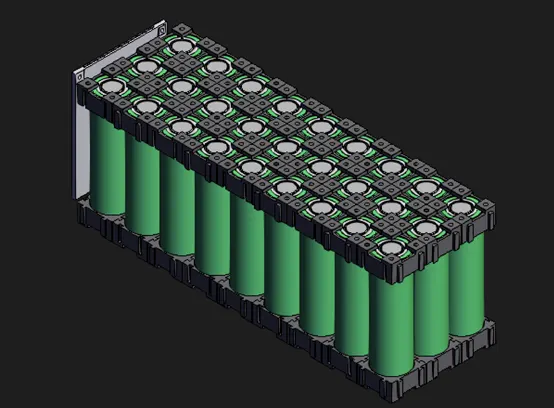
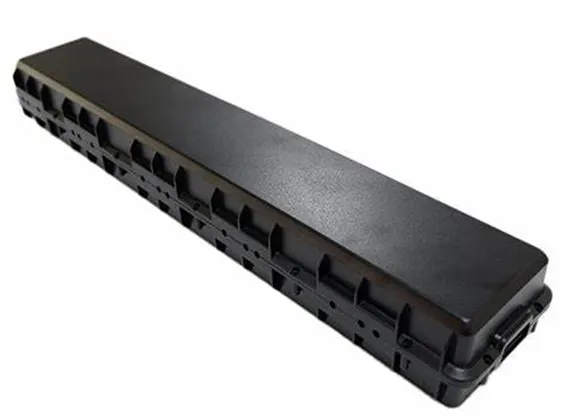
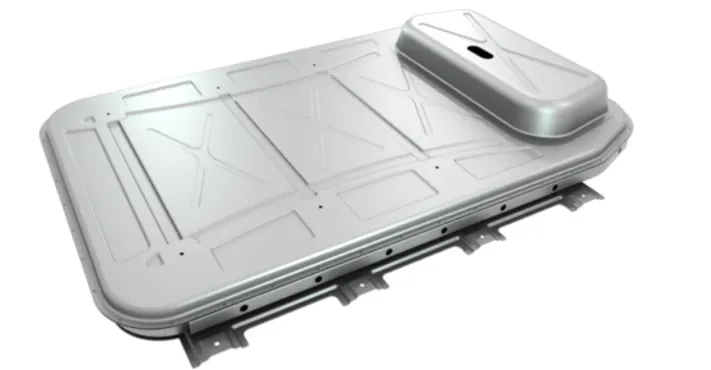
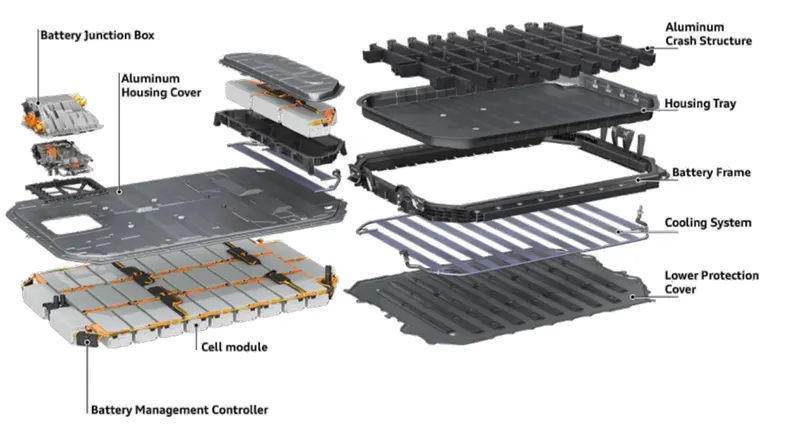
Hence, the module can be assembled. For the entire battery pack 81 of such module would be required. The modules then laid in the final enclosure of the battery pack. A typical enclosure looks this –
Results:
So, the mechanical design for the battery pack is done. The specification of the battery pack is as follows-
81S27P ANR26650M1-B
Energy = 18 KWh
Voltage = 266.67 V
Current capacity = 67.5 Ah