Project 1 - Loss calculation for a DC/DC converter-MATLAB
AIM:Design of boost converter, and calculating the loss of different components including power switching device and deriving efficiency of boost converter. This is applicable in power supply industry, electric vehicles etc where DC-DC converter is required to boost the voltage from DC source. All the aspects of this project with loss calculation, device selection, simulation etc are industry relevant.
answer:
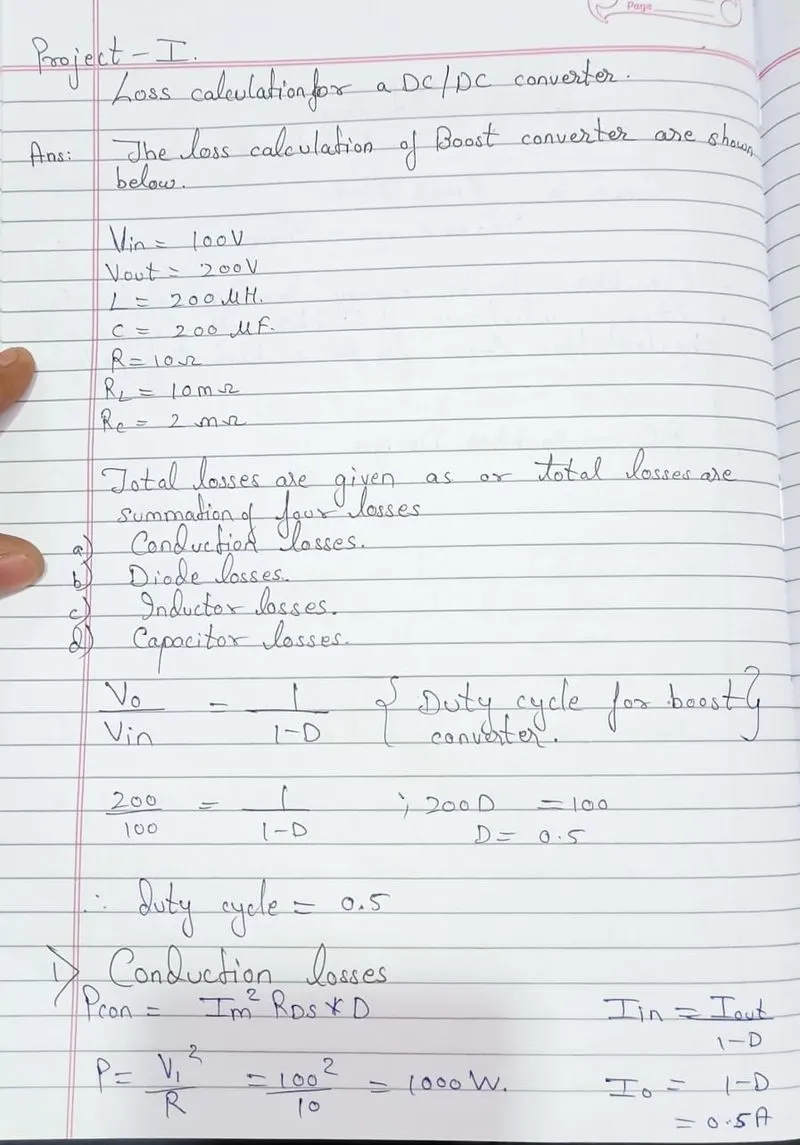
Conduction losses are a result of device parasitic resistances impeding the DC current flow in a DC/DC converter. These losses are in direct relationship with the duty cycle. When the integrated high-side MOSFET turns on, the load current flows through it. The drain-to-source channel resistance (RDSON) causes power dissipation
In addition to the conduction loss in the integrated MOSFET and the catch diode, there are conduction losses in the inductor as well because every inductor has a finite DC resistance (DCR), which is the resistance of the wire in the coil.
The loss calculation for boost converter is shown below;
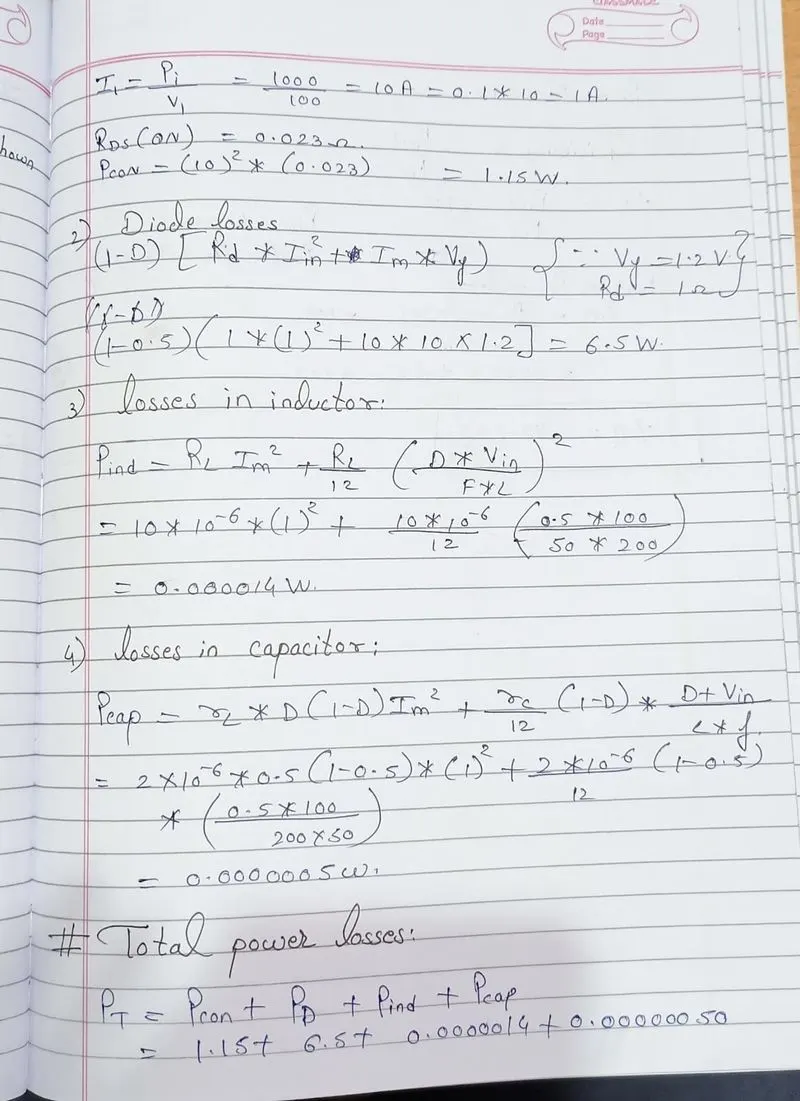
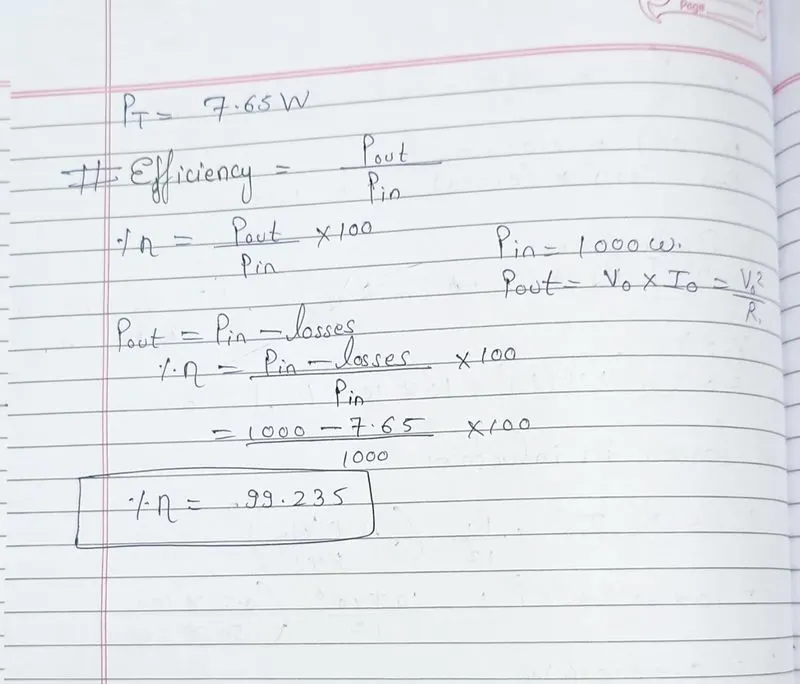
The above convertr has a efficiency of 99.2%.
The conduction losses depend on the load current .With heavier loads the conduction losses in thMOSFET increases.These losses results in increaes temperature of integratyed circuit.
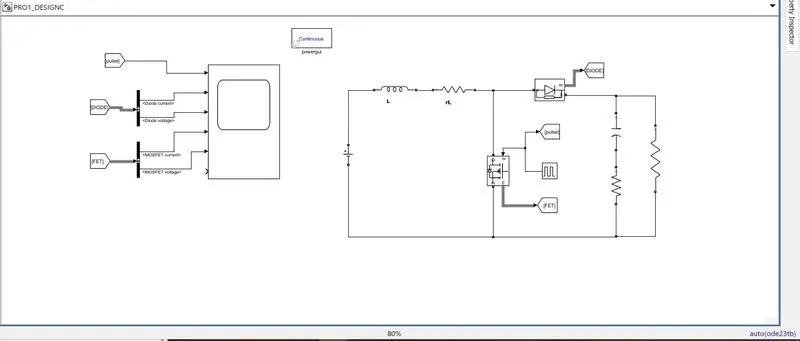
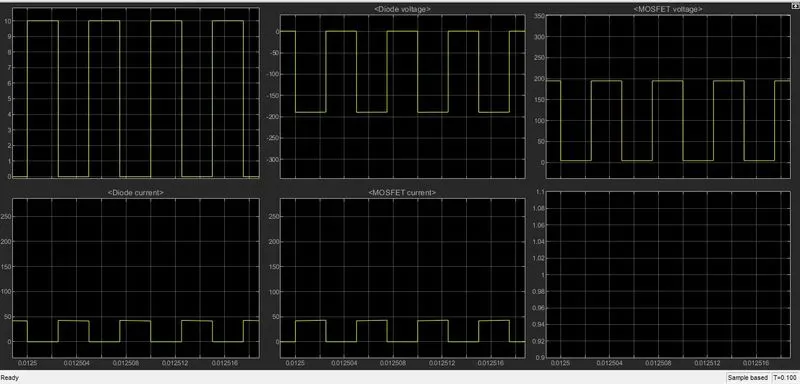
Simulink model of Boost converter: