Project 1 - Device Master File
A Device Master File (DMF) is a confidential document that contains detailed information about the manufacturing, testing, and quality control of a medical device. It is typically created by the device manufacturer and submitted to regulatory authorities as part of the regulatory approval process.
The information contained in a DMF is intended to support the safety and efficacy of the device and ensure that it is manufactured in compliance with regulatory requirements. The contents of a DMF may vary depending on the type of device, but typically include the following:
-
Device description and intended use: This section describes the device and its intended use, including any specific indications or contraindications.
-
Manufacturing and processing information: This section provides detailed information on the device manufacturing process, including equipment used, raw materials, and manufacturing procedures. It also includes information on quality control measures and testing procedures.
-
Device specifications: This section includes information on the physical characteristics and performance specifications of the device.
-
Stability data: This section includes information on the stability of the device, including any degradation or changes in performance over time.
-
Preclinical and clinical data: This section includes information on preclinical and clinical studies conducted on the device, including data on safety and efficacy.
-
Packaging and labeling: This section includes information on the packaging and labeling of the device, including any special storage or handling requirements.
-
Regulatory status: This section includes information on the regulatory status of the device, including any regulatory approvals or clearances.
medical device - Artificial Cardiac Pacemaker
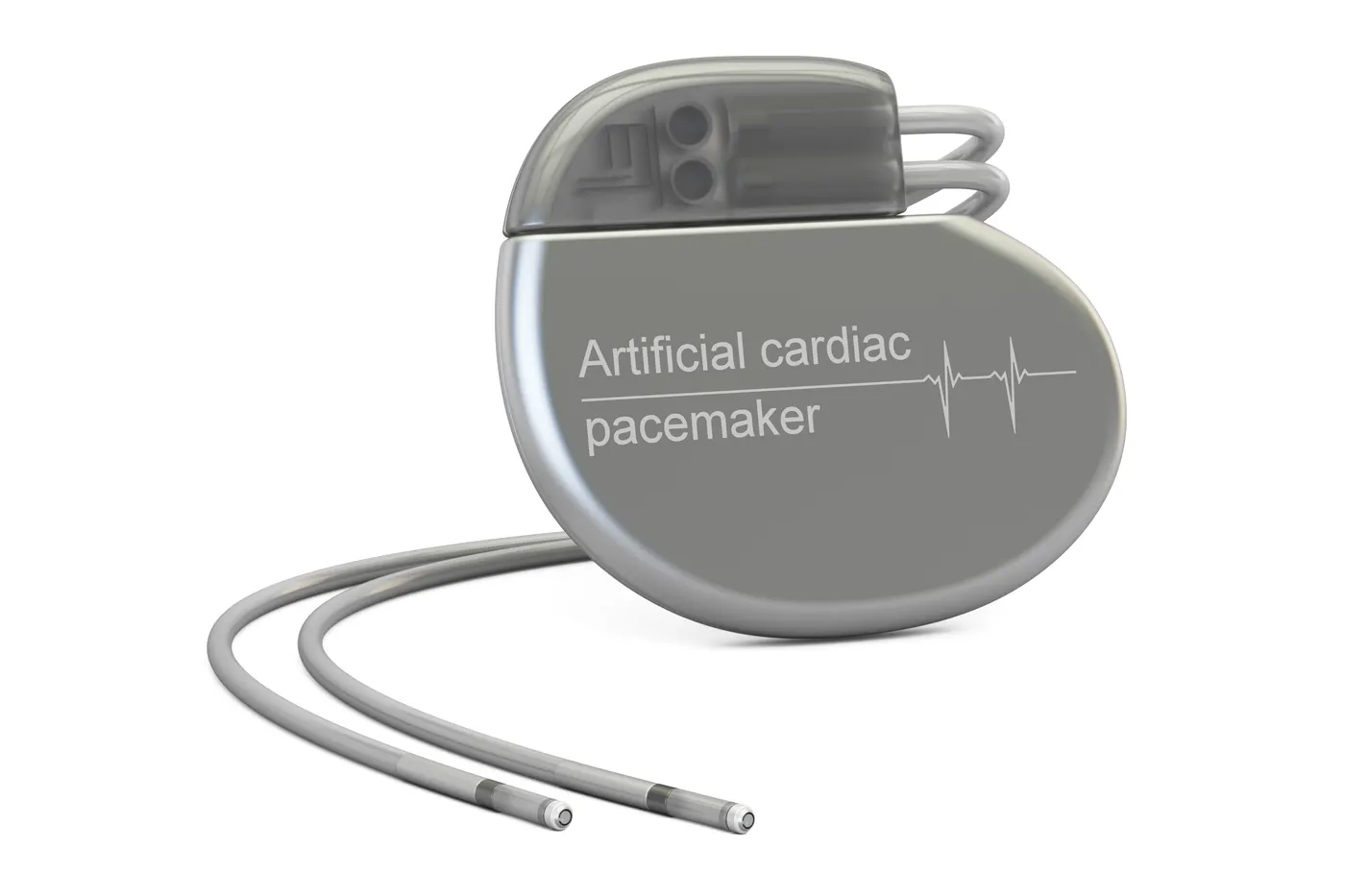
Artificial pacemakers are electronic devices used primarily to control cardiac rate in patients in whom the intrinsic heart rate is inadequate for a normal life style.
These devices automatically and rhythmically provide electrical impulses to stimulate the heart.
Electrical stimulation of various organs of the human body was already in practice more than two centuries ago.
These applications, however, were in experimental stages until recently when electrical stimulation of the heart has emerged as a new therapy.
In view of the astonishing progress made in the field of pacemaker technology and the current indications for the specific types of pacing systems, it behooves physicians caring for patients with heart disease to become familiar with the use of cardiac pacemakers and the not infrequent problems associated with their use.
The primary purpose of this review is to present fundamental knowledge in the electrical stimulation of the heart and the various pacing systems available.
class identification -
The device class identification of an artificial cardiac pacemaker is typically determined by regulatory authorities based on the device's intended use and potential risks to the patient. In the United States, the classification of medical devices is based on a risk-based system established by the Food and Drug Administration (FDA) in accordance with the Federal Food, Drug, and Cosmetic Act.
Artificial cardiac pacemakers are classified as Class III devices, which are considered to be the highest risk devices. Class III devices are those that are intended to support or sustain human life, are of substantial importance in preventing impairment of human health, or present a potential unreasonable risk of illness or injury. As a result, Class III devices are subject to the most stringent regulatory requirements, including pre-market approval (PMA) by the FDA.
The PMA process requires the device manufacturer to provide comprehensive scientific evidence to the FDA to demonstrate the safety and effectiveness of the device. This evidence typically includes data from preclinical and clinical studies, as well as detailed information on the device manufacturing process, quality control measures, and labeling.
In addition to the United States, other regulatory agencies in countries around the world may also classify artificial cardiac pacemakers as Class III devices or may use a similar risk-based system to determine the device classification. It is important for device manufacturers to understand the regulatory requirements in the countries where they intend to market their products in order to ensure compliance with all applicable regulations.
regulatory approvals -
Regulatory approvals for an artificial cardiac pacemaker are required before the device can be marketed and sold in a particular country or region. The specific regulatory requirements and approval processes vary depending on the regulatory authorities in the country or region where the device will be marketed.
In the United States, the Food and Drug Administration (FDA) is responsible for regulating medical devices, including artificial cardiac pacemakers. Artificial cardiac pacemakers are classified as Class III devices and require pre-market approval (PMA) from the FDA before they can be marketed and sold in the United States.
The PMA process involves a comprehensive review of the scientific evidence submitted by the device manufacturer to demonstrate the safety and effectiveness of the device. This evidence typically includes data from preclinical and clinical studies, as well as information on the device manufacturing process and labeling.
In the European Union, artificial cardiac pacemakers are regulated under the Medical Devices Regulation (MDR) and require a CE Marking certification before they can be marketed and sold. The CE Marking certification indicates that the device meets the essential requirements for safety and performance set out in the MDR.
To obtain the CE Marking certification, the device manufacturer must submit a technical file to a European Union Notified Body, which is an independent organization designated by the European Commission. The technical file must include documentation on the design, manufacturing process, clinical evaluation, and post-market surveillance of the device.
Other countries and regions around the world may have their own regulatory requirements for artificial cardiac pacemakers. Device manufacturers should work closely with regulatory professionals and legal advisors to ensure compliance with all applicable regulations in the countries where they intend to market their products.
Regulatory Status of the similar Product-
The regulatory status of similar products to an artificial cardiac pacemaker will depend on the country or region where the product is being marketed. However, in general, the regulatory status of similar products will be determined based on their intended use, risk profile, and similarity to existing devices that have already been approved or cleared by regulatory authorities.
In the United States, similar products to an artificial cardiac pacemaker may be classified as Class III devices and require pre-market approval (PMA) from the Food and Drug Administration (FDA) before they can be marketed and sold. Examples of similar products include implantable cardioverter-defibrillators (ICDs) and cardiac resynchronization therapy devices (CRTs). These devices are also Class III devices and are subject to the same regulatory requirements as artificial cardiac pacemakers.
In the European Union, similar products to an artificial cardiac pacemaker may also be subject to the Medical Devices Regulation (MDR) and require a CE Marking certification before they can be marketed and sold. Examples of similar products include implantable cardioverter-defibrillators and cardiac resynchronization therapy devices.
It is important for device manufacturers to thoroughly research the regulatory requirements for similar products in the countries where they intend to market their devices. This can include reviewing publicly available information on regulatory agency websites, consulting with regulatory professionals and legal advisors, and conducting thorough market research to understand the competitive landscape for similar products in the target markets.
Safety and performance related Information-
Safety and performance related information for artificial cardiac pacemakers can include:
-
Safety Information: Artificial cardiac pacemakers have several safety features built into their design to minimize the risk of complications or adverse events. For example, pacemakers are designed to have an expected battery life of several years, so that replacement surgeries can be minimized. Additionally, pacemakers are designed to have a variety of safety mechanisms that can detect and respond to any abnormal heart rhythms or other issues that may arise.
-
Performance Information: Artificial cardiac pacemakers are designed to perform specific functions, such as regulating heart rate and rhythm, and different models may have different performance characteristics. Performance information can include data on the pacemaker's pacing modes, sensing capabilities, and programmability. Performance data may be collected during clinical trials or post-market surveillance studies.
-
Adverse Events: Adverse events related to artificial cardiac pacemakers can include device-related complications, such as infection, bleeding, or lead displacement. Other adverse events can include issues related to the device's programming or function, such as inappropriate pacing or undersensing of heartbeats. These events are often reported to regulatory agencies as part of post-market surveillance activities.
-
Patient Information: Artificial cardiac pacemakers are typically implanted in patients with specific cardiac conditions, such as bradycardia or heart block. Patient information can include data on the patient population for which the device is intended, as well as information on the risks and benefits associated with the device. Patient information can also include information on device maintenance and follow-up care, such as monitoring the device battery life and scheduling regular follow-up appointments with a healthcare provider.
The Essential Principle Checklist is a document that outlines the essential requirements for the design and manufacture of medical devices, including artificial cardiac pacemakers. The checklist is used to ensure that the device meets the necessary safety and performance requirements before it can be marketed and sold. Here are some of the items that may be included in an Essential Principle Checklist for an artificial cardiac pacemaker:
-
Device description: The device description should include information about the intended use of the device, its features, and its specifications.
-
Risk assessment: A risk assessment should be performed to identify and evaluate any potential hazards associated with the device. This includes risks related to the device's design, materials, manufacturing processes, and intended use.
-
Essential requirements: The Essential Principle Checklist should include a list of the essential requirements that the device must meet to ensure its safety and performance. These requirements may include criteria related to electrical safety, biocompatibility, software validation, and electromagnetic compatibility.
-
Design and manufacturing controls: The checklist should include requirements for design and manufacturing controls, including procedures for design input and review, verification and validation, and change control.
-
Quality management system: The device manufacturer should have a quality management system in place to ensure that the device is manufactured in accordance with the appropriate standards and regulations.
-
Labeling and instructions for use: The checklist should include requirements for the device's labeling and instructions for use, including information about the device's intended use, indications for use, warnings, and precautions.
-
Clinical evaluation: The device manufacturer should conduct a clinical evaluation to demonstrate the safety and performance of the device. This may include clinical trials, post-market surveillance studies, and literature reviews.
-
Regulatory compliance: The device manufacturer should ensure that the device complies with all relevant regulatory requirements in the countries where it will be marketed and sold.
-
Post-market surveillance: The checklist should include requirements for post-market surveillance activities, such as adverse event reporting and monitoring of device performance in the field.
Design and Manufacturing Information -
The design and manufacturing of artificial cardiac pacemakers is a complex process that involves a number of different components and processes. Here are some of the key design and manufacturing information that may be involved in the creation of an artificial cardiac pacemaker:
-
Components: Artificial cardiac pacemakers typically consist of several different components, including a pulse generator, one or more leads, and an electrode. The pulse generator contains the battery and electronics that control the pacing rate and mode, while the leads are implanted into the heart and transmit electrical signals to the electrode.
-
Materials: The materials used in the construction of artificial cardiac pacemakers must be biocompatible and able to withstand the harsh conditions of the human body. Common materials used in pacemaker construction include titanium, silicone, and various metals.
-
Manufacturing processes: The manufacturing processes used to create artificial cardiac pacemakers are highly specialized and involve a number of different steps. These may include the production of components, assembly of the device, testing and quality control, and packaging and sterilization.
-
Testing and validation: Before a pacemaker can be marketed and sold, it must undergo extensive testing and validation to ensure its safety and efficacy. This includes both bench testing and in vivo testing in animal models or clinical trials.
-
Quality management system: The manufacture of artificial cardiac pacemakers must be conducted under a quality management system (QMS) to ensure that the devices meet all necessary standards and regulations. This includes procedures for design control, change control, and process control, as well as ongoing monitoring and reporting of device performance.
-
Labeling and packaging: The labeling and packaging of artificial cardiac pacemakers must comply with regulatory requirements and standards. This includes information on the intended use of the device, warnings and precautions, and instructions for use.
-
Post-market surveillance: Once a pacemaker is on the market, manufacturers are required to conduct ongoing surveillance to monitor its safety and performance. This includes monitoring of adverse events, tracking of device performance, and reporting to regulatory agencies as required.
Product Validation and Verification -
Product validation and verification are essential steps in ensuring the safety and effectiveness of medical devices such as artificial cardiac pacemakers. There are two primary aspects of validation and verification that need to be considered for pacemakers: analytical and clinical.
Analytical validation and verification involve testing the pacemaker in a laboratory setting to determine if it meets specific performance and safety standards. These tests can include electrical safety testing, electromagnetic compatibility testing, and software validation. The goal of these tests is to ensure that the pacemaker functions as intended and does not pose any safety risks to patients or healthcare providers.
Clinical validation and verification involve testing the pacemaker in a clinical setting with actual patients. Clinical trials are typically conducted to evaluate the safety and effectiveness of the device, as well as to determine the optimal settings for individual patients. These trials can involve both short-term and long-term monitoring of patients to ensure that the pacemaker is working as expected and that there are no adverse reactions or complications.
Some specific tests that may be performed during the analytical and clinical validation and verification of an artificial cardiac pacemaker include:
-
Electrical safety testing to ensure that the pacemaker does not generate any harmful electrical currents or cause interference with other medical devices.
-
Electromagnetic compatibility testing to ensure that the pacemaker can function properly in the presence of other electronic devices, such as cell phones and computers.
-
Software validation to ensure that the pacemaker's programming and software functions correctly and is free from errors.
-
In vitro and in vivo testing to determine the pacemaker's battery life and how long it can operate before needing to be replaced.
-
Long-term monitoring of patients to assess the pacemaker's effectiveness in regulating the heart's rhythm and to detect any potential complications, such as infection or device failure.
Understanding the Labelling & Post Market surveillance -
Labelling and post-market surveillance are important aspects of the regulation and monitoring of medical devices such as artificial cardiac pacemakers. These activities help to ensure that the pacemakers are safe and effective for patients, and that any issues or concerns can be identified and addressed promptly.
Labelling refers to the information provided on the packaging and labeling of the pacemaker. This information includes the device's intended use, warnings and precautions, instructions for use, and any relevant technical specifications. The labelling also includes information on the manufacturer, such as their contact information and the date of manufacture. Labelling is essential for healthcare providers to understand how to properly use and care for the pacemaker and for patients to understand the risks and benefits of the device.
Post-market surveillance involves monitoring the safety and performance of the pacemaker once it is on the market and being used by patients. This is done through a variety of methods, including adverse event reporting, clinical studies, and device tracking systems. Adverse event reporting involves healthcare providers and patients reporting any issues or complications that arise while using the pacemaker. Clinical studies may be conducted to evaluate the pacemaker's long-term safety and effectiveness in a real-world setting. Device tracking systems may be used to monitor the location and use of the pacemaker, which can help to identify any issues that may arise.
In addition to labelling and post-market surveillance, regulatory agencies such as the U.S. Food and Drug Administration (FDA) also play a role in monitoring the safety and effectiveness of artificial cardiac pacemakers. The FDA reviews and approves new pacemakers before they can be marketed, and also monitors the safety and performance of devices already on the market. The FDA can require manufacturers to conduct additional testing or make changes to their devices if safety concerns arise.
Overall, labelling and post-market surveillance are essential components of ensuring the safety and effectiveness of artificial cardiac pacemakers. By providing clear information on the device's use and risks, and by monitoring its performance and addressing any issues that arise, healthcare providers and manufacturers can help ensure that patients receive the best possible care.