Project 1
1 - Design requirement -
Innovative multiparameter patient monitor designs require:
- Precise, multiparameter measurements with high sensitivity.
- Wireless, secure connectivity for data logging and monitoring.
- Intuitive, responsive human machine interface (HMI).
Multi-parameter patient monitor captures the physiological vital signs and continuously monitors the patient condition by alerting the medical staff via alarm. The revolutionization in machine learning techniques and Internet of Things (IOT) in healthcare. In this paper, we have designed an IOT based MPM system where four parameter namely heart rate, respiration rate, oxygen saturation and temperature are monitored using corresponding sensors and an email is sent to patient's guardian in case of emergency. The project also focuses on improving the performance of MPM system using Support Vector Machine(SVM) algorithm. The classification accuracy of 95% has been achieved.
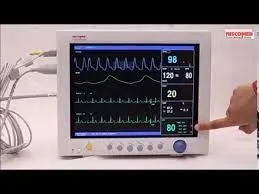
Monitor must be able to monitor ECG, Respiration, SpO2, NIBP and Temperature as a standard parameter.
Physiologic monitoring of a patient should include cardiac telemetry, BP, and pulse oximetry during the entire period of evaluation and intervention for stroke, although BP is the most commonly invoked and modified physiologic parameter during this period.
Readings or measurements that are produced by the physiological process of human beings, e.g., heart-beat rate (electrocardiogram or ECG/EKG signal), respiratory rate and content (capnogram), skin conductance (electrodermal activity or EDA signal), muscle current (electromyography or EMG signal), brain electrical .
the physiological signals, which include the electroencephalogram (EEG), temperature (T), electrocardiogram (ECG), electromyogram (EMG), galvanic skin response (GSR), respiration (RSP), etc.
Monitoring Parameters Monitoring parameters are a select group of constituents that are monitored during each monitoring event that are the waste constituents, reaction products, hazardous constituents, and physical parameters that provide a reliable indication of a release from a waste management unit.
ECG, SPO2, NIBP, RESP, 2-TEMP PR. 32 second full disclosure waveform review. 500 NIBP measurement data can be storage and recall. Data and waveforms color be adjustable.
specification -
- Minimum Order Quantity 1 Piece.
- Number Of Parameters ECG,RESP,SPO2,PR,NIBP,TEMP.
- Screen Size 15"
- Parameters ECG.
- Suitable for All type od patient.
- Lead Selections aVR.
- Resolution 1024 x 768.
Every firm that produces a good or a service will do so by the use of a process. This process will use the firm’s resources in order to transform the primary inputs into some type of output. In designing the actual process, particularly the number and sequence of steps, several important factors need to be considered.
- Product variety – Is the product highly standardized, or is the product highly customized?
- Volume of output – Is the business created to produce large volumes or a small amount of output?
- Is the technology to be used general purpose or specialized? Is it capital intensive?
- The skill level of employees, it is very high or low?
- What is the expected duration?
4 -
As a designer you can directly influence safety. Designers must take account of the General Principles of Prevention when preparing designs. The Principles of Prevention are a hierarchy or risk elimination and reduction.
The General Principles of Prevention are set out in descending order of preference as follows:
- Avoid risks.
- Evaluate unavoidable risks.
- Combat risks at source.
- Adapt work to the individual, especially the design of places of work
- Adapt the place of work to technical progress.
- Replace dangerous articles, substances, or systems of work by non-dangerous or less dangerous articles, substances, or systems
- Use collective protective measures over individual measures
- Develop an adequate prevention policy
- Give appropriate training and instruction to employees.
5 - To gain approval, they must present evidence that the device is reasonably safe and effective for a particular use. The FDA does not have the authority to: Regulate a physician's or nurse's practice. FDA does not tell providers what to do when running their business or what they can or cannot tell their patients
Although the exact procedure may vary from product to product, the calibration process generally involves using the instrument to test samples of one or more known values called “calibrators.” The results are used to establish a relationship between the measurement technique used by the instrument and the known values.
The calibration of an instrument can be carried out by comparing the readings on the instrument with those given by a reference instrument or calibrator. From time to time, the manufacturer's reference instruments are sent to a calibration center to be calibrated against national standards.
steps - Direct testing
- Calibration of the test force using force transducers and measuring force amplifiers.
- Testing of the indenter.
- Calibration of the measuring system with object micrometer and depth measuring device.
- Measuring of the test cycle using a stopwatch.
6 -
7 - There are four methods of acquiring data: collecting new data; converting/transforming legacy data; sharing/exchanging data; and purchasing data. This includes automated collection (e.g., of sensor-derived data), the manual recording of empirical observations, and obtaining existing data from other sources.
8 - 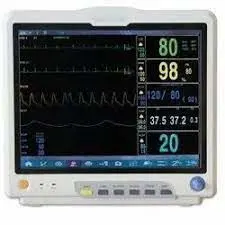
The Multiparameter Intelligent Monitoring in Intensive Care II (MIMIC-II) database consists of 25,328 intensive care unit stays. The investigators collected detailed information about intensive care unit patient stays, including laboratory data, therapeutic intervention profiles such as vasoactive medication drip rates and ventilator settings, nursing progress notes, discharge summaries, radiology reports, provider order entry data, International Classification of Diseases, 9th Revision codes, and, for a subset of patients, high-resolution vital sign trends and waveforms. Data were automatically deidentified to comply with Health Insurance Portability and Accountability Act standards and integrated with relational database software to create electronic intensive care unit records for each patient stay. The data were made freely available in February 2010 through the Internet along with a detailed user’s guide and an assortment of data processing tools. The overall hospital mortality rate was 11.7%, which varied by critical care unit. The median intensive care unit length of stay was 2.2 days (interquartile range, 1.1–4.4 days). According to the primary International Classification of Diseases, 9th Revision codes, the following disease categories each comprised at least 5% of the case records: diseases of the circulatory system (39.1%); trauma (10.2%); diseases of the digestive system (9.7%); pulmonary diseases (9.0%); infectious diseases (7.0%); and neoplasms (6.8%).
Human caring as the moral ideal of nursing is the central focus of professional practice. It involves concern and empathy, and a commitment to the client's lived experience of human health and the relationships among wellness, illness, and disease.
9 - Remote network monitoring (RMON) is the process of monitoring network traffic on a remote Ethernet segment to detect network issues such as dropped packets, network collisions and traffic congestion
- Availability monitoring. Availability monitoring is the simplest way for network teams to know if a device is up and operational.
- Configuration monitoring.
- Performance monitoring.
- Cloud infrastructure monitoring.
10 - In the intensive care unit (ICU), alarms on monitoring devices alert clinicians to a change in a patient's condition, or warn that the device may have failed. Each day, staff can be exposed to as many as 350 alarms per patient . Different devices compete for their attention, and false alarms are common.
11 - Once you have files and folders highlighted, select and hold (or right-click) the folders, then select Show more options > Send to. Select your external storage device name from the list of options. Your files and folders will begin copying to your drive.
deliverables -
2 - Multi Parameter Patient Monitor
- Parameters NIBP.
- Screen Size 12.
- Display Type LCD.
- Power Source Electricity.
- Voltage 220 V.
- Suitable for Adult, Pediatric, Neonatal, Infant.
- Measurement Site Upper Arm.
- Lead Selections aVF.
3 -
4 -
- Process Validation Master Plan (PVMP)
- Process Characterization.
- Equipment Installation and Qualification (IQ)
- Operational Qualification (OQ)
- Performance Qualification (PQ)
- Test Method Development (TMD) & Validation (TMV)
5 -
7 - Alarm management basically aims at preventing, or at least minimizing, physical and economic loss through operator intervention in response to the condition that was alarmed.
8 - A document storage system is a system that controls the storage, sharing and organization of electronic files or captured data from paper-based documents. Document storage platforms accomplish three main objectives: Reduce the risks of documents being misplaced.