Project 2
1 - gastrology system - Celiac disesase
celiac disease - Celiac disease is a serious autoimmune disease that occurs in genetically predisposed people where the ingestion of gluten leads to damage in the small intestine.
1 - a - organ - small intestine
Your small intestine is lined with tiny hairlike projections called villi, which absorb vitamins, minerals and other nutrients from the food you eat. Celiac disease damages the villi, leaving your body unable to absorb nutrients necessary for health and growth.
b - pathological - Celiac disease is an autoimmune disease caused by the ingestion of gluten. Classically, it presents with diarrhea and failure to thrive within the first couple of years of life. Diagnosis is based on abnormalities of small intestinal biopsy
The histological diagnosis of CD consists of an integrated assessment of the following elementary lesions: Increased intraepithelial T-lymphocytes: a value of 25 T-lymphocytes/100 enterocytes is considered a pathological condition also called “lymphocytosis”
c - Celiac disease is characterized by small intestinal mucosal injury and nutrient malabsorption in genetically susceptible individuals following the dietary ingestion of “gluten.” The pathogenesis of disease involves interactions between environmental, genetic, and immunologic factors.
d - Celiac disease inhibits your body's ability to absorb vital nutrients. Failure to get vitamins, minerals, fiber, sugars, and fats from your food deprives your bones, tissues, organs, muscles, and brain from getting the fuel they need to function properly.
2 - a - diagnosic - Diagnosis begins with a physical examination and a medical history
Doctors will also perform various tests to help confirm a diagnosis. People with celiac disease often have high levels of antiendomysium (EMA) and anti-tissue transglutaminase (tTGA) antibodies. These can be detected with blood tests. Tests are most reliable when they’re performed while gluten is still in the diet.
Common blood tests include:
- complete blood count (CBC)
- liver function test
- cholestrol test
- alkaline phosphatase test
- serum albumin test
In people with DH, a skin biopsy can also help doctors diagnose celiac disease. During a skin biopsy, the doctor will remove tiny pieces of skin tissue for examination with a microscope. If the skin biopsy and blood test results indicate celiac disease, an internal biopsy may not be necessary.
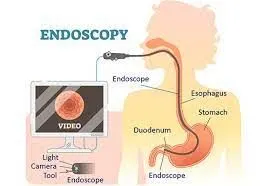
In cases where blood test or skin biopsy results are inconclusive, an upper endoscopy can be used to test for celiac disease. During an upper endoscopy, a thin tube called an endoscope is threaded through the mouth and down into the small intestines. A small camera attached to the endoscope allows the doctor to examine the intestines and to check for damage to the villi. The doctor can also perform an intestinal biopsy, which involves the removal of a tissue sample from the intestines for analysis.
b - The first step in developing a machine learning algorithm is to obtain a set of data from the information from an endoscope. These were obtained following the application of operations and extractions that will be presented in the following chapters.
The data set consists of 109 films (of 100 frames), of which 45 come from healthy patients and 65 come from patients suffering from celiac disease. The classification of these videos was made by “Iuliu Hatieganu” University of Medicine and Pharmacy after using a PillCam SB3 gastroscopy device throughout the year 2019, with patients of different ages and genders (63.3% of patients are older than 35 and 54.1% were man). These data were divided into three categories, as follows:
-
51 videos, used for the training data set.
-
51 videos, used for the test set.
-
7 videos, kept for real-time testing of the application.
c - When making a diagnosis, a doctor may have a single theory as to the cause of a person's symptoms. They may then order tests to confirm their suspected diagnosis.
Such tests may include:
- blood tests.
- urine tests.
- diagnostic imaging tests, such as: ultrasound scan. X-ray. MRI scan. CT scan. endoscopy.
d - If possible, explain things is simple terms. Too many medical terms and jargon may cause your patient to feel uncomfortable and make things appear to be worse than they already are. Be sure that you make things easy to understand and regularly ask your patient if they have any questions
3 - a - Steroids can ease severe signs and symptoms of celiac disease while the intestine heals. Other drugs, such as azathioprine (Azasan, Imuran) or budesonide (Entocort EC, Uceris), might be used.
There is no medication that treats celiac disease. To avoid the health problems that it can cause, you'll need to go completely gluten-free.
A vitamin is an organic molecule that is an essential micronutrient that an organism needs in small quantities for the proper functioning of its metabolism. Essential nutrients cannot be synthesized in the organism, either at all or not in sufficient quantities, and therefore must be obtained through the diet.
b - Procedure. The small bowel is resected either by a laparoscopic or a laparotomy procedure depending on the location, the setting (elective/acute) and the preference of the surgeon performing the intervention. Mobilization and transection of the bowel are performed and the involved segment resected if possible.
- Resectability is assessed peri-operatively and has three types:
- Radical: Complete resection of the mass.
- Partial: Some but not all of the mass is resected.
- Unresectable: Inability to resect any part of the mass.
4 - a - A strict, lifelong gluten-free diet is the only way to manage celiac disease. Besides wheat, foods that contain gluten include: Barley.
b - the patient should be placed in the prone position with support under the abdomen to increase the kyphosis of the thoracic spine.
c - Procedure. The small bowel is resected either by a laparoscopic or a laparotomy procedure depending on the location, the setting (elective/acute) and the preference of the surgeon performing the intervention. Mobilization and transection of the bowel are performed and the involved segment resected if possible.
- Resectability is assessed peri-operatively and has three types:
- Radical: Complete resection of the mass.
- Partial: Some but not all of the mass is resected.
- Unresectable: Inability to resect any part of the mass.
d - Serology testing looks for antibodies in your blood. Elevated levels of certain antibody proteins indicate an immune reaction to gluten.
Genetic testing for human leukocyte antigens (HLA-DQ2 and HLA-DQ8) can be used to rule out celiac disease.
5 - post surgical care -
- Following surgery, keep the wound clean and dry.
- The dressing should be removed and wounds covered with adhesive bandages on the first or second day after surgery.
- Do not remove the paper strips or cut any of the visible sutures.
6 - To confirm a celiac disease diagnosis, your doctor may recommend an upper gastrointestinal endoscopy. This procedure will allow your doctor to identify any inflammation or damage in your small intestines, which is a sure sign of celiac disease
2 - respiratory system - lung cancer
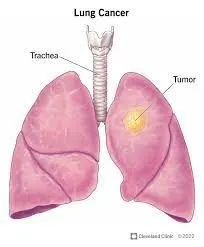
lung cancer - Lung cancer is a type of cancer that begins in the lungs. Your lungs are two spongy organs in your chest that take in oxygen when you inhale and release carbon dioxide when you exhale.
1 - a - organ - lung
The main function of the lungs is the process of gas exchange called respiration (or breathing). In respiration, oxygen from incoming air enters the blood, and carbon dioxide, a waste gas from the metabolism, leaves the blood. A reduced lung function means that the ability of lungs to exchange gases is reduced
b - The pathophysiology of lung cancer refers to the physical changes happening in the body that lead to lung cancer. The leading cause of lung cancer is exposure to tobacco smoke. Other possible causes include radon, asbestos, radiation, and air pollution.
Lung cancer is a type of cancer that begins in the lungs. Your lungs are two spongy organs in your chest that take in oxygen when you inhale and release carbon dioxide when you exhale. Lung cancer is the leading cause of cancer deaths worldwide
c - Smoking causes the majority of lung cancers — both in smokers and in people exposed to secondhand smoke. But lung cancer also occurs in people who never smoked and in those who never had prolonged exposure to secondhand smoke. In these cases, there may be no clear cause of lung cancer.
d - One of the main homeostatic functions of the respiratory system is the gas exchange that occurs in the alveoli in the lungs. As blood passes through the tiny capillaries in the alveolar sacs, changing pressure gradients allow oxygen and carbon dioxide to diffuse in and out of the blood
2 - a - You may be asked to have a blood test to rule out some of the possible causes of your symptoms, such as a chest infection.
- Chest X-ray. A chest X-ray is usually the 1st test used to diagnose lung cancer
- Chttps://allgamesatoz.com/search-results/?cx=partner-pub-7571117627535008%3A1604317181&cof=FORID%3A0&ie=UTF-8&q=Battlegrounds+Mobile+IndiaT scan
- PET-CT scan
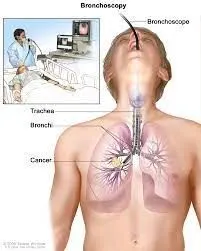
- Bronchoscopy and biopsy
- Other types of biopsy
- Staging
- Lung cancer screening
b - Learn enough about lung cancer to make decisions about your care. Ask your doctor about your lung cancer, including your treatment options and, if you like, your prognosis.
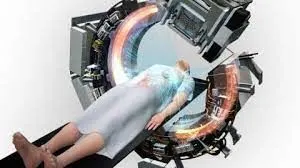
c - Staging tests may include imaging procedures that allow your doctor to look for evidence that cancer has spread beyond your lungs. These tests include CT , MRI , positron emission tomography (PET) and bone scans
d - An X-ray image of your lungs may reveal an abnormal mass or nodule. A CT scan can reveal small lesions in your lungs that might not be detected on an X-ray. Sputum cytology. If you have a cough and are producing sputum, looking at the sputum under the microscope can sometimes reveal the presence of lung cancer cells.
3 - a - Chemotherapy - Chemotherapy is a type of cancer treatment that uses one or more anti-cancer drugs as part of a standardized chemotherapy regimen. Chemotherapy may be given with a curative intent or it may aim to prolong life or to reduce symptoms
Targeted therapy - Targeted therapy or molecularly targeted therapy is one of the major modalities of medical treatment for cancer, others being hormonal therapy and cytotoxic chemotherapy
b - Lung cancer is treated in several ways, depending on the type of lung cancer and how far it has spread. People with non-small cell lung cancer can be treated with surgery, chemotherapy, radiation therapy, targeted therapy, or a combination of these treatments.
Lobectomy is the removal (resection) of the lobe of the lung affected by lung cancer. This is the most commonly performed lung cancer surgery. A bilobectomy is the removal of two lobes and is only done for tumors of the right lung where the tumor involves two adjacent lobes.
4 - a - surgery name - Lobectomy
A lobectomy is a surgical procedure where an entire lobe of your lung is removed for a variety of reasons that may include a lung cancer diagnosis, infection, COPD or benign tumors. There are three lobes of your right lung and two lobes of your left lung.
b - Under general anesthesia and double-lumen intubation, the patient is placed in a lateral decubitus position, and the padded arms are placed unsupported in the “prayer” position in front of the face. Both legs are positioned together flexed like in a sitting position and padded with pillows
c - A lobectomy is a surgery to remove one of the lobes of the lungs. The lungs have sections called lobes. The right lung has 3 lobes. The left lung has 2 lobes. A lobectomy may be done when a problem is found in just part of a lung. The affected lobe is removed, and the remaining healthy lung tissue can work as normal.
A lobectomy is most often done during a surgery called a thoracotomy. During this type of surgery, the chest is opened
A lobectomy is the most common surgery for treating non small cell lung cancer in its early stages. Depending on several factors — including size and location of tumors as well as lymph node status — surgeons may also consider removing smaller sections of your lung.
A lobectomy isn’t just for lung cancer. You may need a lobectomy procedure if you have:
- Lung abnormalities present at birth.
- Damage to your lung from infection or radiation.
- Tumors that have spread from other sites in your body to your lungs.
- Bleeding from lung damage.
d - The common instruments we used in single port VATS lobectomy, including ultrasound scalpel, articulated stapler, non-invasive grasping forceps, oval forceps, separating pliers, electric hook, and vascular clamp
5 - Rest when you feel tire
Try to walk each day
Avoid strenuous activities, such as bicycle riding, jogging, weight lifting, or aerobic exercise, for 6 to 8 weeks, or until your doctor says it is okay
For 6 to 8 weeks, avoid lifting anything over 2 kilograms (4.5 pounds) or that would make you strain
6 -
- Medical Equipment.
- Tomotherapy.
- Linear Accelerators (Varian Clinac 600CD, 2100CD,21EX series)
- Conventional Simulator AND CT- simulator.
- Positron Emissing Tomograph Computed Tomography (PET-CT)
- Magnetic Resonance Imaging (MRI)
- 64-Channel Computed Tomography (CT)