Project 1 - Design and Develop a IOT based Wireless Wearable Health Monitoring System or a Home Healthcare System to monitor the physiological parameters of ECG, Heart Rate, Pulse Oximetry, Cuffless Blood Pressure and Body Temperature.
Project 1
Product name: Care from Home (CFH)
CFH is a home healthcare monitoring system that monitors ECG, heart rate, SpO2, blood pressure and body temperature. It is a wearable device used for vital parameters monitoring.
Parameters and Specifications
- ECG: It measures the electrical activity of heart.
- Specifications
- Amplitude: 0.1-1mV
- Frequency:0.5 to 150Hz
- Senor used: AD8232. The output of the sensor is an analog reading
- Heart rate: It measures the number of times heart beats per minute.
- Specifications
- Normal range: 60 to 100
- Sensor used: MAX30100 (It is oximeter and heart rate senor). It gives the digital number as output.
- SpO2: It gives the oxygen saturation in arterial blood
- Specifications:
- Normal range: 90-100
- Sensor used:MAX30100
- Blood pressure: it the pressure exerted by arterial walls normally on the walls of arteries
- Specifications
- Normal range 60-140 mm of Hg
- Sensors used:1620 pressure sensor-it is a piezoresistive sensor used for medical use
- Body temperature: It gives the internal temperature of our core.
- Specifications
- Normal range: 36.1 to 37.2℃
- Senor used: LM35
Block schematic of IoT device
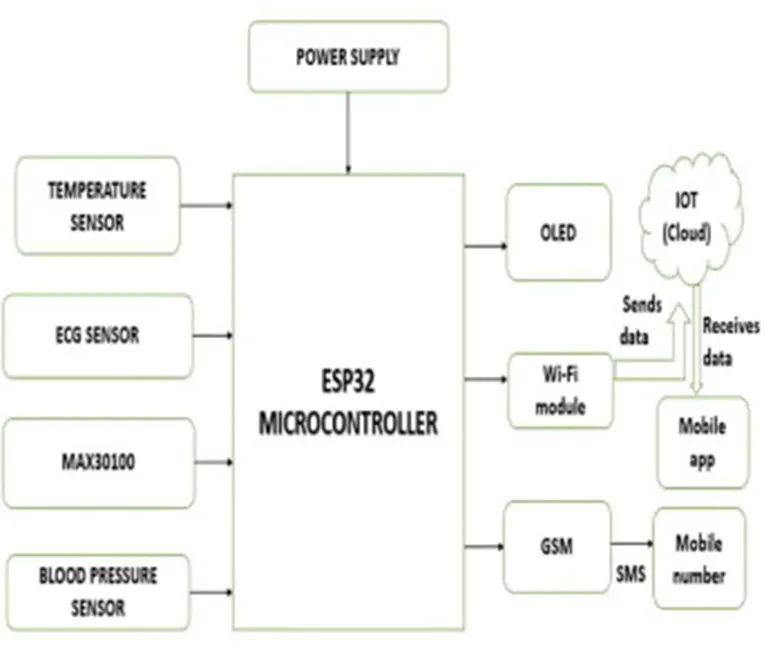
Temperature sensor: LM35 is a precision temperature that gives its output in ℃. It is a linear sensor with operational range from -55℃ to 150℃. The accuracy of the sensor is ±0.5℃. The sensitivity is 10mV/℃
ECG sensor: AD8232 measures the electrical impulses generated by cardiac muscle. Thus, giving the electrical activity of heart.
Blood pressure sensor: Oscillometric method is used to measure both systolic and diastolic blood pressure
Pulse oximeter sensor and heart rate sensor: MAX30100 is used to measure both SpO2 and heart rat. Pulse oximeter is measure using both red and infra-red LEDs.
Power supply: Rechargeable lithium battery is used to provide the power at required voltage for the device to handle input and output transfer to the internet.
ESP32 microcontroller: It is a low cost, low power microcontroller with an integrated W-Fi and Bluetooth connectivity. It is used for processing and connecting the peripherals
- Memory:448KB for booting and core functions (ROM)
- SRAM:520KB
- Supports external memory up to 16MB
GSM: It stands for global system for mobile communication. It allows the use of voice and data at same time. GSM device is used to send messages to the mobile number if any one of the parameter exceeds the threshold value and is abnormal.
Wi-Fi module: It sends the data to the cloud
OLED monitor: It is used for the display or output of the sensors is displayed on OLED monitors
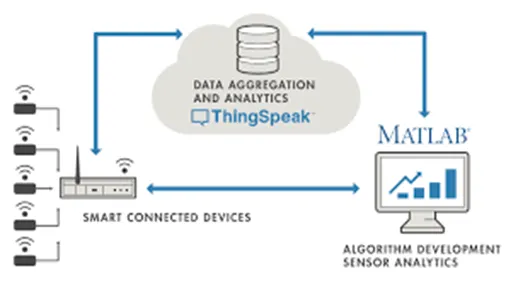
Thingspeak: It is a cloud-based IoT analytics application that analyses, compiles and visualizes the live data
Design factors
The design factors that are considered for the product design include
- Mobility: The movement of person is not restricted as the sensors are wearable and small in size
- Real-time vital physiological parameters monitoring
- WiFi: Transmission of data using WiFi communication rather than Bluetooth enables communication to wide areas
- Emergency handling: Any abnormal event is reported to mobile and auto call for ambulance or emergency services is enabled
- Cost: the sensors used are accurate and the microcontroller used in the design of product makes it economical than Arduino based IoT devices or Raspberry Pi based IoT devices.
Types of noises encountered
- The main source of noise in IoT based wearable devices is motion of person. They result in
- Motion artifacts: These cannot be avoided as the person is mobile. However, implementation of common mode rejection and appropriate signal conditioning by filtering, amplification would reduce this noise
- EM interference: could be avoided by proper shielding
- Environmental noise: Eliminated by noise cancellation algorithms and signal conditioning
- Powerline interference
- Baseline wander
- Ways of elimination of noise: Filtering
- Filtering: firstly, pass through the high pass filters
- Pass through the low pass filters
- Notch filter to remove power line interference
- Amplification to achieve a perceivable range
- Convert to digital form
- We can also use wavelet transforms to eliminate noises
Communication protocol-IP
Wireless-Fidelity (Wi-Fi) uses Internet protocol (IP) to communicate between devices. Data is divided into small units called as packets. IP information is attached to every packet and this helps the routers to send packets to the destination. Each domain that connects to internet has IP address that serves as unique identifiers.
Once the packets reach the destination, depending upon the transport protocols like TCP/UDP data is transported.
TCP/IP protocol
In TCP/IP protocol, before transmitting data, TCP establishes connection with recipient and once receiver acknowledges connection, it begins transmission of data in order. Missing packets are re-sent.
It is used for reliability rather than speed of transmission.
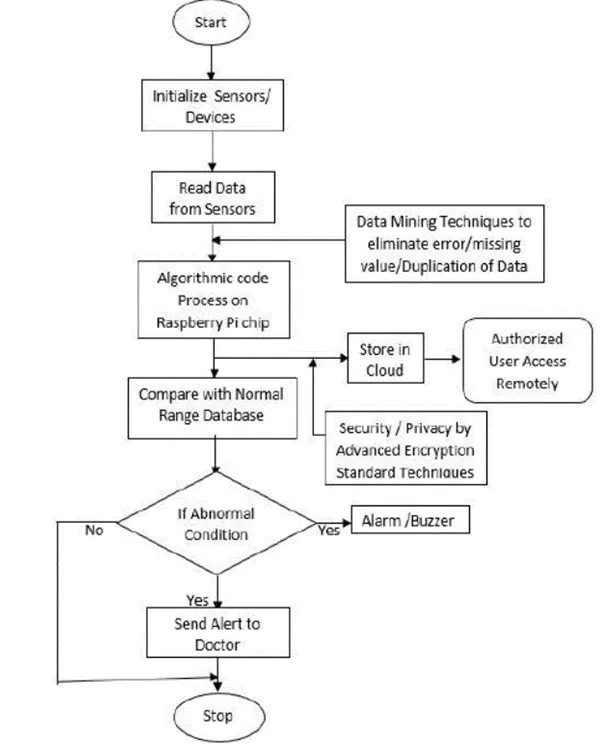
Flowchart
Methods for cloud computing for data analysis
Cloud computing for data analytics involves usage of powerful analytical tools to identify patterns in data and extract the information
In the device, it is proposed to use Thingspeak
Thingspeak is a IoT based cloud platform that allows us to send sensor data from anywhere to cloud. It can analyse, visualize data using MATLAB or any other software
Data storage and retrieval
IoT along with cloud computing is a powerful platform for monitoring at remote site. Cloud storage offers huge storage in a scalable form.
Specifically, cloud is used in the design as Infrastructure as Service provider (IaaS). Here, cloud provider would manage IT infrastructure like storage, server and networking resources and provide access to the subscribers on demand via virtual machines accessible via internet.
This provides storage resiliency such as backup, replication and recovery

Plan to detect abnormal events
Algorithms are used for analysing the data acquired from sensors. This data is compared against the database and abnormal event is detected. Specifically, a threshold value or physiologically normal range is fed to the algorithm.
Once the patient data exceeds or falls below the physiological range, abnormal event is detected.
Abnormal event management
After the detection of any abnormal event, machine sends an emergency SMS via GSM module to the mobile numbers of person’s speed dial list. This can also trigger the auto-call facility to emergency services.
In the design, if temperature falls below 35℃ or heart rate exceeding 130 beats per minute, SpO2 levels falling below 85, blood pressure exceeding 150 mm Hg would trigger the emergency alarms in the design.
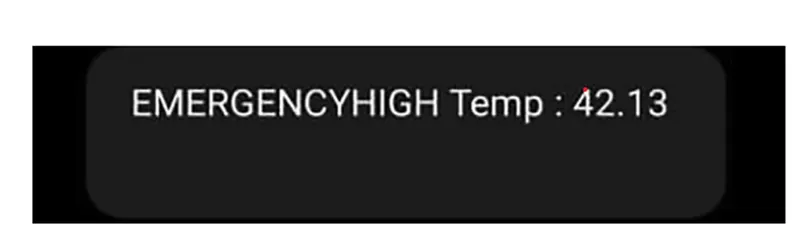
The above is the message sent via SMS to the mobile number of persons in the event of high temperature.
Data encryption and security
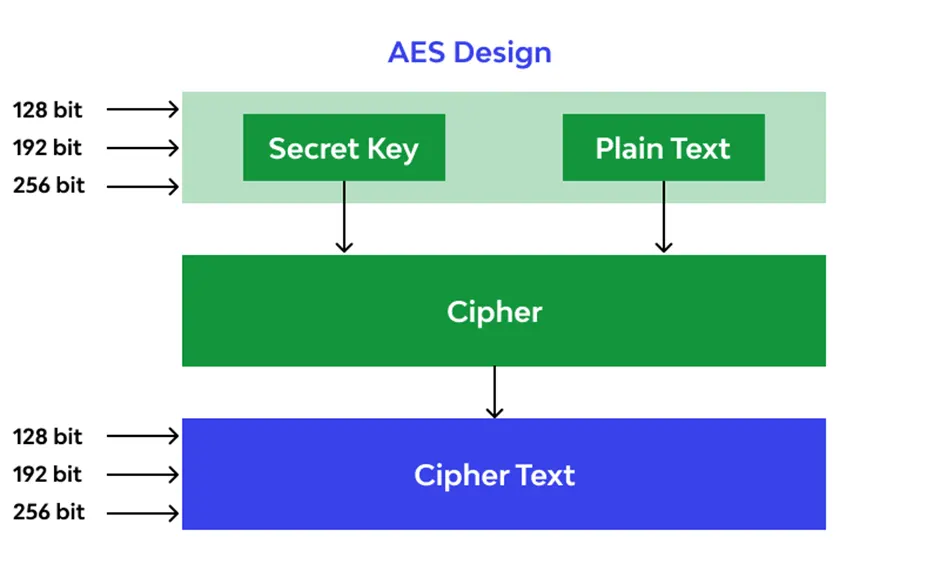
Advanced Encryption Standard (AES) Algorithm
AES is based on symmetric key matrix calculation. Data is encrypted to avoid hacking. Encryption technique has secret passkey that is on the both sides namely encryption and decryption sides.
AES encryption uses 128-bit, 192-bit and 256-bits passkeys. The 128-bit encryption is the most secure form.
The encryption of data is of three steps namely
- Initial round
- Main round
- Final round
Security
IoT security is the main concern as it is susceptible for hacking. The main aspects of security for IoT based products include
- Credential security
- Device authentication
- Encryption
- Turning off unnecessary features
- DNS filtering
Device certification plan
Device certification ensures
- Operability of device in safe and reliable manner
- Devices do not interfere with cellular network on other wireless devices
- Device interoperability
Certification types
Every country has certain rules for certification. In India, following tests are conducted before the device certification like
- Radio frequency testing
- Electrical safety testing
- Specific absorption rate testing
- Electromagnetic compatibility testing
- Fitness tracker mark
- Electromagnetic field testing
- Wireless testing and certification