Project 1_Comparative study of different storey buildings for Seismic forces
Etabs project 1
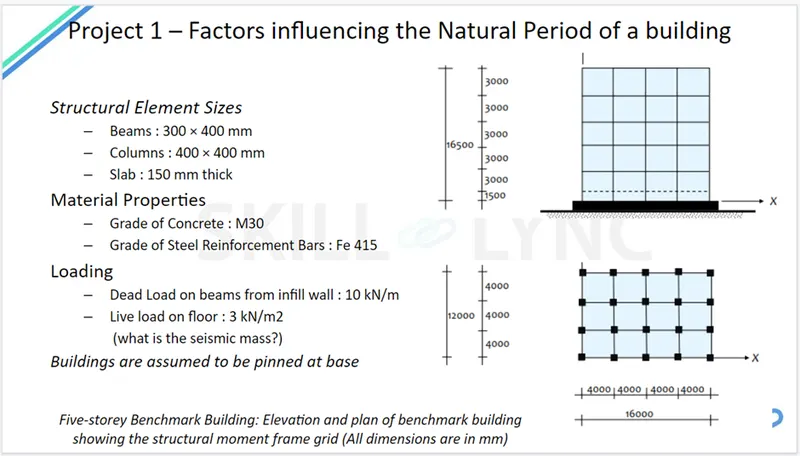
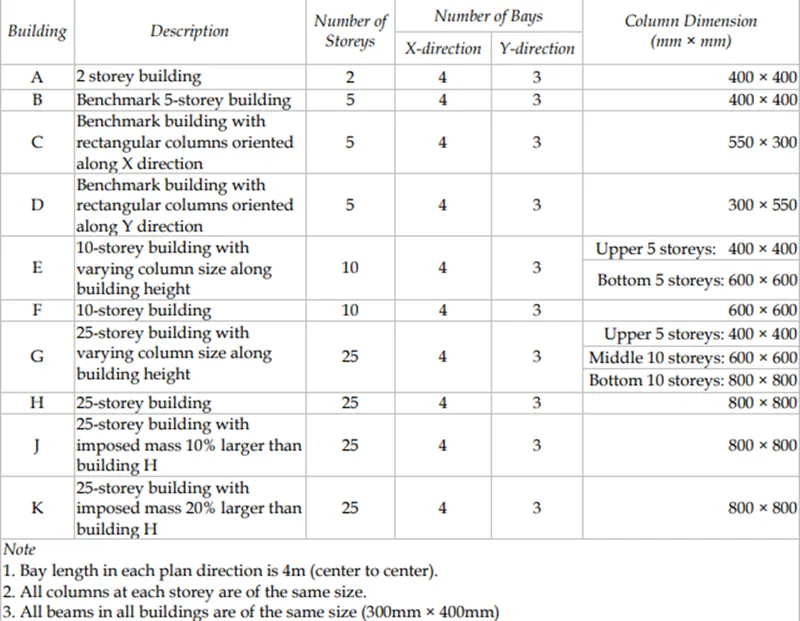
Aim- To model and analyse multiple buildings with different floors and different column dimensions subjected to seismic loads and compare the results of the buildings in seismic behaviour.
Procedure-
Modelling Building A- Number of storey=2 and column dimension= 400x400mm
- Open etabs 2019.
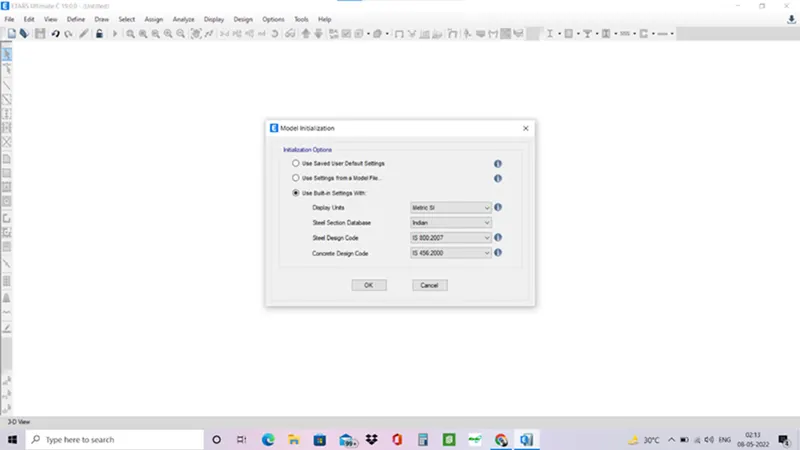
- Set up new model initialization> use built in setting. Specify the model as Indian code.
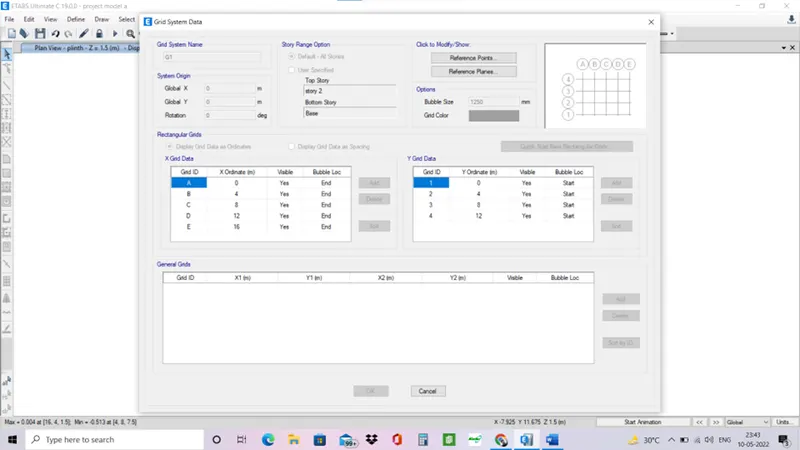
- Set the grid system and storey system of the model.
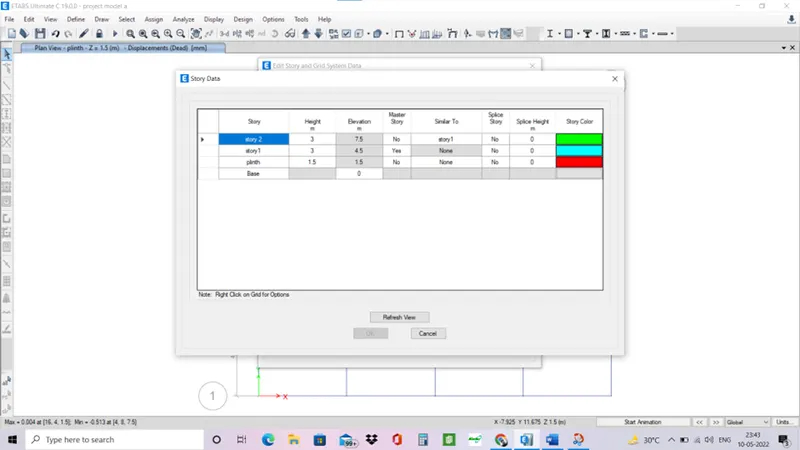
- Now, add the material property in the model.
- Define>material properties>add new material>m30 and HYSD 415.
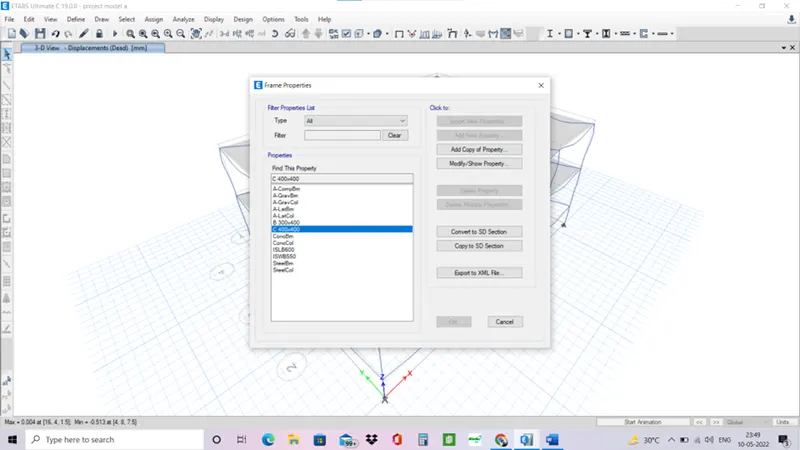
- Define > section properties>frame sections > add new property> select rectangular section.
- Define beams, columns and slab and modify the frame section data. Set the depth, width and reinforcement data.
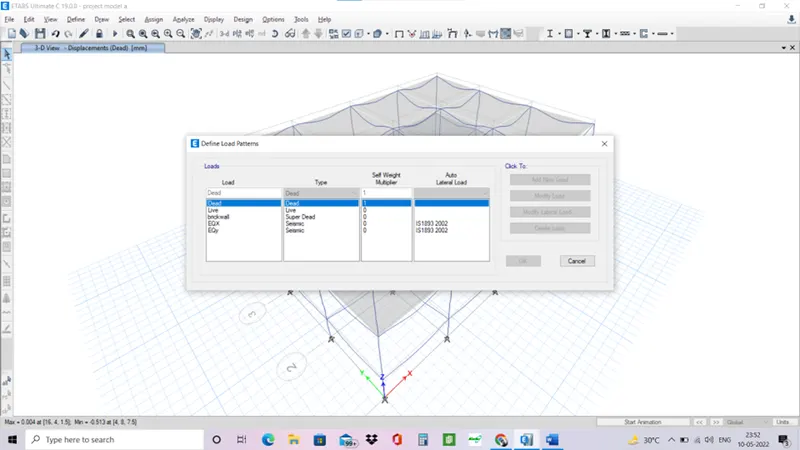
- Now, add the load patterns in the model.
- Define> load patterns> add new load.
- Dead load is automatically defined, rest are to be added.
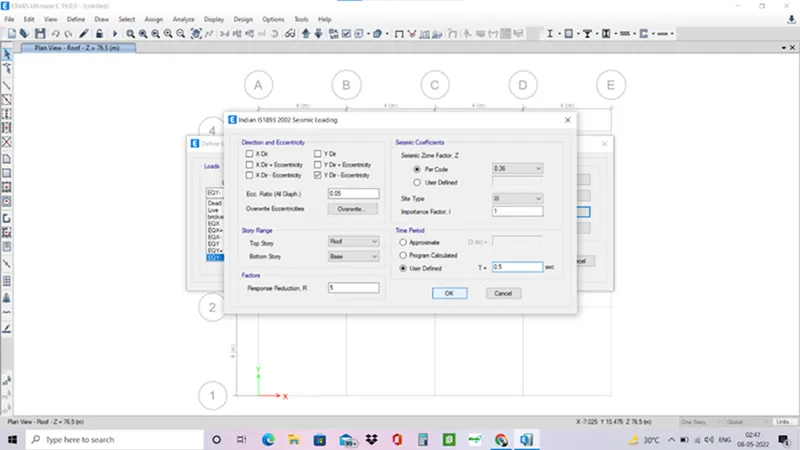
- Modify the seismic loads for eccentricity and directions.
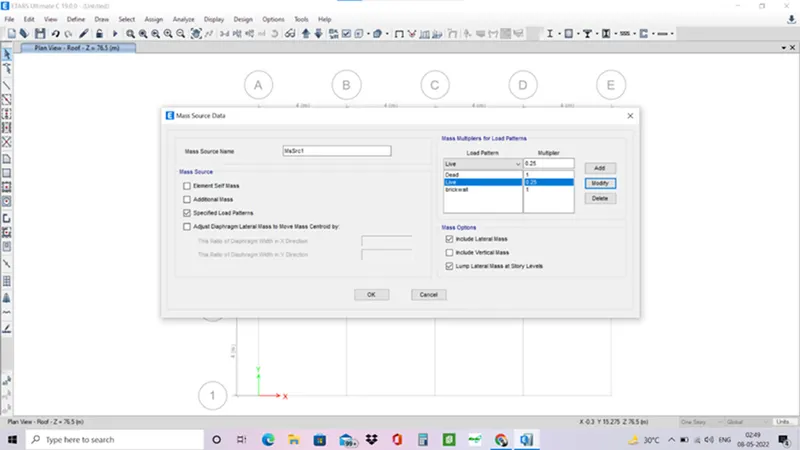
- Add mass source.
- Define> mass source> modify mass source.
- Add the load patterns in the mass source. Dead load, live load and wall load.
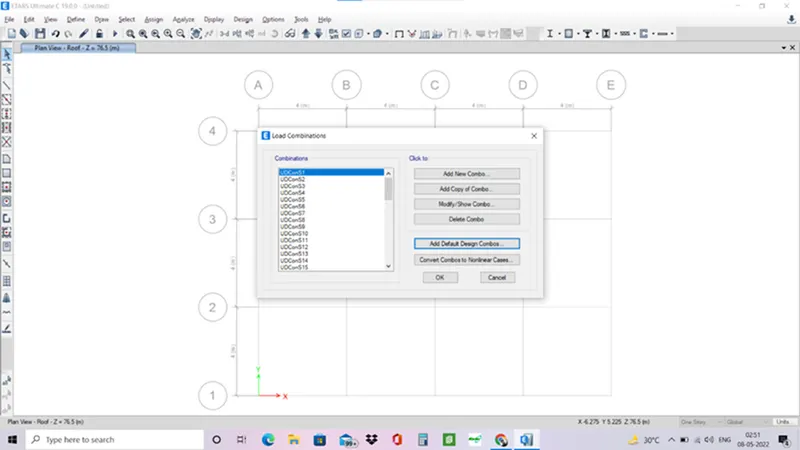
- Add load combination.
- Define>load combination>add default load combinations.
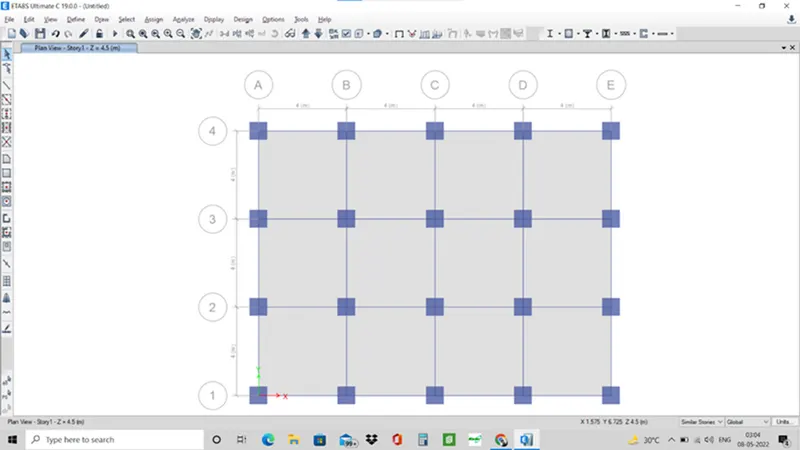
- Now add the columns, beams and slab in the model.
- Carefully place the columns, beams and slabs.
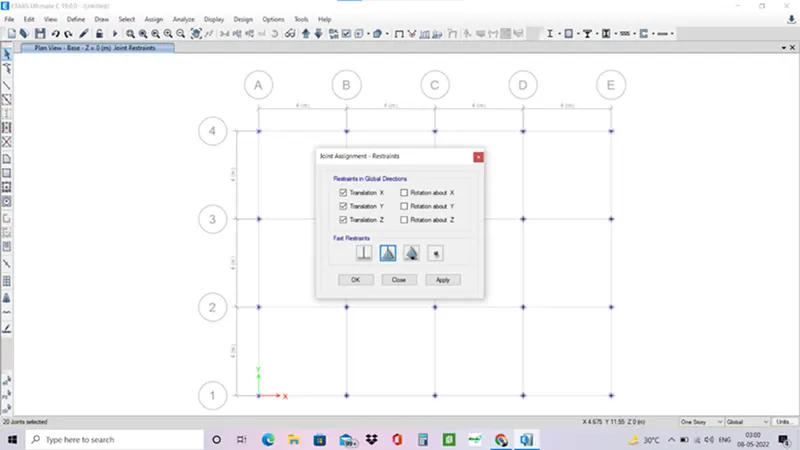
- Add restraint of pin foundation in the model.
- Add loads on the building.
- Apply 10kn/m2 distributed frame loads on beams (dead)
- Apply 3kn/m2 uniform shell load on the slab (live)
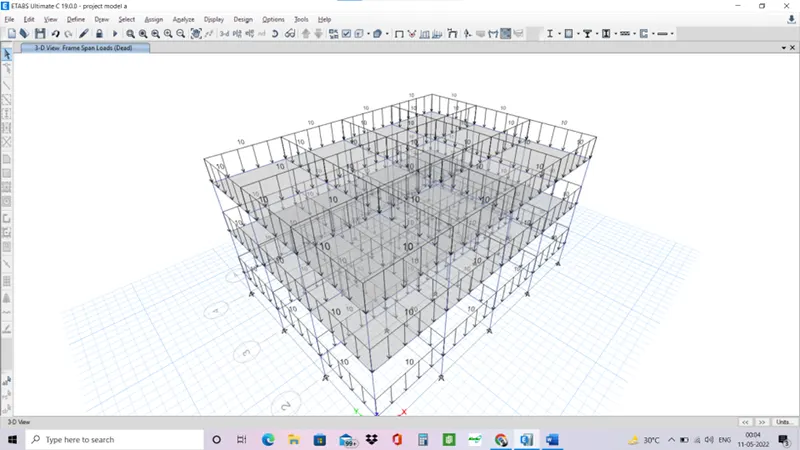
- Add the diaphgram on the building for centre of mass.
- Check the model for any errors.
- Run analysis on the model.
- Similarly draw All the models and check the results.
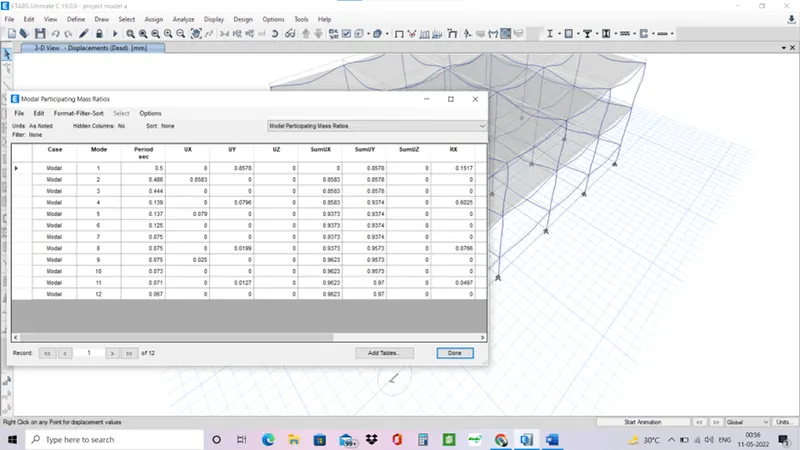
Model A
Model B
Model C
Model D
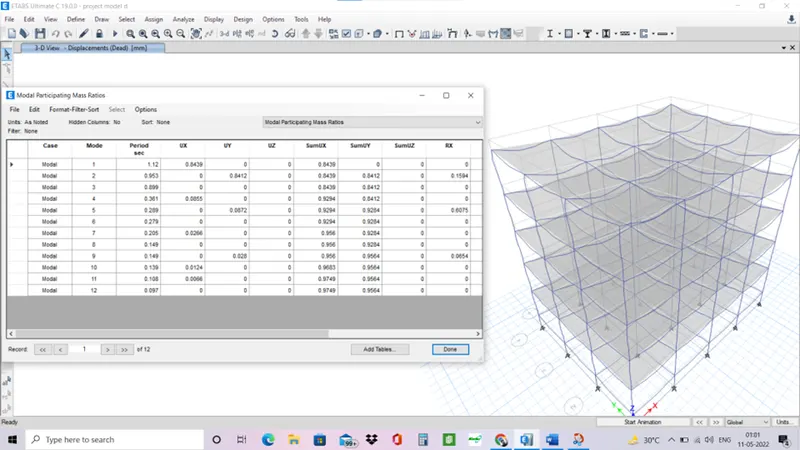
Model E
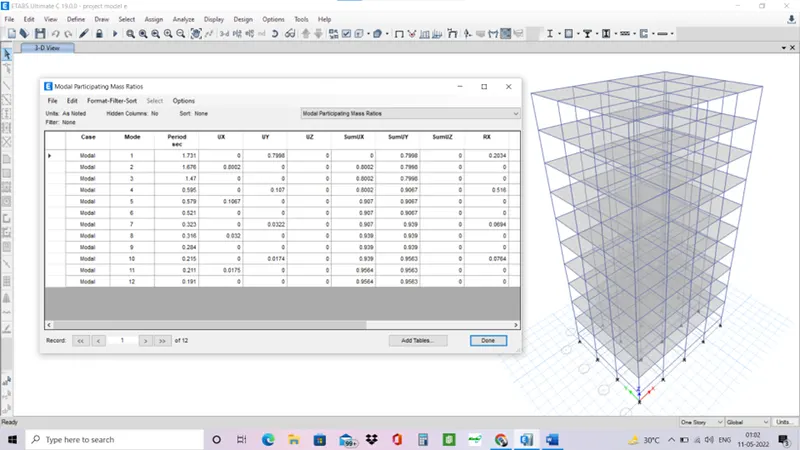
Model F
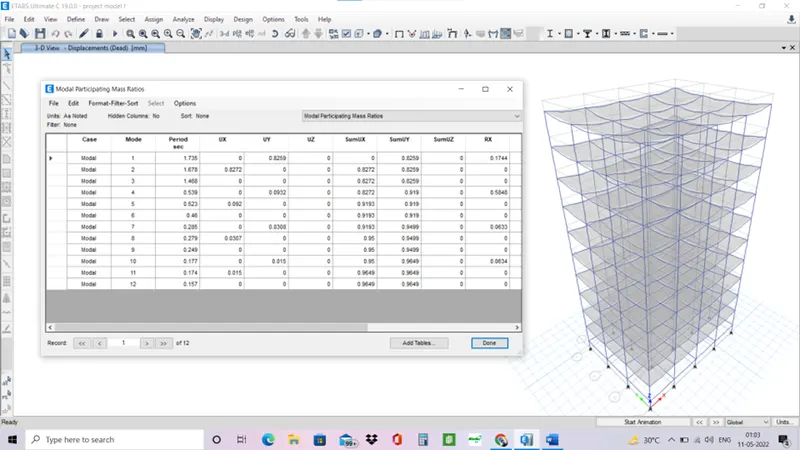
Model G
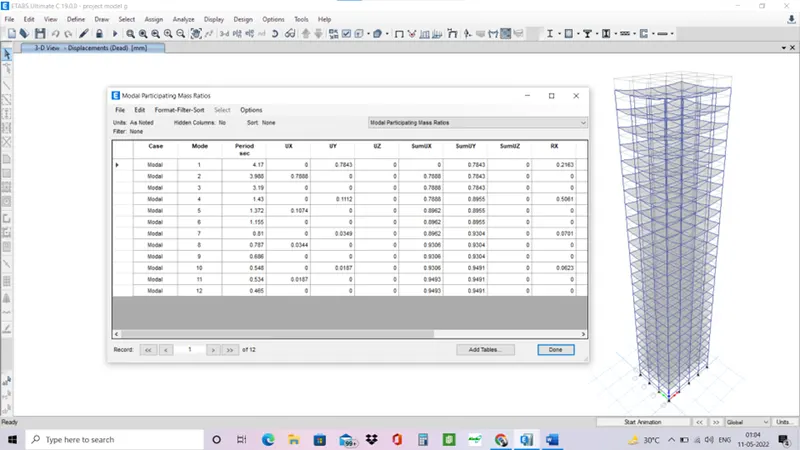
Model H
Model J
Model K
Comparisons-
Effect of stiffness on T: Compare fundamental natural periods of buildings E & F as well as G & H. Why is there a marginal or significant difference in the fundamental natural periods?
- Model E has varying size of columns and Model F has uniform sizes of column.
- Model E and F has a time period of 1.731sec and 1.735 sec respectively.
- Model G has varying size of columns and Model H has uniform sizes of column.
- Model G and H has a time period of 4.171sec and 4.416sec respectively.
- Varying column sizes are more stable or equally stable compared to uniform column sizes along the building.
Effect of mass on T: Compare fundamental natural periods of buildings H, J and K. Have the buildings become more flexible or stiff due to change in mass?
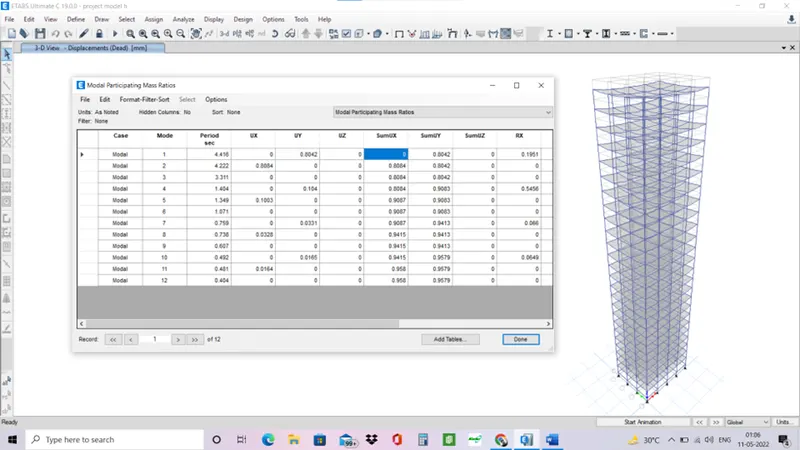
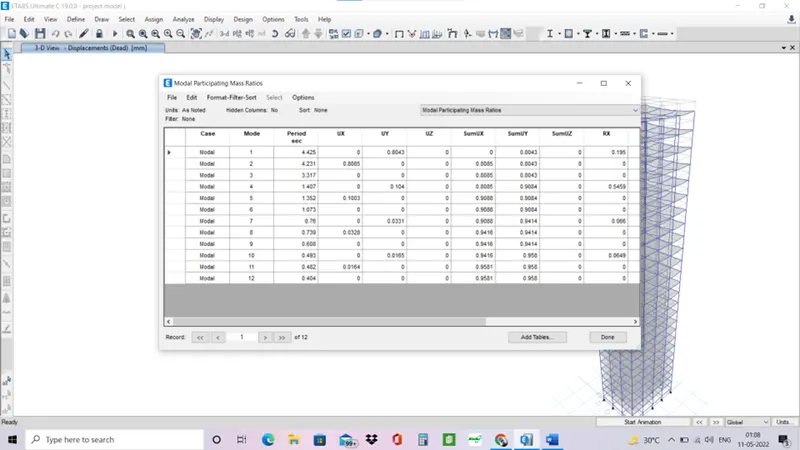
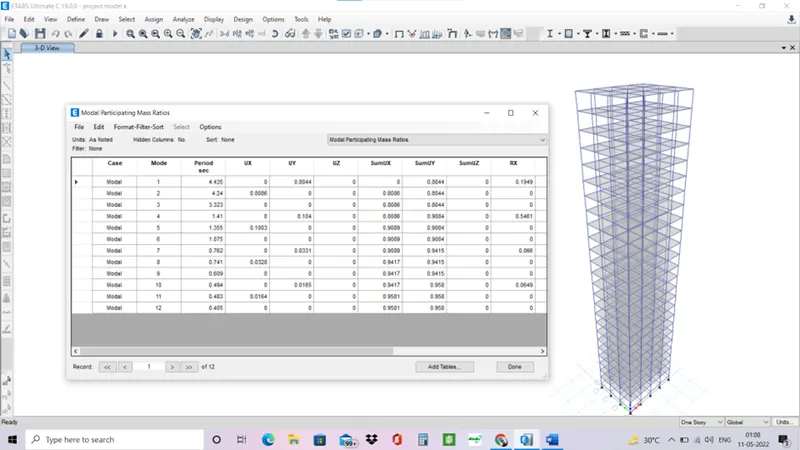
- Model H, model J and model K has a time period of 4.416 sec, 4.425 sec, 4.435 sec respectively.
- We can observe as the time period increases with the increase in the imposed load we can assume that the building becomes more flexible.
- Since the mass of the structure is directly proportional to the flexibility of the structure.
Effect of Building Height on T: How does the fundamental natural periods of Buildings A, B, F and H change with change in building height?
- Time period of model A= 0.5 sec 2 story
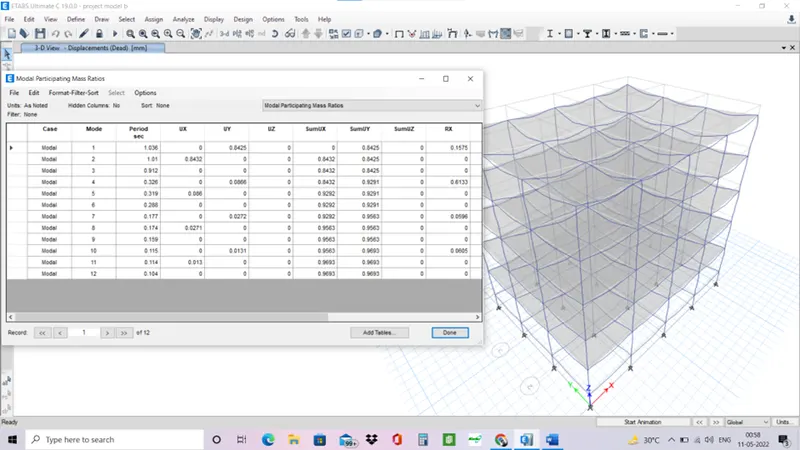
- Time period of model B= 1.036sec 5 story
- Time period of model F= 1.736 sec 10 story
- Time period of model H= 4.416 sec 25 story
- We can see as the height of the building increases the time period also increases.
Effect of Column Orientation on T: How does the fundamental natural periods of Buildings B, C and D change with change in column orientation?
- Model b uniform column of 400x400= 1.036sec
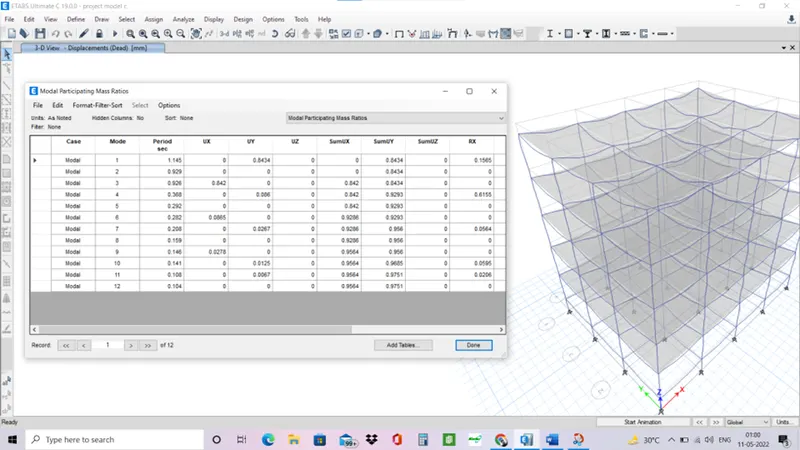
- Model c uniform column of 550x300 in x direction= 1.145 sec
- Model d uniform column of 300x550 in y direction= 1.12 sec
- We can observe there are some changes in natural periods of the building depending upon the column orientation.
Effect of Flexural Stiffness of Structural Elements on mode shapes: Compare fundamental mode shape of Building B in two situations when flexural stiffness of beams relative to that of adjoining columns is very small versus when it is large.
- Flexural stiffness of beams is 100%= 1.03sec
- Flexural stiffness of beams reduced by 90%= 2.62 sec.
- As observed when flexural stiffness is very small the time period increases and the structure becomes more flexible.
Effect of Axial Stiffness of Vertical Members on mode shapes: Compare fundamental mode shape of Building H in two situations when axial cross-sectional area of columns is very small versus when it is large.
- Full axial cross section for columns = 4.41 sec
- Axial cross section is only 10% for columns = 5.99 sec
- Reducing axial stiffness increases the time period and also affect the gravity design of the building.
Effect of Degree of Fixity at column bases on mode shape: Compare fundamental mode shape of Building B in two situations when base of columns is pinned versus when it is fixed.
- The time period If the Model B is pinned = 1.03sec
- The time period if the Model B is fixed = 0.941 sec
- The model becomes less deflected and more stiff if the restraint are set as fixed.