Project 1_Comparative study of different storey buildings for Seismic forces
ANS-
AIM- TO STUDY AND COMPAIR THE RESULTS ON
- Factors influencing the dynamic characteristics of a building
- Factors influencing the Natural Period of a building
- Factors influencing the Mode shape of oscillations
Introduction:-
The importance dynamic characteristics of a building are the modes of oscillation and damping .this is the effect of Flexural Stiffness of Structural elements , Axial stiffness of vertical members on mode shapes.
PROCEDURE:-
- open ETABS .
- select new model option.
- select new grid option and create storey as per requirment.
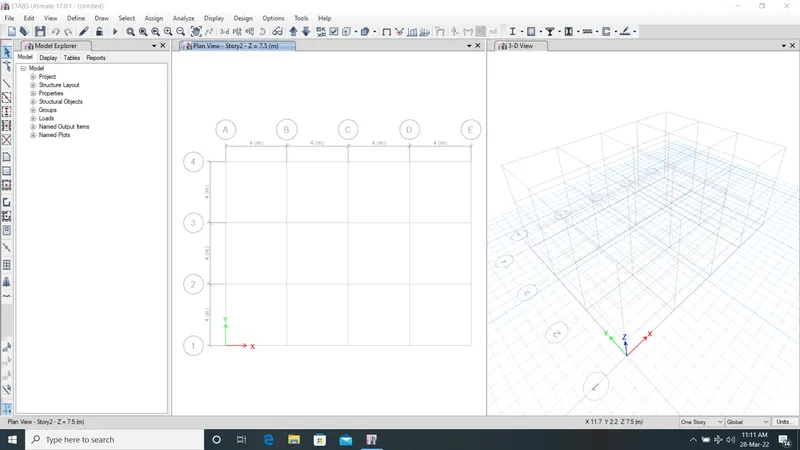
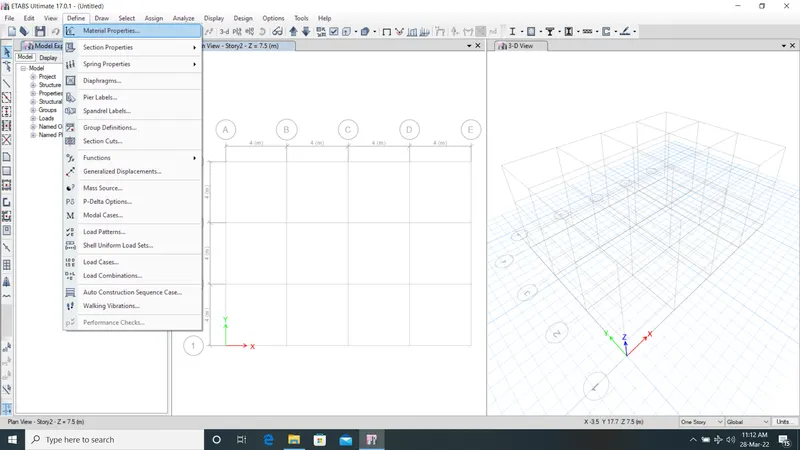
- now select define option <material properties <add new material properties.
- now add M30 and HYSD415.
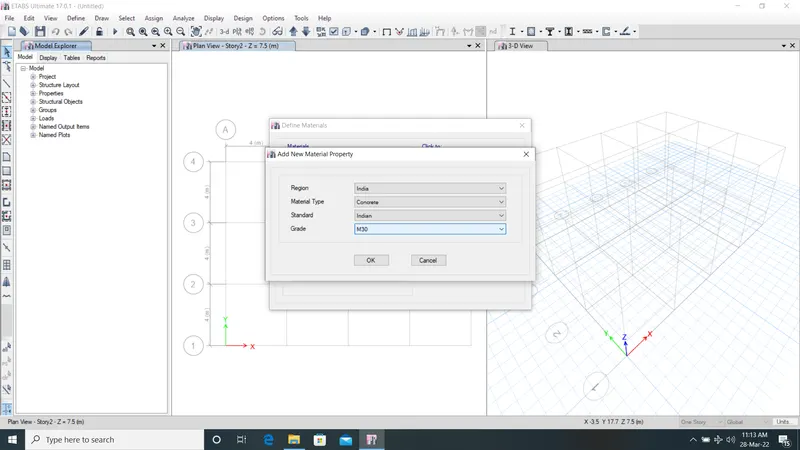
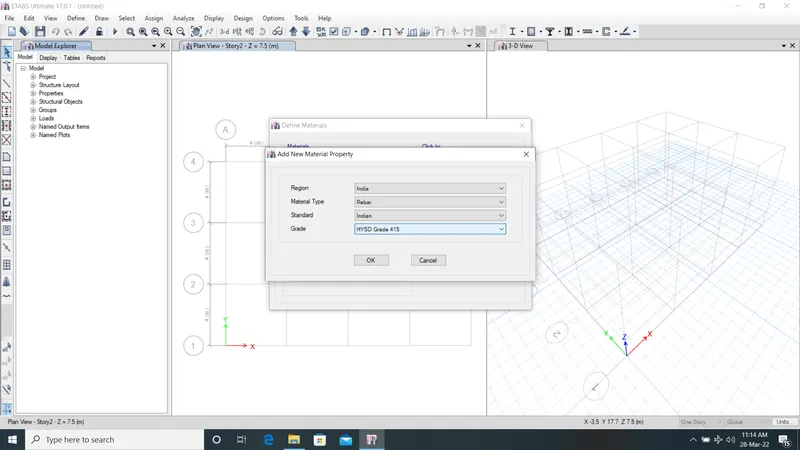
- now go to define < section properties <frame section
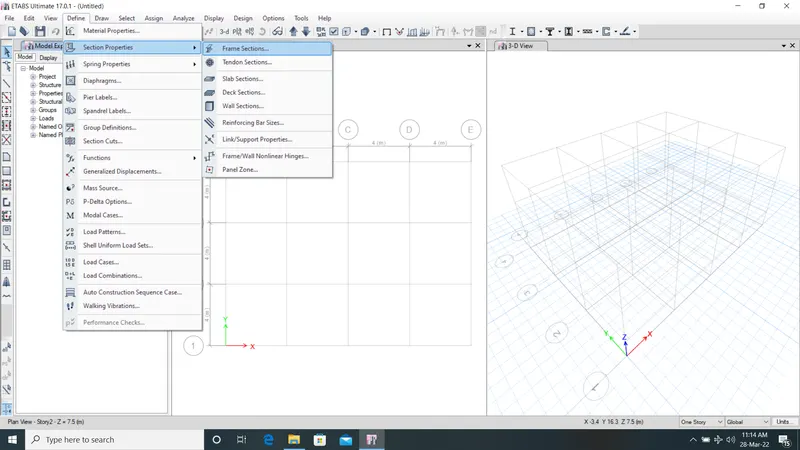
- now add concrete section of beam and column with given data of Model A
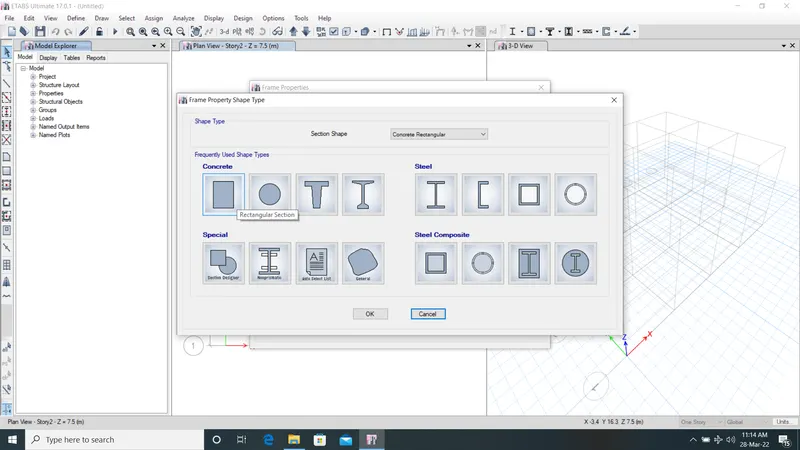
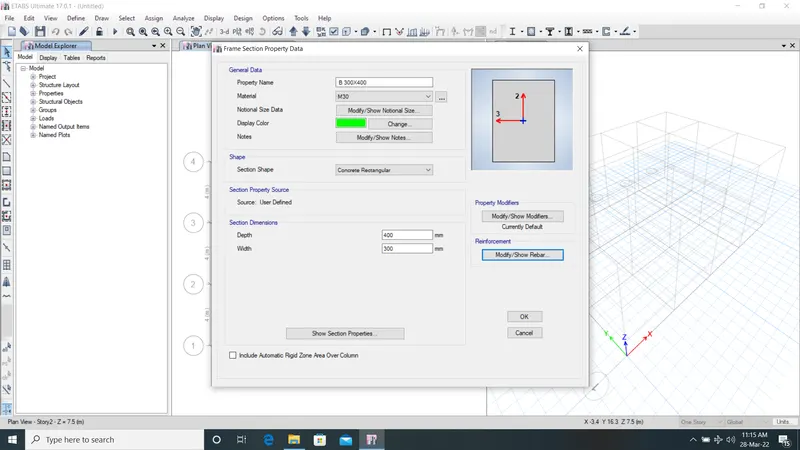
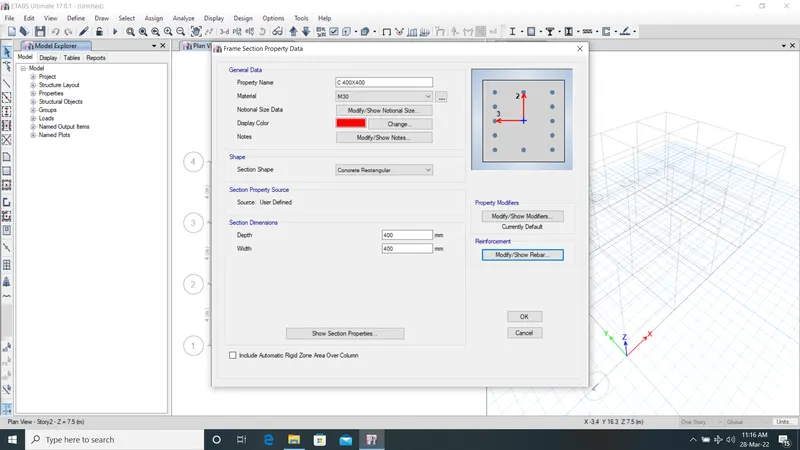
- now again go to define<section<slab section.
- add slab of 150 mm thickness.
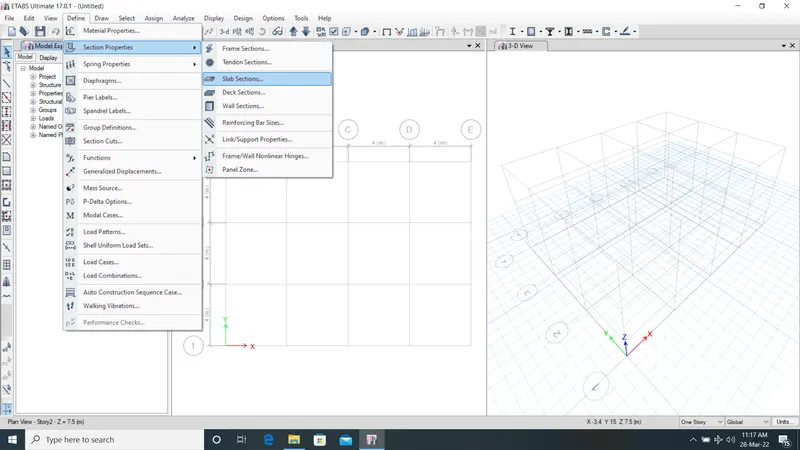
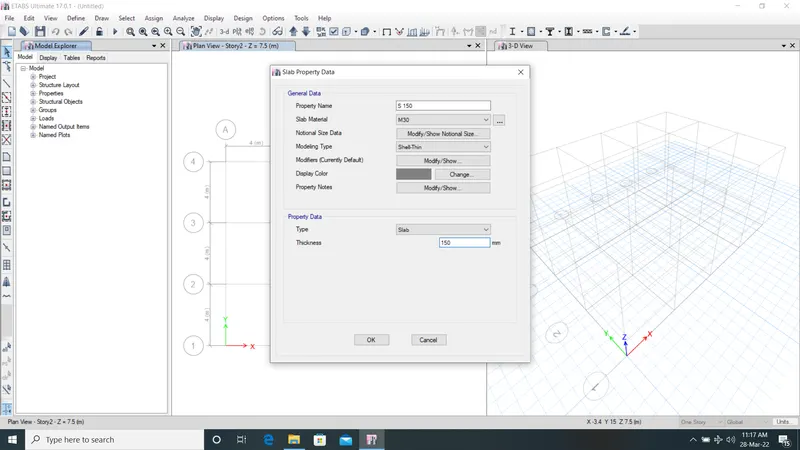
- now go to define<load patterns
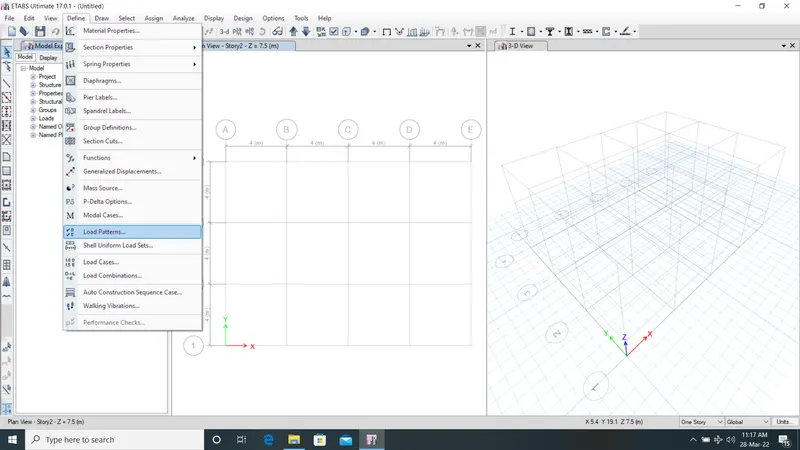
- now define load patterns.
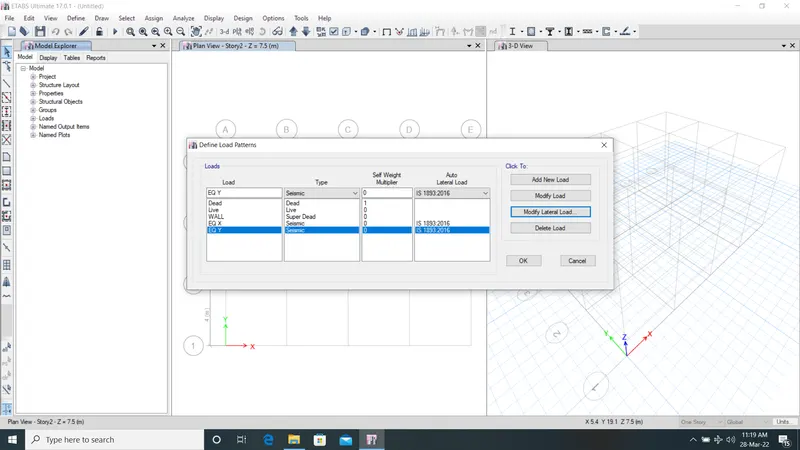
- now go to define<mass source
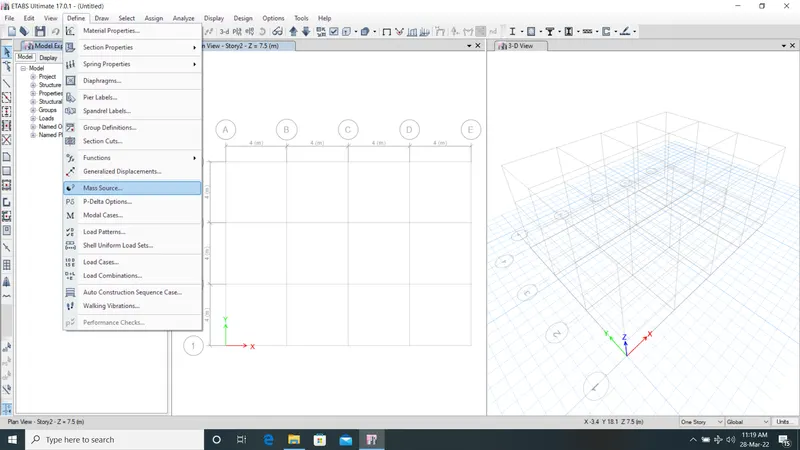
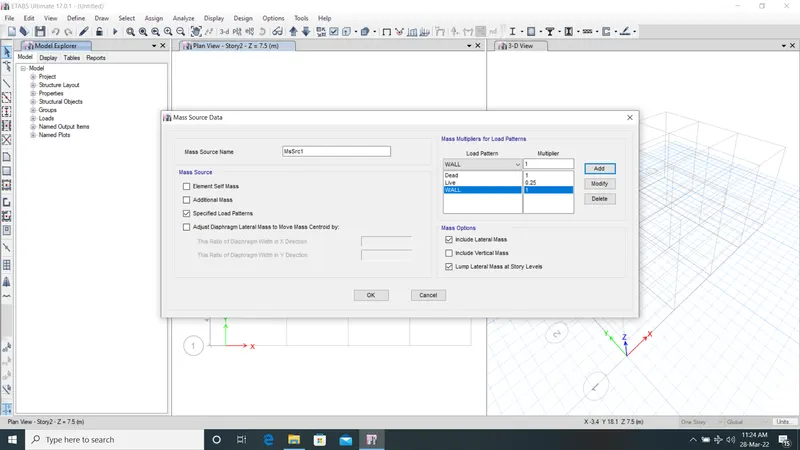
- now go to define<load combination.
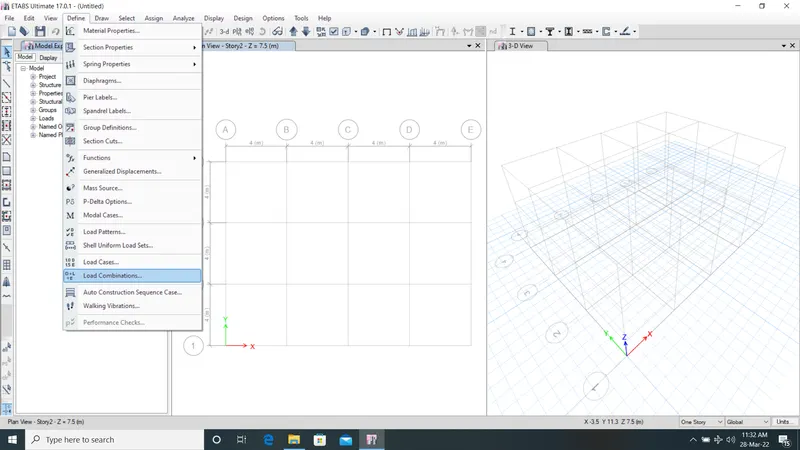
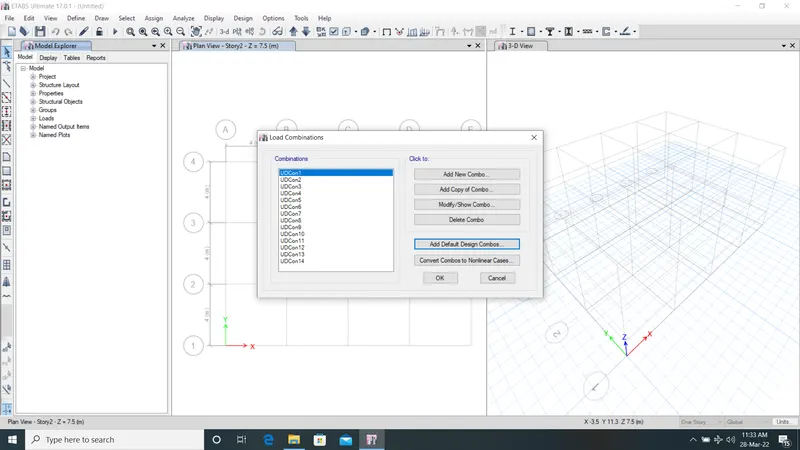
- now using quick draw beam, quick draw column , draw slab.
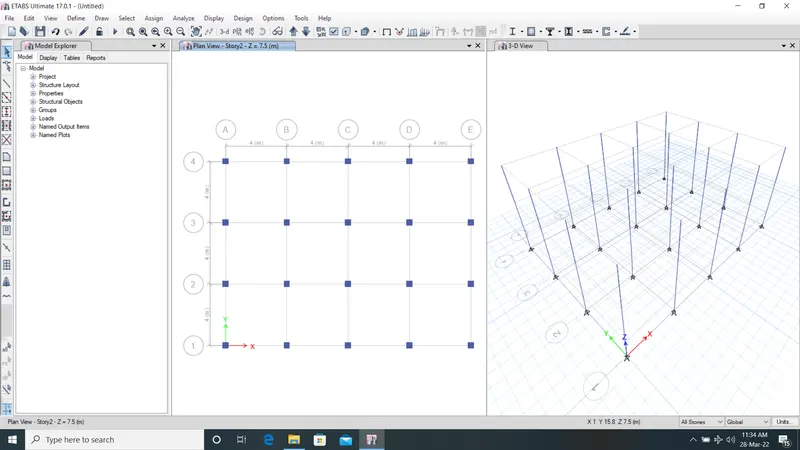
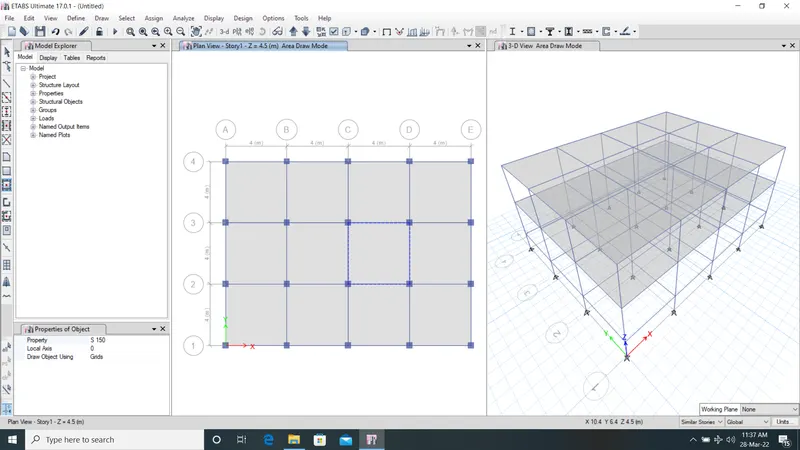
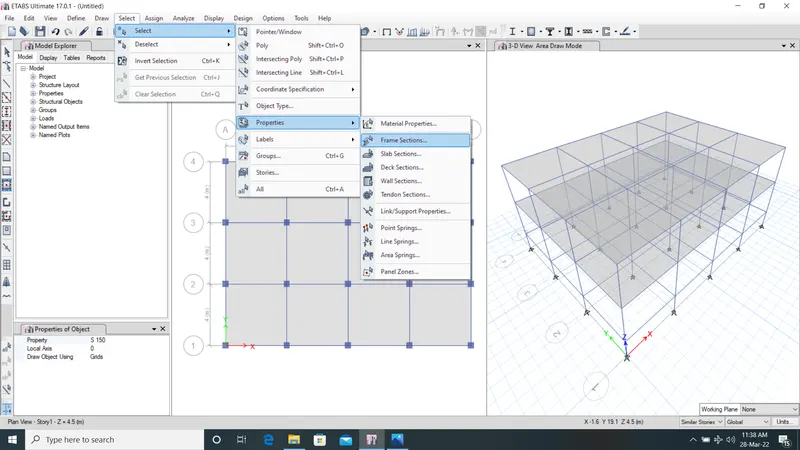
- now go to select<properties<frame selction.
- select all beams.
- now go to assign<frame load<distributed.
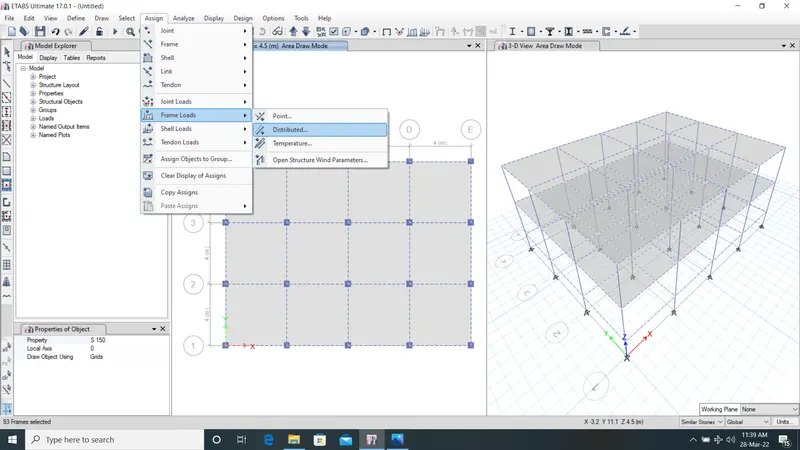
- now apply 10kn load .
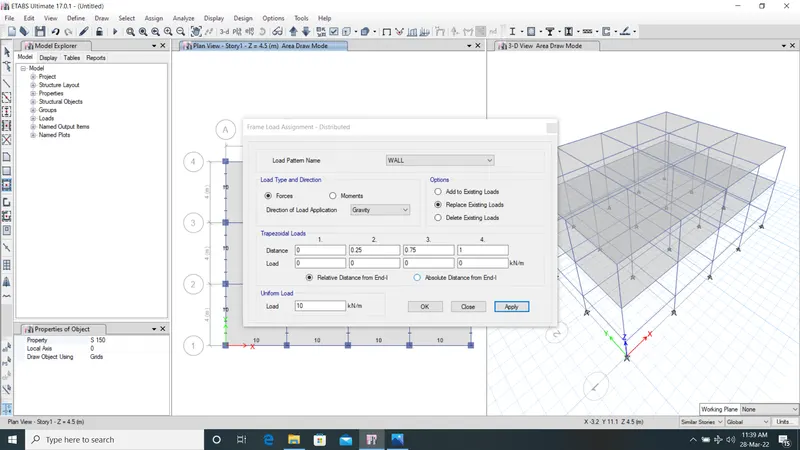
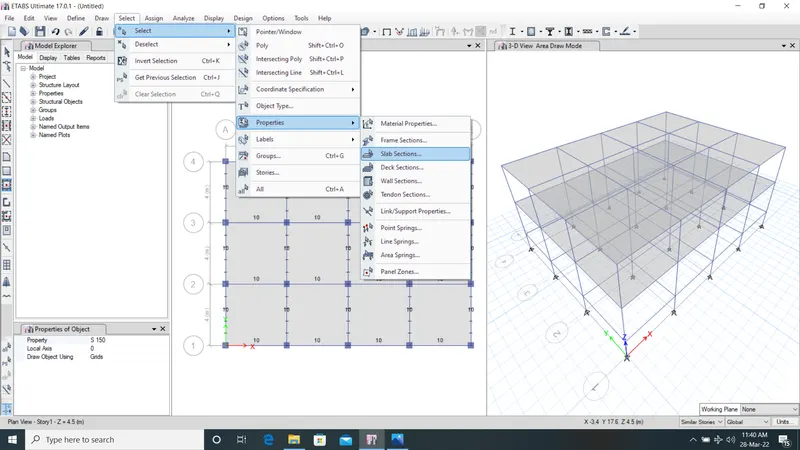
- now again go to select<properties<slab section.
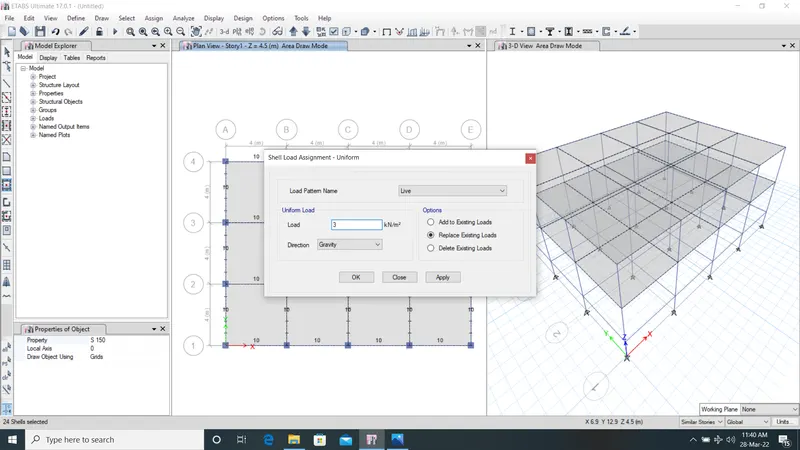
- now same as last process assign uniform load.
- assign 3kn live load.
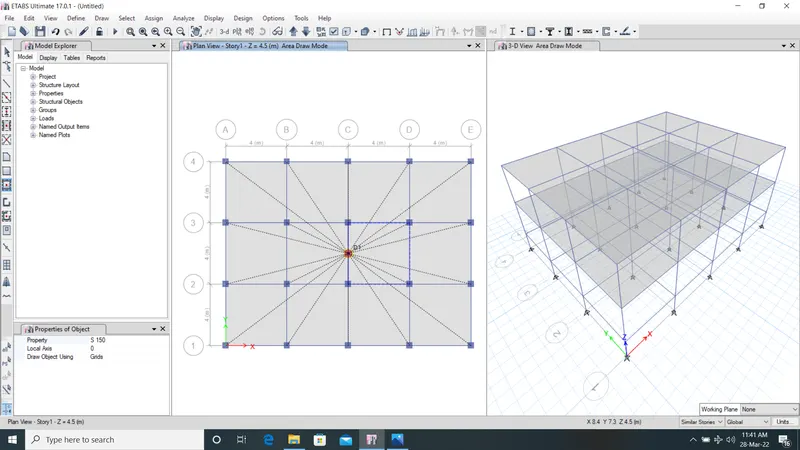
- now again go to shell <diaphragms.
- apply D1
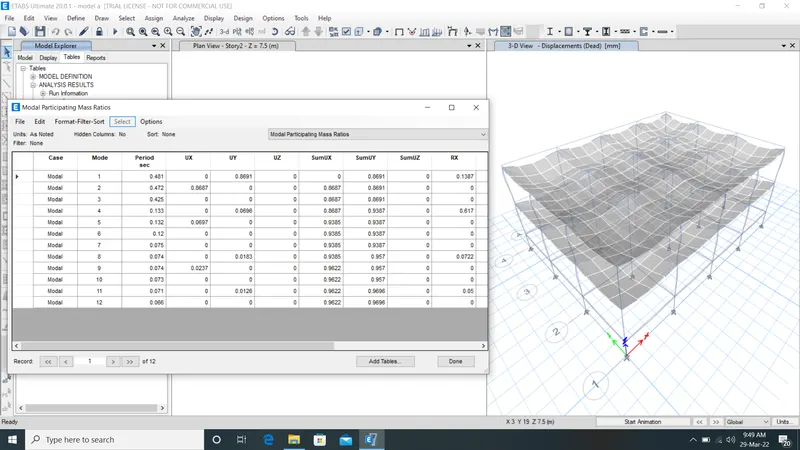
MODEL A
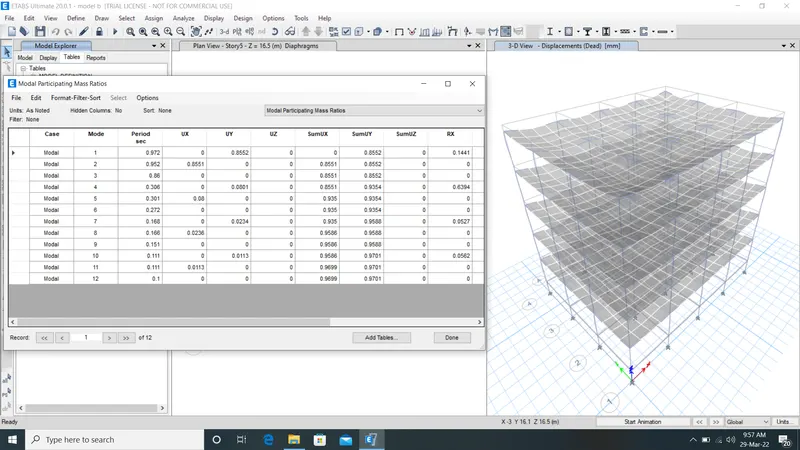
MODEL B
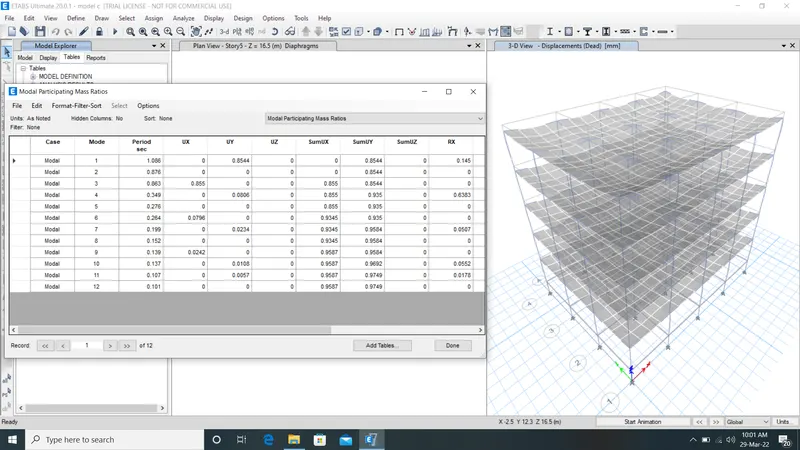
MODEL C
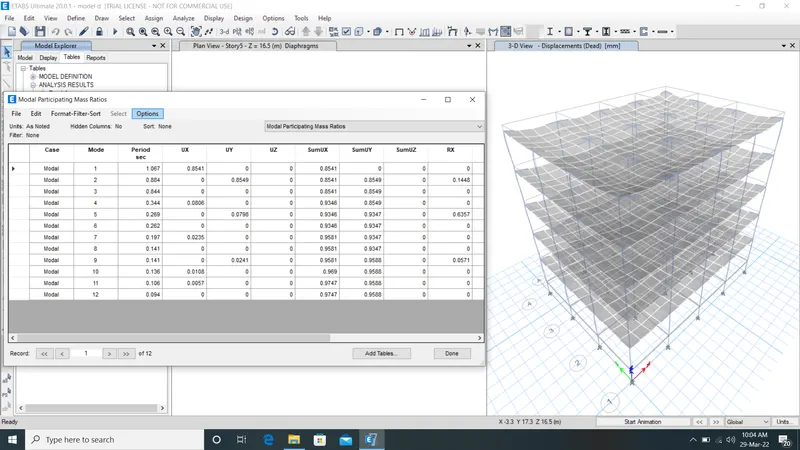
MODEL D
MODEL E
MODEL F
MODEL G
MODEL H
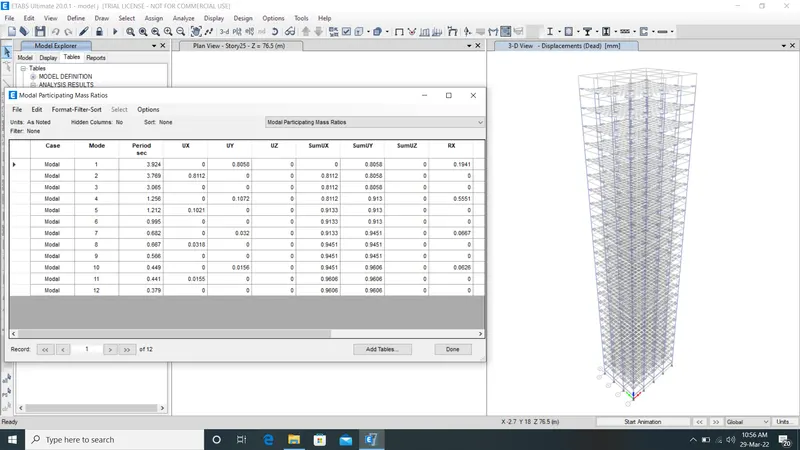
MODEL J
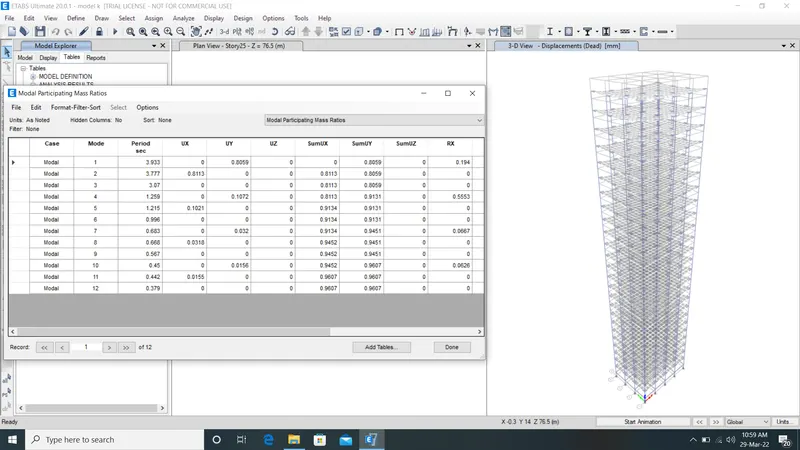
MODEL K
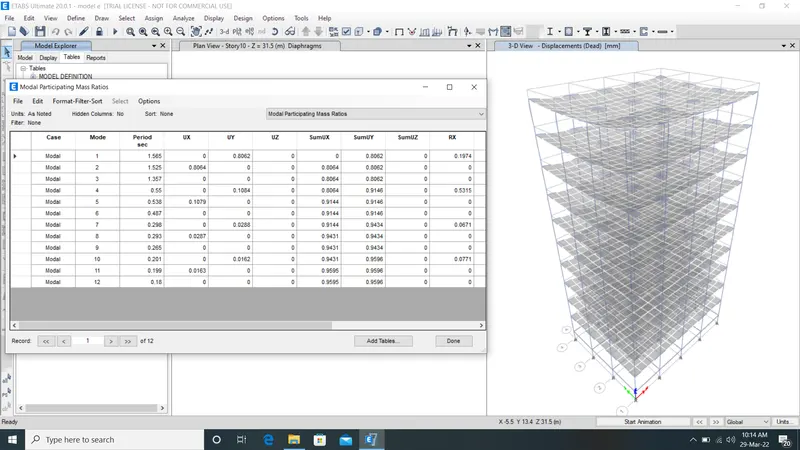
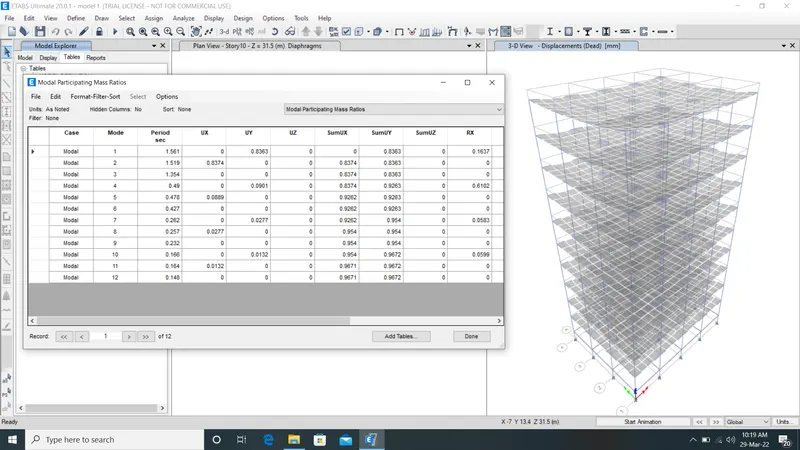
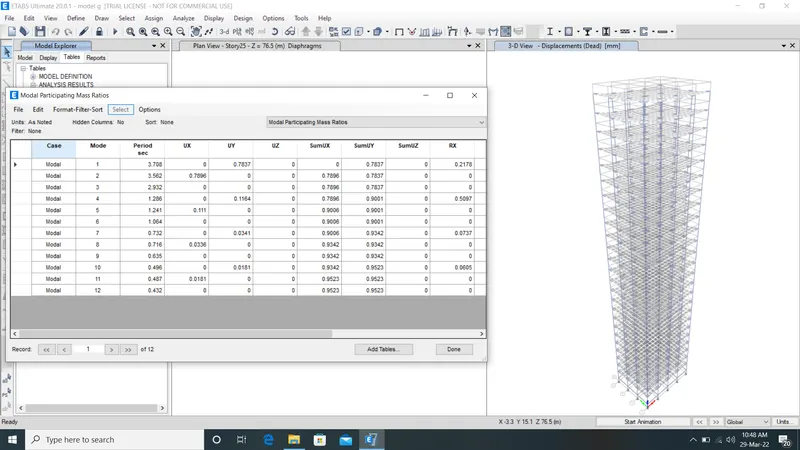
Effect of stiffness on T: Compare fundamental natural periods of buildings E & F as well as G & H. Why is there a marginal or significant difference in the fundamental natural periods?
- The fundamental natural period of building E is 1.565 sec.
- The fundamental natural period of building F is 1.561 sec.
- The fundamental natural period of building G is 3.708 sec.
- The fundamental natural period of building H is 3.961 sec.
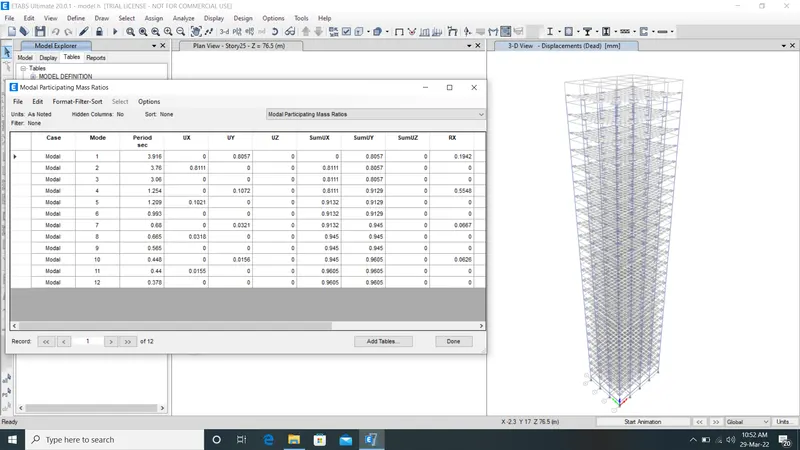
Effect of mass on T: Compare fundamental natural periods of buildings H, J and K. Have the buildings become more flexible or stiff due to change in mass?
- The fundamental natural period of building H is 3.916 sec.
- The fundamental natural period of building J is 3.924sec.
- The fundamental natural period of building K is 3.933 sec.
Effect of Building Height on T: How does the fundamental natural periods of Buildings A, B, F and H change with change in building height?
- The fundamental natural period of building A is 0.481 sec.
- The fundamental natural period of building B is 0.972 sec.
- The fundamental natural period of building H is 1.561 sec.
- The fundamental natural period of building F is 3.916 sec.
Effect of Column Orientation on T: How does the fundamental natural periods of Buildings B, C and D change with change in column orientation?
- The fundamental natural period of building B is 0.972 sec.
- The fundamental natural period of building C is 1.086 sec.
- The fundamental natural period of building D is 1.067 sec.
Effect of Flexural Stiffness of Structural Elements on mode shapes: Compare fundamental mode shape of Building B in two situations when flexural stiffness of beams relative to that of adjoining columns is very small versus when it is large.
fundamental mode shape of Building B
- When stiffness of beams relative to that of adjoining columns is very small = 0.972 sec
- When stiffness of beams relative to that of adjoining columns is large = 1.99 sec
Effect of Axial Stiffness of Vertical Members on mode shapes: Compare fundamental mode shape of Building H in two situations when axial cross-sectional area of columns is very small versus when it is large.
fundamental mode shape of Building H
- When stiffness of beams relative to that of adjoining columns is very small = 3.916 sec
- When stiffness of beams relative to that of adjoining columns is large = 5.4 sec