Project 1 : CFD Meshing for Tesla Cyber Truck
Introduction:
CFD, the acronym for Computational Fluid Dynamics is the analysis of the systems involving fluid flow, heat transfer, and associated phenomena such as chemical reactions by means of computer-based simulations. The technique is very powerful and spans a wide range of industrial and non-industrial application areas.
Project
Given:
A model of a Tesla Cyber-Truck
Aim/Objective:
|
· Topological Cleanup of the model. · Create and assign PIDs as per requirements. · Perform Surface meshing of the given model along with setting quality criteria parameters. · Construction of a wind tunnel around the model. |
Compulsory tasks |
|
· Volumetric meshing of the wind tunnel. submit the model |
Optional tasks |
Procedure:
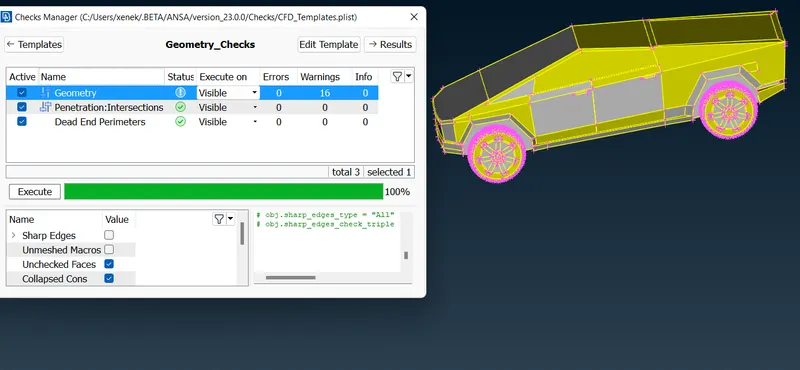
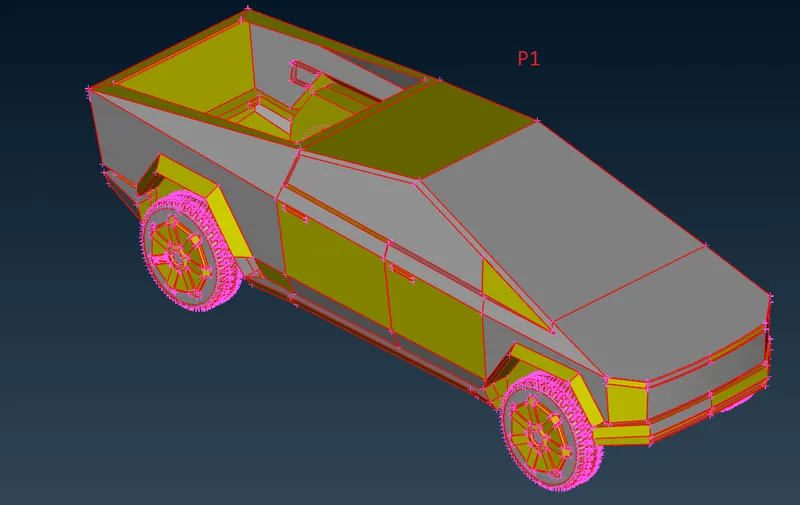
Open the given model in the ANSA. The model will look as shown in P1 and P2.
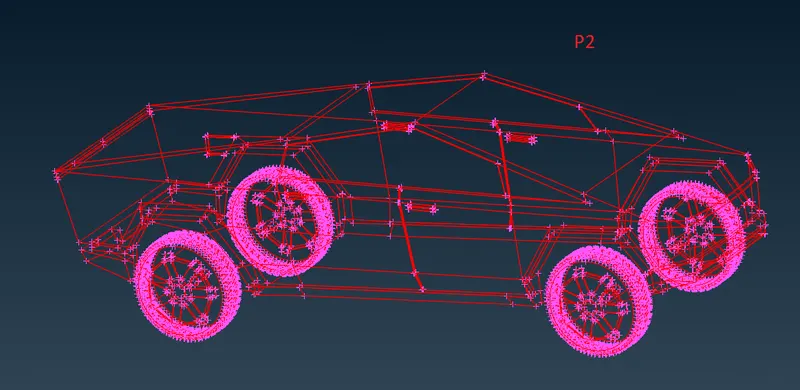
Step 1:
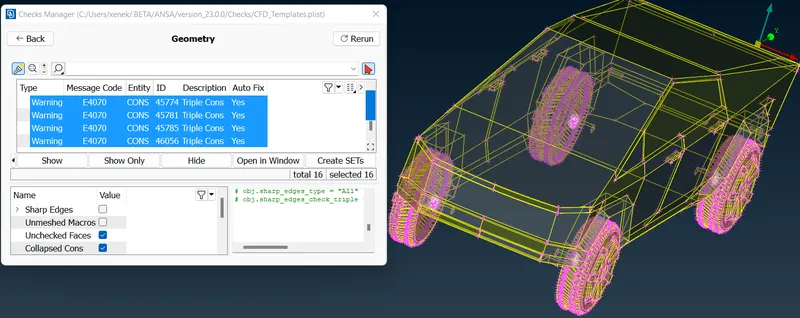
As there are lots of visible single cons, hitting a TOPO seems to be the first thing that comes to mind. The model looks as shown in P3 after hitting a TOPO.
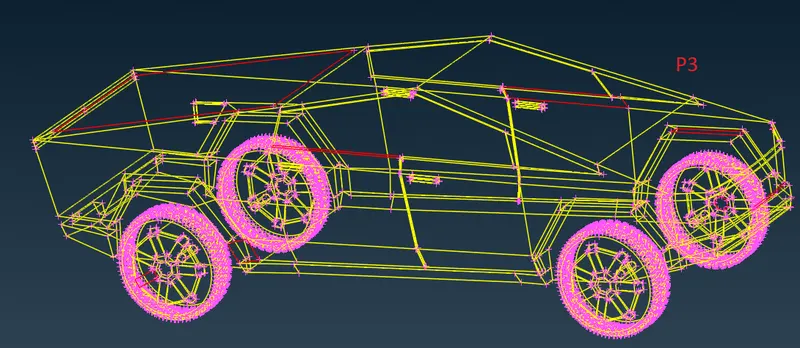
Step 2:
The model, though is axis-symmetric, however since the geometry check does not reveal too many errors, these shall be dealt with individually. The missing faces are created by COONS option whereas the collapsed cons are deleted and new surfaces are created wherever necessary.
Step 3:
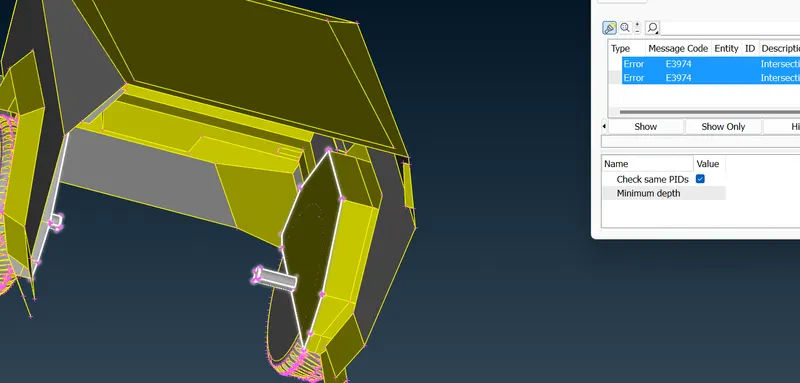
The intersection errors are present in the axles of the Tyres. The overlapped faces have been deleted directly whereas in order to eliminate the single cons in the hole of the plate, the project > Cons option has been used. Though it may have created triple cons, these are unavoidable. In addition, the intersection errors in the front part of the truck are eliminated by using the INTERSECTION option and then deleting the unwanted faces individually.
Step 4:
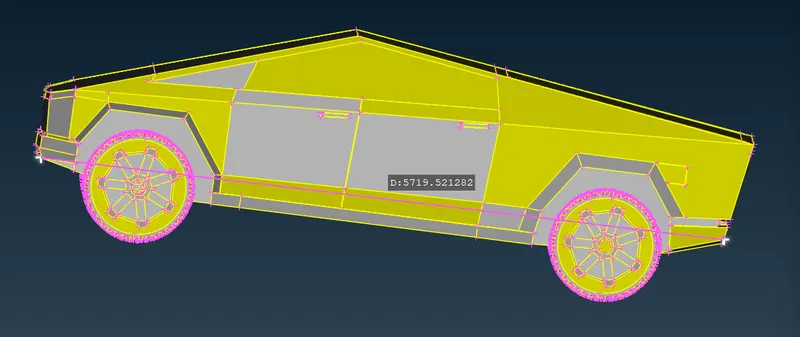
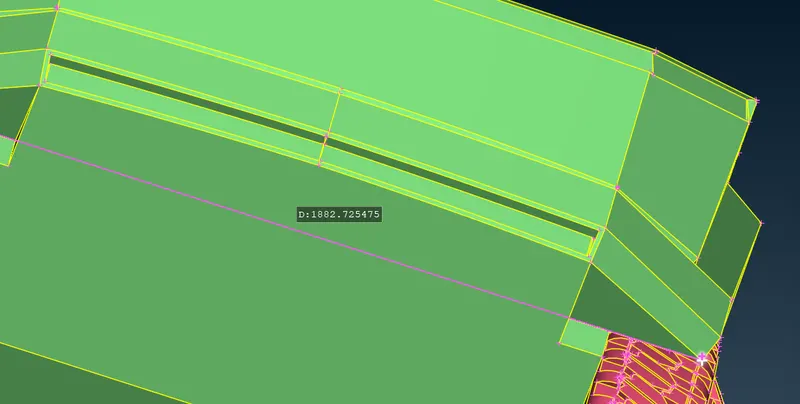
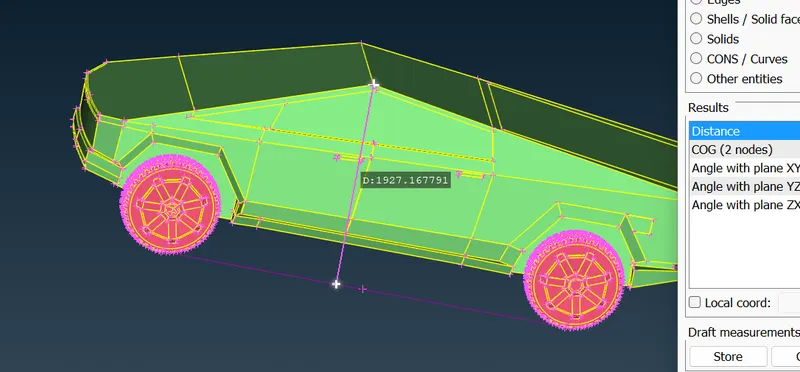
Once the model is free of geometry errors, the dimensions of the truck are measured. The length of the truck comes out to be 5720 mm approximately. The width and height of the truck come out to be 1890 mm and 1930 mm respectively.
Step 5:
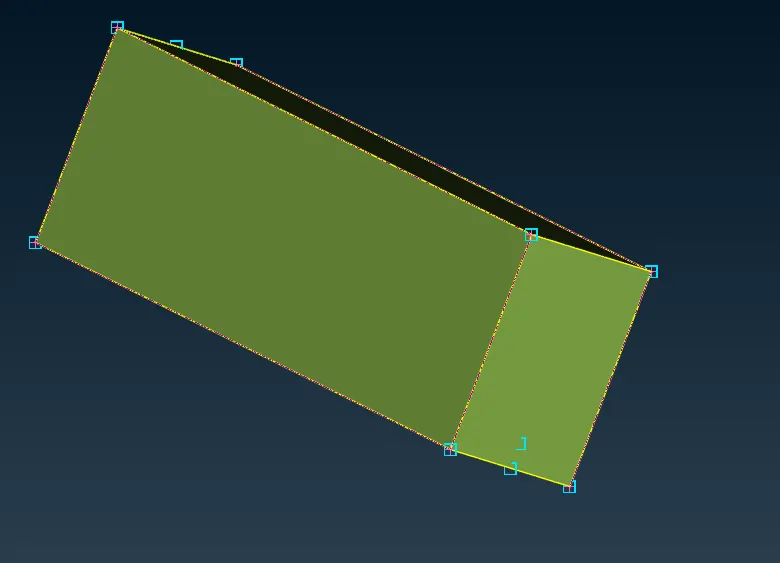
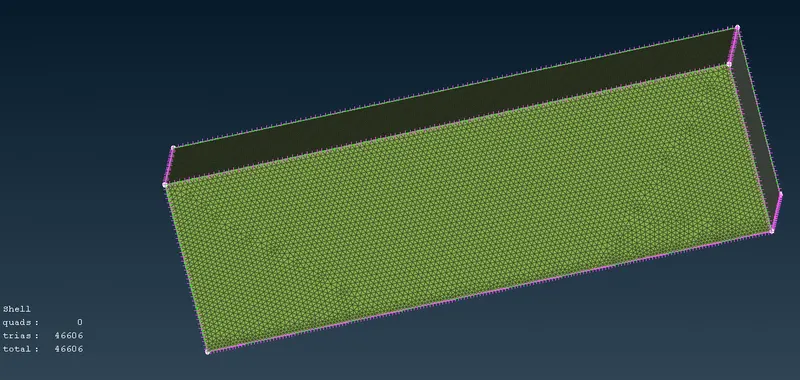
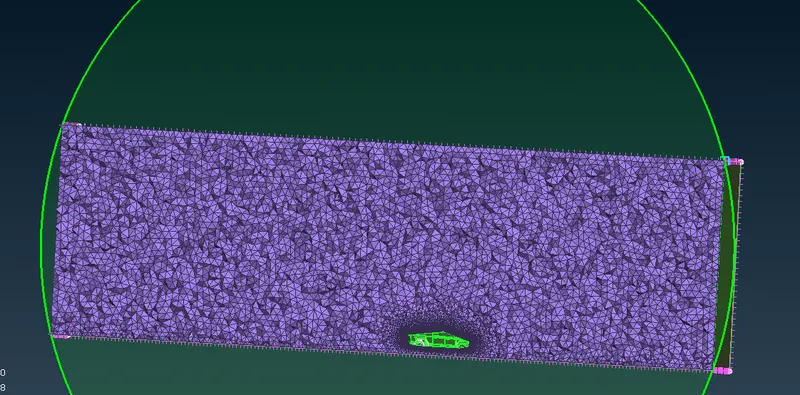
In order to create the faces of the wind tunnel, the reference points need to be created as per the data available in the videos of the week-4 challenge i.e the front face of the wind tunnel should be at a distance of 4X from the front bumper, the back face at a distance of 6X from the rear bumper, the side faces at a distance of 2x + width of the car, the top face at a height of 3X from the roof and the bottom face should be at some appreciable distance of the tyres so that there are no intersection errors. After the creation of the points, lines are drawn between the points to create faces.
Step 6:
The faces of the wind tunnel are created by COONS option.
Step 7:
The PIDs have to be assigned as the next step. In my case, only three PIDS have been created viz. Wind Tunnel, Tyres, and Body.
Step 8:
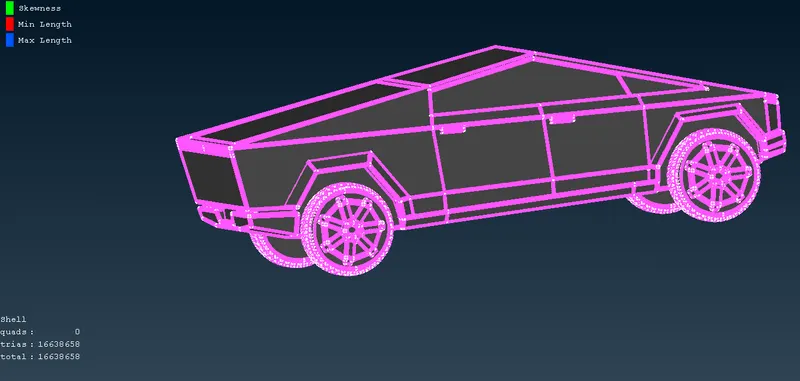
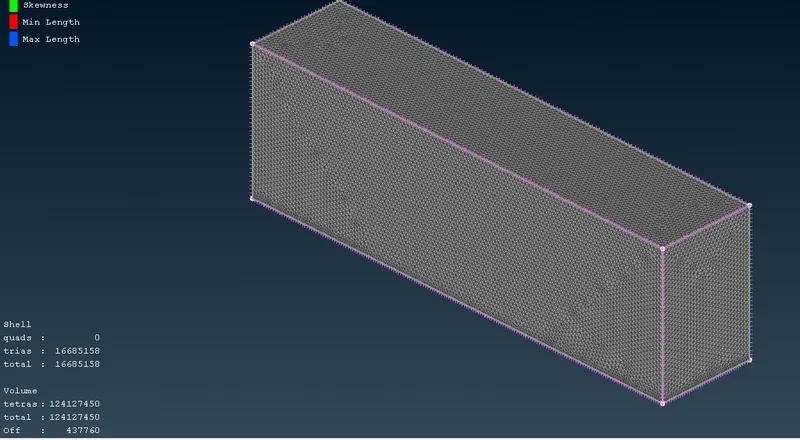
The surface meshing is the next step. In this case, after trying out many target lengths, a target length of 2 mm for the body and 3 mm for tyres has been selected. For the bottom face of the wind tunnel, a target length of 325 mm while a target length of 525 mm seems to be suitable for the top face. For the side faces a growing mesh is created. The meshing algorithm used for the model is CFD. The quality criteria that have been selected are skewness, min. length and max. length. A skewness of 0.6 seems to be appropriate for the given case. There is no Off element in the surface meshing.
Step 9:
Go for the volumetric meshing of the space between the cyber truck and the wind tunnel using Tetra CFD. The Off elements are below 0.5% and there is a scope for further improvement, however, due to the shortcomings of the system, it has been left as such. The link to the model is given below:
https://drive.google.com/file/d/1YxgAt9dQMpWOPt7-hghuD-KEeCqwdqJe/view?usp=share_link
https://drive.google.com/file/d/1YxgAt9dQMpWOPt7-hghuD-KEeCqwdqJe/view?usp=share_link
Conclusion/Takeaway:
Selecting the mesh target lengths is a real challenge to ensure that minimum off elements are there and the geometry is captured properly. In addition, the magnitude of the Volumetric meshing has been observed on a bigger scale in this project. The system's limitations have also been realized as it took so much time for the volumetric mesh to happen. As far as TOPO clean-up is concerned, there are many techniques to get it done and it also depends on the knowledge of the available tools.
Important screenshots during the completion of the project: