Project 1 : CFD Meshing for Tesla Cyber Truck
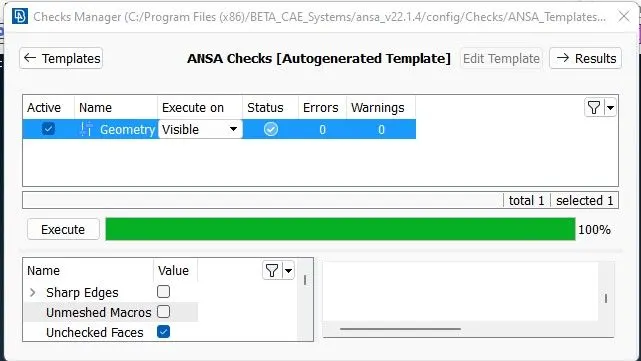
The aim of this challenge is to clean the geometry of a tesla cybertruck model and then perform surface meshing preparing the model for volumetric meshing process. For this we have to first obtain the model of the cybertruck and then check for geometrical errors, single cons, and triple cons where excess surfaces or duplicate and merged surfaces might be present.
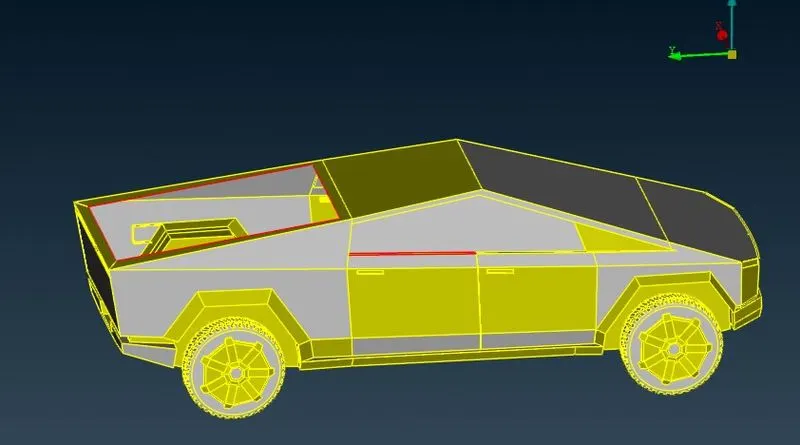
Then, after identifying all the errors, we start the process of topological geometry cleanup for the model. Before that, to ease the process, we can delete half of the model since the car model is symmetrical. Then, we can identify all the regions where surfaces are absent and use new-surface to create coons and surfaces to fill the area. We then identify overlapped surfaces and duplicate surfaces then delete them. Then, we identify triple coons and identify the cause to rectify the problem.
After the geometrical cleanup has been done, we can mirror the one side to create a whole car model and after a final check we can assign individual PID's for the body and wheels.
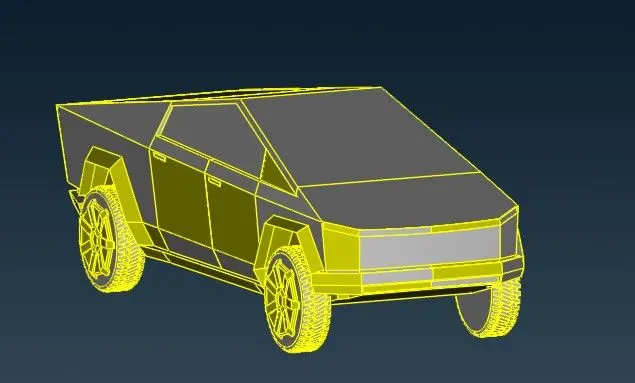
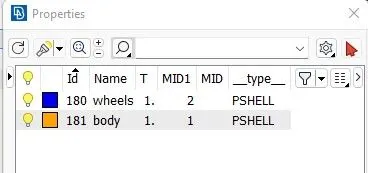
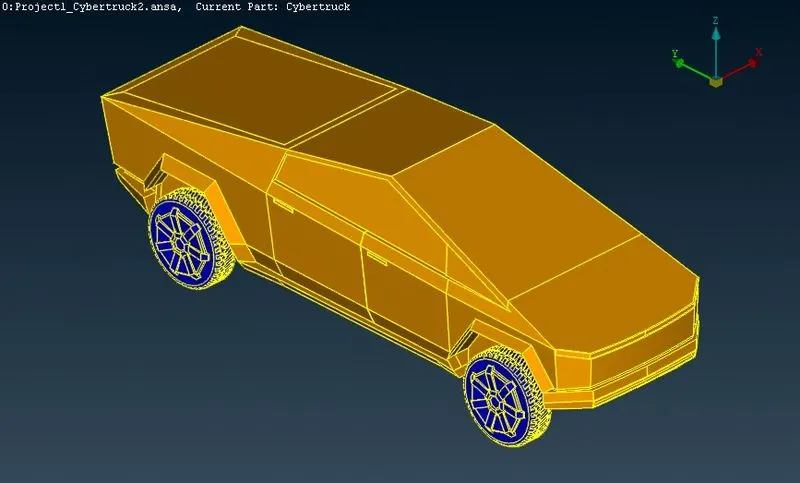
After assigning individual PID's and deleting empty PID's, we can move onto surface meshing. Before surface meshing the geometry, we can specify the mesh parameters, and quality criteria for the individual PID's.
We create a wind tunnel using the bottom surface as reference and creating a point beneath the model, then using the point as reference we can create another point at a distance of 6x+x in front direction, 4x+x in the backward direction and then using the created points, we can create symmetrical points in either sides of the model at 2x direction. Now, we can use these points to create curves using which a surface can be created. After creating the surface, we can now use the offset option to offset the surface in the upward direction at 3x distance and now use the new surface option to create surfaces and to create an enclosed geometry.
Finally, after creating the wind tunnel, we can assign a new PID to the enclosure and proceed to surface meshing.
After that, we can provide the quality criteria required for surface meshing for the car model and the wind tunnel model individually and then the mesh parameters and then specify the target lengths for both perimeters and macros then use spot mesh to create surface mesh for the visible PID.
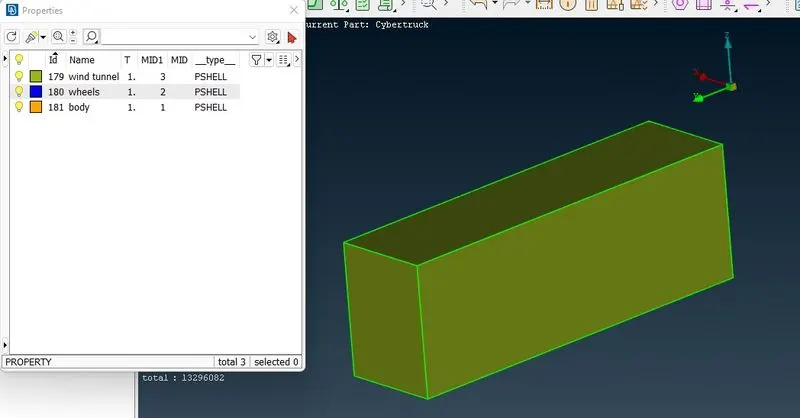
Now, checking and making sure we clear the quality criteria, we can proceed to volumetric meshing. Now, we choose the define whole database option and delete the duplicate surfaces as well as the duplicate volumes which are created. Now, we can choose tetra cfd option and perform volumetric meshing.
Therefore, we have successfully performed geometrical cleanup, surface meshing and volumetric meshing for a tesla cybertruck model inside a wind tunnel.
https://drive.google.com/file/d/1gsuPc2V9SxHMOXYH7R6T9QGDmRJZsuVc/view?usp=share_link