Project 1
A.I.M :
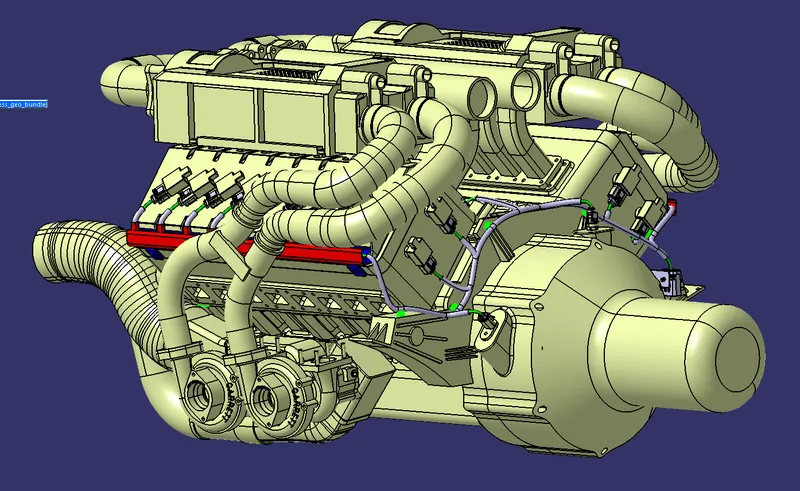
Design and develop the Wiring harness on Given V6 Engine and Prepare flatten view drawing in CATIA V5. Application of all Packaging rules, Industry best practices studied in this course shall be demonstrated in design.
OBJECTIVE :
- Define all the mechanical connectors electrically and save it in the Catalogue.
- Place all the connectors to the required positions on the given engine 3D CAD model
- Place P-Clamps and Fir Tree clips at the required position by following the packaging rules.
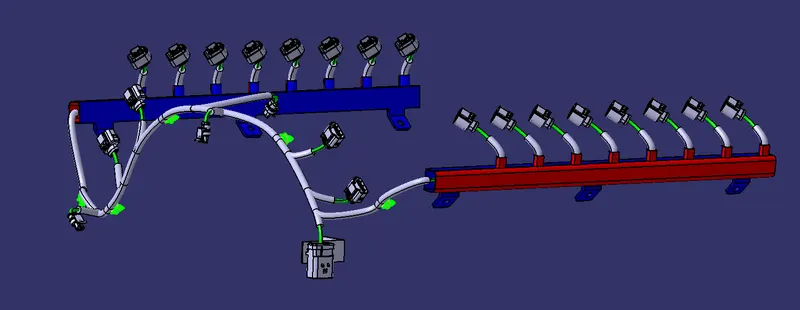
- Create the Wiring Harness Routing with all the electrically defined connectors and mounting equipments.
- Create branching points at required locations to create sub branches and connect to various connectors in the geometrical bundle.
- Apply Protection coverings as required.
- Create Wiring harness flattening for the final geometrical bundle.
- Using the drafting workbench, create a drawing sheet with the flattened wiring harness.
INTRODUCTION :
what is a wiring harness ?
A wire harness, also commonly referred to as a wiring harness, is an exterior sheath used to cover some types of electronic wires. Generally, wiring harnesses are made of thermoplastic or thermoset materials that can help protect the cables from the environment.
Engine Harness :
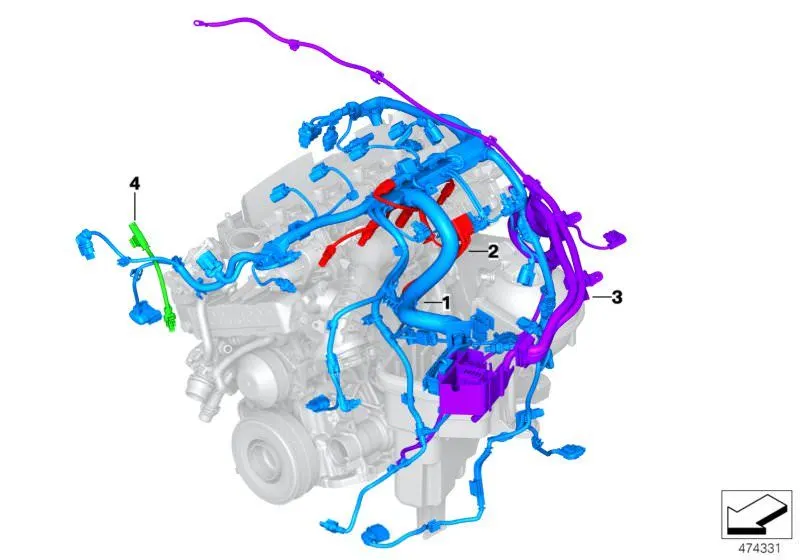
An engine wiring harness is constricted wires, cables, terminals, and connectors controlling a vehicle’s electrical system. It relays electrical power and control information to components such as batteries, alternators, fuel injectors, fuses, audio systems, blower motors, fuel injectors, and computers. Wire harness companies customize it for every location, application, and design it interconnects.
Also known as a cable harness, it is more than just a collection of multiple wires put together.
The harness also reduces the likelihood of electrical problems that would otherwise affect the vehicle or equipment. Flame retardant overmolding minimizes the risk of electrical fires. Also, It shields cables and wires from moisture, thus preventing corrosion. In addition, by installing the harness on the vehicle or machinery’s frame or chassis, there is a lower likelihood of damage from abrasions and vibration.
working of an engine wiring harness & protecting against heat and surrounding :
There are many cables in the engine wiring harness that work to connect electricity to your vehicle parts. This vehicle part has many sensors, and they work to ensure that everything in your vehicle is in working order. Some of these major systems in your car are fuel and transmission. When you get a check engine light, you have the engine wiring harness to thank.It works by using these cables and a fuse box. They wire the electricity produced by the engine to the various parts and sensors. It is created using high-temperature plastic or rubber because the engine heats up a lot. That could cause the engine wiring harness to melt over time. And while this is a rare occurrence, it does happen.
Think of this part of the vehicle like the brain. Without it, it wouldn’t be possible to get the information your vehicle needs. It’s always working overtime to relay the data your vehicle needs to function correctly. Whenever a sensor goes off, it’s because the engine wiring harness alerted the sensor of the problem.The exciting thing is that as vehicles get more advanced, the engine wiring harness grows. Some say that new cars have over 100 pounds of wires, so imagine how many things could go wrong with that. In the past, there may not have been many issues. However, as things advance, there are more to go wrong.
protection :
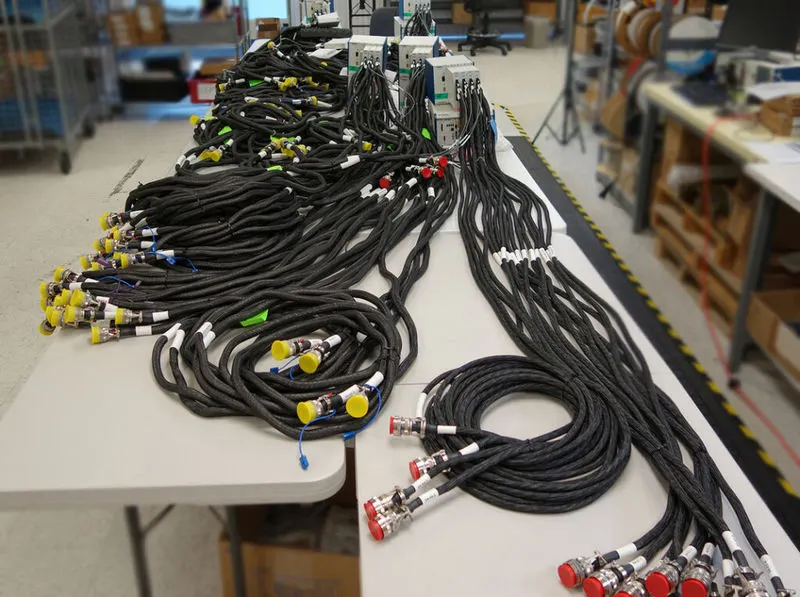
Protecting the wires is crucial to the safety of the vehicle. Wires exposed to high temperatures, erosive chemicals and projectiles will be damaged leading to fires, brake failures and critical malfunctions. To prevent these issues, wires need to be bundled and covered.install wiring insulation or heat shield sleeve material that can withstand direct contact with high-temperature surfaces and is flameproof. It needs to be a material built specifically for under hood automotive applications and withstand constant temperatures up to 125°C, or 257°F.
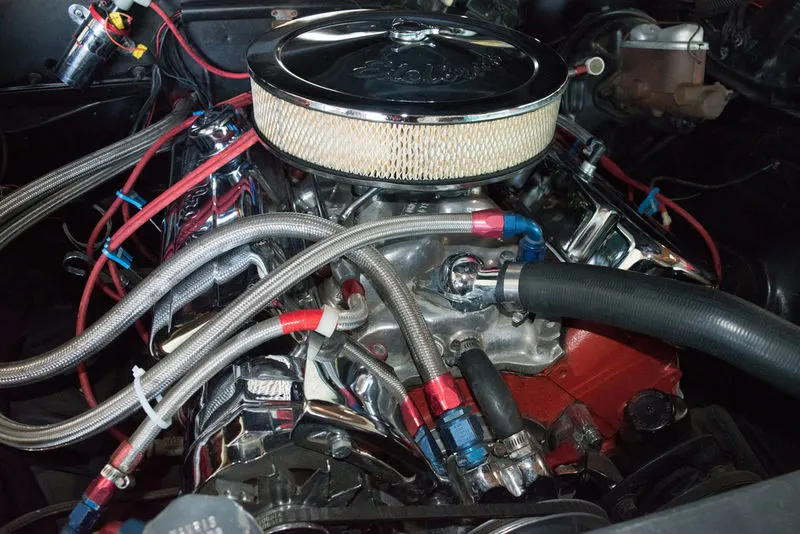
There are many options for protecting the wires in a vehicle’s harness. Zip ties securely bundle wire together but offer little protection or insulation. Plastic conduits offer protection from rough surfaces, although they can add weight and are not as flexible as other options. Heat-shrink tubing provides protection from heat, moisture and chemicals. However, the application is time-consuming.Tape is another option for bundling and protecting wires. Tapes are more flexible and cost-effective than other bundling options because they can be used for protective wrapping, bundling and sealing. With a wide variety of backings and adhesives, tape can offer sound dampening, thermal and electrical insulation and abrasion protection of the same quality of the other methods. Additionally, tapes are more flexible, lighter and easier to apply than tubing or plastic conduit.
WIRING HARNESS CREATION :
S1 :
Created a product file assembly for the harness , inside the file added the engine part file and a geometrical bundle product file for the harness components .
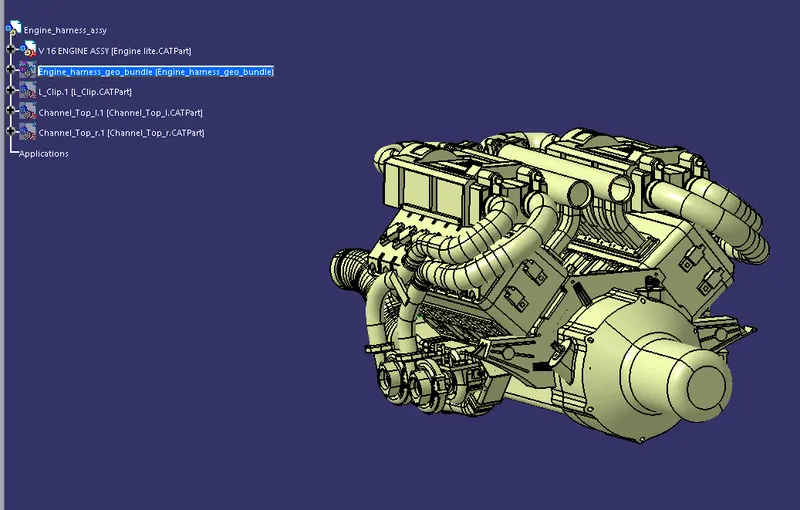
S2 :
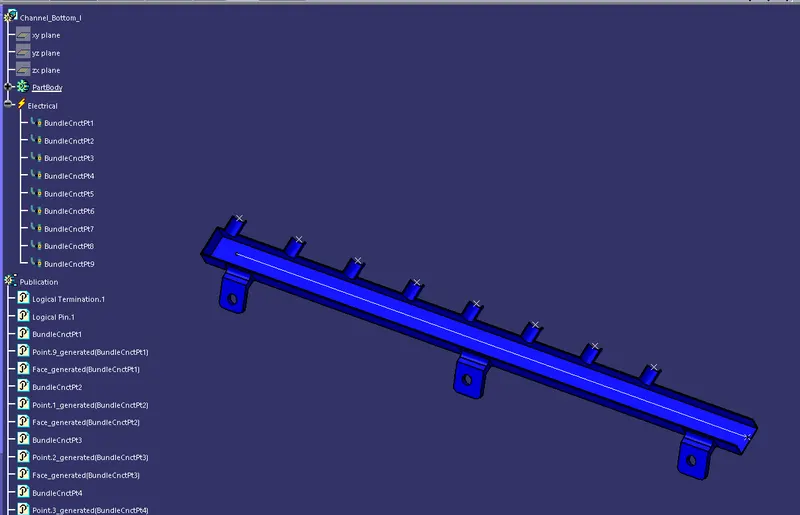
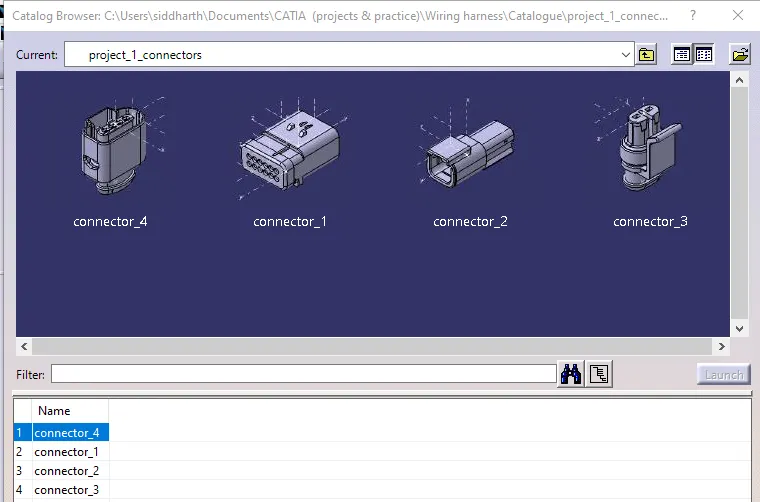
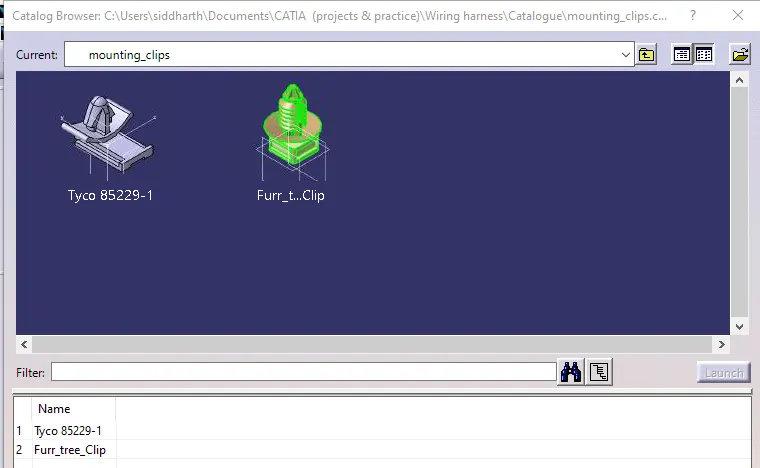
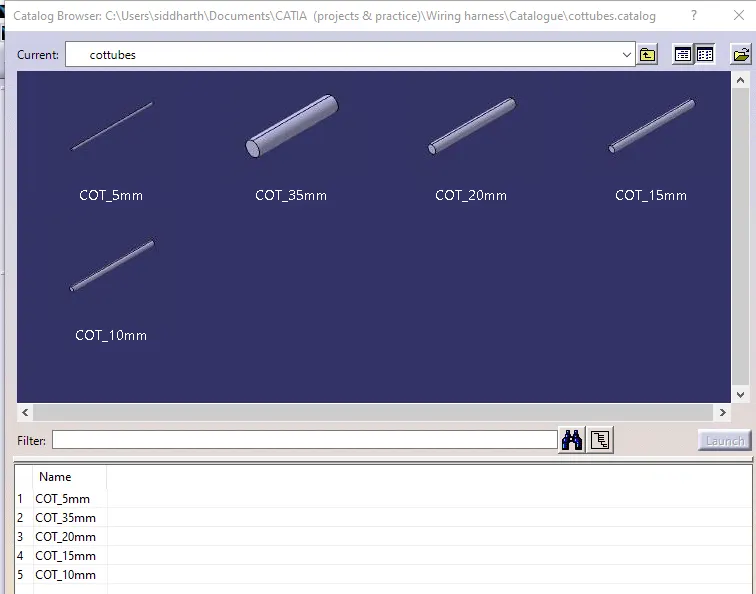
downloaded all the necessary connectors and mounting equipments for the harness design , using the electrical part desig workbench , converted the equipments from mechanical to electrical parts , and created catalogues as per items.
electrically defined channel :
connectors :
mounting equipments :
cot tubes :
S3 :
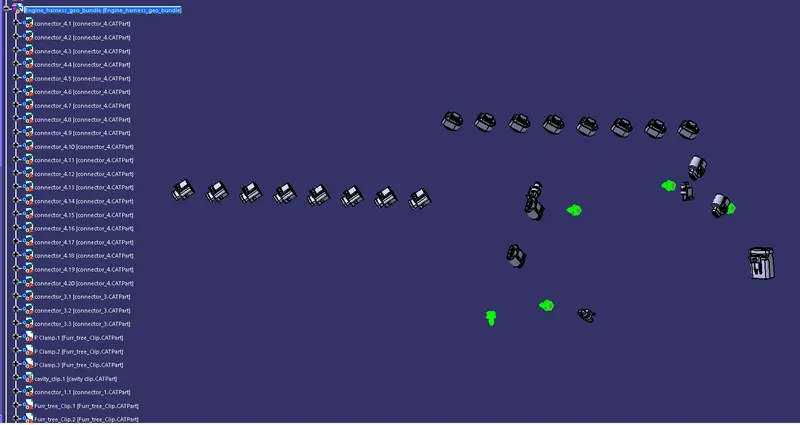
Added all the necessary connectors , interconnectors , mounting equipments for the harness design inside the geometrical bundle product file.
S4 :
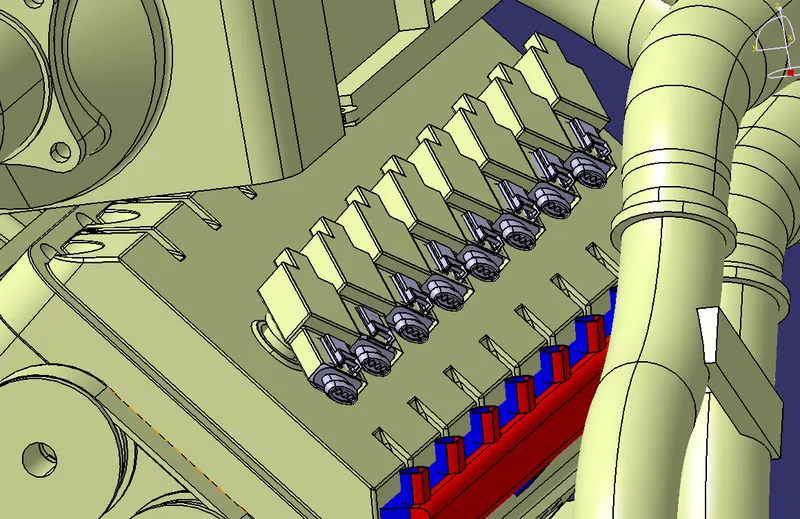
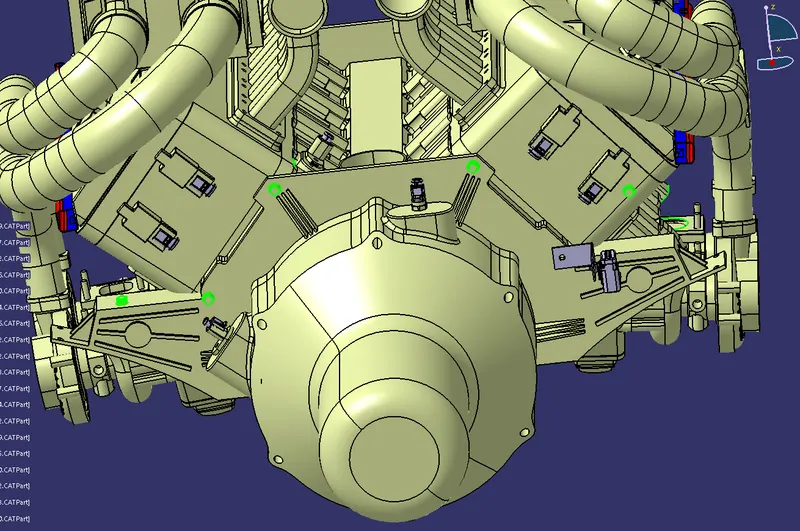
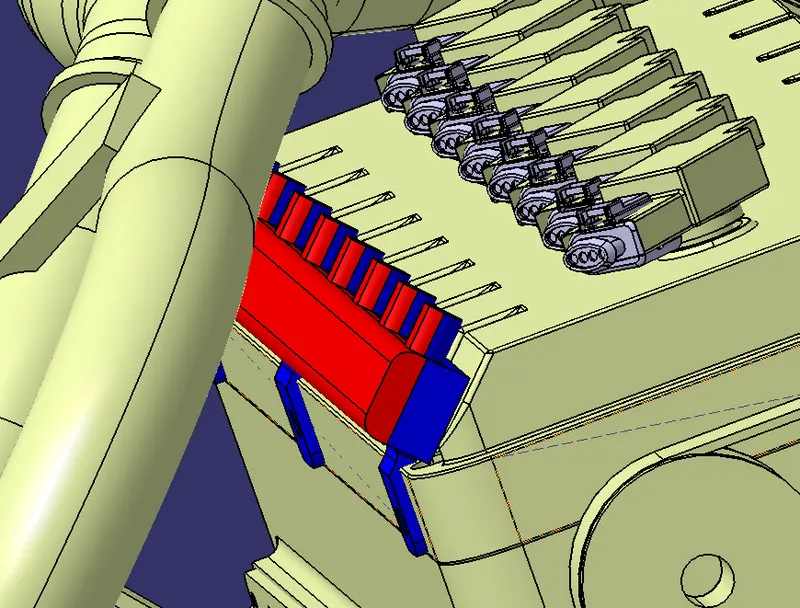
Using the manupulation toolbar and the compass , placed the connectors , mounting clips , l bracket , bottom channel and the interconnectors to its suitable places for the harness creation.
S5 :
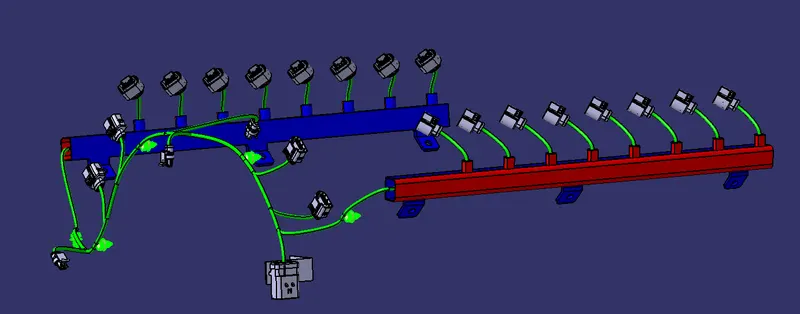
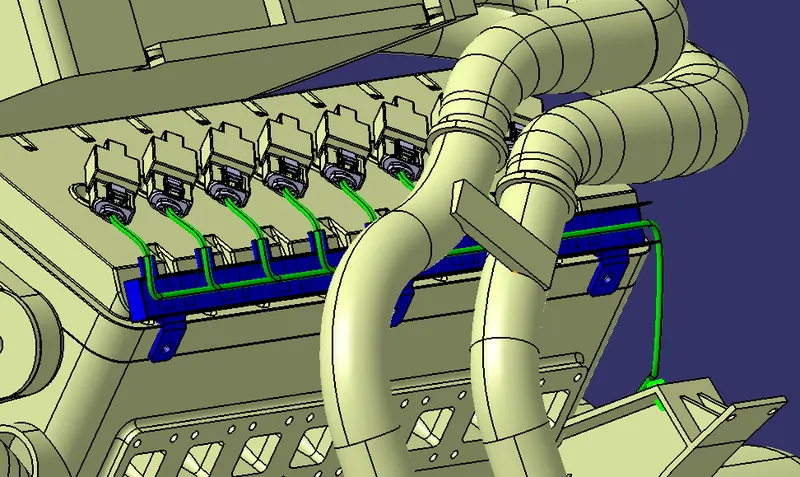
After placing all the connectors and mounting clips to there respective positions , using the electrical harness assembly workbench started the harness routing from the interconnector to all the connectors by following all the design standars followed by the industries.
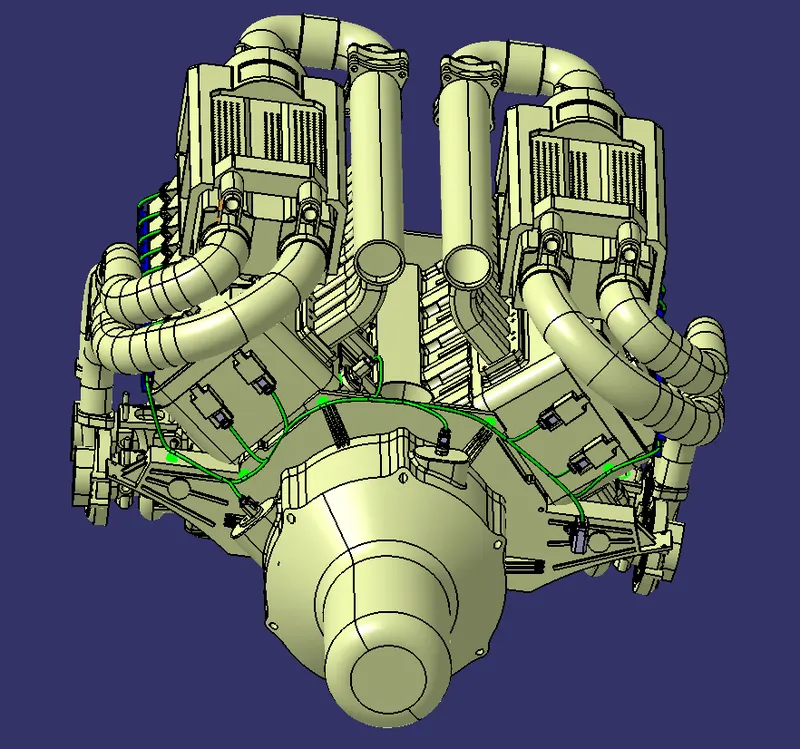
S6 :
After the harness was created , checked for the harness connectivity , and got no error with the connectivity of the harness.
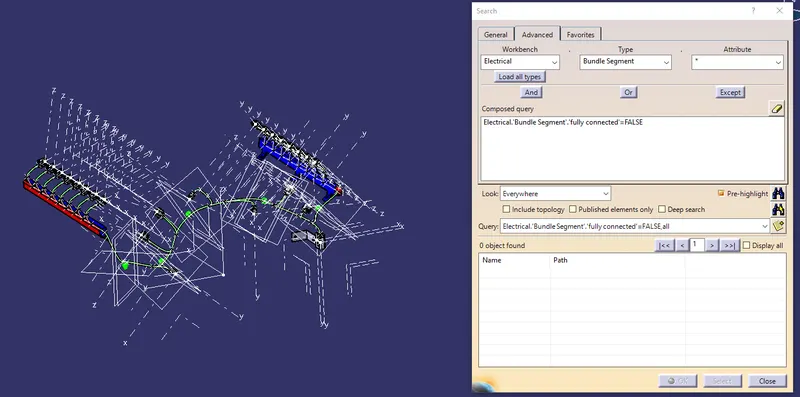
S7 :
finally added the cot tubes to the harness from the catalogue for protection against engine heat the enviromental condition.
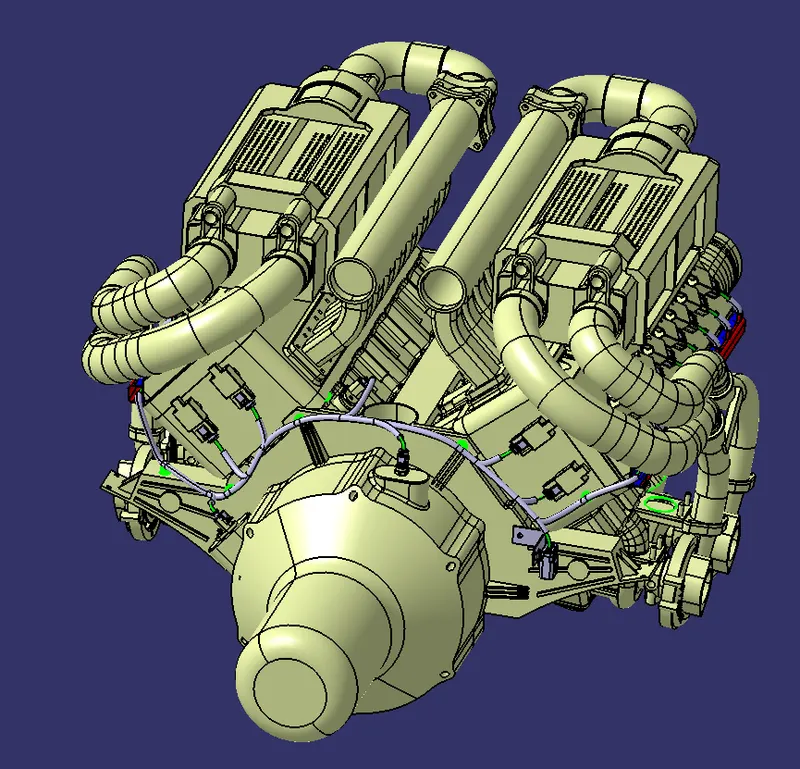
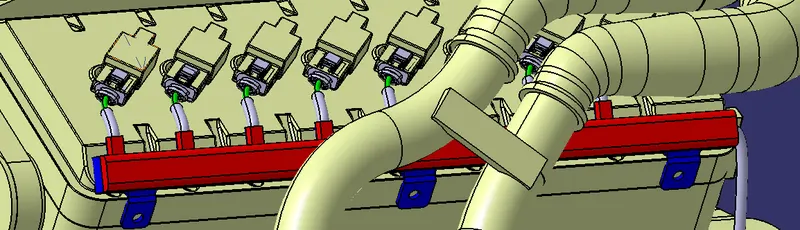
S8 :
unfortunately could not able to flatten the wiring harness because of the software limitation .
Final product :