Project 1
Introduction
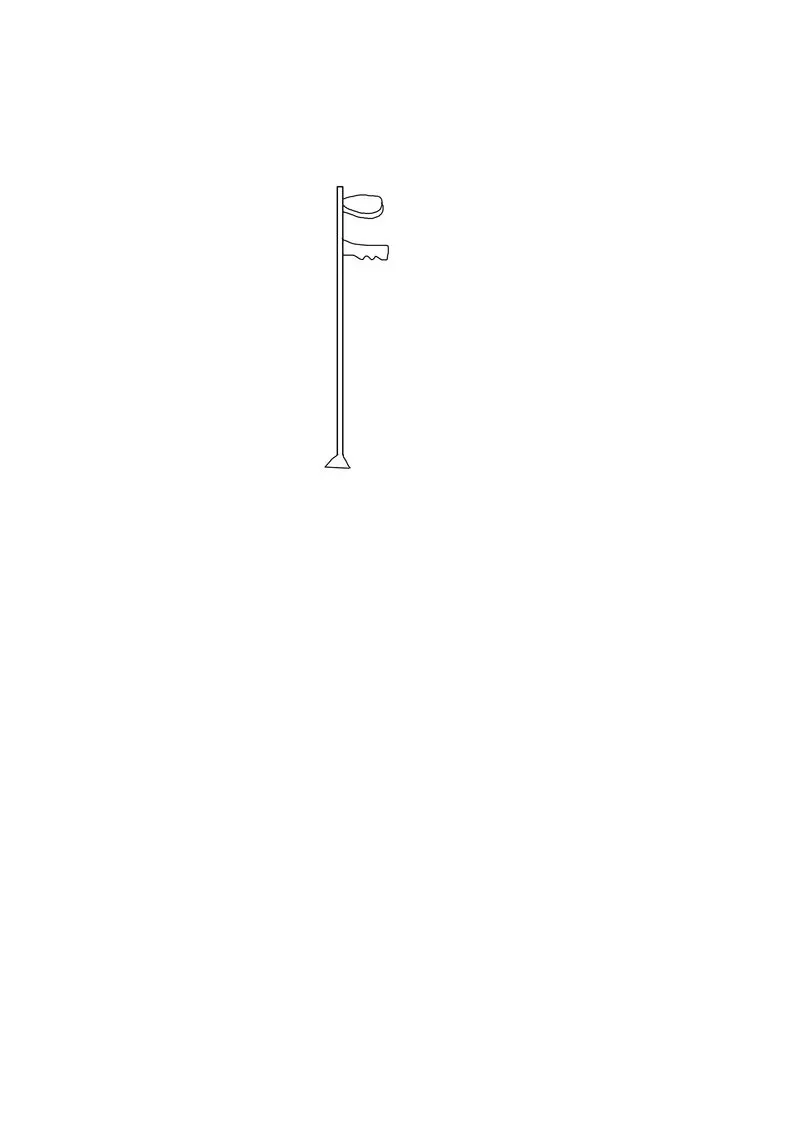
Forearm crutch is a device that is used by the people that are not able to walk on their own due to some physical disabilities. This device aids them to walk around easily. There are three types of crutches, Axilla crutches, Forearm crutches and Gutter crutches. All of the crutches can be used in the different ways. In this project I am specifically going to talk about forearm crutches. A forearm crutch uses a strap, a handle and a rod which attaches to a rubber piece at the end of the crutch and helps with the grip of the crutch. The design of the crutch is made by keeping in mind for the people who have to use the crutches for longer time durations. The hand of the slides in the band/strap that is present on the rod of the crutch and the person holds the handle that is present just below the strap for easier movement. The strap will be fastened onto the forearm of the person helping them with easier movement.
Main parts of the crutch
If I have to talk about the main parts of the crutch (forearm crutch) then that would be the handle, the strap and the critch rod itself. The rod is the most important part of the crutch. If the rod is not of a good quality, then the crutch is not safe for the patient, as the rod might get bend or it might collapse at any givven time, injuring the user even more. Also the rod is not single pipe if the crutch is intended to be a crutch with a variable height. This means that the crutch will be made with two rods and they will be moveable. This means the rods along with the lock should be made of a good material. if the material is not made up of good material in the first place, the lock can open at any time, thus compromising the safety of the user. Next comes the handle. Now the handle is made up of an material that the company wishes, but it is made mostly of hard plastic, making it with plastic helps the customer enjoy the benefits of the crutch at a much lower price. Also the companies can manufacture softer handles depending on the usage time and person using it. Next being the forearm strap. This helps the user attach the crutch to the arm without fearing it to fall from their hands if they have a loose grip. This also helps patients who have to hold the crutch for longer durations by not fearing the crutch might fall down if they accidently loose grip. These are the main parts of the crutch.
Design
Materials used
Strap used on the crutch
The usage of the material depends on the design for the strap by the company. Now if the company decides the strap should be made of a flexible material rather than it being fixed, the nylon strap will be used to make the moveable strap for the crutc, but if the strap if decided to be of stationary position, it will be made of aluminum and lined with sopft cloth in it to make it cmofortable for the user.
Handle of the crutch
Well the material depends from company to company and as well models. Now if the crutch is of the base model, it will have a handle of a hard material and it gets softer as the models change as per company's policy. So the materials mostly used are plastic, recycled rubber, foam etc.
Rod for crutch
The material that is used for the beam of the crutch is set as a standard aluminium. The companies make it of aluminium since it is light in weight, does not rust even when used in a rainy settting. This has made the aluminium the first choice of many manufacturers.
Attachments for extension
The material used for this is plastic. Since the attachments have to be of something that will not catch rust and last longer to aid the rod and not give up, thus the material. Of course the material is easily replaceable and readily avbailable. This made this the choice of the manufacturers.
Grip
The grip of the crutch which helps it dtand and get a hold on the floor is made mostly of hard rubber or silicon, since it will help the crutch get a grip on the ground and since it is hard it will last much longer than a soft material if used in the place of hard material for the grip.
Manufacturing Process
Aluminum hollow tubes and plastic arm cuffs, hand grips, and changeable rubber tips make up the bulk of the work involved in producing forearm crutches. Some companies that make crutches opt to buy pre-fabricated hollow tubes in a variety of sizes and forms. However, many companies that make crutches prefer to make their own hollow tubes since it allows them to control the quality and precision. To produce the hollow aluminium tube, a stock billet is heated to extreme temperatures before being dragged through a die to reduce its diameter and increase its length. The method enhances the dimensional precision and surface polish of the desired tube, but it requires a hollow starting billet. Soft but still solid, thanks to the initial heating process that preserves interior qualities. After the drawing process is complete, the tube undergoes a quick cooling procedure known as water quenching. The hollow tube is then bent and holes are punched at various lengths along its length to create the required crutch shape. When all other pieces have been attached, this will be the last step in the assembling process. Injection moulding, performed with an IMM (injection moulding machine) or injection press, produces the arm cuffs, hand grips, and rubber tips. This apparatus is adaptable to the shapes of the components being manufactured by being fitted with various mould cavities. First, plastic polymer is fed into the machine's heating unit, where it is melted. Next, the molten plastic is injected under high pressure into the mould cavities for the arm cuff, hand grip, or rubber tip, respectively. In order to account for the material's shrinkage as it solidifies, once the cavities are filled, more material is injected into the machine than is necessary to fill the moulds. Once the item has been shaped and cooled to the proper temperature, the moulds are opened and the finished product is released from the machine. Considering its accuracy and precision in shaping parts, as well as the intricacy of shapes, this manufacturing is ideal for producing plastic materials like the arm cuffs and hand grips, as well as rubber. After each component has been refined and subjected to quality control testing, the forearm crutch can finally be pieced together.
Improvisation
We can improvise on the design by making the crutch as close to the design of the legs as possible. The crutches can be bent so that the force gets equally divided on the crutch rather than the rod getting the whole pressure right from the top and breaking due that pressure. The material that can be used instead of aluminium can be graphite since it is also as light as the metal aluminium and can be bent easily. Since it will be a single piece crutch, the cost will be much less as compared to the crutches that are in circulation right now.
Conclusion
The conclusion of the project is that the crutch can be redefined and be rebuilt with the help of new materials like graphite, carbon fiber etc. The crutches can be made as close to the human body and can be made at a cheaper cost with the help of alloys. Making the use of plastics less can also help with the environment.