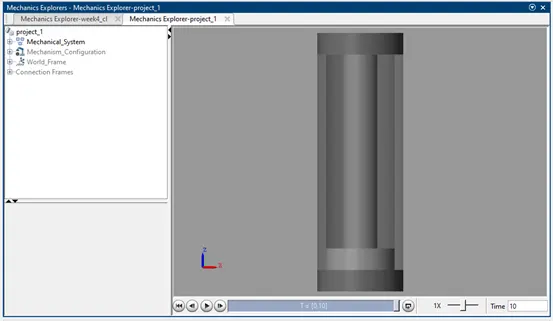
Project 1
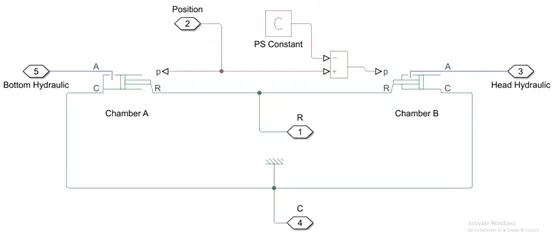
Develop a double-acting actuator model using Simscape Multibody and Simscape components. The mechanical system of the cylinder needs to be built using Simscape Multibody library components/blocks, and the hydraulic system needs to be modeled using Simscape library physical components.
ANSWER
Aim :
- To Develop a double-acting actuator model using Simscape Multibody and Simscape components.
Objective :
- The mechanical system of the cylinder needs to be built using Simscape Multibody library components/blocks, and the hydraulic system needs to be modeled using Simscape library physical components.
Theory :
The following Cylindrical Model Schematic shows the three different configurations of the piston
Half Retracted, Fully Retracted, Fully Extended
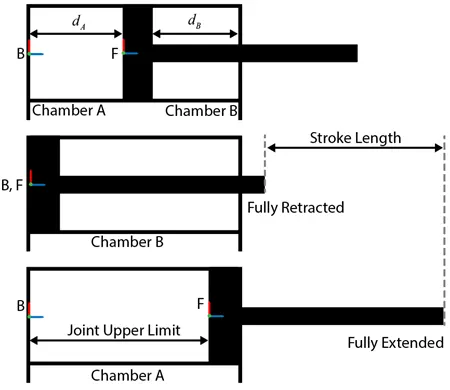
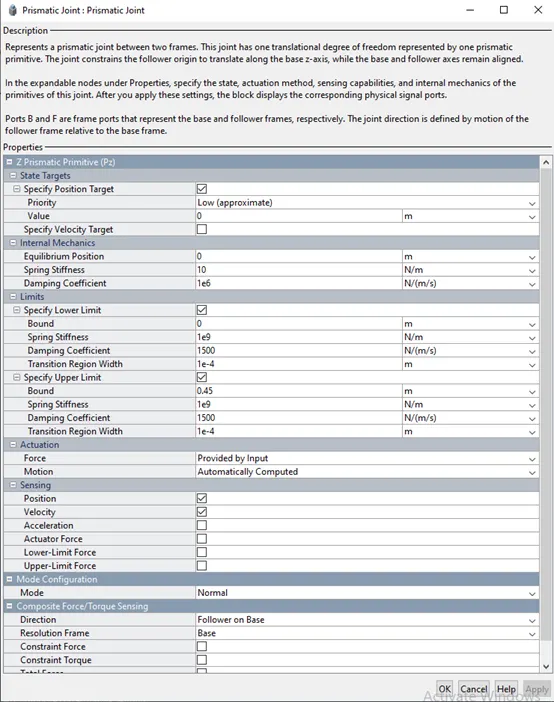
the mechanical part of the system in Simscape Multibody. For example, to model the cylinder and piston, you can use the revolved solid (Simscape Multibody) and Cylinderical solid (Simscape Multibody) blocks. To provide the translational degree of freedom for the piston, use a Prisimatic joint (Simscape Multibody) block. To easily calculate the lengths of the chambers A and B, you can attach the base frame (B) and follower frame (F) of the joint to the centers of the left inner surface of the chamber A and the left surface of the piston, respectively. Make sure that the Z-axes of the B and F frames are aligned and both point toward chamber B.
How the Double Acting Hydraulic actuator works -
Double-acting hydraulic cylinders have a Cylindrical housing and one piston. When hydraulic oil is supplied to its cap end port, hydraulic pressure force will be applied over the piston and the end cylinder will be extended. During the extension of the piston hydraulic oil at the rod, the end side will be pushed out and directed towards the reservoir.
For the returning stroke, the hydraulic direction is reversed with the help of the direction control valve. During the returning stroke hydraulic oil is supplied to the rod end side and hence piston is retracted. During the retracting of the piston cap end, oil is directed towards the reservoir. hence the double-acting hydraulic actuator operated in both the directions
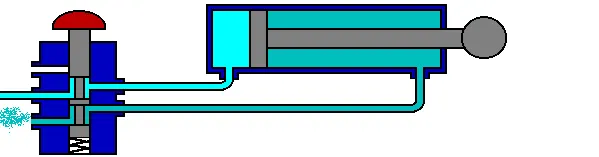
The extra port also allows more control of the piston during retraction and ensures it always returns back to its starting point
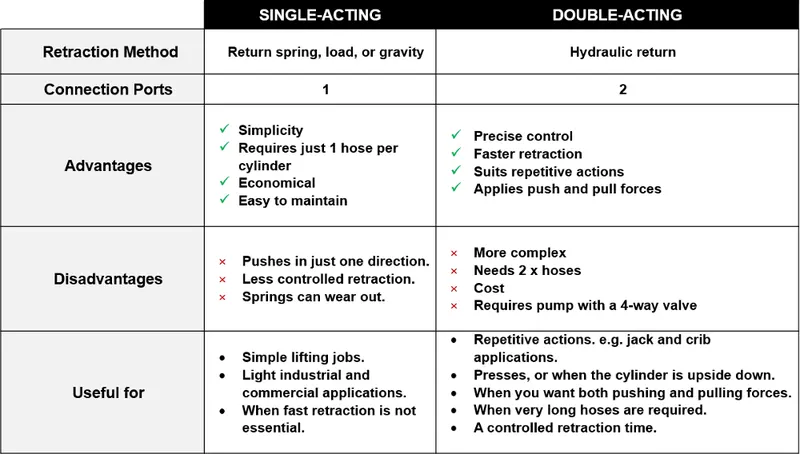
Difference Between Double Acting Hydraulic actuator and Single acting Hydraulic actuator
Model :
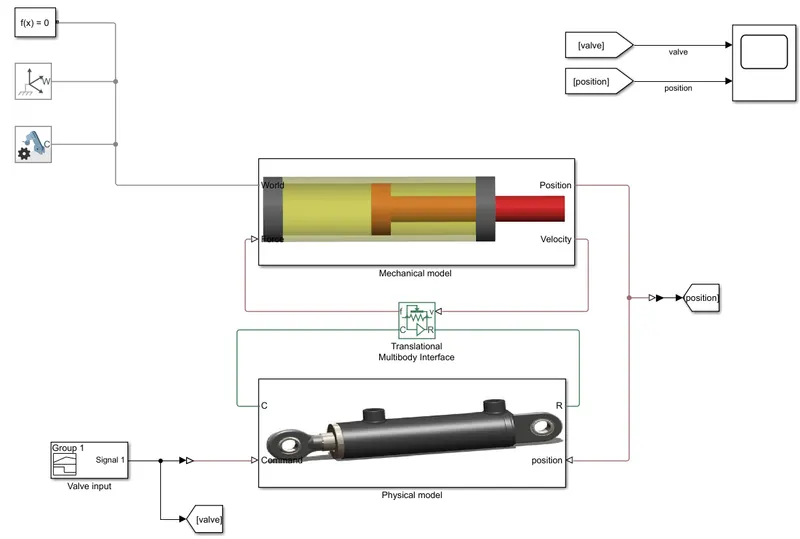
Hydraulic system :(Physical model)
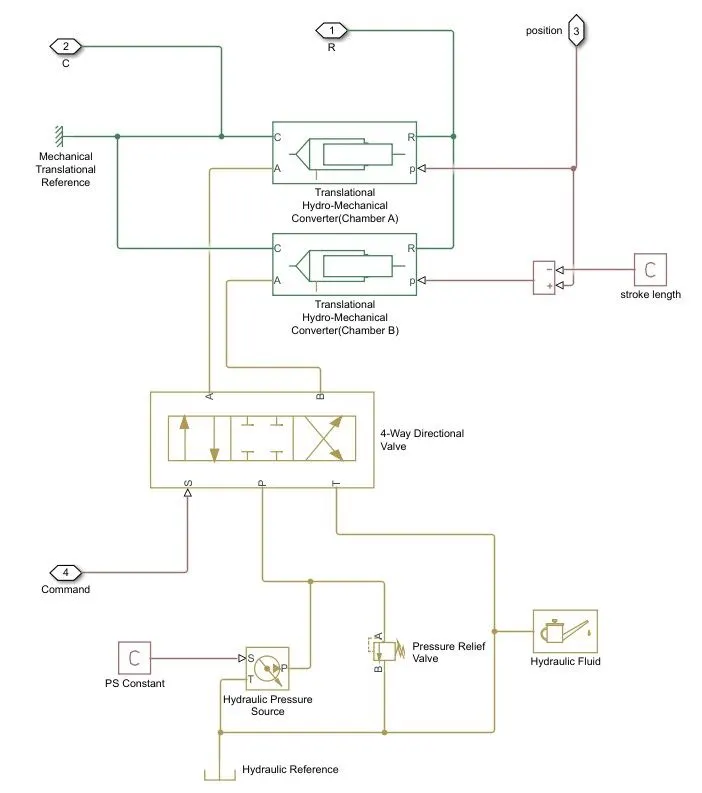
Double-acting hydraulic cylinder working principle, Application, and troubleshooting
A hydraulic cylinder is a mechanical device that uses hydraulic power to create pressure. They are commonly used in various industrial applications and are also common in hydraulic pumps. They can be used in various ways, including as actuators or as lifting devices.
Double-acting hydraulic cylinder
A double-acting hydraulic cylinder is a mechanical device that uses two chambers to regulate pressure. It has a control valve on each end that allows the user to selectively fill each chamber with pressurized fluid. This makes it possible to actuate the cylinder in two different ways: by pushing or pulling the lever in one direction (resembling the first action of a simple hydraulic cylinder), or by pushing or pulling the lever in the opposite direction (resembling the second act of a simple hydraulic cylinder).
In case of a hydraulic failure, the cylinder will retain the pressure in one of the chambers until the supply of oil is restored, thereby preventing any damage or injury. There are two types of double-acting cylinders:
- Double-acting cylinder with a piston rod on one side.
- Double-acting cylinder with a piston rod on both sides.
- Double-acting hydraulic cylinders are typically used in industrial processes that require a quick force.
- Double-acting cylinders are used for power steering and the more powerful the car the more power you need to be able to steer it.
- This type of cylinder is widely used in industrial equipment, such as cranes, forklifts, lifts, and other heavy-duty machines.
- Double-acting cylinders are used in hydraulic systems that raise and lower things such as landing gear, door hinges, etc.
- A very common use for a double-acting hydraulic cylinder is to open or close some kind of “flap” on an aircraft wing.
How does a double-acting hydraulic cylinder work
A double-acting hydraulic cylinder has two distinct chambers: One chamber is filled with oil, and the other is empty. When the piston rod is retracted into the cylinder, the oil is forced into the empty chamber, and thus creates pressure. This pressure pushes the piston rod out, resulting in the extension of the cylinder. On the other hand, when the piston rod is pushed into the cylinder, the oil is forced into the chamber filled with oil, thus creating a vacuum. This vacuum pulls the piston rod into the cylinder, and thus retracts it. This action is reversed when you remove the force (that is when you let go of the rod). In this manner, you can use double-acting hydraulic cylinders to create the force necessary to push or pull something.
Double-acting hydraulic cylinders perform two types of operations including:
- Differential types and
- Synchronous types.
Differential type hydraulic cylinders
Differential type is the most common type of hydraulic cylinder. It has two pistons; one connected to the rod and the other connected to the body. As the input force increases, the rod extends. At the same time, the body remains stationary because the second piston is locked into the cylinder. This causes the output force to increase. As the input force decreases, the rod retracts. At the same time, the body remains stationary because the second piston is locked into the cylinder. This causes the output force to decrease. The body will always remain in its original position as long as the input force is equal to the output force. However, the rod will move up or down depending on which one of the two forces is greater. Therefore, a differential type hydraulic cylinder is very useful. For example, if you want to raise a heavy box, you should use a rod connected to the body of the cylinder. Make sure that there is a safety factor so the force exerted by the rod is always greater than the weight of the object being lifted.
Synchronous type hydraulic cylinders
Synchronous type cylinders work on a different principle. Instead of oil pressure, an electrical signal is sent to a valve that allows the oil to enter the cylinder and keep the piston moving up and down. When the signal is stopped, the oil stops flowing into the cylinder and the piston comes to a stop. This makes the cylinder very efficient in terms of power usage.
Synchronous type hydraulic cylinders have only one piston. This piston will expand and contract at the same time regardless of the amount of hydraulic fluid that is inside the cylinder. This makes this type of cylinder very efficient but not as powerful as the other type. You will find this type of hydraulic cylinder mainly used on automobiles, farm equipment, and industrial machinery.
Mechanical system:

1.Cylinder Assembly:
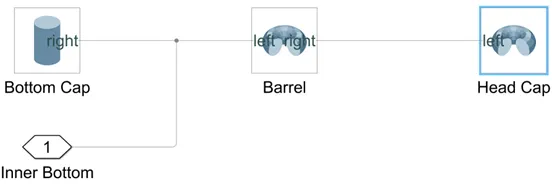
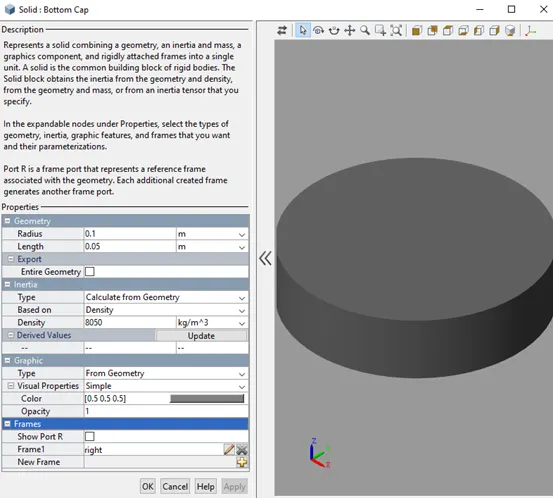
Bottom Cap:
Barrel Cap:
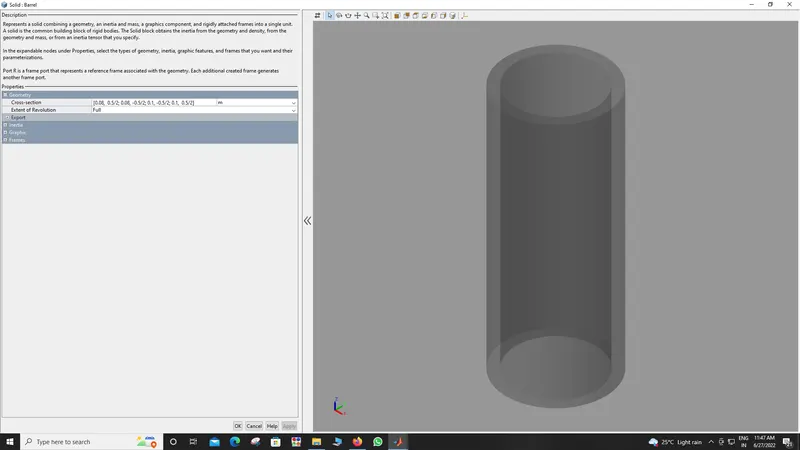
Head Cap:
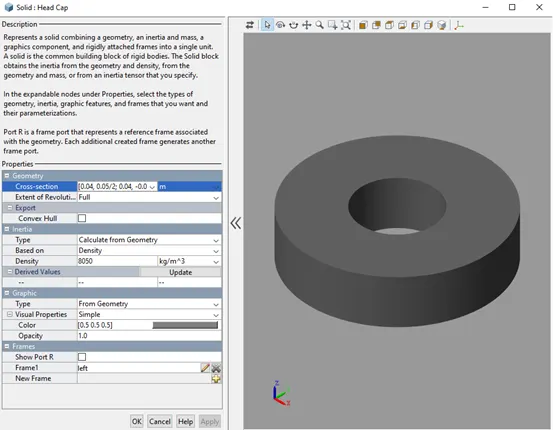
- Prismatic Joint:
A prismatic joint is often called a slider — for example, a “crank-slider linkage.” This is a type of kinematic pair and an idealized way to describe how motions are constrained within machines.
There are several physical embodiments of a prismatic joint, such as slideways. Rectangular cross-sections may be used in combination with plain or rolling bearings to enable linear motion while preventing rotation about the axis of movement.
Hydraulic and pneumatic cylinders are typically modeled as prismatic joints although they may also permit rotation about their axis. Kinematic pairs are classified as higher pairs and lower pairs. Higher pairs involve point or line contact, such as a ball or roller that’s rolling over a surface. Lower pairs can be visualized as surface contact.
- Piston Assembly:
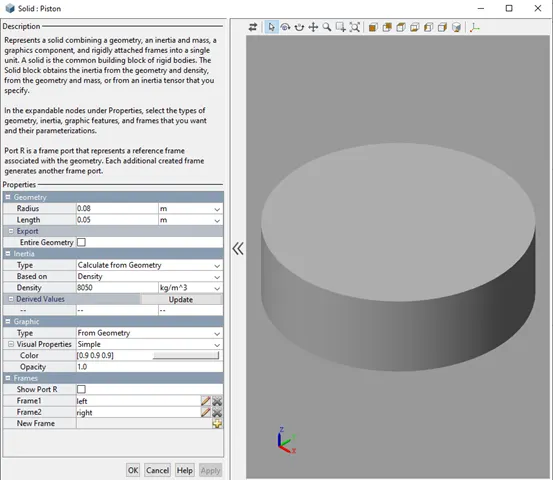
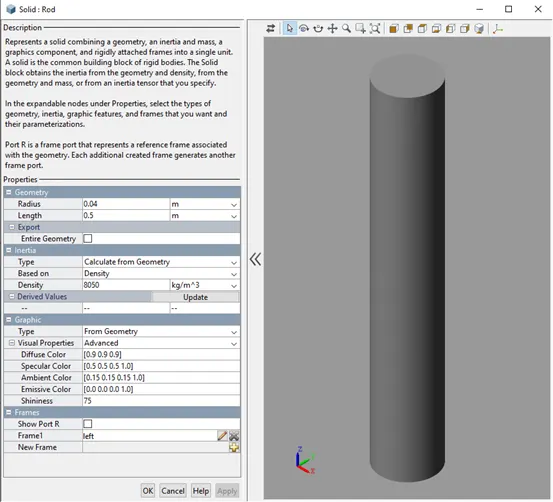
The inlet or outlet flow inside the barrel pushes the Piston or Plunger of hydraulic cylinders. When the Piston moves to either side of the cylinder, the Rod contracts or expands.
These are the parts of the basic hydraulic cylinders. More types of cylinders are more complex in their construction. However, these components are essential to almost all hydraulic cylinders, and it is good to know what they are and how they work.
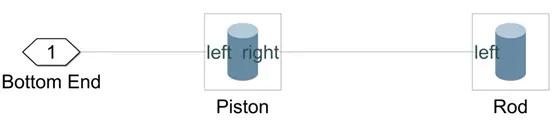
Piston:
Rod:
Hydraulic system:
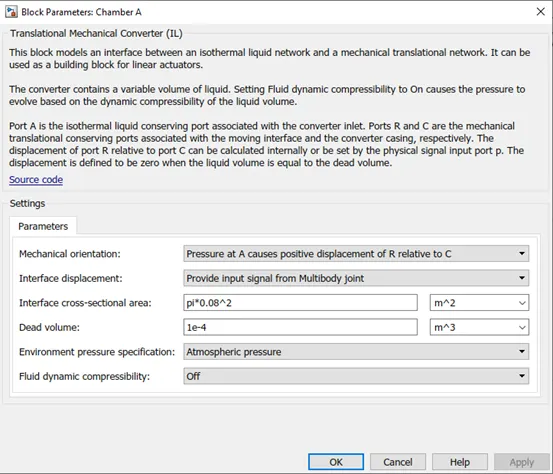
Chamber A:
Chamber B:
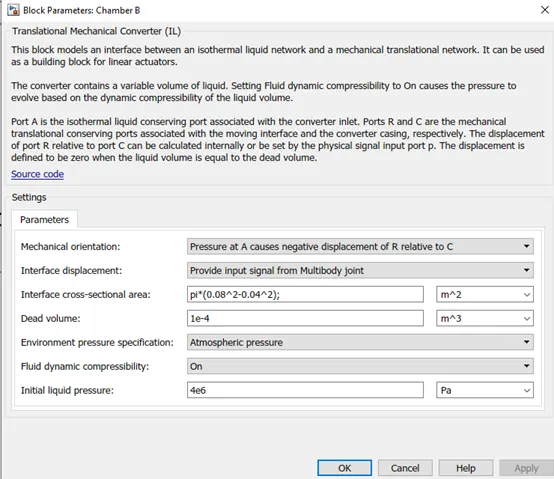
CHAMBER C:
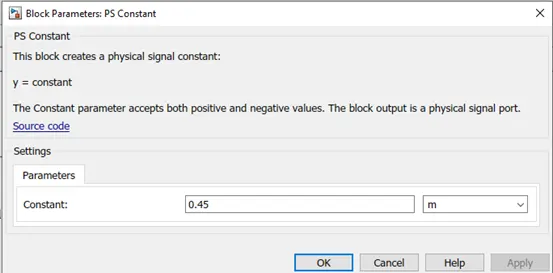
Hydraulics:
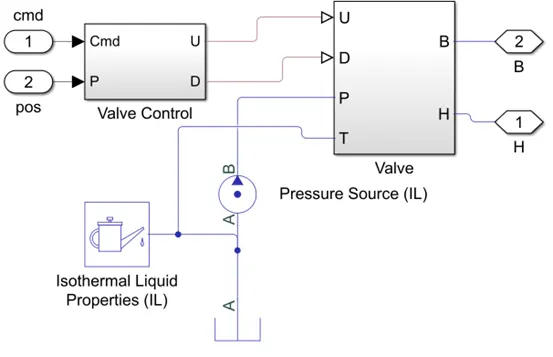
Valve Control:
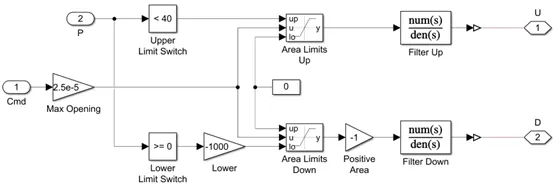
Valve:
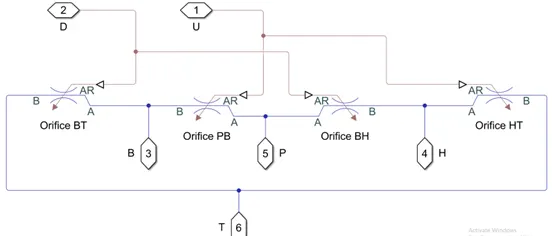
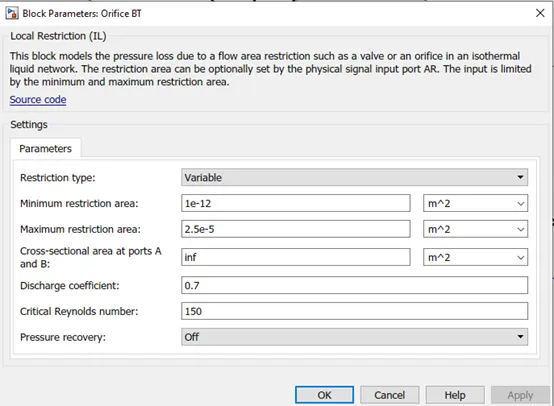
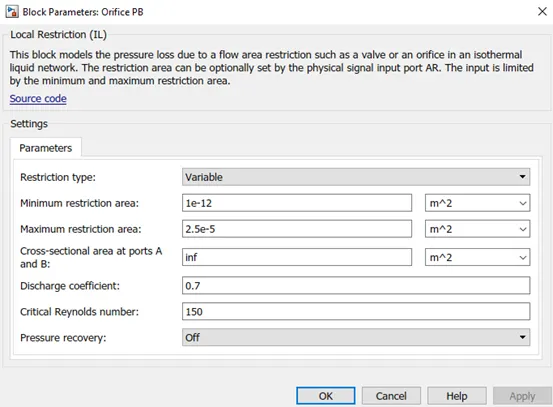
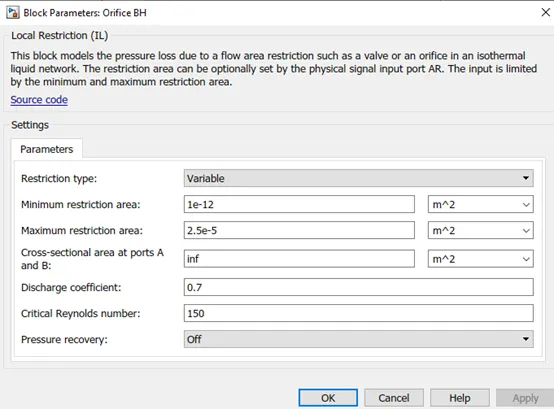
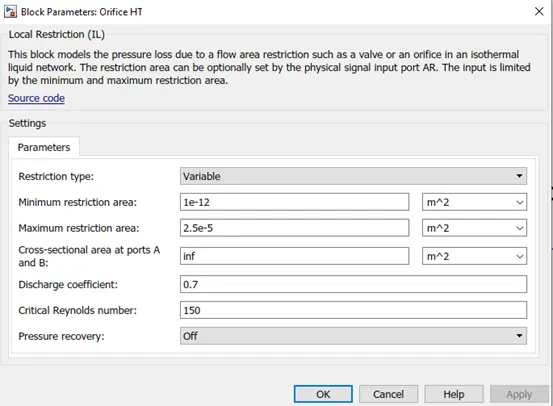
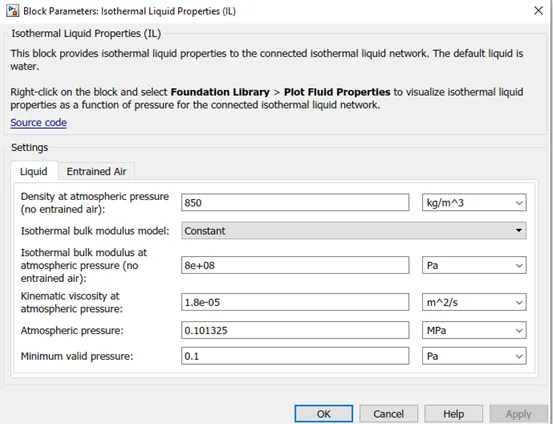
Iso thermal liquid properties:
isothermal liquid domain, the working fluid is a mixture of liquid and a small amount of entrained air. Entrained air is the relative amount of non-dissolved gas trapped in the fluid. You can control the liquid and air properties separately: You can specify zero amount of entrained air.
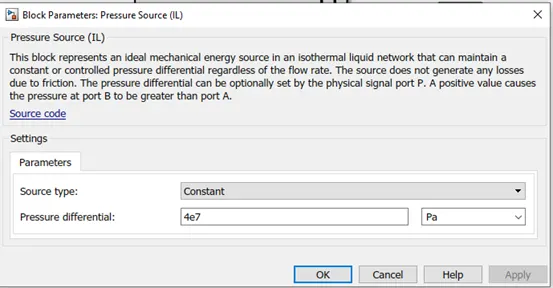
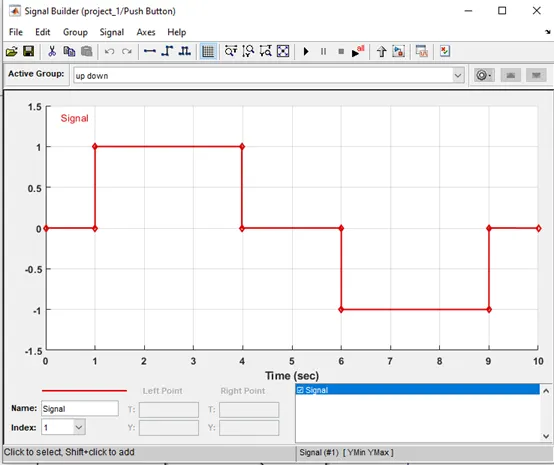
Result: The animation of the acutuator can be observed while running the Simulink file attached below.