Project 1
1)
AIM: To Develop a double-acting actuator model using Simscape Multibody and Simscape components
OBJECTIVES
- To develop a hydraulic model(Physical model) to maintain and control the flow of working fluid.
- To develop a mechanical model having hydraulic cylinder and piston.
- Implement hydraulic and mechanical system together to develop a double-acting actuator model .
THEORY
Pumping hydraulic fluid to both sides of the plunger is possible with double-acting hydraulic cylinders. The piston rod can travel forward and backward thanks to connection apertures located close to both ends. The additional port gives the plunger more control during retraction and guarantees that it always returns to its starting position.A double acting cylinder produces extend and retract forces to move the piston rod and alternates cycles of pressurised fluid to both sides of the piston, giving the movement more control. It would be necessary to use a control system composed of a 2-, 3-, or 4-way position valve to obtain the desired movement for your application.
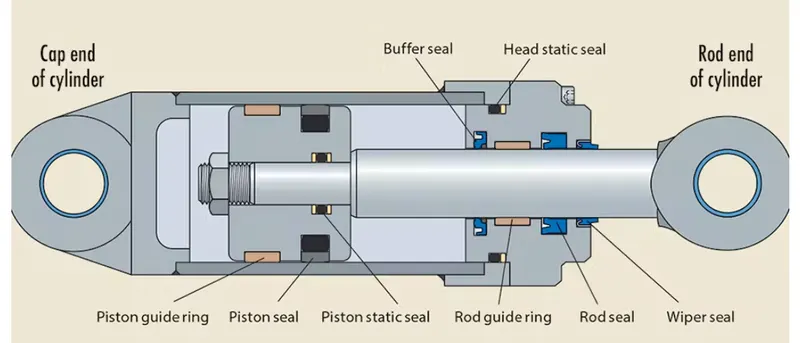
The definition of a hydraulic actuator is a device that converts the fluid's pressure energy into mechanical motion. The hydraulic actuator consists of a cylinder or a fluid motor that uses hydraulic energy to operate mechanically. A rotational, linear, or oscillatory motion is produced as a result of the mechanical motion. A hydraulic actuator applies a lot of force while compressing liquids, which is almost seldom the case.
The lower chamber of the actuator is connected to the hydraulic supply and return line, which allows hydraulic fluid to flow into and out of the lower chamber. The piston's action is transferred to a valve by the system.The valve is initially held in the closed position by the spring force when there is no hydraulic fluid pressure. Pressure in the lower chamber rises when fluid is introduced. The force produced by this pressure on the piston's bottom is the opposite of the force produced by the spring. The piston starts to rise, the spring starts to contract, and the valve starts to open when the hydraulic force is greater than the spring force. The valve keeps opening as the hydraulic pressure rises. In contrast, as hydraulic oil is removed from the cylinder, the piston descends and the valve closes because the hydraulic force is now less than the spring force. The actuator's ability to supply or drain oil allows the valve to be set between fully open and fully closed.A hydraulic actuator operates on the same principles as a pneumatic actuator. To move the valve, each makes use of some motive power to overcome the spring force. Additionally, hydraulic actuators may be built with a fail-safe feature that allows them to fail-open or fail-close.
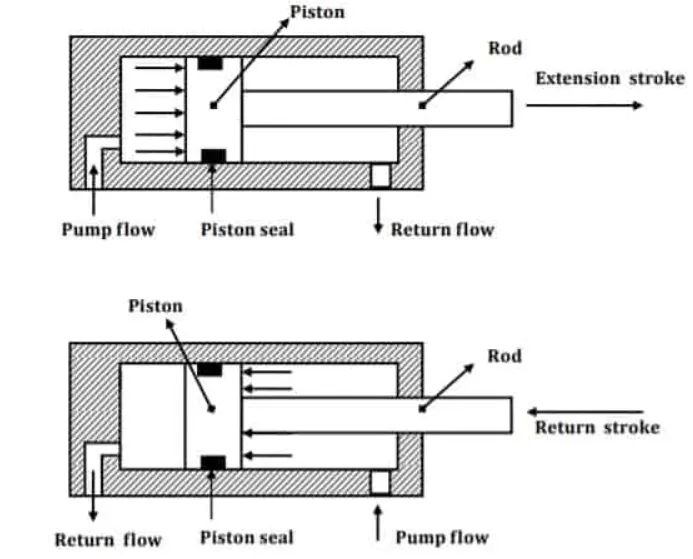
TYPE OF HYDRAULIC ACTUATOR
- linear actuation, a linear actuator is employed. These hydraulic actuators, also known as hydraulic cylinders, provide the force or motion in a straight line.
- Rotary actuation is accomplished with a rotary actuator. These hydraulic actuators are known as hydraulic motors because they produce the torque or rotational motion. Constant angular movement can be achieved with these actuators.
- Semi rotaty actuation is accomplished using the semi-rotary actuator. Although 360 degrees or less is more common, these are capable of partial angular movements that can be many complete revolutions.
DRAWBACKS OF SINGLE ACTING ACTUATOR
- The design of the valve assembly costs more since mechanical springs are used. The size and design of the valve determine price differences.
- Due of their susceptibility to wear, springs are frequently the first part of an actuator to break. Therefore, it is commonly believed that single-acting actuators are less durable than double-acting actuators.
- The actuator's bigger form factor, which may not be small enough to fit into some applications, is caused by the spring-modules.
ADVANTAGES OF HYDRAULIC ACTUATOR
- Rugged and well-suited for high force applications are hydraulic actuators. They are capable of producing 25 times more force than an equivalent-sized pneumatic cylinder. Additionally, they function at pressures of up to 4,000 psi.
- Due to fluid incompressibility, a hydraulic actuator can maintain force and torque without the pump supplying more fluid or pressure.
- With little power loss, hydraulic actuators can operate at significant distances from their pumps and motors.
- Design is simple
- Inexpensive
- Strong construction
- High force capabilities
- Protection of the engine from overloads
- They can hold pressure & torque stable
- The pumps & motors within the actuator can be arranged at a considerable distance through a small amount of power loss.
DISADVANTAGES OF HYDRAULIC ACTUATOR
- Fluid will leak from hydraulics. Similar to pneumatic actuators, fluid loss causes decreased efficiency and cleanliness issues, which could lead to harm to nearby parts and surroundings.
- The accompanying components needed for hydraulic actuators are a fluid reservoir, motor, pump, release valves, heat exchangers, and noise-canceling devices.
- Inflexibility
- High maintenance
- Sensitive to temperature
- Partial motion control capabilities
- Insufficient data collection capabilities
- Operating efficiency is low
- Its efficiency is low as compared to others
- Its operation conditions will influence its main characteristics
APPLICATIONS OF HYDRAULIC ACTUATOR
- These are used in high force-based applications.
- These are used for various applications like crane drives, winches, self-driven cranes, excavators, wheel motors in military vehicles, feeder drives, agitator drives
- & mixer, roll mills, trammels & kilns, drum drives for digesters, shredders for cars, tires, drilling rigs, high-powered lawn trimmers & trench cutters.
- Hydraulic jack
- Highly precise positioning for heavy loads
- Hydraulic brake
- Controlling oh close-loop velocity
- Hydraulic ram
- It can be used as a sensor
DOUBLE ACTING ACTUATOR MODEL
HYDRAULIC(PHYSICAL) MODEL SUBSYSTEM
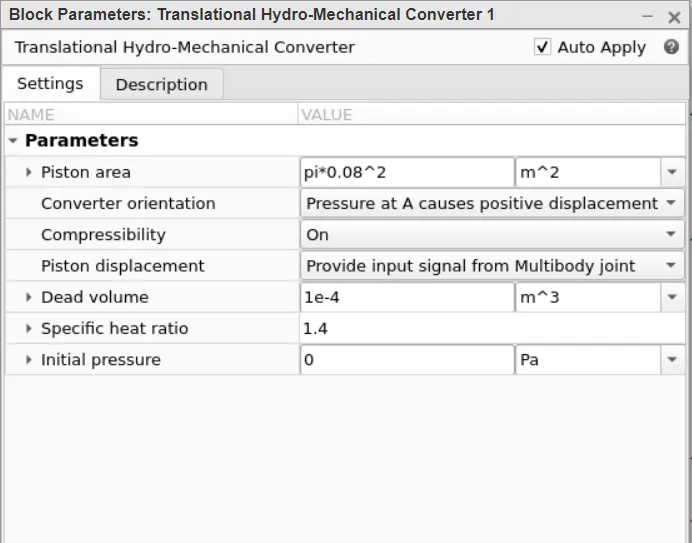
TRANSLATIONALK HYDROMECHANICAL CONVERTER 1 PARAMETERS
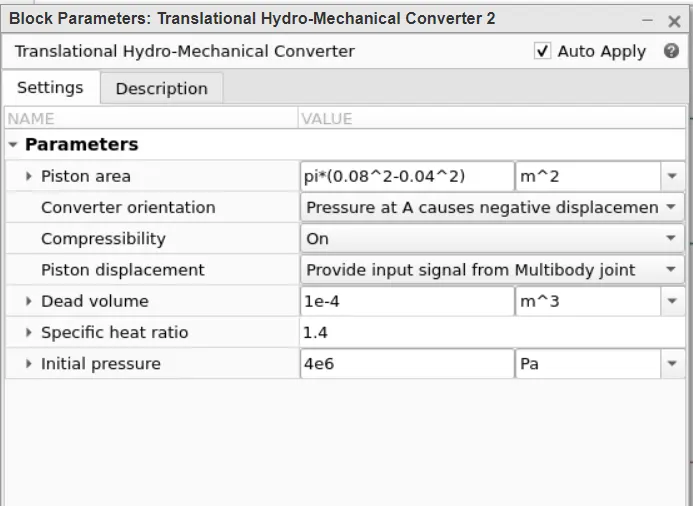
TRANSLATIONALK HYDROMECHANICAL CONVERTER 2 PARAMETERS
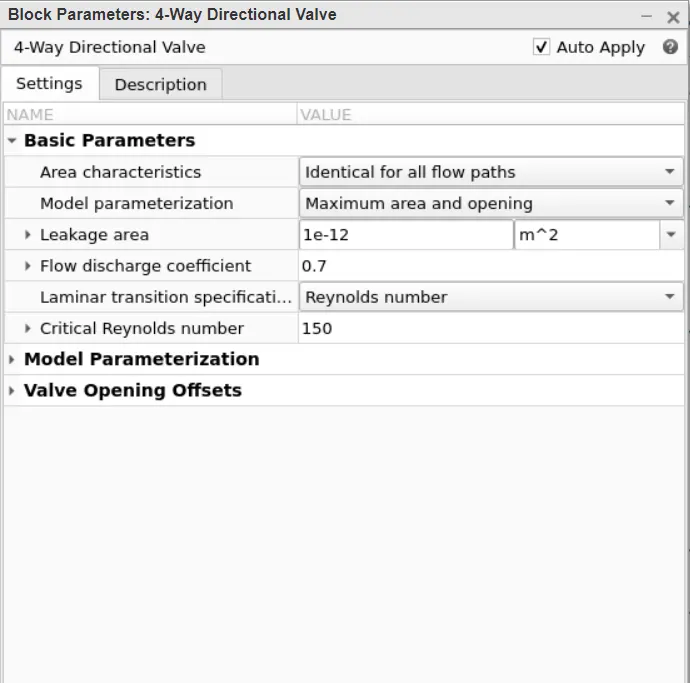
4-WAY DIRECTIONAL VALVE PARAMETERS
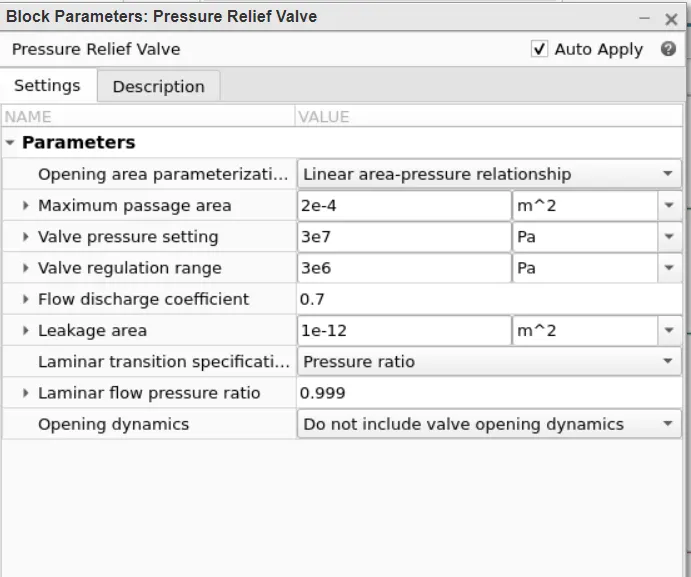
PRESSURE RELIEF VALVE PARAMETERS
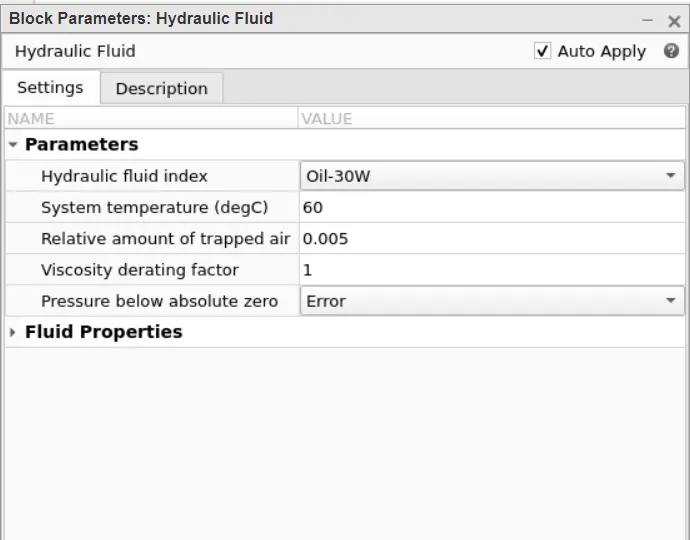
HYDRAULIC FLUID PARAMETERS
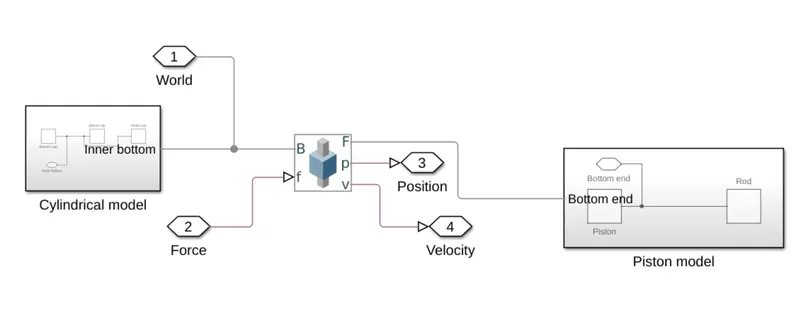
MECHANICAL MODEL SUBSYSTEM
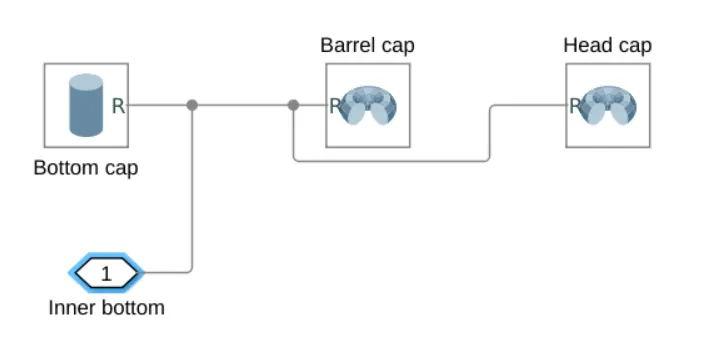
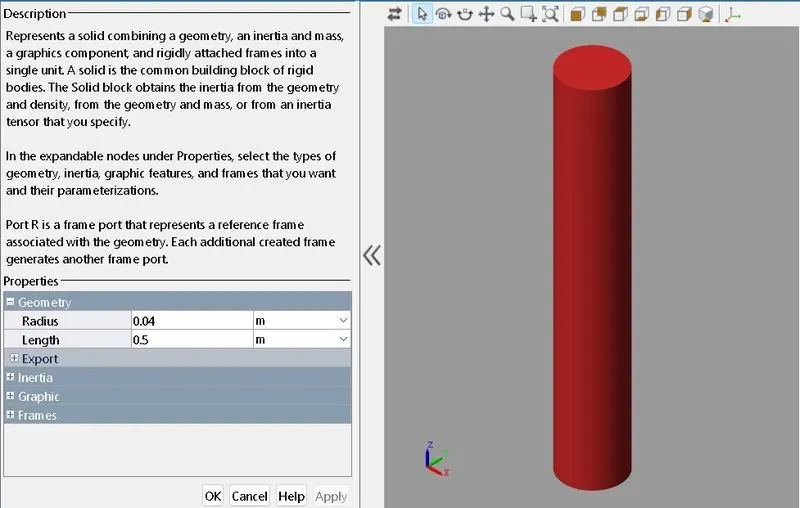
CYLINDER MULTIBODY DESIGN
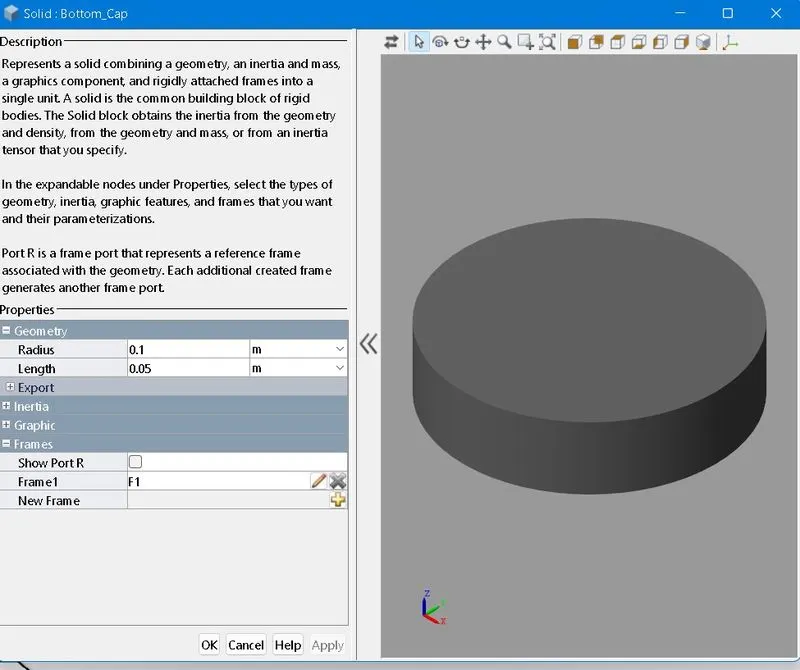
BOTTOM CAP
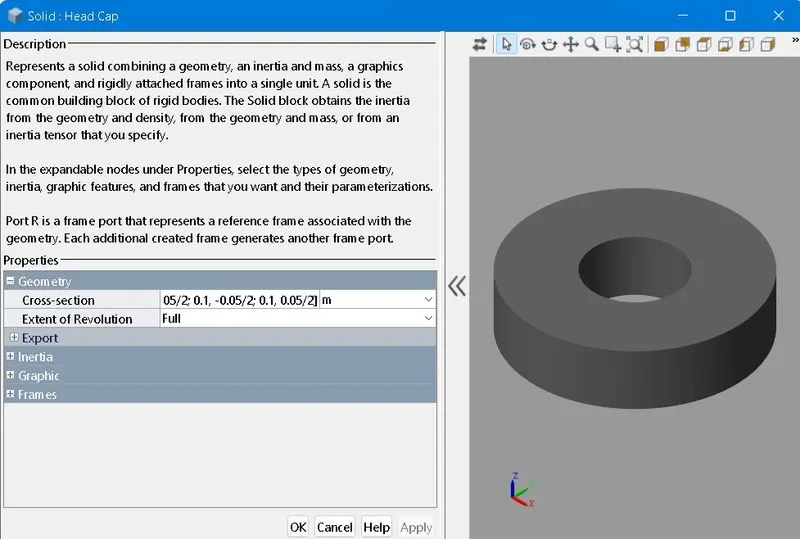
HEAD CAP
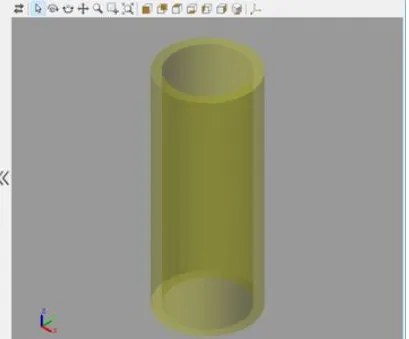
CYLINDER BODY
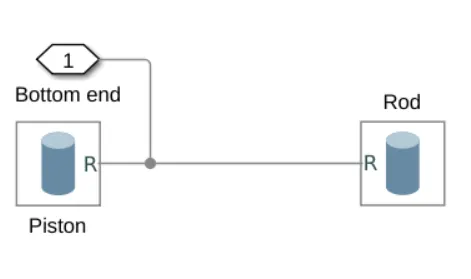
PISTON MULTIBODY DESIGN
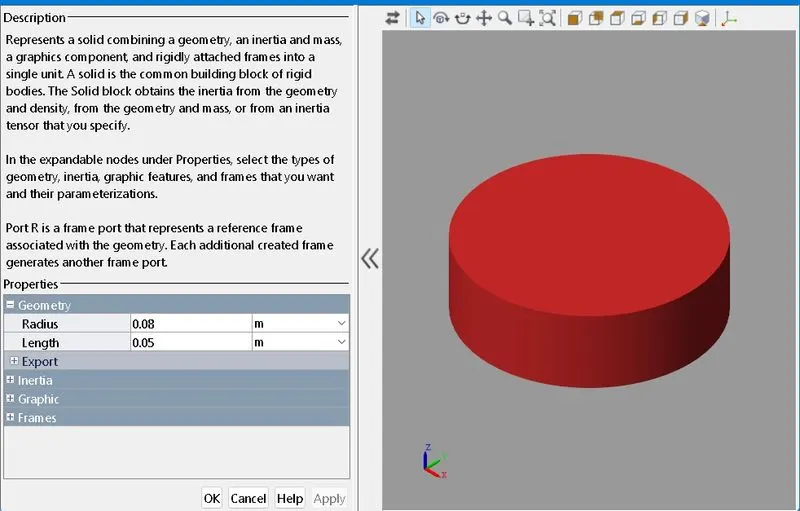
PISTON HEAD
PISTON ROD
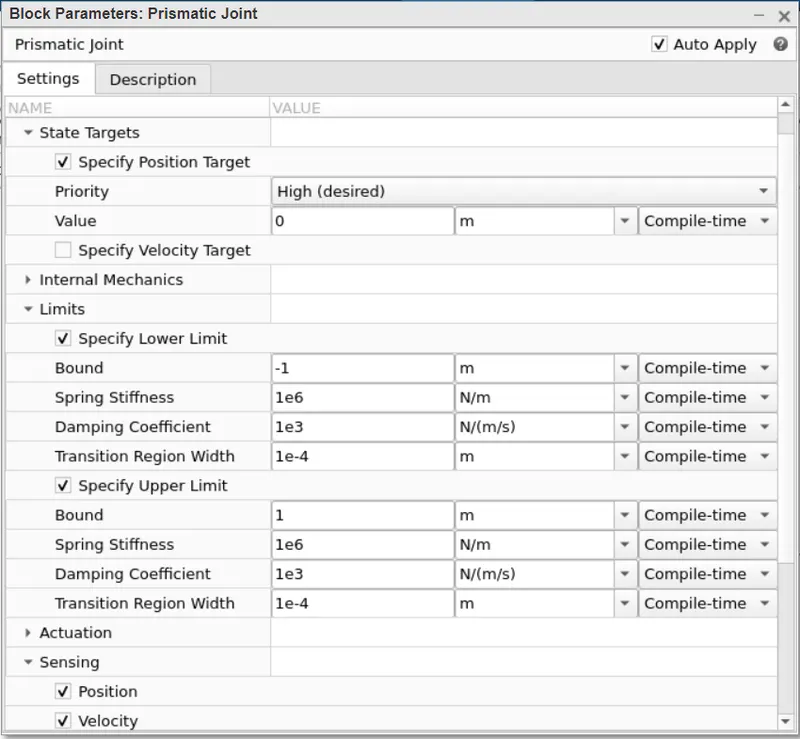
PRISMATIC JOINT PARAMETERS
STEPS FOLLOWED
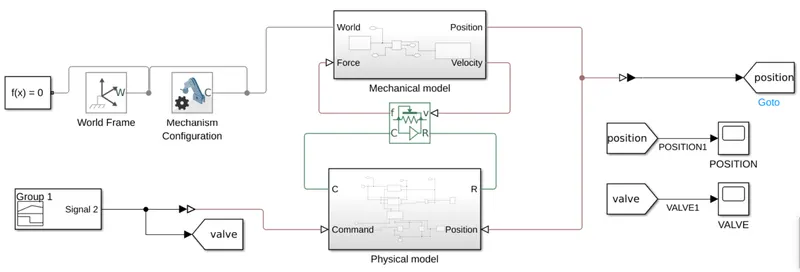
- Double acting actuator consist of mechanical and hydraulic model(physical).
- The mechanical and hydraulic models are connected by using translational multibody interface.
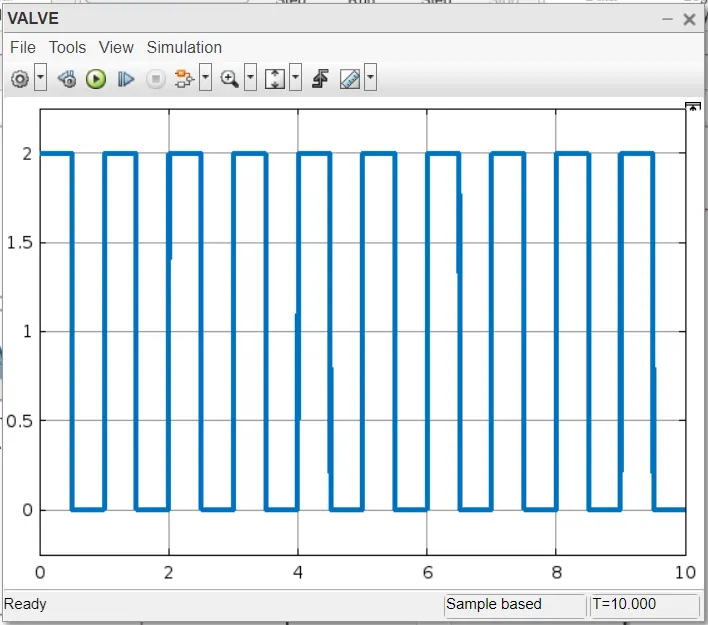
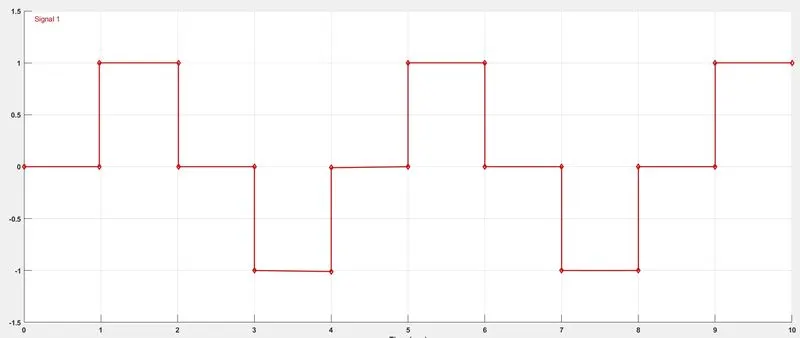
- Input signal is supplied from the signal builder block.
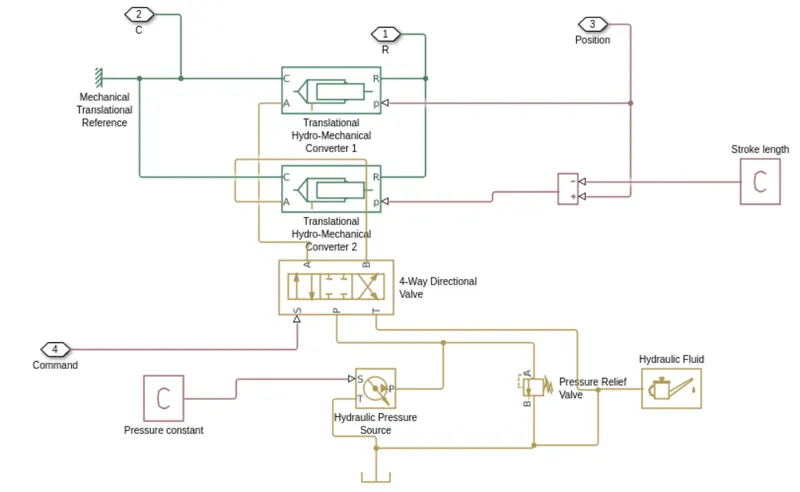
- The physical model consist of translational hydromechanical converters, 4-way directional valve, hydraulic fluid,hydraulic pressure sensor,hydraulic reference and pressure relief valve.
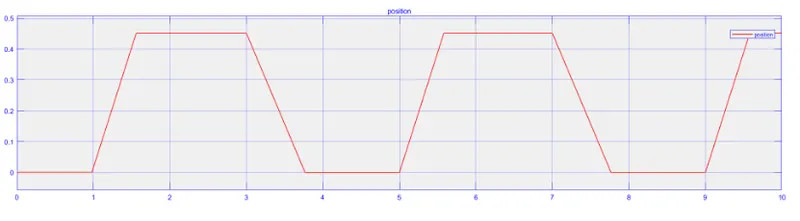
- Stroke length given as 0.45 meters
- Hydraulic fluid selected as oil-30W.
- 4-way directional valve regulates the flow of fluid.
- The mechanical model consist of cyliner and piston assembly.
- Mechanical models are developed by using multimodel modelling.
- The cylinder assembly consist of bottom cap, barrel cap and gead cap.
- The piston assembly consist of piston and a rod.
- The cylinder, piston paremeters are given according to the dimension required.
- The cylinder and piston assembly is connected by using a prismatic joint.
- Mechanical configuration , world frame and solver configuration blocks are fed to the mechanical subsystem.
- 10 second stop time is applied.
- Fixed time step with runge kutta(ode 4) has used to develop the model.
- Step time is 0.01 second
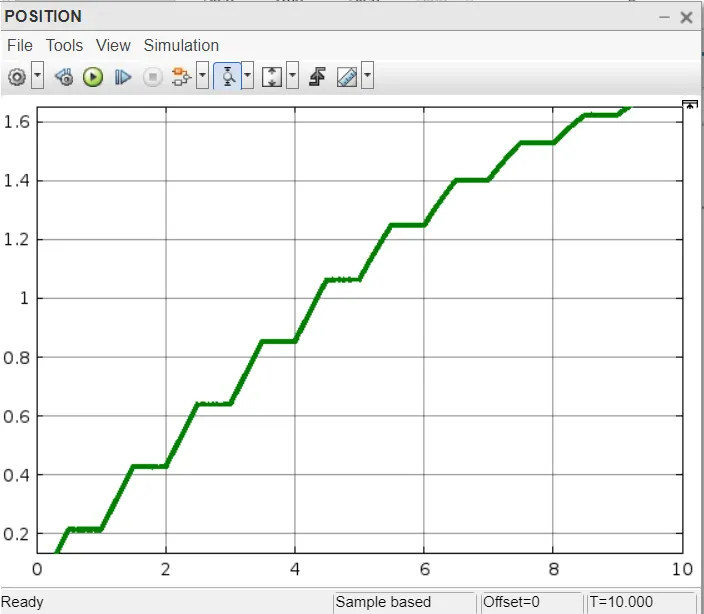
- Scope for valve and position are obtained as given below
SCOPE OBTAINED:
CASE 1 (FOR SQUARE WAVE)
VALVE INPUT
POSITION OUTPUT
VALVE INPUT
POSITION OUTPUT
CONCLUSIONS
- Double acting actuator has developed using Simscape Multibody and Simscape components.
- Hydraulic and mechanical models are developed.
- Valve position variations have plotted. Multibody motion diagram is attached below.
- https://drive.google.com/file/d/1Oe3xoMjZgltoC9CYRq5MAnB6ep3e5a_N/view?usp=sharing