Project 1
- Actuator
In very simple terms, an actuator is a device that makes something move or operate. Every one of us takes advantage of at least one actuator every day. Let’s look at some examples of actuators.
Grocery Store Door
The door opens automatically for us when we go to the grocery store. An actuator makes the door open.
Car Seat
We can move the car seat forward or backward before we drive away in our car. An actuator makes the seat move.
- Types of Actuators
1. Linear Actuator
An actuator can move something in a straight line, also referred to as linear.
2. Rotary Actuator
Also, An actuator can make something move in a circular motion, also referred to as rotary.
- What Makes an Actuator Move?
Actuators receive a source of energy and use it to move something. To put it another way, the actuator converts a source of energy into a physical-mechanical motion.
A butterfly valve is operated by turning the Handwheel connected to the rotary actuator. In industrial applications, the Handwheel could be replaced by one of three typical sources of energy, which can operate the rotary actuator:
– Electric actuators use some form of electric energy to operate.
– Hydraulic actuators use a variety of liquids as a source of energy.
– Pneumatic actuators are operated by compressed air.
- Types of Actuators
Typical actuator types in the industry include:
– Electric Motors
– Hydraulic motors
– Pneumatic Control Valves
- Double Acting Actuator
(pneumatic actuator example)
When looking for a device to move the load in both directions, double-acting cylinders are useful applications when your machine requires more than one movement. Unlike single-acting cylinders, double-acting cylinders can extend and retract without the need for a spring. Instead of applying pressurized air into one port, double-acting cylinders have two ports where air can enter in and out.
Air enters through one port moving the piston forward and then applies pressurized air into the other port retracting the piston back into the cylinder. Double-acting cylinders are the most widely used pneumatic actuators compared to single-acting cylinders given their ability to extend and retract within a shorter period, thus, becoming more efficient and precise.
Double-acting pneumatic cylinders are mostly used in industrial and robotics industries. They perform tasks such as opening/closing doors and lifting and moving merchandise off conveyor belts. Other uses include medical applications, earth-moving equipment, and space programs.

Advantages of Double Acting Cylinder:
- More control over movement since pressurized air moves both ways
- Faster, stronger, and use less energy
- Offer more design variation: stroke and bore sizes
- Many double-acting pneumatic cylinders are ISO compliant as opposed to single pneumatic cylinders
Disadvantages of Double Acting Cylinder:
- More costly than single pneumatic cylinders
- Requires bigger housing - if used as a feed cylinder it needs to be coupled with another machine system
- In certain situations, air consumption may be calculated at different rates
- Double Acting Hydraulic Actuator
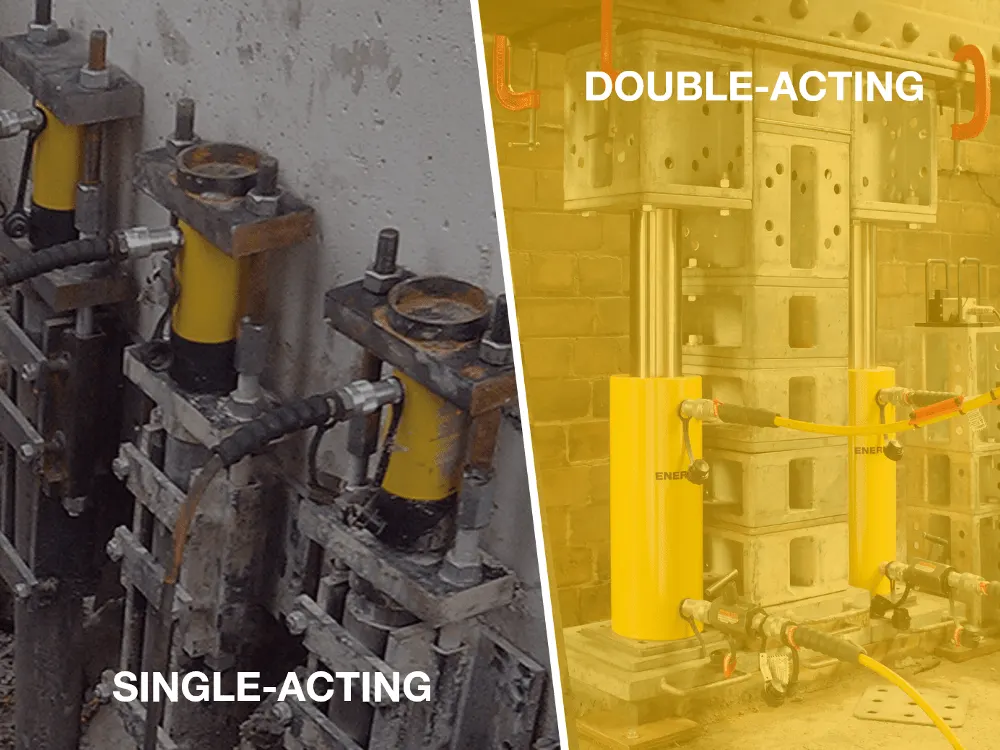
When comparing single-acting vs double-acting hydraulic cylinders, the most visible difference is the number of couplers or connection ports. A single-acting hydraulic cylinder includes just one port. This is where the hydraulic fluid enters and forces the plunger out in one direction. A double-acting cylinder includes two ports. One for the hydraulic fluid to enter and extend the plunger, and the other for retracting the cylinder.
In a double-acting hydraulic cylinder, the plunger retracts when hydraulic fluid is pumped under high pressure into the top port, forcing the plunger back to its original position. This can be done quickly, if required, or very gradually with precise control.
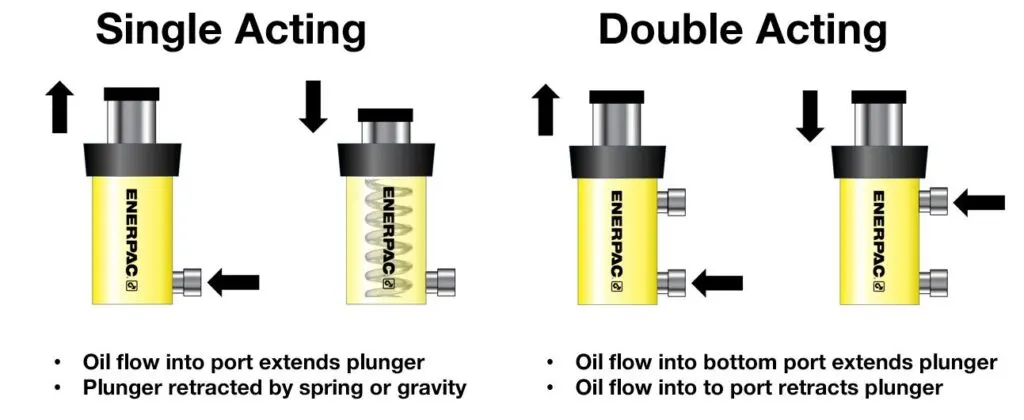
Double-acting hydraulic cylinders can pump hydraulic fluid to both sides of the plunger. Connection ports positioned near both ends allow the piston rod to move both forward and backward. The extra port also allows more control of the plunger during retraction and ensures it always returns to its starting point.
The faster and more predictable retraction of double-acting cylinders makes them the better choice for projects needing repeatable accuracy.
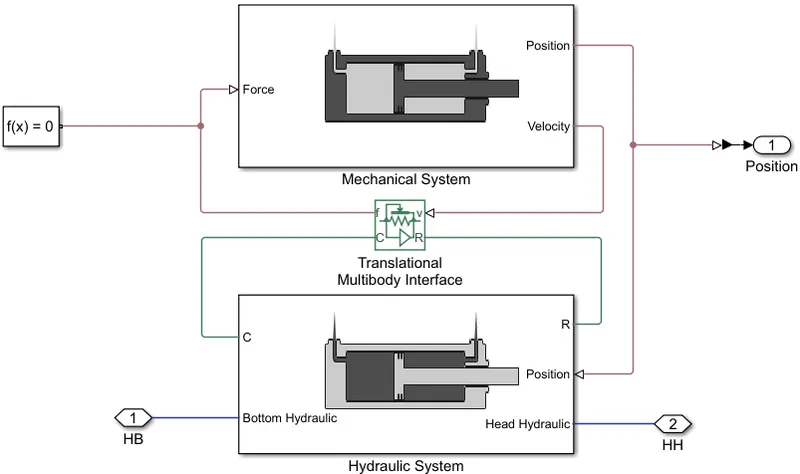
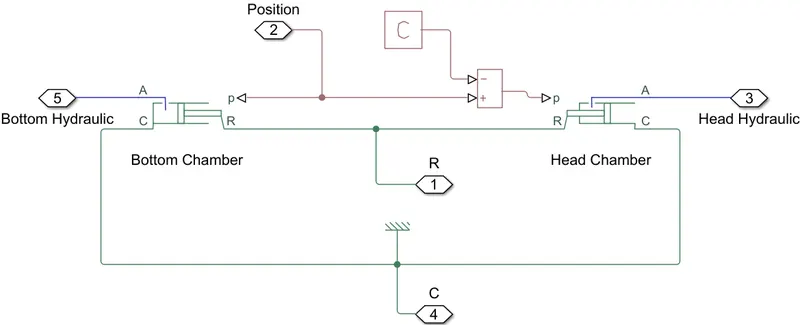

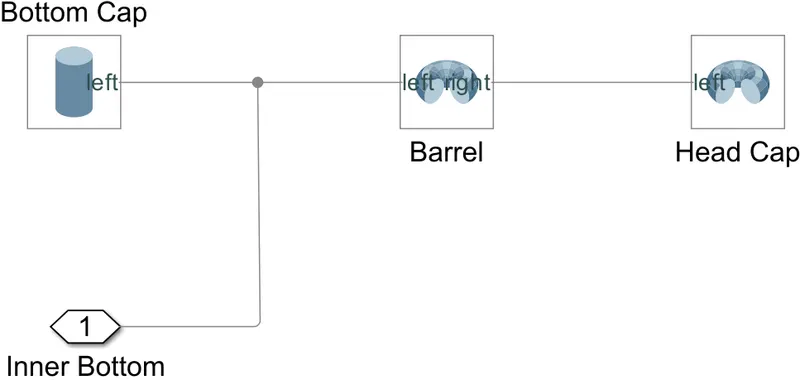

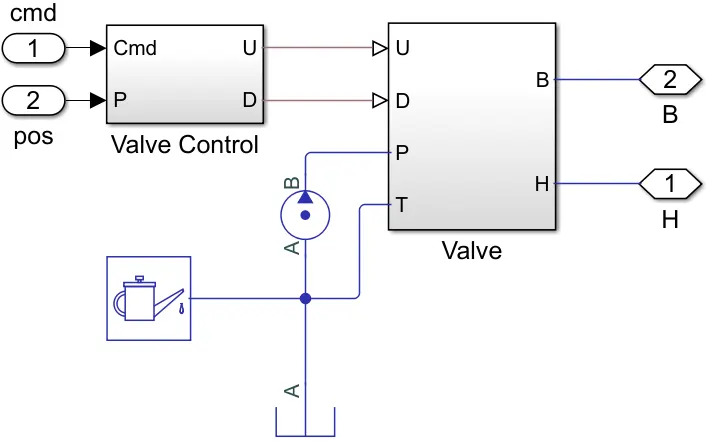
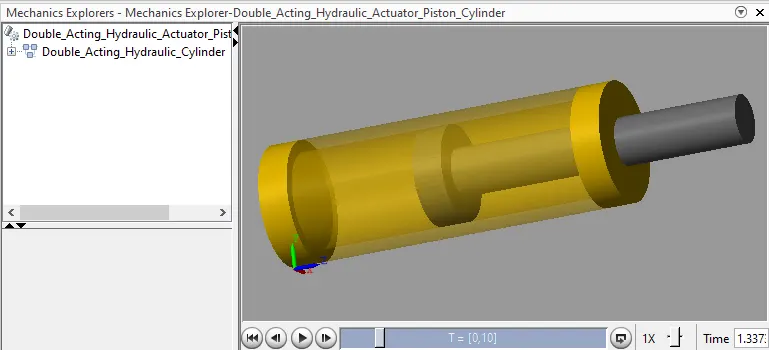
Mechanics Explorers
Plot
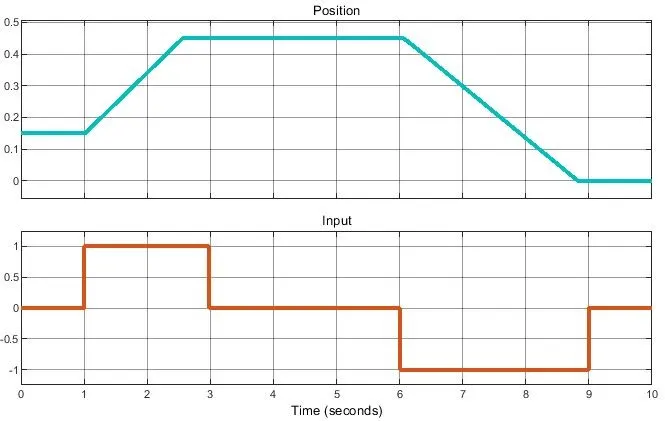
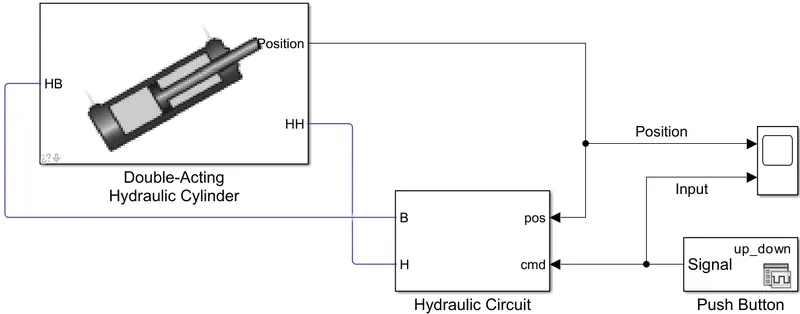
The plot shows how the input signal is given for the double-acting hydraulic cylinder. A positive signal is given to move the piston towards the head of the hydraulic and a negative signal is to move the piston towards the bottom of the hydraulic. Time taken for the negative signal is more than the positive so that the piston can get back to its initial position and plus move toards bottom end of the cylinder. Position curve shows the moving piston.