Prandtl Meyer Shock problem
Aim : Study of Prandtl-Meyers shock wave equation.
Objective : To study and understand how shock wave form, Subsonic and Supersonic Flow.
Theory:
What is a Shock Wave?
Shock waves are generally caused due to any disturbance in surrounding.
When a moving particle strikes stationary fluid or air, the free stream air molecules are disturbed and scattered away from the nose resulting in formation of a shock .This happens due to intermolecular momentum / collision of the molecules.
Shock Wave generated in moving Objects:
If an object show in below image is moving in one direction at certain velocity, shock waves are developed at the nose , wavelength reduces at front and frequency reduces as waves move away from body.
If the object creating sound moves faster than sound ,then it is known as supersonic flow.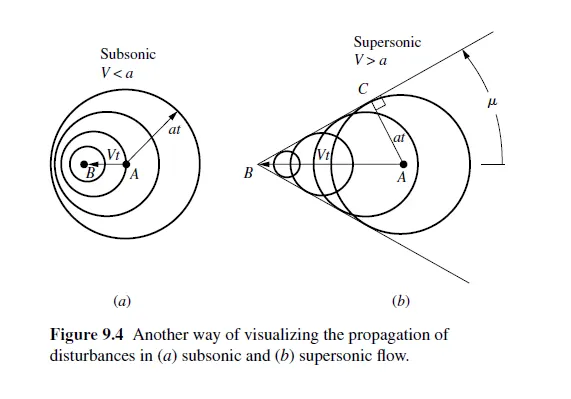
Generally the flow is defined as supersonic or subsonic depending on the velocity of the flow, determined by Mach number.
Mach Number :
M = It the ratio of Speed of sound / Speed of object sound source.
= v / a
The angle at which the wave is generated is given by U,
U = `sin. 1/M`
Generally denoted by Local number.
If Mach no < 1 the Flow is Subsonic , If Mach no > 1 then Supersonic.
Some of the factors and basic concepts:
What is Entropy ?
Entropy is the measure of degree of randomness in a system.
Icentropic process : In thermodynamics, an isentropic process is an idealized thermodynamic process that is both adiabatic and reversible. The work transfers of the system are frictionless, and there is no transfer of heat or matter.
Shear stress : F (tangential force) / Area
Static Pressure : Idle Pressure available in system. It is important to calculate static pressure in the system as it affects the changing pressure.
Kinetic Pressure : Equivalent pressure available in a moving fluid is kinetic pressure.
Total Pressure = Static Pressure + Kinetic Pressure
Types of Shock Waves ,
Oblique Shock Wave and Expansion shock waves and Normal shock waves.
Oblique shock waves are the shock wave generated where compression takes place. In the shock wave is directed towards itself, ie in same direction of velocity waves.
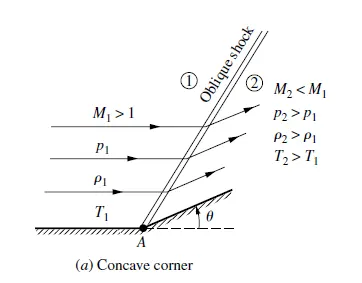
The deflected angle is called as wave angle.
Oblique shock waves are used in application where air compression is required in say intakes .This concept is used to reduce the mach number as it flows and having very less stagnation pressure losses.
Generally shock waves having mach number 4 or 5 Tend to have stagnation pressure losses upto 70% which is not feasible. Hence oblique shock waves are used to reduce mach number and also pressure losses and still be able to increase compression.
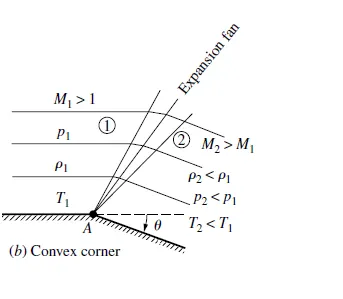
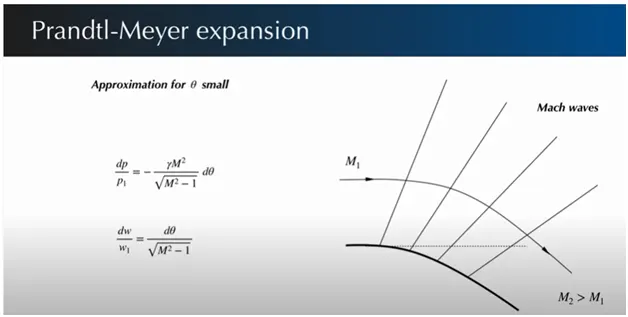
Expansion waves are the shock waves generated away from the flow through a finite or infinitesimally small angle Theta .(but forbided by 2 law of thermodynamics) only applicable for infinitesimally small angle )because Mach number increases with expansion, where as entropy remains same.
Case Setup and Mesh :
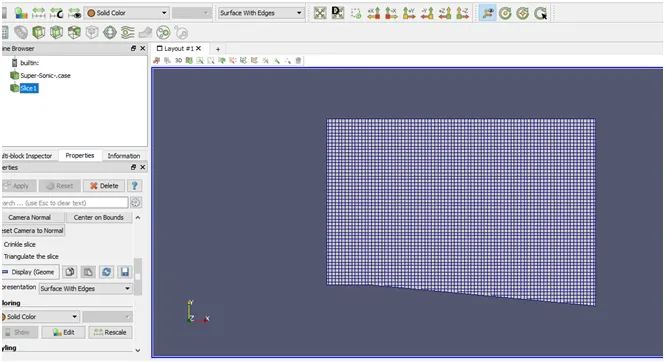
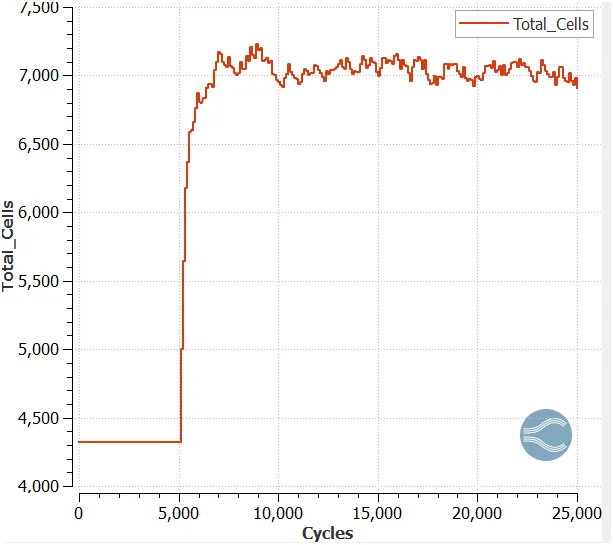
Sub-Sonic flow : Mach no < 1
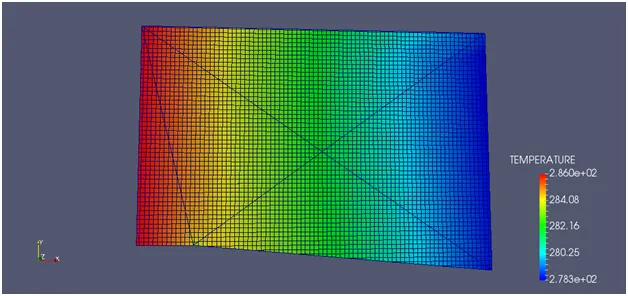
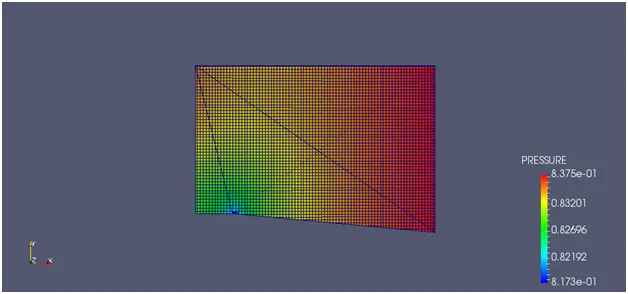
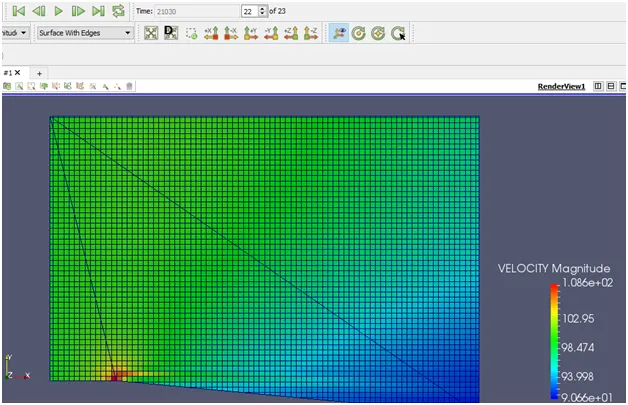
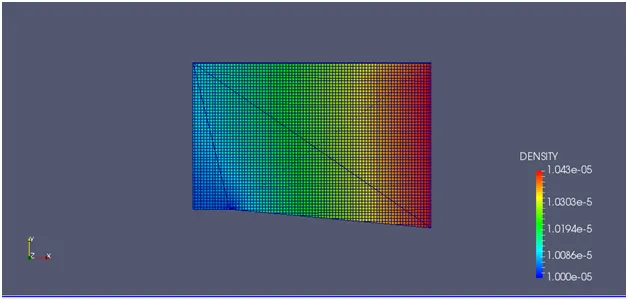
For SUPERSONIC FLOW :
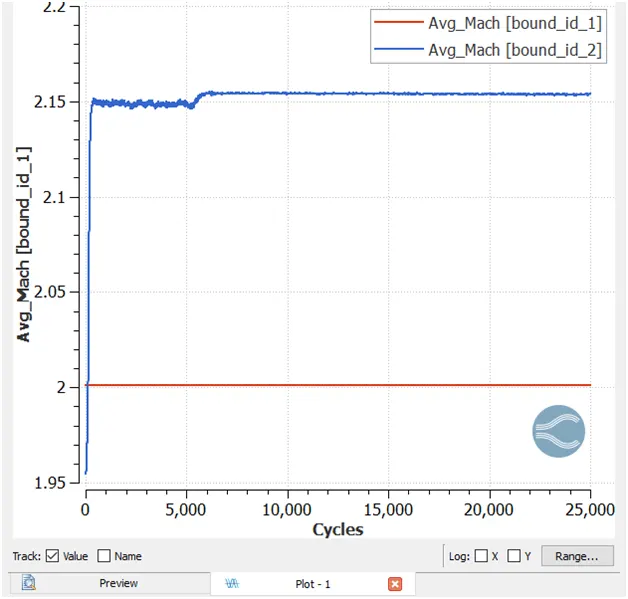
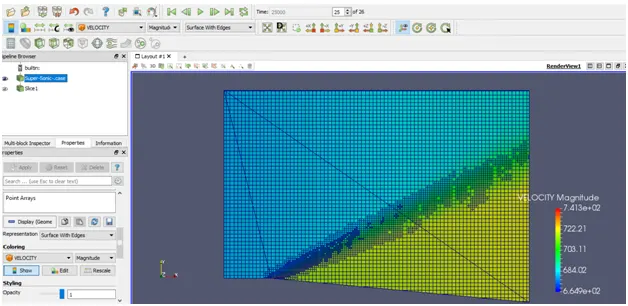
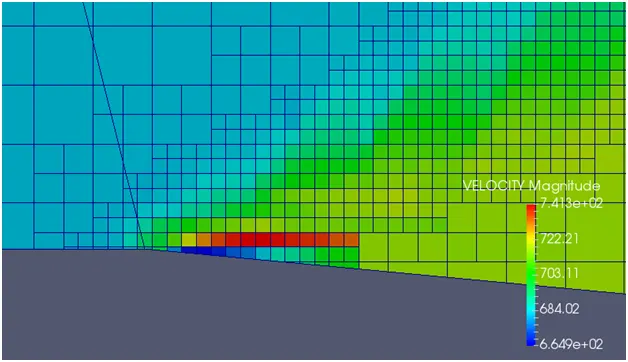
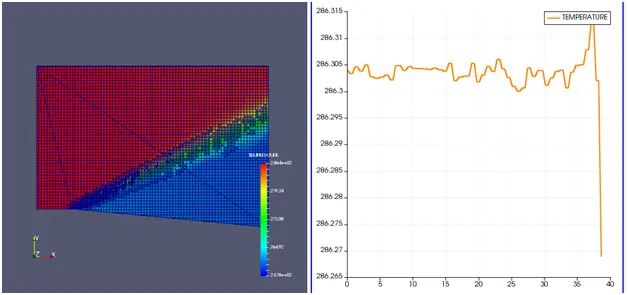
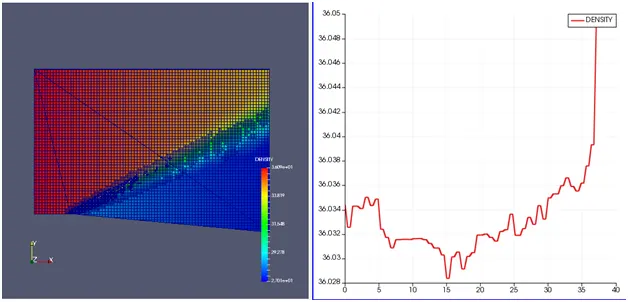
Plot at inlet of flow :
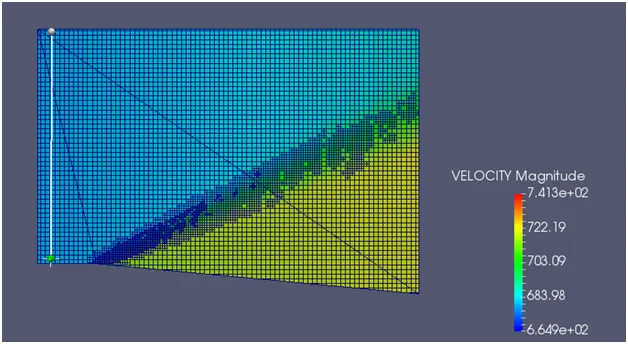
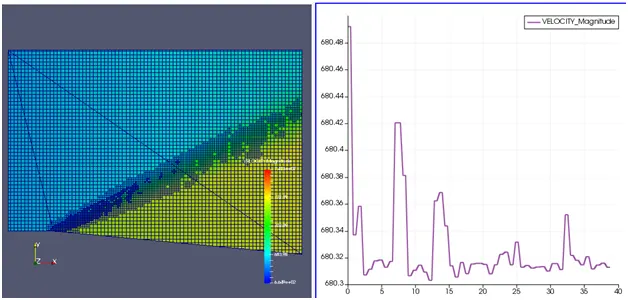
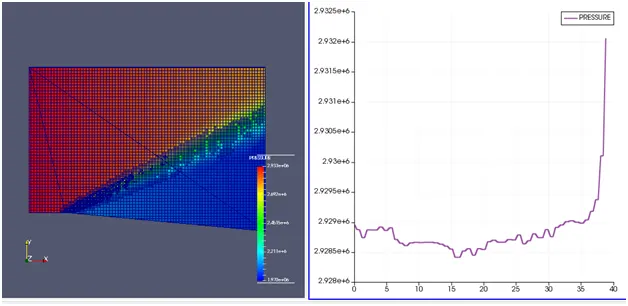
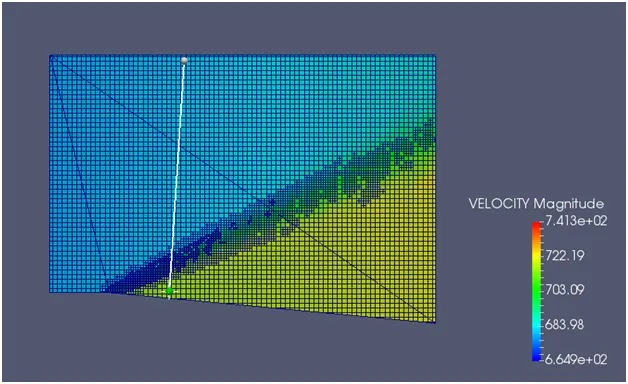
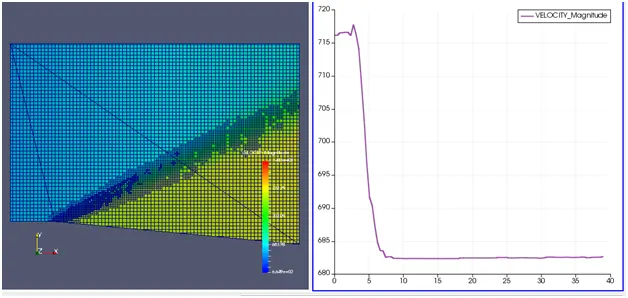
Plot at the center of flow :
Plot near the outlet :
Results and Conclusion :
Simulation ran for 2 cases :
- Supersonic When Mach no > 2
- Subsonic When Mach no < 1
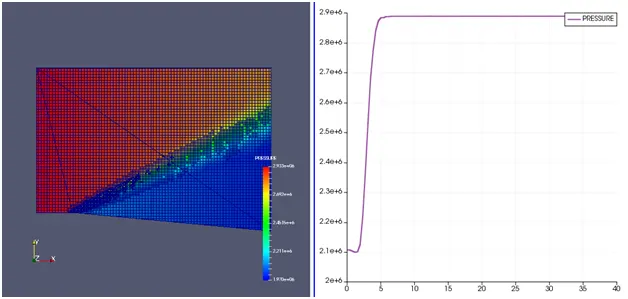
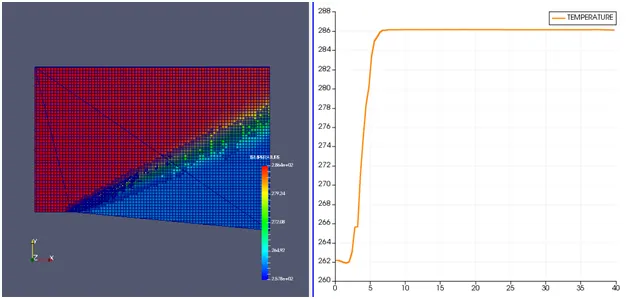
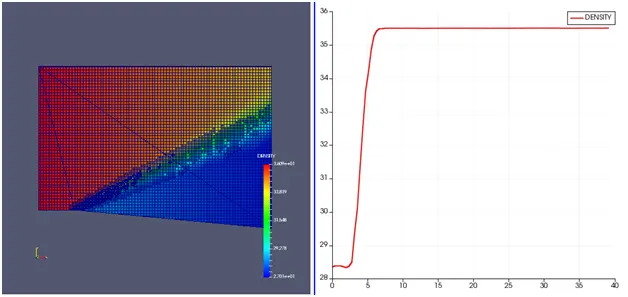
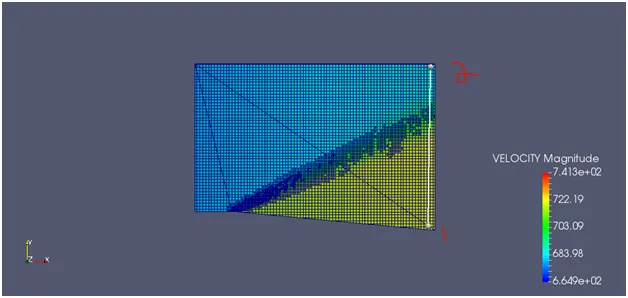
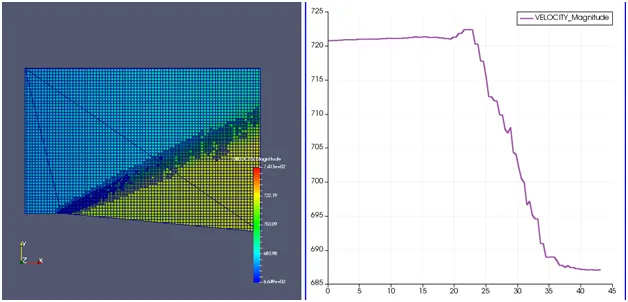
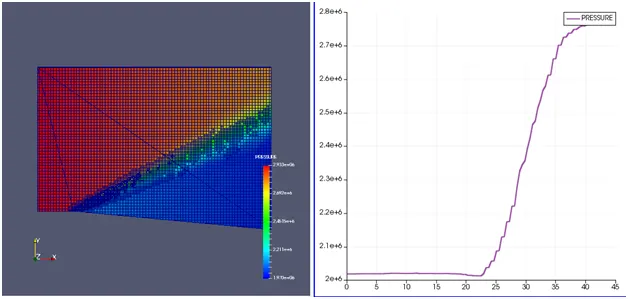
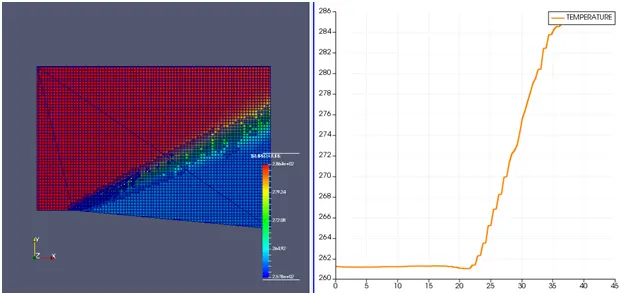
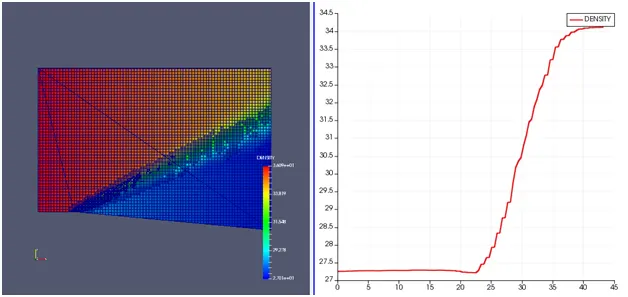
For the given geometry , when the air / fluid is flowing through the channel, there is change in the boundry . This change causes increase in cross-section eventually resulting formation of expansion waves.
As the the flow is supersonic , shock waves are generated. These shock waves expand giving results as mentioned below :
- Velocity Increase from Inlet to Outlet.
- Mach no increase from Inlet to Outlet
- Pressure reduces from Inlet to Outlet
- Density and Temperature decrease from Inlet to Outlet
This geometry is not feasible for practical purpose especially designing intake ducts , because the Mach Number keeps increasing towards the outlet.Considerable pressure losses will be seen in real life.
For Sub sonic ,
Velocity and tempreture reduce from Inlet to Outlet .
Pressure and density increases from Inlet to Outlet .