Overview of E-vehicle and HEV.
Aim:
- To write a brief report on the hybrid/electrified vehicular transportation situation in India.
- To write a summary about E.V & hybrid vehicle sales in 2021 at united states.
- To write a summary about HONDA civic e:HEV 2021.
Objectives:
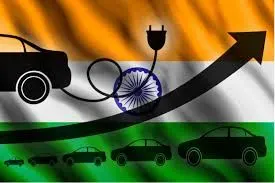
- India has set a goal to achieve EV sales accounting for 30% of private cars, 70% of commercial vehicles, and 80% of two and three-wheelers by the year 2030.
- very car sold in India from 2030 will be electric, under new government plans.
- India spent Rs 4.7 Lakh Crores in 2016-17 in importing crude oil. Electric Vehicles will help lower the bill.
Introduction
Automotive Mission Plan (AMP) has been finalised jointly by Government of India and Indian Automotive Industry. The vision of AMP 2026 is, By 2026, the Indian Automotive industry will be among the top three of the world in engineering, manufacture and export of vehicles and components, and will encompass safe, efficient and environment friendly conditions for affordable mobility of people and transportation of goods in India comparable with global standards growing in value to over 12% of India’s GDP and generating an additional 65 million jobs.
India’s auto industry has become one of the largest in the world due to the competitive environment in the market. The turnover of the auto industry is equivalent to 7.1% as per the Review Report of Automotive Mission Plan 2016. Government of India approved the National Mission on Electric Mobility in 2011 and subsequently National Electric Mobility Mission Plan (NEMMP) 2020 was unveiled in 2013. As part of the mission, Department of Heavy Industry has formulated a scheme namely FAME – India (Faster Adoption and Manufacturing of (Hybrid &) Electric Vehicles in India) for implementation with effect from 1st April 2015, with the objective to support hybrid/electric vehicles market development and Manufacturing eco-system.
Intented support provided by our indian goverment to promote E.V/HYBRID VEHILES
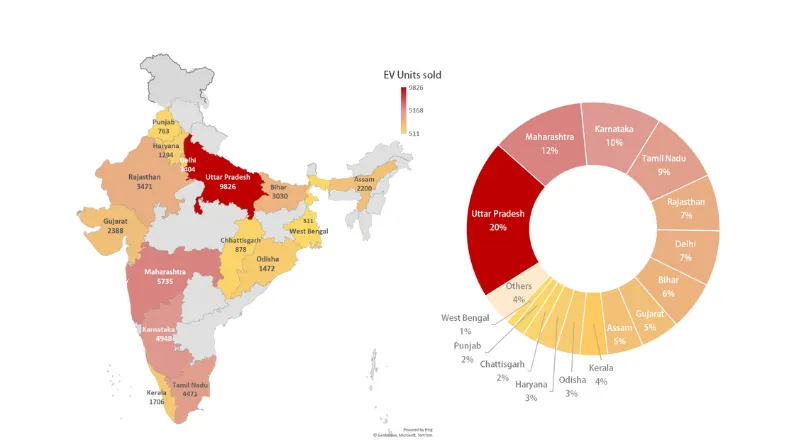
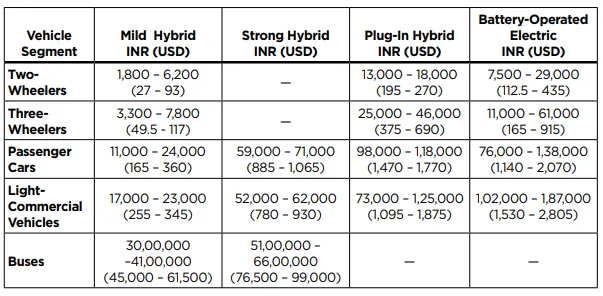
According to recent research by Accelerated e-Mobility Revolution for India’s Transportation (e-amrit) portal in India, only 7,96,000 Electric vehicles have been registered till December 2021, and the installation of 1,800 charging stations on public places. It shows that the country has a long way to go to achieve the recommended ratio. The growth of sales has seen a growth of 133% from FY 2015 to FY 2020, when compared to sales of conventional ICE vehicles, the numbers seem insignificant. The overall scheme is proposed to be implemented over a period of 6 years, till 2020, wherein it is intended to support the hybrid/electric vehicles market development and its manufacturing eco-system to achieve self-sustenance at the end of the stipulated period. The scheme has 4 focus areas i.e. Technology Development, Demand Creation, Pilot Projects and Charging Infrastructure.
FAME-2
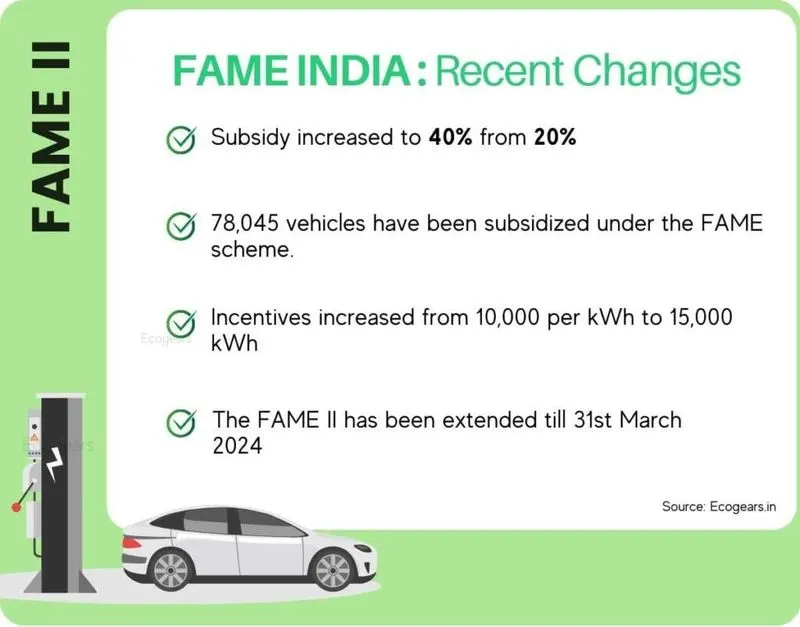
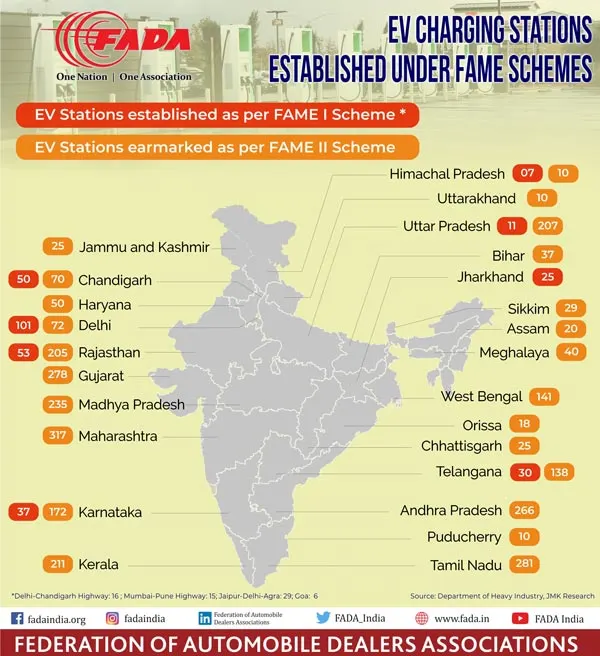
To prevent the use of petrol and diesel-type vehicles the FAME India project was launched by the authorities of the indian government and it was an integral part of the national electric mobility mission plan. In this article today, we will share with all of you the different details regarding the Fame India Scheme 2022 phase 2 which was launched recently for the residents of India.Fame India Scheme 2022 was launched keeping in mind the pollution which was happening due to the vehicles which are operated through diesel and petrol. The first phase of the scheme is already done by the concerned authorities of the Indian government. Now, phase two of the scheme was started under which the Government of India will be giving out 670 electric buses in the states of Maharashtra Goa Gujarat, and Chandigarh and it is also said that 241 charging stations will be provided in on the streets of Madhya Pradesh, Tamilnadu, Kerala, Gujarat, and Port Blair. This will help in the development of the areas with electrical vehicles.
Charging can create a hurdle ?
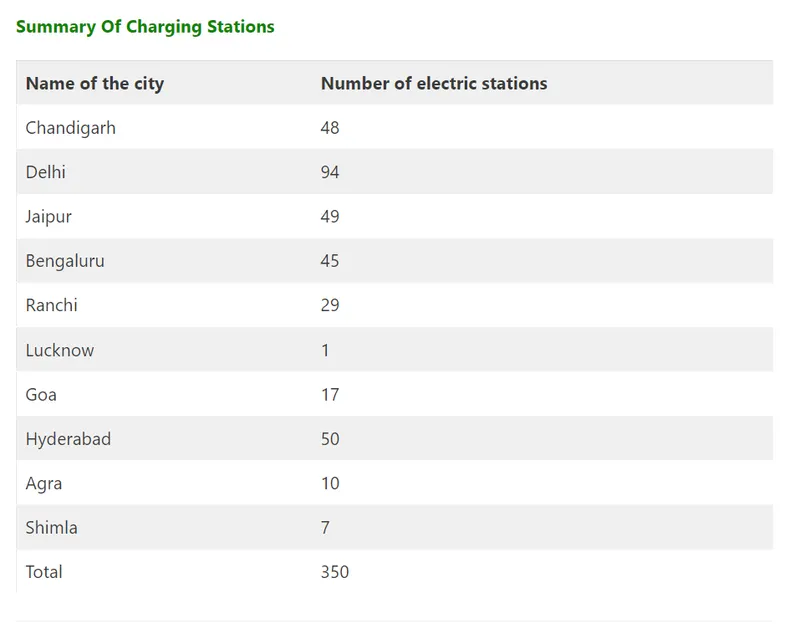
The government needs to focus on building a supply chain by manufacturing batteries domestically and bringing down the cost of EVs in India. We should be more focused on attracting foreign battery manufacturers as well as domestic players to set up local production facilities. It will help to lower the cost of batteries and EVs, improving the cost competitiveness.The government has installed 350 new charging stations under the second phase of the Fame India scheme. These stations are installed in cities like Chandigarh, Delhi, Jaipur, Lucknow, and Bangalore. This information was provided in the Parliament. On 20 July 2021 Minister of State and heavy industry affairs Krishan Pal Gujar announced that infrastructure for 520 charging stations has been sanctioned at a cost of Rs.43.4 crores under the first phase of this scheme.
Private industry efforts towards electrification:
Electric vehicle market is likely to attract investments of Rs 94,000 crore over the next five years and is expected to generate business opportunities in the real estate sector, according to a joint report by Colliers India and Indospace. The report 'Electric Mobility in Full Gear' mentioned that the electric vehicle (EV) industry in India is currently at a nascent stage but it is likely to grow, backed by government. initiatives and a move towards recognising climate change."India is taking a step towards sustainability and has vowed to cut its carbon emissions. At the recently concluded CoP26 summit, India pledged to reach net-zero carbon emissions by 2070. In India, the transport sector is currently the third-largest emitter of CO2. This is leading to increased thrust on EVs in India," .
According to information available, apart from Hero electric, Ola Electric and Ather Energy, which already put up plants in Tamil Nadu, TVS Motor Company, Tube Investments of India, Simple Energy, Booma Innovative Transport Solution, Magenta EV Solutions, Zion International and Propel Industries were among the slew of companies that had recently signed Mous with the state government to set up EV or EV component manufacturing facilities.Further, there is a need to establish dedicated EV park that provides plug and play facilities, developing and retrofitting warehouses for storing lithium-ion batteries, Colliers added.
private Chargine stations:
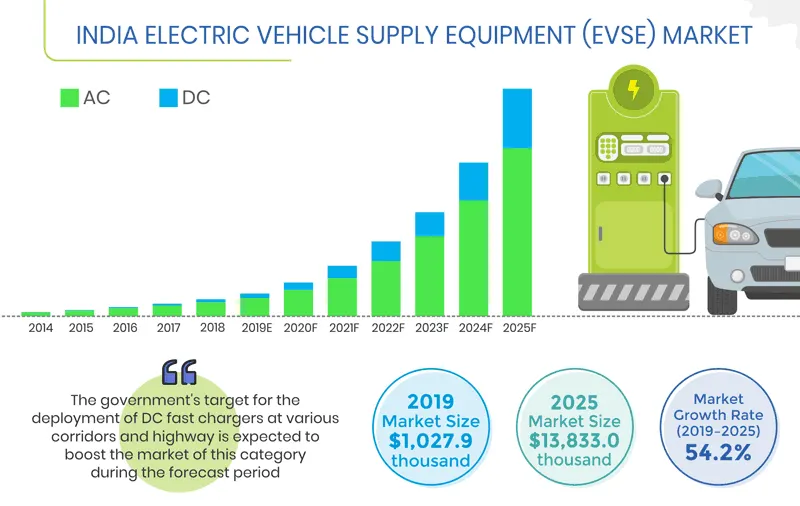
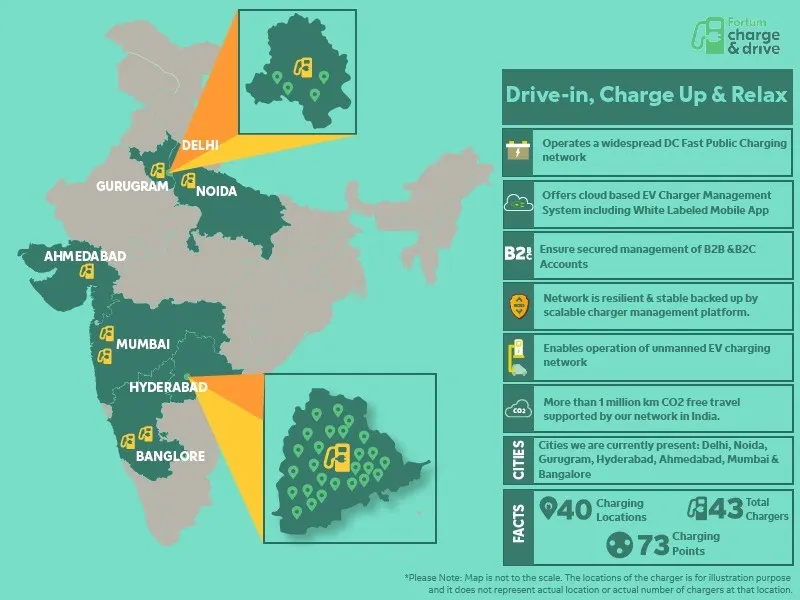
Electric mobility (e-mobility) sector in India is categorized by the availability of Electric Vehicles (EVs) on the supply side and adoption trends on the demand side. Adequate charging infrastructure is the key prerequisite that will define the adoption trends of EVs in India. EVs carry limited onboard energy in the battery packs which need charging from time to time depending upon the battery pack, size, and capacity.
Charging systems are therefore essential for the sustainable operation of EVs. The charging requirement depends not only on the kind of vehicle (two-wheeler, three-wheeler, four-wheeler, and bus) but also on the utility purpose i.e. passenger or commercial. The Government of India has set a target to electrify 70% of all commercial vehicles, 30% of private cars, 40% of buses, and 80% of two-wheeler and three-wheeler sales by 2030. This target entails simultaneous penetration of charging stations across India.The Government of India has been supporting the EV industry through schemes such as FAME1 and FAME2 with a major focus on charging infrastructure. The industry players too have been quite optimistic and shown an active interest in the overall EV Charging ecosystem. While EVs are being worked upon by major OEMs, an ecosystem for the development of chargers, charging stations, and
Customer and stakeholders opinion and outlook towards electrification
DR. AJAY MATHUR, DIRECTOR GENERAL, TERI In its commitment to combat climate change and meet its INDC goals, India has acknowledged the problem of rising air-pollution in its cities and has shown greater resolve to tackle the same as an immediate stop to arrest the greenhouse gas emissions form the transportation sector. Electric mobility is one of the pathways that the country has pro-actively taken to mitigate the said problems. The National Electric Mobility Mission Plan 2020 aims at introducing a significant number of electric vehicles in the country and central schemes like FAME India have provided a shot in the arm for implementing the mission. However, a comprehensive network of well-managed public charging infrastructure and access to private charging is a must for a successful rollout of nation-wide electric mobility.Manufacturers of most electric two-wheelers, including Hero Electric, Okinawa Autotech, Ather Energy, Ampere Vehicles, Bajaj Auto, TVS Motor, among others, have seen demand rise sharply in the first five months of the current year.
Nagesh Basavanhalli, managing director (MD) and group chief executive officer, Greaves Cotton, that sells electric two-wheelers and three-wheelers under the Ampere brand, said his firm has sold close to 100,000 electric two- and three-wheelers and is expanding capacity at Ranipet in Tamil Nadu (TN)."It will have the capacity to roll out 1 million units by the end of this financial year. The demand has outstripped supply,” said Basavanhalli.
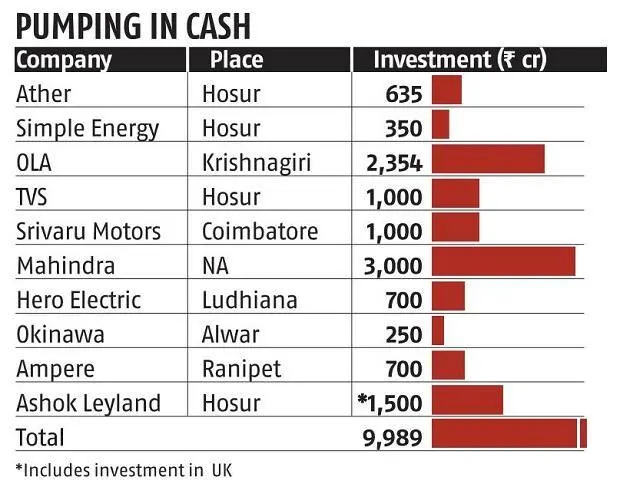
Okinawa Autotech, too, is expanding capacity to meet growing demand, said Jeetender Sharma, MD and founder, Okinawa Autotech, which sells the i-Praise + and the Praise Pro brand of electric scooters. The company produces 90,000 units in a single shift at its Alwar factory, which can be doubled with an additional shift, he said. It is also investing Rs 250 crore in a bigger factory in Bhiwadi, which will have the capacity to roll out 1 million units per annum.
Sohinder Gill, president, Society of Manufacturers of Electric Vehicles, the apex body representing the interests of EV makers, says a total of Rs 3,612 crore has been raised by manufacturers to fund their EV plans. This includes Rs 2,132 crore by Ola Electric, Rs 701 crore by Hero MotoCorp-backed Ather Energy, Rs 380 crore by Hero Electric, the rest by Revolt Motors, Pure EV, and Ampere Vehicles.
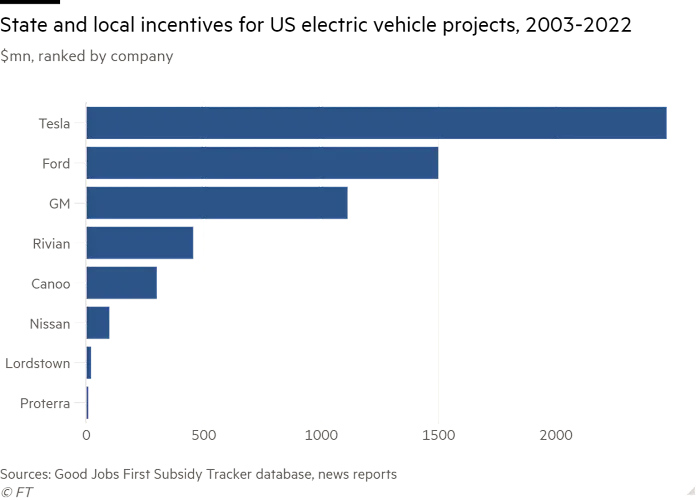
These additional hybrid or electric models were mostly either crossover vehicles, which combine attributes of passenger cars and sport utility vehicles, or vehicles such as vans and pickups, which previously didn’t have many hybrid or electric vehicle options.Manufacturers of hybrid vehicles and plug-in vehicles have expanded into market segments such as crossovers, vans, and pickups following consumer preference for larger vehicles. Within each electric or hybrid powertrain type, crossover vehicles now account for most sales.So, in this summary we know about how us government and the private sector promote the e.v vehiclec and for developing the sales and control's emission.
Summary-2
Introduction of new e.HEV reveals by HONDA:
Honda has introduce the all-new Civic e:HEV, the 11th generation of its iconic global compact car. Building on 50 years of heritage, the all-new hybrid Civic blends strong performance and efficiency with improved levels of interior comfort, visual appeal and overall usability. Featuring Honda’s proven e:HEV powertrain technology as standard, the all-new Civic completes the brand’s mission to electrify all its mainstream European models by the end of 2022.In its latest guise, the Civic embodies a new, progressive ‘exhilarating‘ approach to design. Coupled with Honda’s ‘Man-Maximum, Machine-Minimum’ (M/M) development principle, this joint approach has shaped all aspects of the Civic’s design and development.
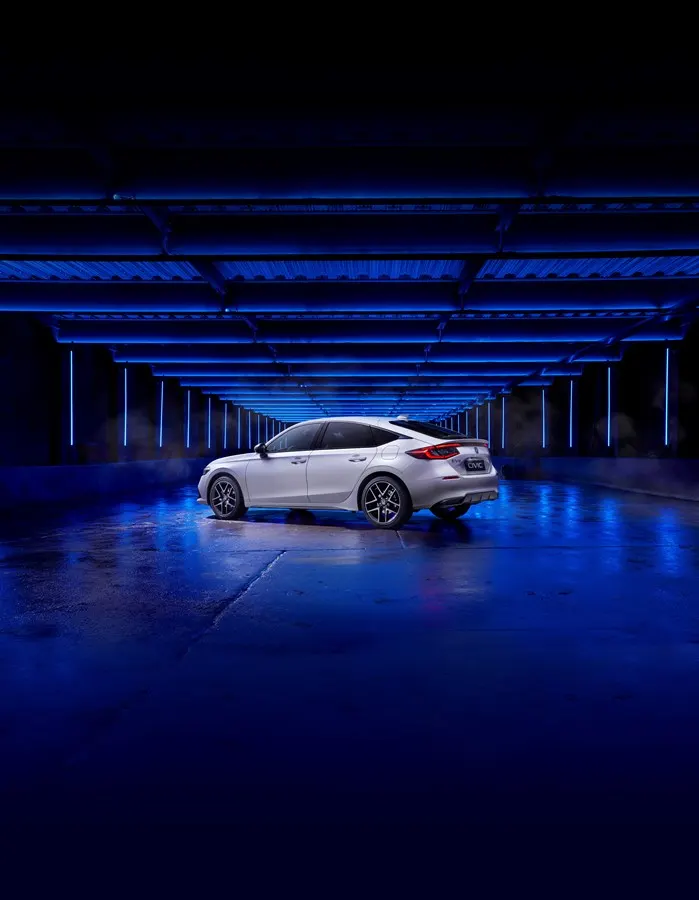
Honda’s proven e:HEV (hybrid electric vehicle) powertrain technology is offered as standard and its application in the Civic, sees the deployment of a new 72-cell lithium-ion battery and two compact, yet powerful electric motors paired with a newly developed 2.0-litre direct-injection, Atkinson-cycle engine. Combined, the powertrain delivers a maximum motor output of 135kW and 315Nm of torque. The latest iteration of the internal combustion engine has several new elements within its architecture to help achieve a thermal efficiency of 41%, one of the highest figures within the automotive industry for a production road car.The two powerful electric motors work together to provide the primary drive force for the all-new Civic. The engine is controlled by a new, compact Power Control unit which now sits under the bonnet with the rest of the powertrain. Sitting under the rear seats is the latest version of our Intelligent Power Unit and whilst smaller and lighter, it benefits from an increased energy density. This system delivers a feeling of instant torque and powerful acceleration whilst still offering outstanding efficiency.
This advanced powertrain is capable of shifting seamlessly between EV, Hybrid and Engine drive with no input from the driver. Four drive modes – Eco, Normal, Sport and a new Individual mode, which allows separate control of the engine, transmission and cluster gauge display, can be selected by the driver to tailor the vehicle response as required.
The all-new Civic also features Honda’s expanded SENSING suite of advanced safety features and driver aids. A new 100-degree front wide-view camera and enhanced recognition technology improve the Civic’s capacity to identify pedestrians, road lines, boundaries, other vehicles including motorcycles and cyclists. For the first time, the all-new Civic is equipped with sonar sensors – four at the front and four at the rear. In addition to improved Collision Mitigation Braking System, Lane Keep Assist and i-ACC technology, Low Speed Braking Control, Blind Spot Information, Cross Traffic Monitor and Traffic Jam Assist are all new additions to the Civic’s comprehensive active safety offering.
Combining a refined, clean exterior design, a premium light and airy interior, advanced safety and convenience technologies and a perfect blend of economy and performance, the all-new Civic e:HEV is the most dynamic, efficient and safest Civic yet.Since its launch in 1972, the Civic has sold more than 27.5 million units across 170 countries. The all-new Civic builds on the success of previous generations and promises to set new class benchmarks when it arrives in Europe from Autumn 2022. Customers can register their interest now on the Honda website.