Mixing efficiency
OBJECTIVE
(A) To compare the mixing effectiveness of hot and cold fluid flow with the help of steady state simulation.
(B) How to post process the result ?
(C) Comparison of K-epsilon and k-omega SST model.
SCOPE
(A) Basic understanding of Fluent Solver.
(B) Importance of Mixing Tee's.
SOFTWARE USED
- ANSYS SPACE CLAIM :- To design the fluid flow problem
- ANSYS MESHING:- Generation of mesh.
- ANSYS FLUENT:- To setup the physics ; solution initialisation and solving the fluid flow problems.
- ANSYS CFD POST:- To document and compare the results
ABSTRACT
Mixing tee's are the devices which are designed to efficiently mix the two streams of flow into a combined stream. These devices generally undergoes thermal fatigue because of the incomplete mixing of the fluid streams which are at different tempratures.Temprature is used to measure the degree of mixing.These are ideal for microbore and analytic grdient HPLC.
PRACTICAL APPLICATIONS OF MIXING TEE
- Waste water treatment plants.
- Mixing of fuel gases in Nuclear power plants.
- Blending of oils in Chemical Industry.
GEOMETRIC DESCRIPTION:-
Hot Inlet Temprature:- 36°c
Cold inlet temrature:- 19°c
We need to perform the simulation for the following cases:-
- Case 1
- Short mixing tee with a hot inlet velocity of 3m/s.
- Momentum ratio of 2, 4.
- Case 2
- Long mixing tee with a hot inlet velocity of 3m/s.
- Momentum ratio of 2, 4.
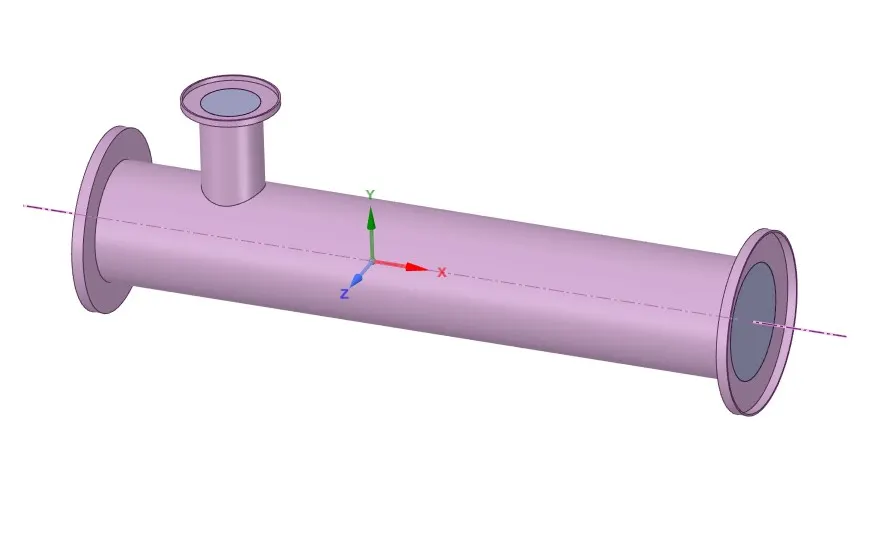
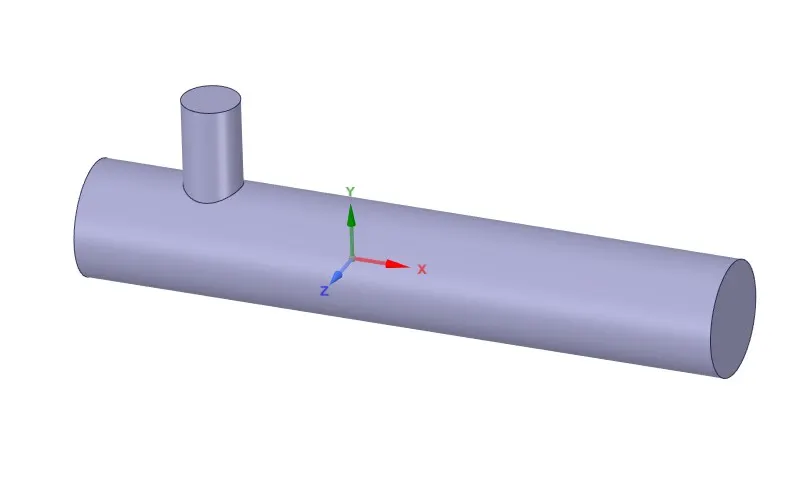
The Geometry model has been provided in the challange . I have used the Design Modeler to extract the fluid volume .
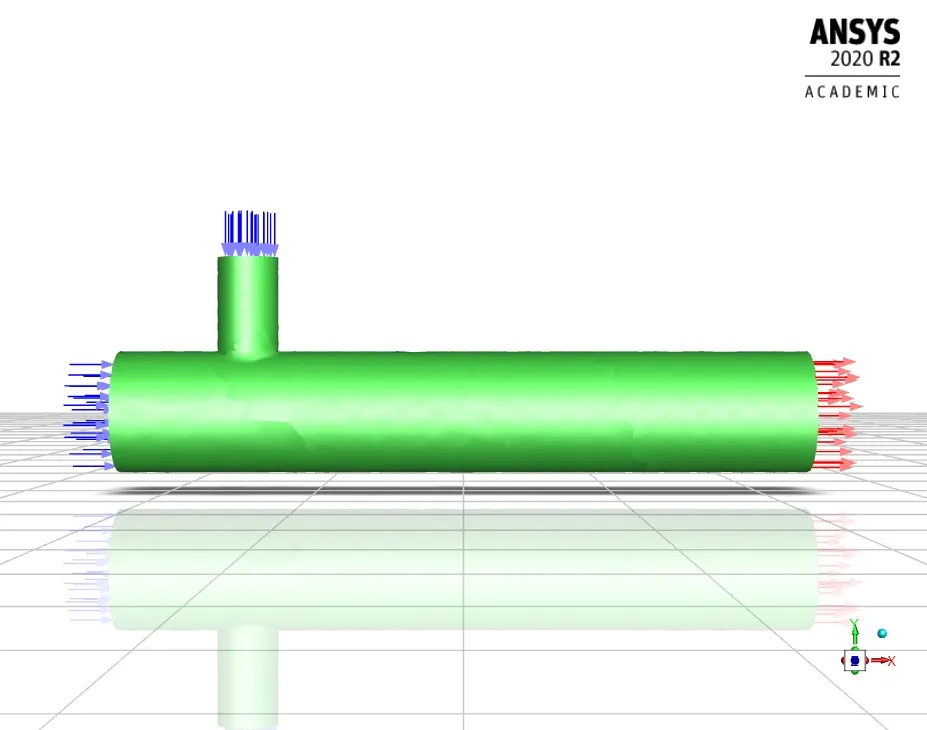
GENERAL REPRESAENTATION OF MODEL
USING SPACE CLAIM:
STEPS:
- IMPORTING DESIGN
- USING PREPARE COMMAND EXTRACTION OF VOLUME
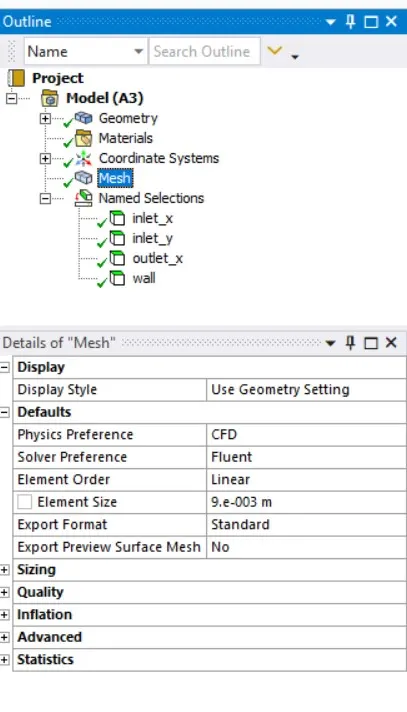
USING ANSYS MESH:
STEPS :
- ELEMENT SIZING
- MESH SELECTION
1 MIXING TEE SHORT
VELOCITY OF HOT INLET = 3 m/s
VELOCITY OF COLD INLET = 6 m/s
Mesh Sizing = 1
Mesh independancy Test
(1 .a )
MESH QULAITY
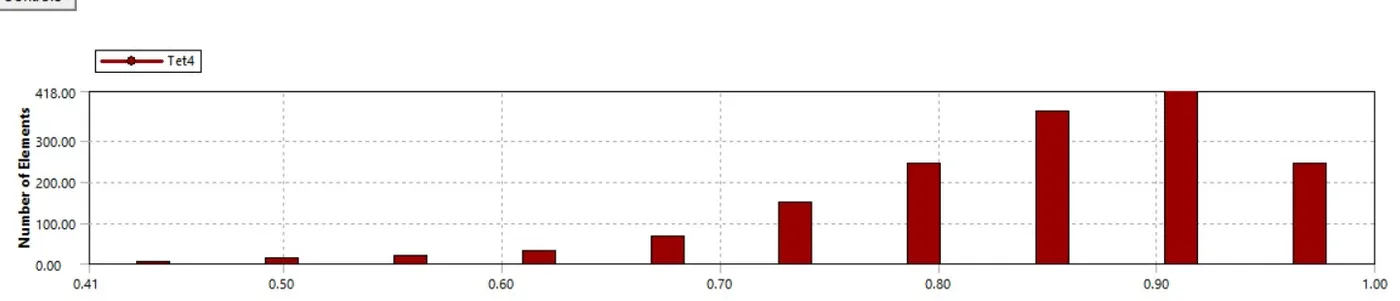
EXPLANATION
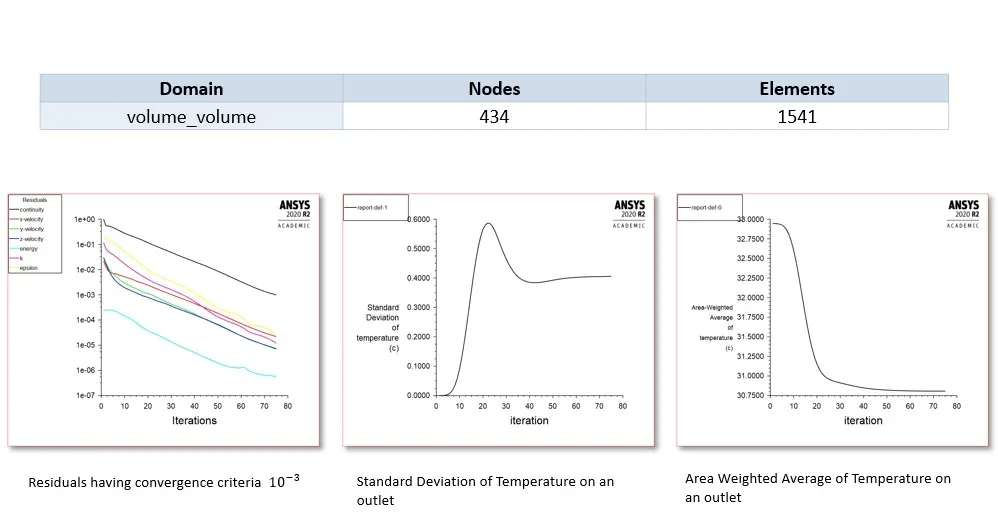
RESULTS
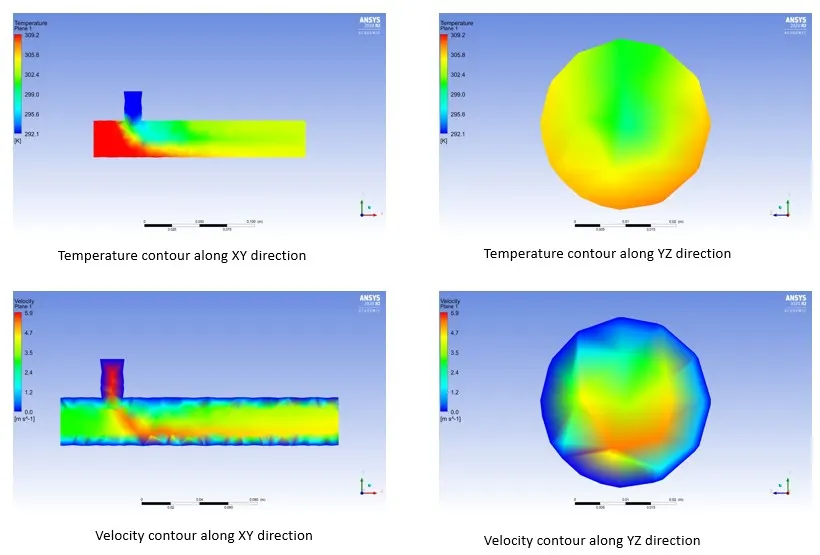
________________________________________________________________________________________________________________________________________________________________________
(1 .b)
- VELOCITY OF HOT INLET = 3 m/s
- VELOCITY OF COLD INLET = 6 m/s
- Mesh Sizing = 9*10^-3
MESH QUALITY
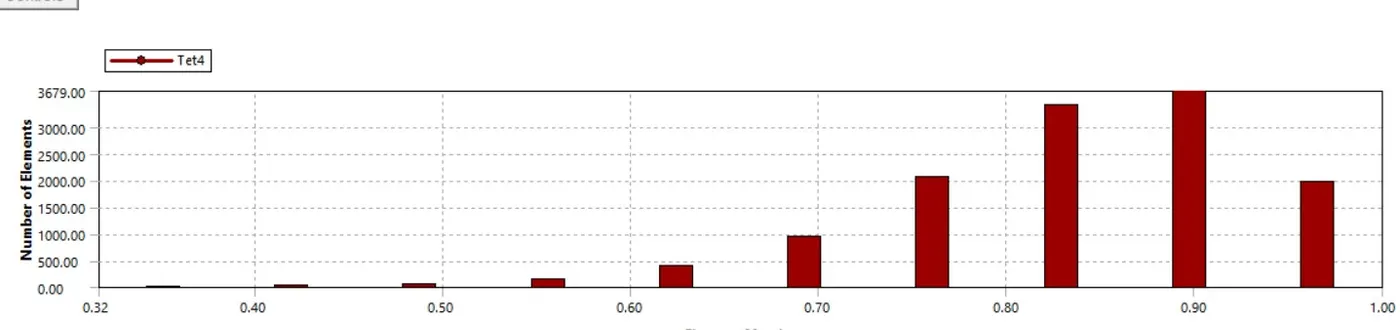
EXPLANATION
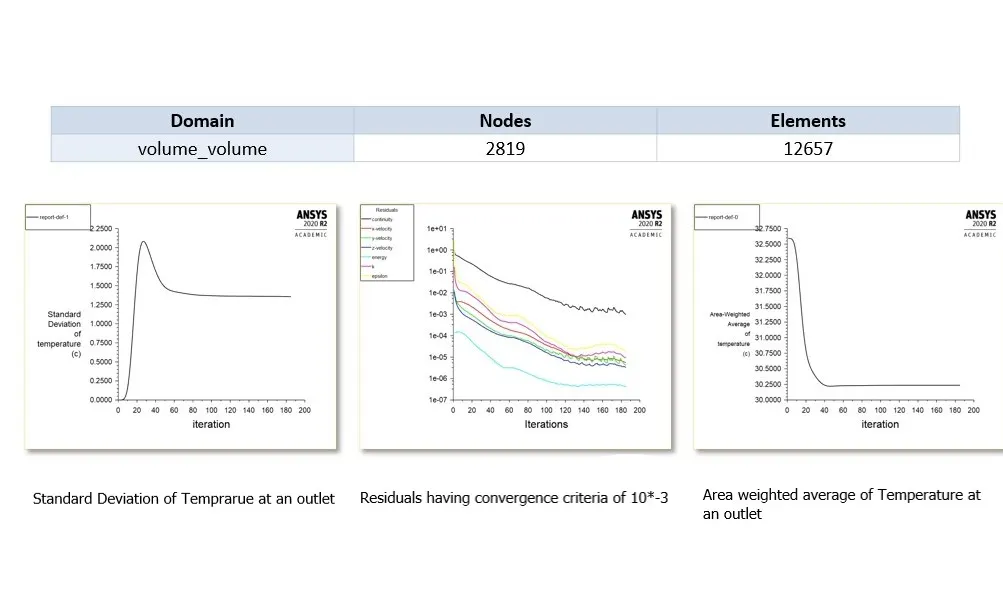
RESULTS
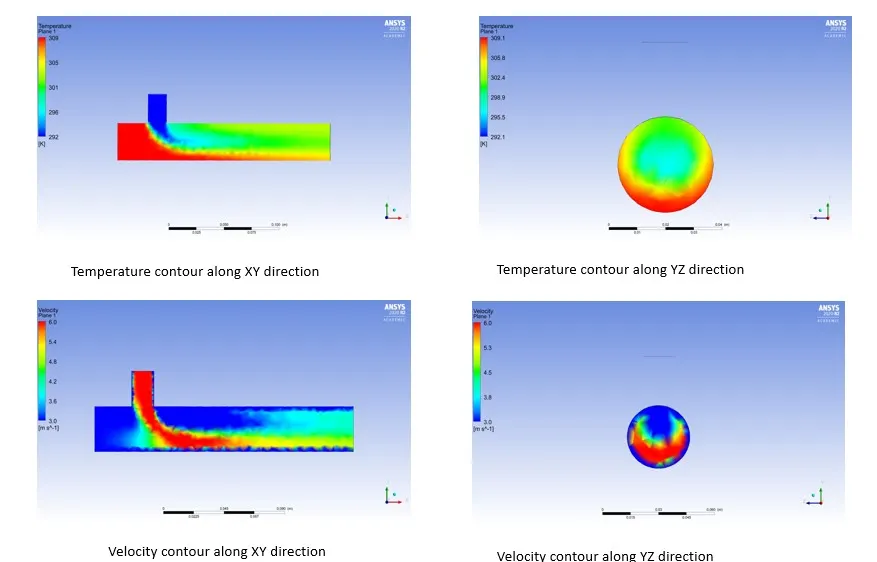
________________________________________________________________________________________________________________________________________________________________________
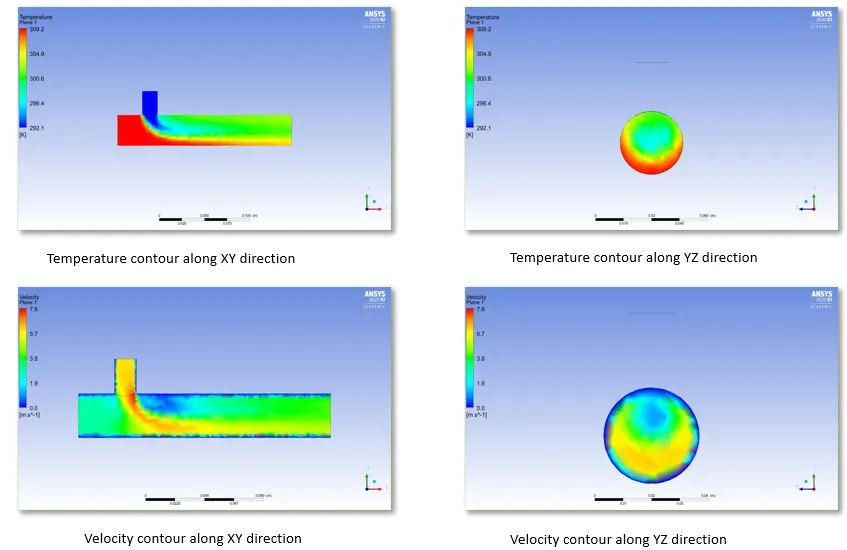
(1.c)
- VELOCITY OF HOT INLET = 3 m/s
- VELOCITY OF COLD INLET = 6 m/s
- Mesh Sizing = 5*10^-3
MESH QUALITY
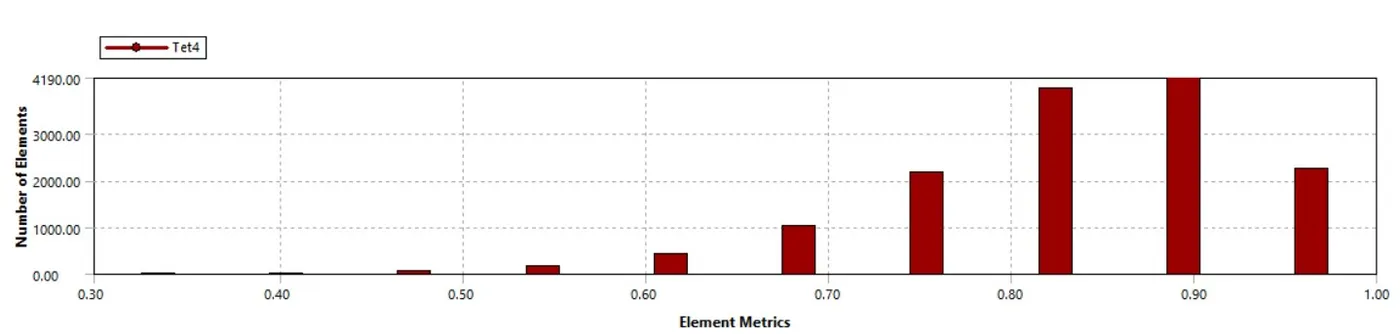
EXPLANATION
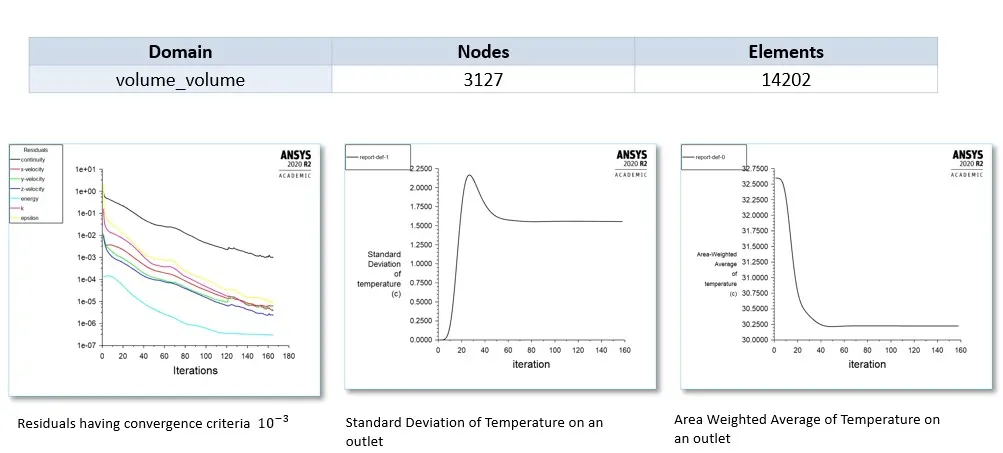
RESULTS
________________________________________________________________________________________________________________________________________________________________________
2
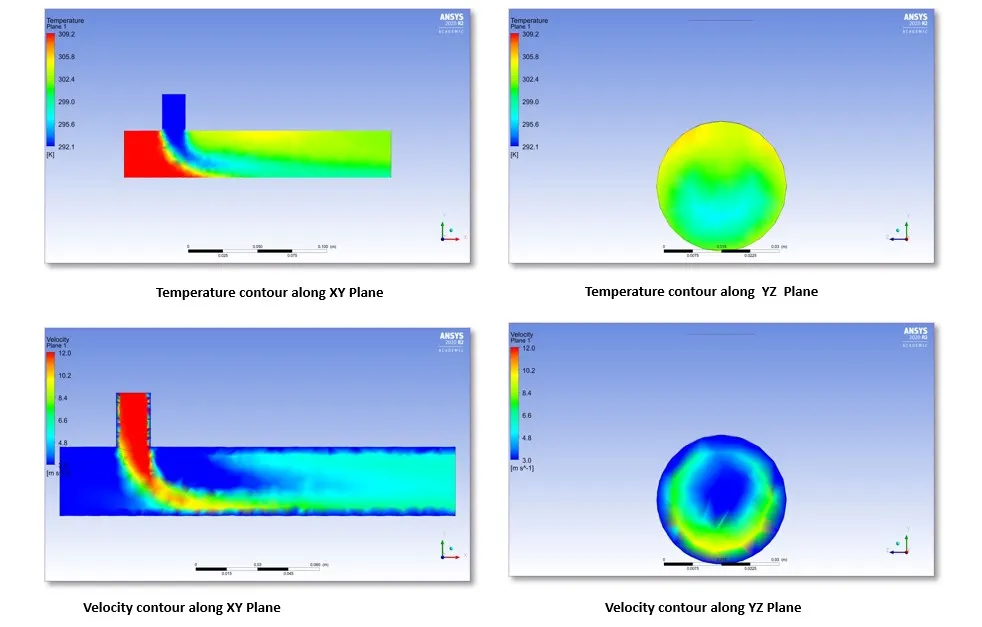
MIXING TEE SHORT
VELOCITY OF HOT INLET = 3 m/s
VELOCITY OF COLD INLET = 12 m/s
Mesh Sizing = 9 *10^-3
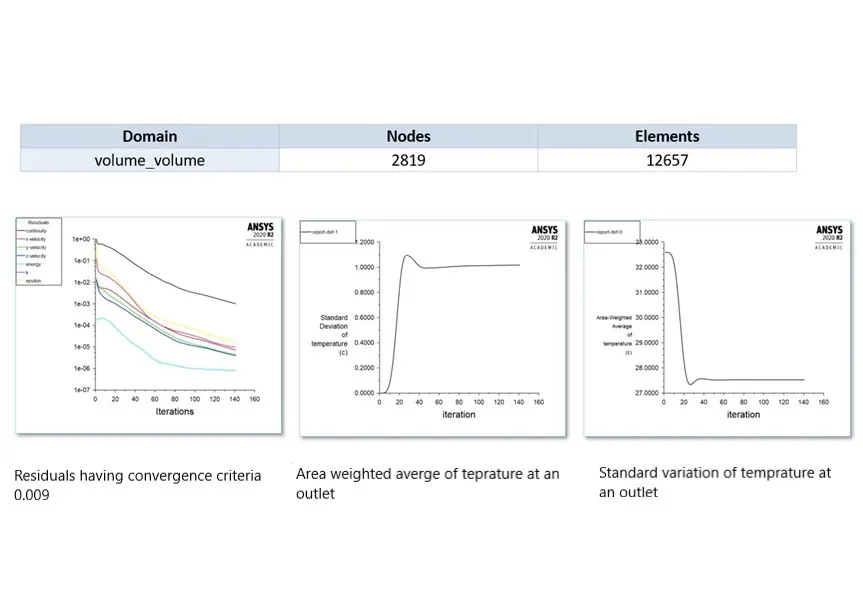
RESULTS
________________________________________________________________________________________________________________________________________________________________________
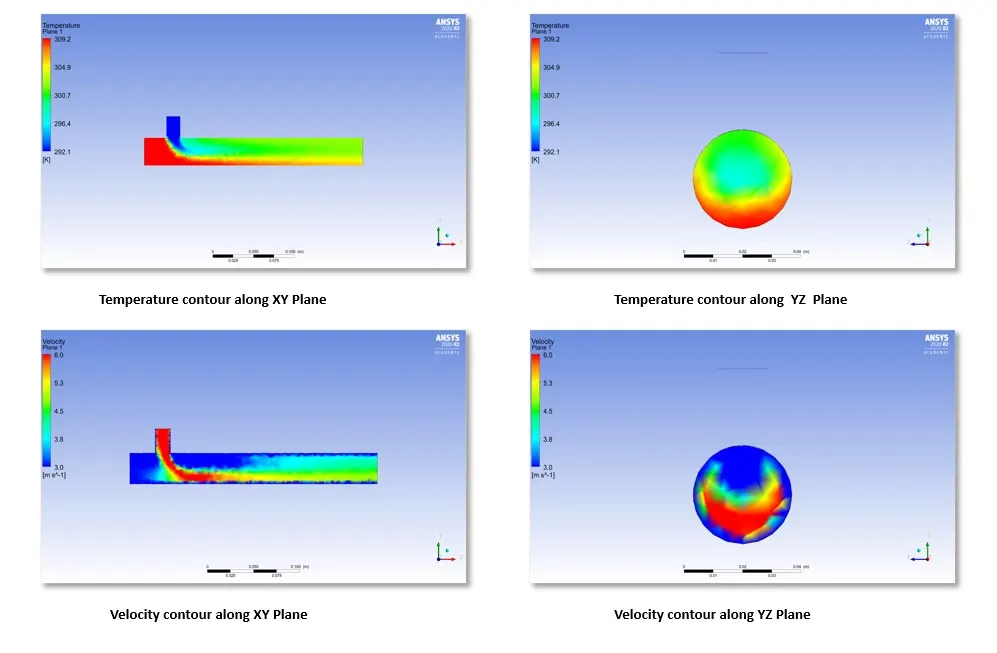
3 MIXING TEE (LONG )
- VELOCITY OF HOT INLET = 3 m/s
- VELOCITY OF COLD INLET = 6 m/s
- Mesh Sizing = 9 *10^-3
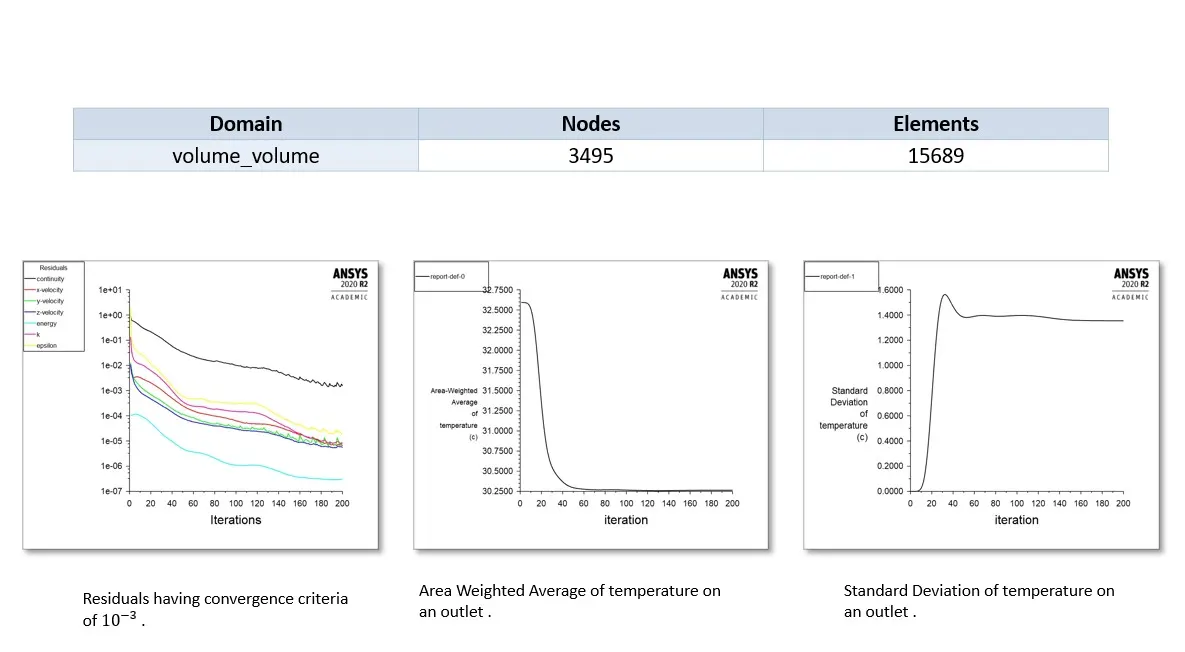
RESULTS
________________________________________________________________________________________________________________________________________________________________________
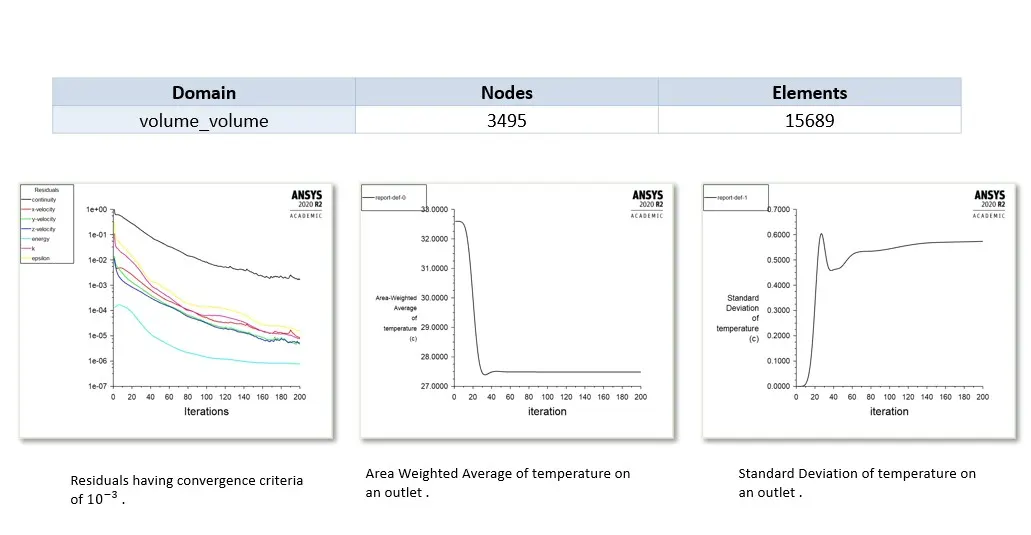
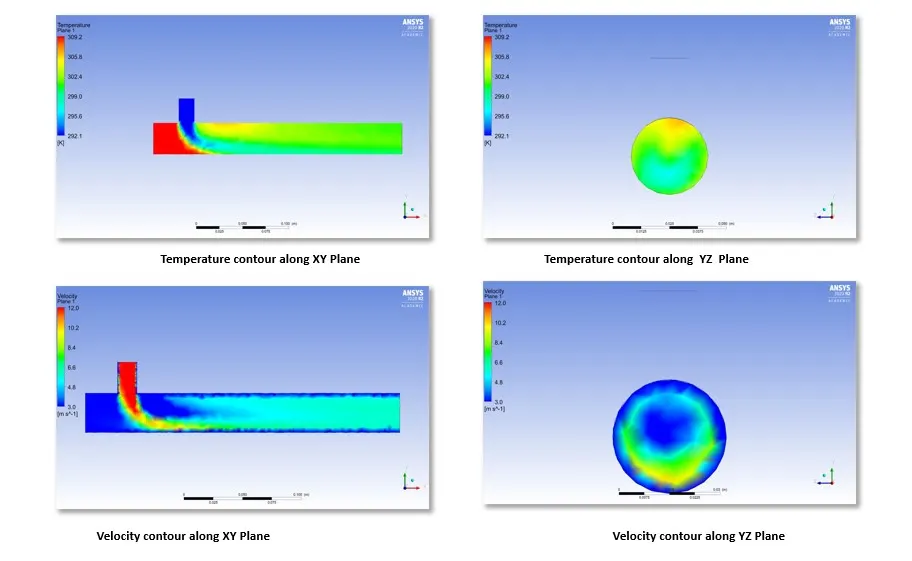
4 MIXING TEE (LONG )
- VELOCITY OF HOT INLET = 3 m/s
- VELOCITY OF COLD INLET = 12 m/s
- Mesh Sizing = 9 *10^-3
RESULTS
- FURTHER EXPLANATION
________________________________________________________________________________________________________________________________________________________________________
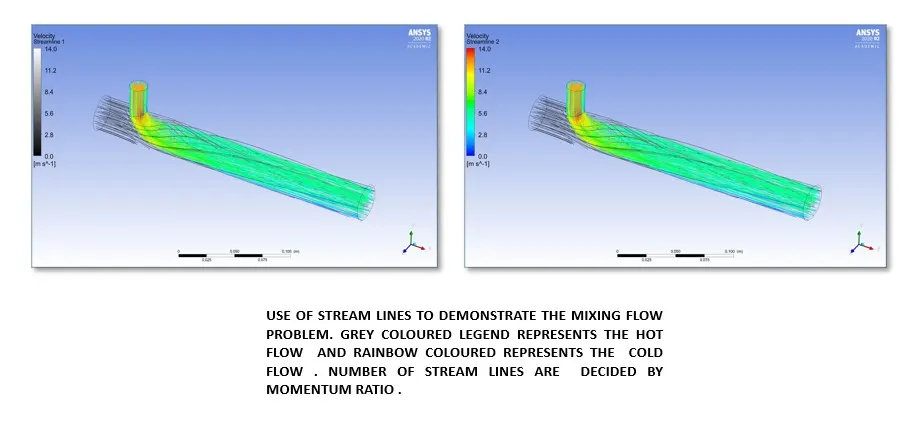
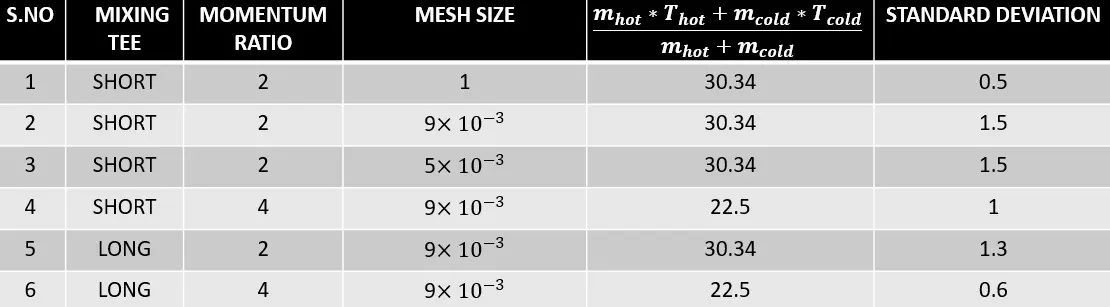
MIXING EFFECTIVENSS
- USING K EPSILON MODEL
________________________________________________________________________________________________________________________________________________________________________
K Epsilon Model vs K omega SST Comparison
I have used the K Epsilon (relizable) model
1)k omega SST & K epsilon relizable dosenot have much of difference .
2)We have to use the blending functions in k omega SST so as to get the better results.
3)Limitations of K-omega include:
- Difficulty of convergence compared to k-epsilon
- Sensitivity to initial conditions
________________________________________________________________________________________________________________________________________________________________________
Conclusions
- With the increase in momentum ratio mixing efficiency increases .
- With the increase of tee length ,mixing efficiency slightly improves but it is not productive to use the same .
- K Epsilon and K omega SST model gives the similar results in each region except at the jet impingement region.
- Momentum ratio is one of the most desirable factor in the mixing tee efficiency.