Meshing Comparison of a sheet metal component using Manual meshing, Batch meshing and casting method in ANSA
MESHING COMPARISON OF A SHEET METAL COMPONENT USING MANUAL MESHING, BATCH MESHING AND CASTING METHOD IN ANSA.
AIM:
The aim is to mesh the component using manual meshing, Batch meshing and casting methods according to the below mentioned quality parameters and to compare the end results of the each method of meshing.
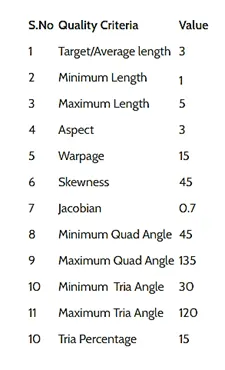
Fig: Quality criteria.
PROCEDURE:
MANUAL MESHING
1. Import the given sheet metal component to ANSA and check for geometrical errors and fix issues if any.
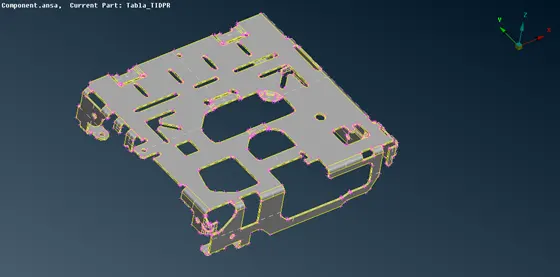
Fig: Imported Model.
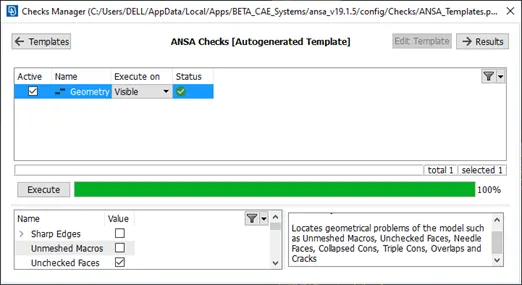
Fig: Geometry Check.
2. Measure the thickness at various locations.
3. Extract the mid surface using offset option, select the face using features and offset 0.5mm.
4. Set PID and assign thickness as 1mm for the extracted mid surface.
5. Check for geometry errors and set perimeter and macro length to 3mm.
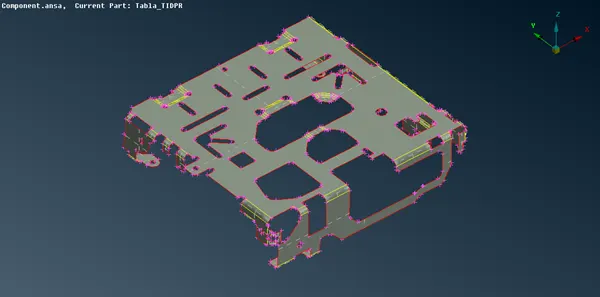
Fig: Extracted Mid surface.
6. Check the perimeter length at sharp corners for minimum length. If it’s below the minimum length then the perimeter must be altered to a permissible level.
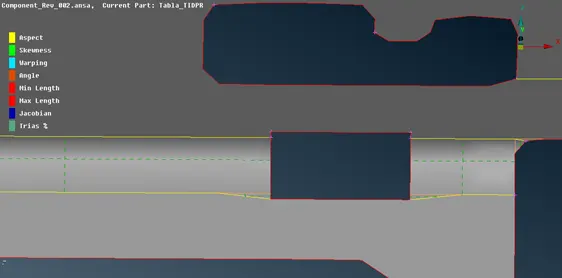
Fig: Altering the perimeter.
7. Ensure the holes were captured with even number of nodes and make sure that the hole edges were parallel to the feature edges if not slide the edges and mark the nodes.
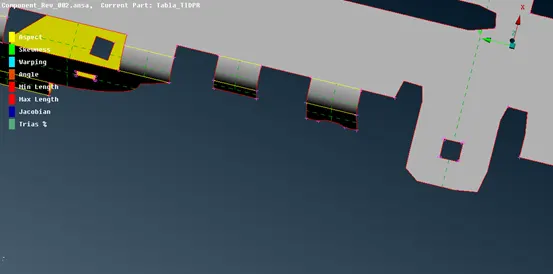
Fig: Aligning of holes.
8. Introduce some cuts so has to obtain the proper mesh flow.
9. Set the mesh parameters and quality parameters as specified.
10. Mesh the model and clear the quality of the elements using mesh improvement tools.
11. Remove the manually introduced cuts using join option.
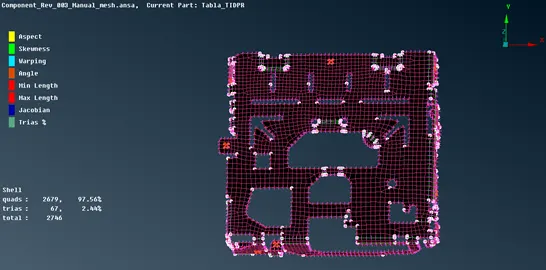
Fig: manually meshed model.
BATCH MESHING.
1. Repeat the above mentioned steps and extract the mid surface using skin option.
2. Open the model browser and set the mid surface as a new part.
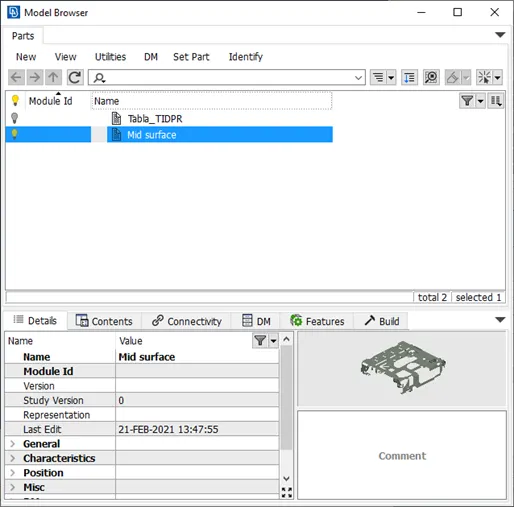
Fig: Model browser.
3. To perform batch mesh open Batch mesh tool, create a new meshing scenario, select the mid surface as content. Select the mesh and quality parameters and run the batch mesh process.
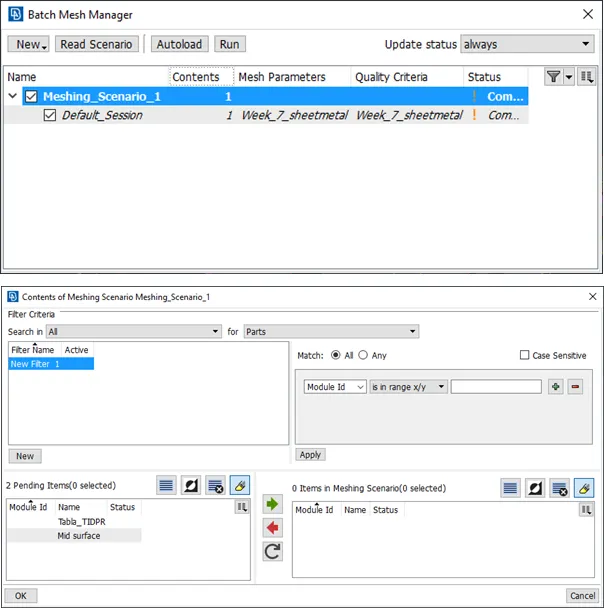
Fig: Batch mesh Manager.
4. The obtained batch mesh has some issues with the feature capturing and mesh flow, so that it need to be corrected manually using mesh improvement tools.
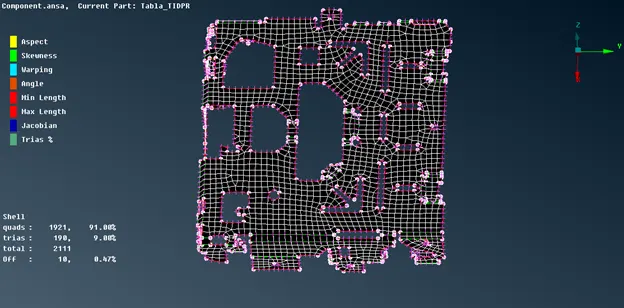
Fig: Batch meshed Model.
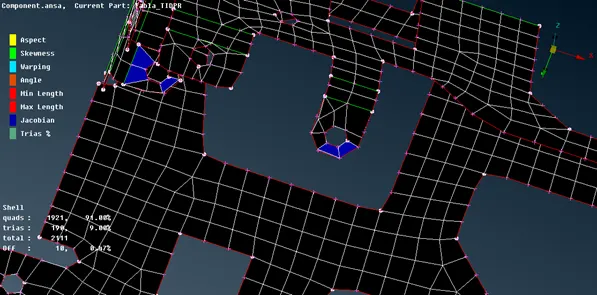
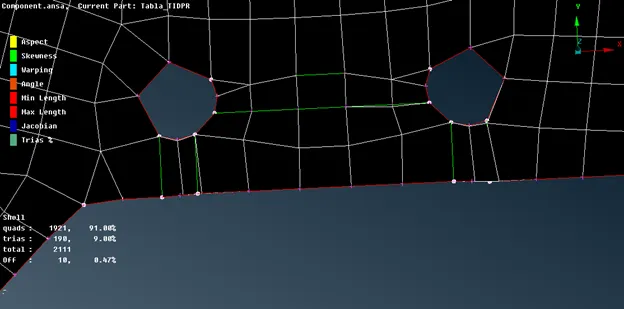
Fig: Batch meshing errors.
CASTING.
1. Casting is the automated mid mesh generation process where mesh is generated directly from the parent geometry without mid surface.
2. Import the geometry and check the geometry for errors and fix if any errors found.
3. Select the mid surface option as casting and enter minimum thickness and target element length values.
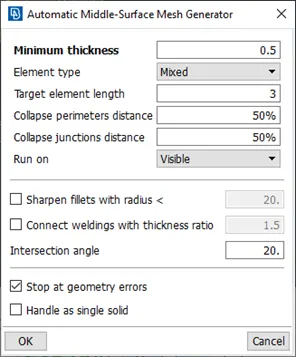
Fig: Casting window.
4. The generated mesh is automatically released and it’s independent of geometry.
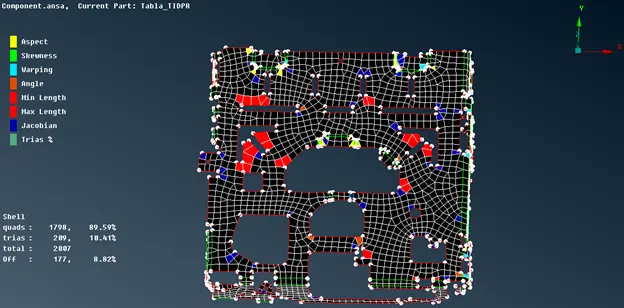
Fig: Mesh obtained by Casting.
5. The obtained mesh has lot of issues with the feature capturing of intricate profiles and mesh flow along with quality criterions.
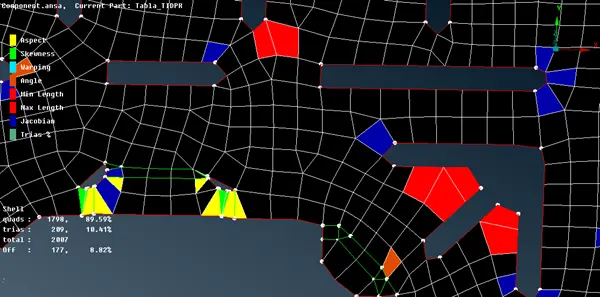
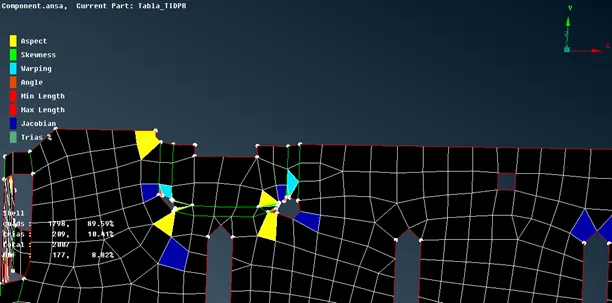
Fig: Casting errors.
6. The issues with the FE must be fixed manually. Additional care must be taken while clearing the quality near to the critical features.
LEARNING OUTCOMES:
1. Preparation of model for the batch meshing and casting.
2. Handling the end results of batch meshing and casting methods.
3. Clearing the quality and improving the mesh flow after batch meshing and casting methods.
4. Selection of ideal process of meshing according to the model.
COMPARISONS:
1. The manual meshing has a good control over mesh flow and feature capturing but a time consuming procedure. (Time taken to mesh - 3 Hrs)
2. Batch meshing gives the satisfactory results for plain surfaces and simple profiles but the complicated profiles can be altered easily. The mesh flow can be enhanced with minimum effort. (Time taken to mesh – 4hrs)
3. The casting gives a rapid mesh generations but handling of elements and mesh for this model consumes more time since the model has more features in it. The mesh modification near to the holes and other complicated profiles will be challenging since FE is independent of CAD. (Time taken to mesh – 5hrs and 30 Mins)
RESULT:
The given sheet metal component was meshed using manual, Batch mesh and Casting methods according to the prescribed quality criteria and the end results were compared.
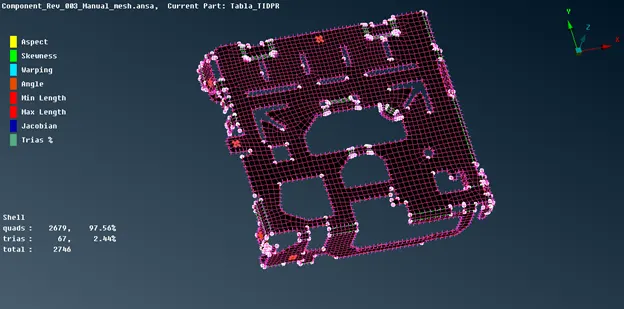
Fig: Final Model – Manual mesh
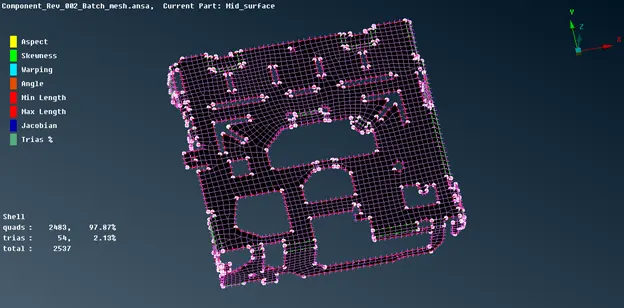
Fig: Final Model – Batch mesh
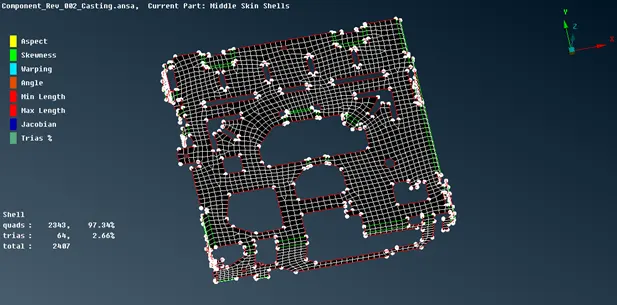
Fig: Final Model - Casting