Introduction to National Building Code and Steps in a Construction project
AIM:
To answer the given questions regarding the building codes for designing a structure.
OBJECTIVE:
In this challenge the aim is to provide answers for the questions asked regarding the building codes.
1)
- Building codes are a set of standards that are uniform to all structures and hence they provide guidelines for designing a structure.
- These codes protects the overall construction as well as public safety.
- The designer constantly refers to these building codes which can enhance their knowledge in this field.
- The codes enable to combine the modern construction methods with standard methods.
- These standards helps the government agencies to approve the plans as it becomes the law of public jurisdiction which is enacted by appropriate authority.
- Provides building standards with the approval of government agencies.
2)
- Group A: Residential buildings
- Group B: Educational buildings
- Group C: Assembly buildings
- Group D: Institutional buildings
- Group E: Mercantile buildings
- Group F: Business buildings
- Group G: Storage buildings
- Group H: Industrial buildings
- Group J: Hazardous buildings
3)
- Initiation- In this step we figure out the objective of the project, determine whether the project is feasible and identify the major deliverables of the project. The major steps are understanding the feasibility, identifying the scope, identify the deleverables, identify project stakeholders and developing a statement of work.
- Planning- Once the project is approved to move forward based on the project initiation document, the next phase is planning. In this stage, the large task is broken down into smaller tasks, build your team and prepare a schedule for the completion of the task. The smaller goals should be created in such a way that each task is achievable within the time frame. The major steps in this phase are creating a project plan, workflow diagram, estimating budgets, gathering resources, anticipating risks.
- Execution- This phase turns plan into action. The job of the project manager is to keep the work on track. The steps are creating work and organizing workflow diagrams, briefing teammembers about the projects, communicating with team members, monitoring quality of work and managing budget.
- Closure- We provide final deleverables and determine the success of the project. Major steps are analyze the project performance, analyze team performance, documenting project closure, conducting post implementation reviews, accounting for used and unused budgets.
4)
- Construction- Managing the civil engineering buildings from beginning to end, which include the coordination between the owner and designers etc..
- Finance and estimating- Accounting, financial contracts and estimating financial activities.
- Contracts and bids- Strong bidding practices and effective contracts are integral.
- Geotechnical- Designing foundation and earth quake systems to support soil and transfer load of structures into the subsoil while limiting settlements.
- Managements- Managing and supplying equipments
- Structural- Designing structural elements used to support loads for a specified public functions such as bridge, dams etc.
- Surveying- To determine horizontal distance and elevations, producing maps
5)
- Group A: Residential buildings
- Group B: Educational buildings
- Group E: Mercantile buildings
- Group E: Mercantile buildings
- Group H: Industrial buildings
6)
Design Team:
- Helps to finalise the plan, coordination of various design inputs
- Design team finalise the plan
- Design is a evolutionary process, hence participation of design team must be ensured
- To ensure proper implementation of the design
Management team:
- Accomplishment of project in accordance with the design and specification in a stipulated time and cost.
- Responsible for the day to day execution, design supervision, quality control, etc.
- Achievement of satisfactory completion of the project.
7) & 8)
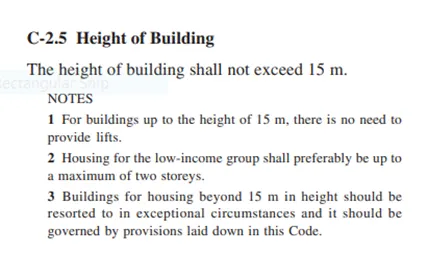
a) Height limitation: As per NBC 2005 clause C-2.5, height of building should not exceed 15m.
The height of my buiding is 7m, which is less than 15m. Hence it follows NBC guidelines.
b) Area limitation:
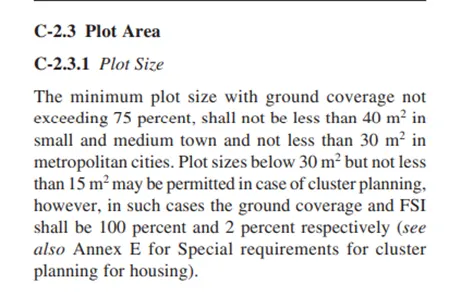
The area occupied by my building is greater than 40 sq. m. Floor area is 190sq.m. Hence it follows NBC guidelines.
c) Room sizing:
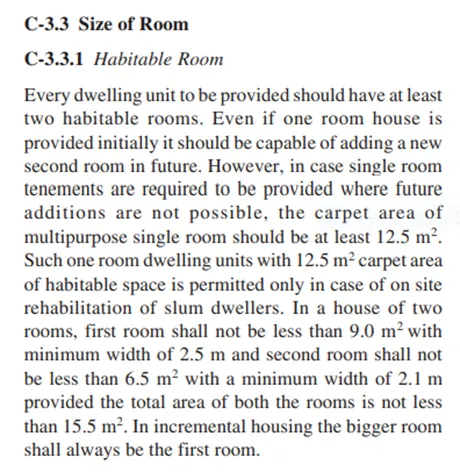
In my model, the number of rooms is 4 and total area of rooms is 150m2, which is greater than the specified value in the code. Hence this follows NBC guidelines.
d) Wall height: Clause F-3.4:
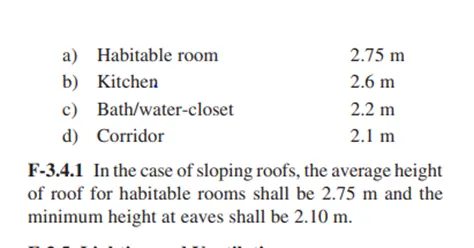
In my model the height of walls is 3m, grater than the minimum value specified. So it follows NBC.
e) Thickness based on fire and safety:
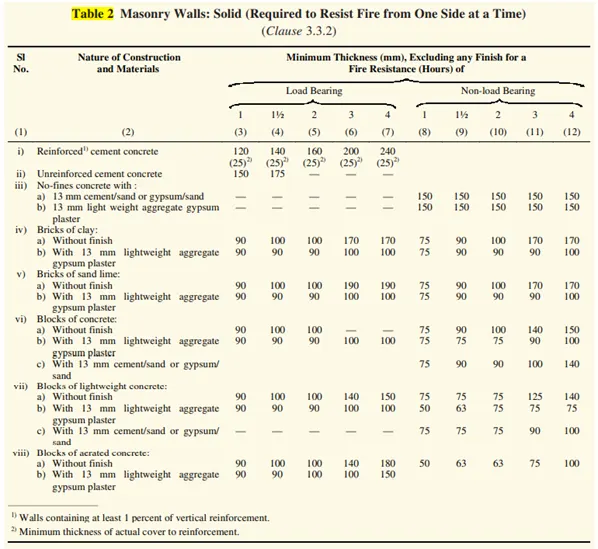
In my model, the wall thickness is 203mm, so it is safe.
f) Passageway requirements:
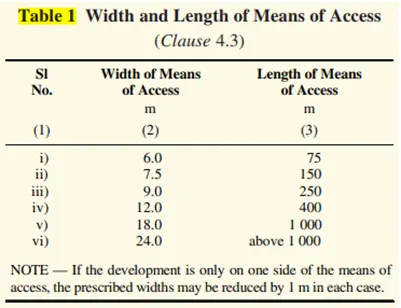
The model satisfies the values.
CONCLUSION:
All the answers have been provided.