Identification of Cracks
- What is the mode of failure or damage of the beams in the figures below? Are the damages repairable? Elaborate.
a).
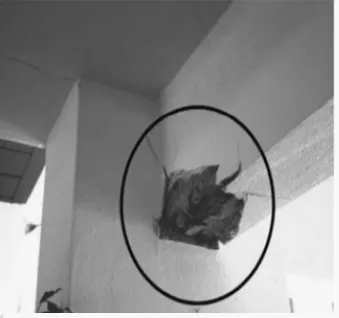
This crack is formed at the beam-column joint due to the Flexural failure of the beam. Flexural strength, also known as modulus of rupture, or bend strength, or transverse rupture strength is a material property, defined as the stress in a material just before it yields in a flexure test. This flexural strength represents the highest stress experienced within the material at its moment of rupture. It is measured in terms of stress and represented by sigma. To overcome this failure the main steel main steel is incorporated at the bottom/top.
This damage is repairable.
It is caused also due to improper vibration or by not providing sufficient cover.
b).
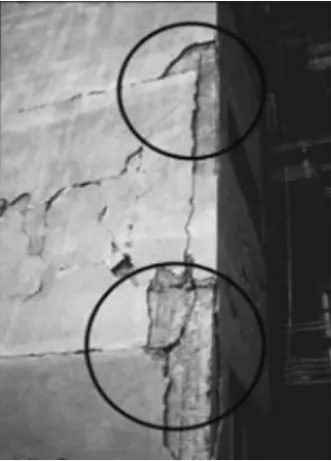
This type of failure is occurred due to the usage of concrete having a high slump.
This type of failure can be repairable by using concrete having less slump value. We can also use high slump concrete when we control all these failures by adding admixtures like superplasticizers or by using air-entrained concrete also.
c).
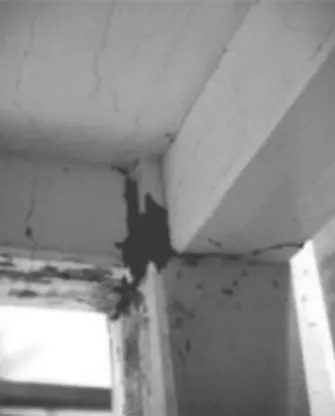
This type of failure occurs due to the beam joint failure. This failure occurs due to the shear only when the column and beam design is not done properly. This can be repaired for short time only in a long run it may lead to the worst failure in the structure.
2). What is the mode of failure or damage of the beams in the figure below? Are the damages repairable? Elaborate
a).
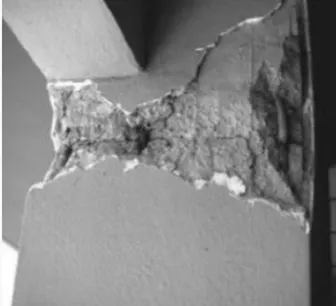
This failure is due to buckling. Generally, the buckling will occur at the place where the bending moment is maximum and shear force is zero.
We can reduce this type of failure by the reinforcement in such a way that the lapping in column reinforcement does not meet at a single point.
b).
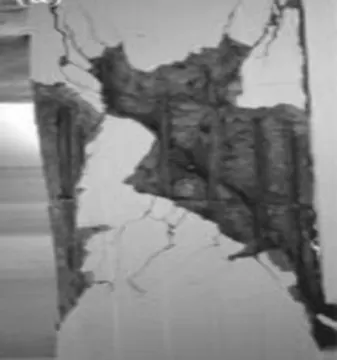
This type of failure occurs due to the shear. Generally, the lateral loads are occurred due to wind or earthquake. These loads are carried by shear walls as well as columns. If there are no shear walls then the column should carry these loads. So then this type of failure will occur due to the heavy loading. This can be reduced by providing shear links to the columns, or by increasing the size of the column in the direction of shear to increase the shear capacity.
c).
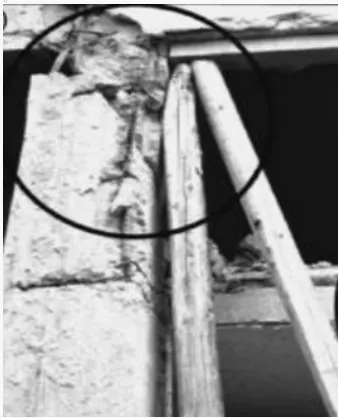
This type of failure occurs due to the short column. Short columns fail by crushing at very high-stress levels that are above the elastic limit of the column material. Short columns possess high stiffness that attracts most of the force acting on the building. This type of failure can be reduced by reducing the openings in the wall.