Identification of Cracks
Question 1:
What is the mode of failure or damage of the beams in the figure above? Are the damages repairable? Elaborate
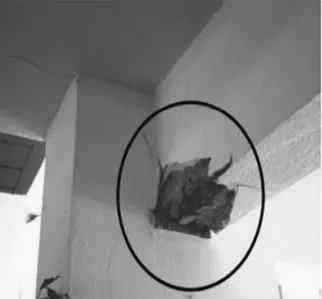
A) Observation
- As we can see concrete has curshed and we can see the reinforcement.
- This is usually a sign of rupture where concrete spall beyond the reinforcement.
- The top of the beam looks safe becouse of flange advantage of the slab.
- If the crack devolop from the bottom till top means rebar yielding occuresin support bottom only.
ans)
- Reversal stress occure in the beam during the earthquick its a form of flexural failure.
- In the event of reversal stress the top of the beam goes compression and the bottom of the beam in tension.
- we can undestand becouse of the salb advantage top is safe and the reinforcement in the bottom is not satisfied.
- It can be repalced by the reinforcement becouse of the yield.
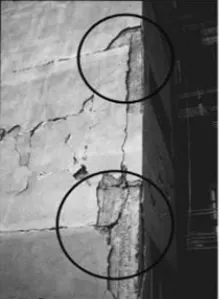
B) Observation:
- We can see that there is a cracks in corner of the beams and the column.
- As it looks wider cracks seemed to be devoloped through the structure.
- The colums and the beam joints looks to be seperated.
- Concrete is not severely crushed.
Ans)
- We can understand that there is insufficient reinforcemt in the joints it is beam pullout failure.
- In the event of earthquick is could make it more worst were beam and the column can be totally seprated.
- We cant provide any ancharage lenghts bar now becouse of the existing concrete. Its not repairable.
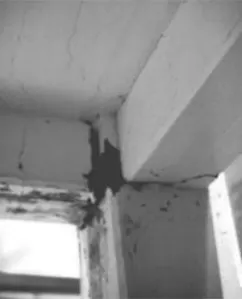
C) Observation:
- There are extreme cracks at the joints of beams and the column.
- Now the crack on the beam can be extended either side.
- Even the slab devolp the crack along the beam with direction.
Ans)
- It is called as plastic hinge failure.
- At the begining damage occure in the joints of the beams and the columns.
- The damage occured becouse load is in the lateral direction and the stress is completly opposite direction.
- Even the slab is designed for the tension if the cracks are devoleped in the slab it cant control the damage any more.
- It can be strengthened.
Question 2:
What is the mode of failure or damage of the beams in the figure above? Are the damages repairable? Elaborate
a) 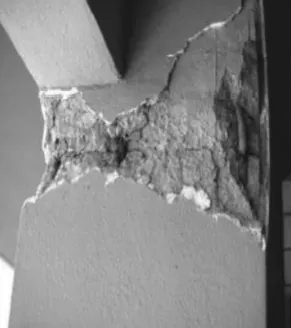
Observation:
- We can see that tht damage in the concrete has occured in the top of the column.
- The damage of the concrete is all arounfd the face if the column.
- Ther is no damage in the beams.
- Column looks like its at the edge of the bulding.
- There are no wall around the columns so we can say that it is in the ground floor.
Ans)
- The Hinge form on the top of the grounf becouse there is no infill wall accross the column.
- As concrete crush is devoloped we can either replace it or we may not.
- It is a soft story failure. Tecnically it is plastic hinge formation.
b) 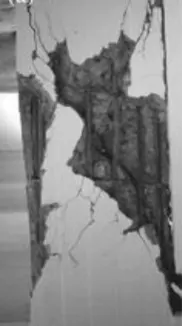
Observation:
- We can see the concrete is completly breaken down completly.
- There is itact of logitudianl reinforcement.
- The spacing in the reinforcement looks wider.
Ans)
- It is a pure shear failure.
- Becouse of less shear reinforcement the concrete takes all the shear stress.
c) 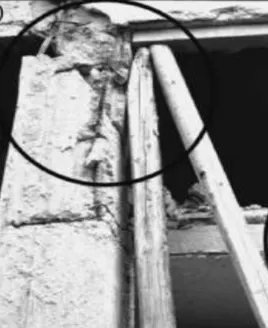
Observation:
- We can see that there is complete failure in column.
- The failure accured only on the top of the column.
- We can see the two slabs one is at the center and ine is at the top of the column.
- The wooden pile in the picture are for the post failure of the coulm for the temporay support to avoid collapse.
Ans)
- It is a short column failure.
- The intermediate slab or the beam in the colum causes this effect.
- These lead to be failure becouse the connections are unintensionalm are not been accounted while the design.
- This kind of failure can be repaired.