Identification of Cracks
1a- 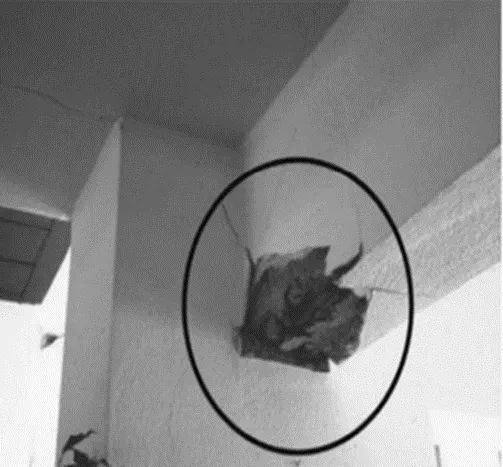
Observations-
- The concrete on the beam is crushed and the reinforcement is exposed.
- The damage occurs at the end and bottom of the beam.
- Top of the beam looks safe due to flange advantage from slab.
- The cracks occurs from the bottom to top which means yielding of bars occurs at the bottom.
Answer-
- Flexural failure occurs due to the reverse of stress during earthquake,
- Here the top experienced tension and bottom experienced compression.
- The top compression was managed by the slab concrete but the bottom tension could not be managed by the reinforcement provided.
- Since the reinforcement is yielded the structure cannot be repaired.
1b- 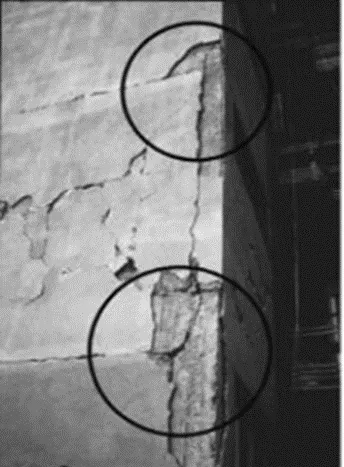
Observations-
- Cracks occurs along the beam-column edge.
- Concrete looks cracked but not crushed.
- Cracks appeared to have developed through the structure as it looks much wider.
Answer-
- Beam pull out failure due to insufficient development length has occurred here.
- Since providing the anchorage length or development length is very hard in an already existing structure, this looks like not repairable.
1c-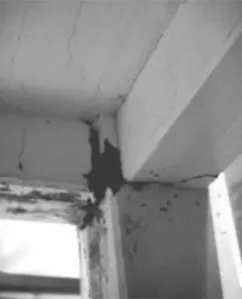
Observation-
- Cracks appear at the joint of the beam-column.
- Cracks have developed through the entire width of the beam.
- Cracks have also occurred in the direction of the beam in slab
Answer-
- Since the failure occurs at the joints of the beam-column this could be plastic hinge failure.
- This occurs due to cyclic lateral loading and stress reversal at the joints.
- The slab provided some strength to manage the failure by undergoing tension but failed since some cracks are developed.
- The structure can be strengthened therefore it is repairable.
2a-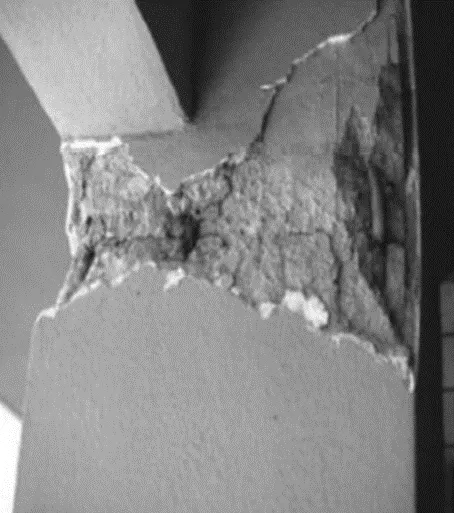
Observation-
- Failure occurs at the top of the column.
- Concrete seems to be crushed and the whole face of the column is damaged.
- Beam seems fine.
- No wall means either ground floor, basement level, parking space.
Answer-
- Since it is at bottom It could be soft storey failure or plastic hinge failure.
- Since there are no in fill walls during lateral movement plastic hinge occurs at the top of the ground storey columns.
- Based on the development of the crushed concrete it can be determined whether the structure is repairable or not.
2b-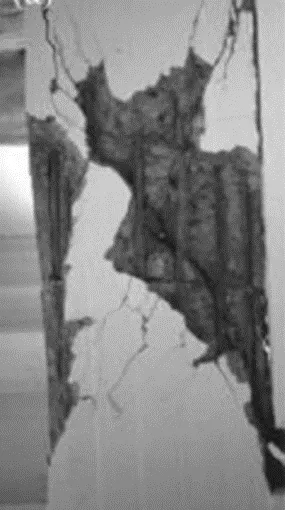
Observations-
- Concrete appears to be severely damaged.
- Although the longitudinal reinforcements seem intact, but the shear reinforcement spacing is very wide.
Answer-
- It is a pure shear failure.
- the failure occurred due to providing inadequate reinforcement to the structure.
2c-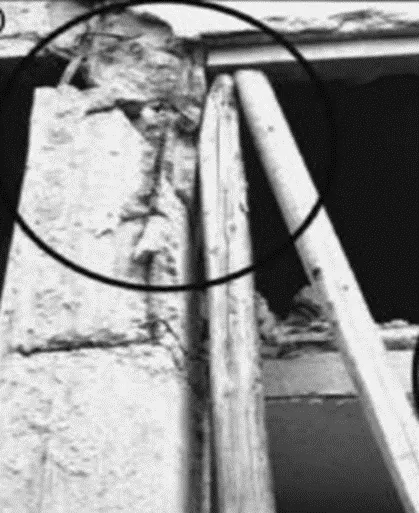
Observations-
- columns is completely failed.
- Columns also seem detached to the beam.
- Two slabs are attached to the column one at top and one in mid columns and both are detached as cracks can also be observed in mid column.
- The wooden pile are post failure support system for the beam.
Answer-
- It looks like a short column failure.
- The addition of the beam or slab at middle may be the cause.
- The addition of the beam or slabs leads to unintentional loads which are not accounted for in the design and can lead to failure.
- The column looks severely damages and cannot be repaired.