Identification of Cracks
1)What is the mode of failure or damage of the beams in the figure above? Would you characterize the case as damage or as a failure? Are the damages repairable? Elaborate
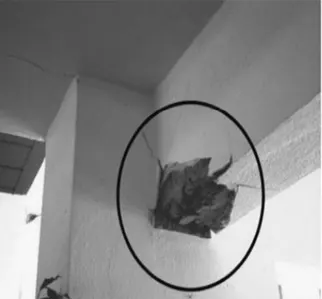
1a)It is developed due flexural failure andconfining reinforcement failure
Flexural damage is mostly associated with cracking and spalling of concrete and yielding of the reinforcement. By contrast, flexural failure comes with disintegration of concrete beyond the cover. often with buckling of bars.the link between horizontal and vertical structural elements, are directly involved in the transfer of seismic forces.
It may also be caused due to insufficient vibration of concrete as there will be hinderence of the reinforcement while vibration. it can be repairable.
The repair can be done by providing proper cover and reinforcement at the joint.
1b)
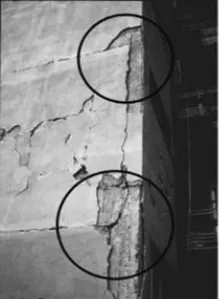
b)Failure due to insufficient bond strength and improper curing.
the beam cannot develop its full moment resistance at the end section and the force resistance and stiffness of the frame it belongs to drops accordingly. The loss of beam anchorage prevents a proper plastic hinge from forming at the ends of beams.These types of column failure can be avoided if attended with much care. Cavities inside the column that were not filled properly with construction ground reduce the compressive area of the column. As a result itaxial capacity will be reduced.
The damage is reparable, although the original deficiency, namely the poor anchorage of beam bars in the joint, cannot be corrected easily
1c)

failure due to beam-column joint connection in the reinforced concrete frame .
In the strong column-weak beam design, beams are expected to form plastic hinges at their ends and develop flexural overstrength beyond the design strength. The high internal forces developed at plastic hinges cause critical bond conditions in the longitudinal reinforcing bars passing through the joint and also impose high shear demand in the joint core. The bond performance of the bars anchored in a joint affects the shear resisting mechanism to a significant extent the joint was not intended to become the weak link between the four components. Such elements are usually subjected to very high shear forces during seismic activity, and if inadequately reinforced, result in an excessive loss in strength and stiffness of the frame, and even collapse.
2a)
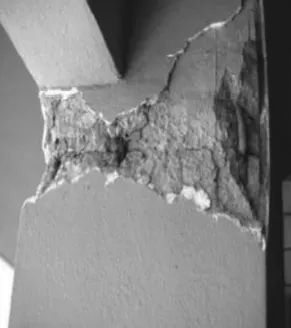
failure is mainly due to the flexural damage.
The flexural forces from the beams and columns cause tension or compression forces in the longitudinal reinforcements passing through the joint. During plastic hingeformation, relatively large tensile forces are transferred through bond. When the longitudinal bars at the joint face are stressed beyond yield splitting cracks areinitiated along the bar at the joint face which is referred to as yield penetration. Adequate development length for the longitudinal bar is to be ensured within the joint taking yield penetration into consideration. Therefore, the bond requirement has adirect implication on the sizes of the beams and columns framing into the joint.
2b)
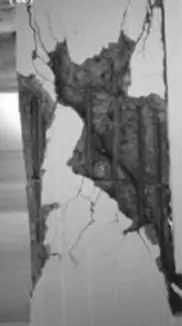
it is developed due the failure of shear in coloums
This type of failure occurs due to large horizontal loads like wind load and seismic loads like earthquake loads. This type of failure can be avoided by providing the proper shear links and shear connectors and also increasing the size of the column in the direction ofthe shear which increases the shear capacity.
it is difficult to repair .
2c)
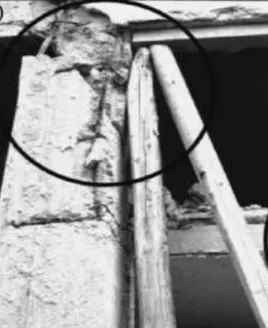
it is due to short coloumn long beam effect.
the column is classified as short column if its slenderness ratio is less than 3. Slenderness ration is the ratio of effective length to least lateral dimension. this type of failure is avoided by providing intermediate column instead of short column that is having slenderness ratio 3 to 12 and also by providing high characteristic compressive strength concrete and high yield steelreinforcement.suppose there are two columns,one of them is short. according to the calculations it is concluded that short columns long columns, because of which they are more stiffer coattract more forces, which may lead to failure of structure. therefore in order to save the structure,short columns should be designed cons the desired force it should withstand.