Hood design-Week 2
Aim
To Design Hood Outer Panel, Inner Panel and the necessary reinforcements by following the Master Section mentioned with the design parameters.
Objective
- To design the hood outer and inner panel and the necessary reinforcements by following the master section.
- To submit an Assembly of hood inner panel, outer panel, latch, hinge and the reinforcements.
- To write a detailed report about the hood design which includes a detailed explanation about hood and its components, latch trajectory, mastic data, emboss definitions, manufacturing process like deep-drawing and hemming, and all the parameters followed in the design.
Hood
Introduction
The hood of a vehicle is the metal panel that covers the engine. It is usually located at the front of the car, and it opens to provide access to the engine compartment. The hood is an important safety feature, as it helps to protect passengers from being injured by the engine in the event of a collision. In addition, the hood can also help to cool the engine by deflecting heat away from the cabin. For these reasons, it is important to ensure that the hood is in good condition and properly secured before driving. Not only does the car’s hood protect the engine from the elements, but it also helps to improve the car’s aerodynamics. But perhaps the most important use for the hood is as a safety feature. In the event of a collision, the hood can help to absorb some impacts and reduce the risk of serious injury. As a result, it is essential to keep the hood in good condition and to replace it if it is damaged. Hood are typically made out of steel or aluminium,although aftermarket manufacturers may manufacture hoods out of fiber glass, carbon fiber, or dry carbon. The hood serve as a great deal of purpose in protecting the passengers inside the car and the pedestrains in the event of an accident.
Components of Hood Assembly
The components of hood assembly are :
- Hood outer panel - It is the styling metal cover mounted on hood inner panel
- Hood inner panel - The inner panel provides the strength to the hood
- Hinges - Hinges are used to for opening or closing the hood
- Striker - It is used for locking the hood in closed position
Mastic data
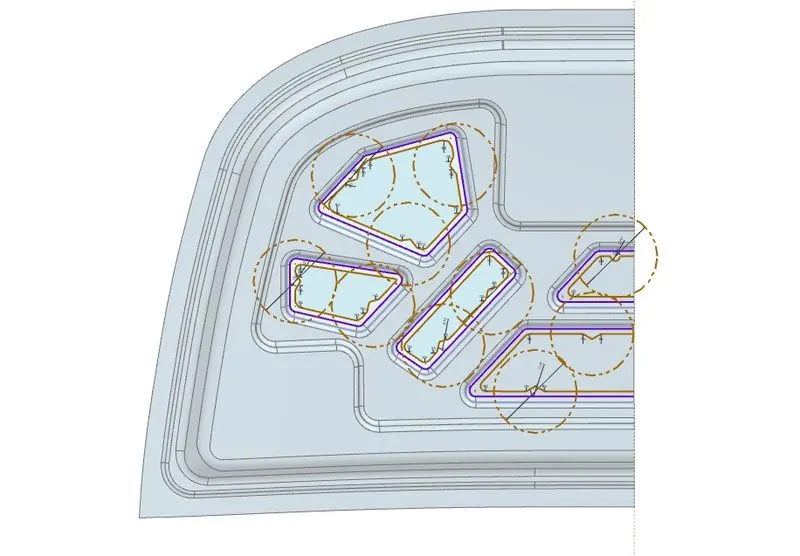
Mastic is a form of sealant or adhesive used to fill the joints or as a bond for different materials and gaps. It is an elastic and flexible material used to create a durable bond between two different surfaces or to protect a particular surface. It is applied between the hood outer and inner panel.The main purpose of adding the sealant is to avoid the NVH issues as well as providing good aesthetic look to the outer panel. Mastic sealant is an all-purpose sealant used on a wide range of materials like aluminum, glass, marble, wood, plastics, ceramic, steel, etc. They are corrosion, temperature, water, and UV-resistant. If the assembly of inner panel and outer panel is done by welding process, it may results some spots or projections on the outer panel. So the manufacturer will not consider it. Also by directly joining the outer and inner panel, it generates some sound when vehicle is in motion resulting in NVH issues.So in order to overcome this issues a mastic sealant is applied between the gap of outer panel and inner panel because it behaves like a rubber which restricts the sound as well as providing good deforming. Initially it is in form of glue,but after the treatment in hot furnace it gets hardened and provides strength between both panels.Each spot of mastic sealant can cover and give a strength upto 80mm area diameter.
Deep Drawing
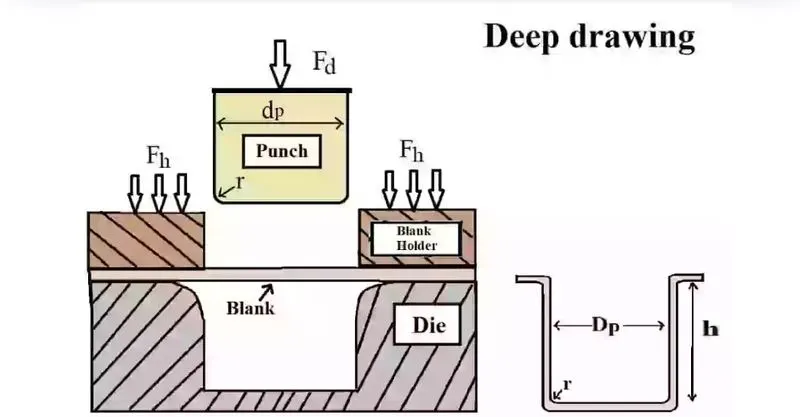
Deep drawing (in the context of sheet metal forming) is the process by which a flat sheet of steel is transformed into a deep (often complex) shape, whereby the flat sheet is “drawn in” from the edges and “sucked in” to create a deep shape that otherwise may not be possible using normal metal forming techniques. So basically deep drawing is the process of converting blank of sheet metal into a cylindrical containers with a flat or hemispherical base. It is combination of metal forming process & sheet metal process. It basically consists of die, punch, blank holders. After the application of drawing force, the blank of material forms & takes shape of the punch or shape made onto the punch. To avoid frictional resistance between blank & die, the lubricant is used.
Embossing
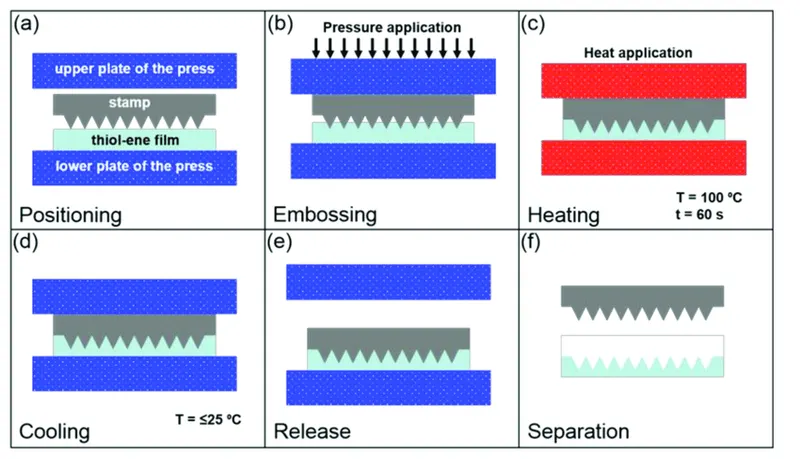
Embossing is a stamping process for producing raised or sunken designs or relief in sheet metal. This process can be made by means of matched male and female roller dies, or by passing sheet or a strip of metal between rolls of the desired pattern, theoretically with no change in metal thickness, or by passing sheet or a strip of metal between rolls of the desired pattern. Metal sheet is drawn through the male and female roller dies producing a pattern or design on the metal sheet. Depending on the roller dies used, different patterns can be produced on the metal sheet.
Hemming Process
Hemming is a sheet metal forming process in which sheets are joined by bending it usually to 180°. Automotive body panels and automotive parts such as deck-lids, trunk-lids, doors, hoods and tailgates are formed by hemming process.
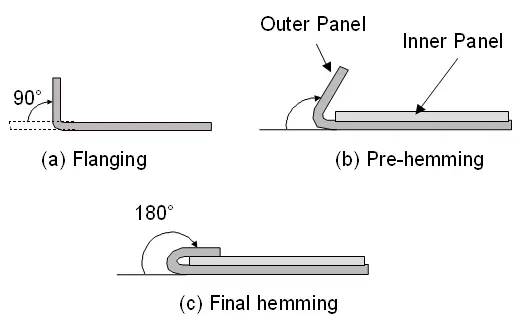
Hemming is a forming operation in which the edges of the sheet are folded or folded over another part in order to achieve a tight fit. Normally hemming operations are used to connect parts together, to improve the appearance of a part and to reinforce part edges.In car part production, hemming is used in assembly as a secondary operation after deep drawing, trimming and flanging operations to join two sheet metal parts (outer and inner) together. Typical parts for this type of assembly are hoods, doors, trunk lids and fenders. The accuracy of the hemming operation is very important since it affects the appearance of the surface and surface quality. Material deformations, which occur during the hemming process, can lead to dimensional variations and other defects in parts. Typical hemming defects are splits or wrinkles in the flange, material overlaps in the corner areas or material roll-in. This is why it is important to use simulation tools in order to, on the one hand, better understand the hemming process and, on the other hand, significantly reduce the number of “trial and error” loops during tryout und production.
There are various types of hemming operations:
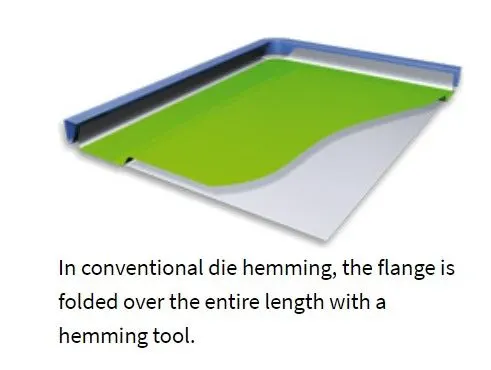
- Conventional die hemming - Conventional die hemming is suitable for mass production. In die hemming, the flange is folded over the entire length with a hemming tool. Normally the actual hemming is a result of a forming operation in which the flange is formed with a hemming tool after the drawing and trimming operations have been completed. The formed flange is then hemmed in several process steps. These steps include, for example, the pre-hemming and final hemming depending on the respective opening angle of the flange. Production plants for conventional die hemming are very expensive, but the cycle times are very low.
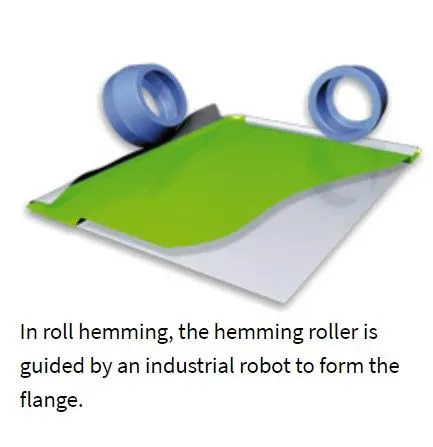
- Roll hemming - Roll hemming is carried out incrementally with a hemming roller. An industrial robot guides the hemming roller and forms the flange. Roll hemming operation can also be divided into several pre-hemming and final hemming process steps. Roll hemming is very flexible to use and tool costs are significantly lower as compared to those of conventional die hemming. However, the cycle times are much higher since the hemming is realized using a hemming roller which follows a defined path.
Parameters followed in the design
- Opening Angle of Hood
Opening angle of the hood varies from person to person and country to country. In India, the average height of a person is 5.8 feet/ 177 cm (Current data) whereas in the European countries the average height is 6 feet. Opening angle is considered as an important criteria, when the opening angle is less than required there are possibilities of human head injury.
- NCAP Crash Test Ratings For Strength
European New Car Assessment Programme is an independent crash-test safety body, which rigorously assesses the safety of cars, and helps to further the advancement of car safety technology. With safety at the forefront of all car makers minds, and many firms and organisations signing up to the ‘Vision Zero’ initiative – which aims to eliminate all deaths and serious injuries from our roads – Euro NCAP’s test programme is an ever-evolving one, with its architects periodically updating crash-test regimes to ensure cars are assessed using the most stringent criteria possible.
- Wrap Around Distance (WAD) for Pedestrian Safety
When a car crashes on the pedestrian, the whole human body wraps around the front shape of the car, and the head impacts on the hood or the windscreen. The distance at which the head impacts on the car from the ground is mentioned as wrap around distance (WAD).
- NVH (Noise, Vibration, Harshness) For Consumer/Customer/User/Buyer
Noise, Vibration and Harshness (NVH) is the study and modification of the noise and vibration characteristics of vehicle, particularly cars and trucks. To improve NVH, mastic sealants were provided on the inner panel to attach with outer panel. Here mastic points on the inner panel plays a major role to avoid Noise and Vibration into the cabin.
Features/tools used for modeling :
- Offset surface: Creates a body by offsetting a set of faces.
- Offset curve in face: Offsets curves along the faces on which they lie.
- Trim sheet: Trims off a portion of the sheet body.
- Through curves: Creates a body through multiple section where the shape to pass through each section.
- Law extension: Creates a law controlled extension from base sheet.
- Trim and extend: Trims or extends a set of edges or faces to intersection with another set of edges or face
- Extend sheet: Extend a sheet body by a distance or to the intersection with another body.
- Face blend: Add tangent blend faces between the selected sets of faces. The bend shape can be circular, conic or law controlled.
- Edge blend: Round sharp edges between faces. The radius can be constant or variable.
- Mirror geometry: Copies geometries and mirror them across the planes.
- Sew: Combine sheet body by sewing the common edges together, or combine the solid bodies by sewing common faces.
- Thicken: Creates a solid body by adding thickness to a set of faces.
- Emboss: Embossing is a stamping process for producing raised or sunken designs or relief in sheet metal.
- Local radius analysis: Calculates geometric properties of selected points on curve, edges and faces.
- Curve on surface: Creates a surface spline feature directly on face.
- Wave geometry linker: Copies geometry from other parts in the assembly into the work part.
- Sketch: Creates a sketch
- Trim body: Trims off a portion of a body.
Result
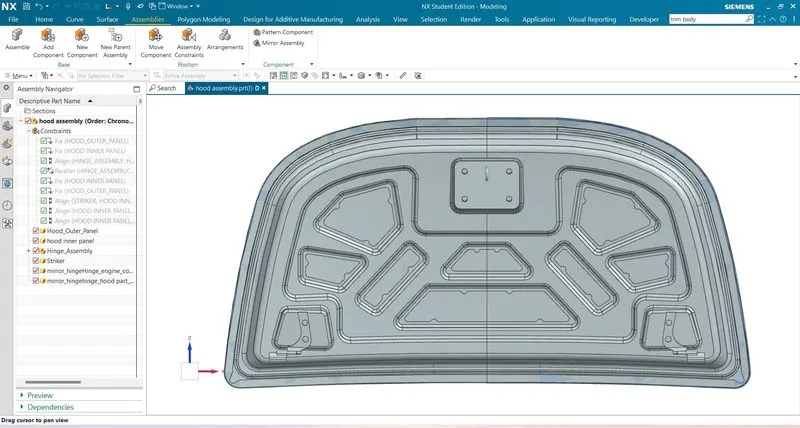
Front view
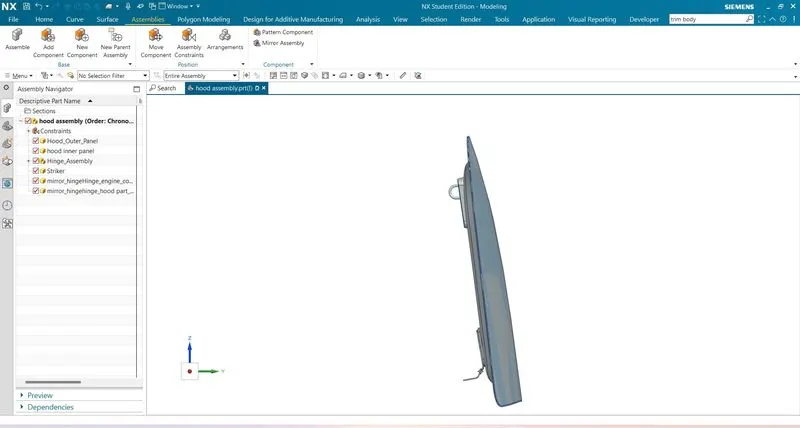
Side view
Back view
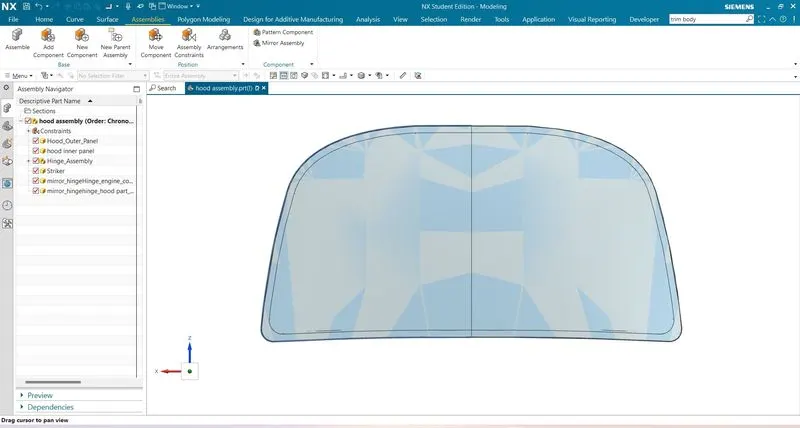
Trimetric view
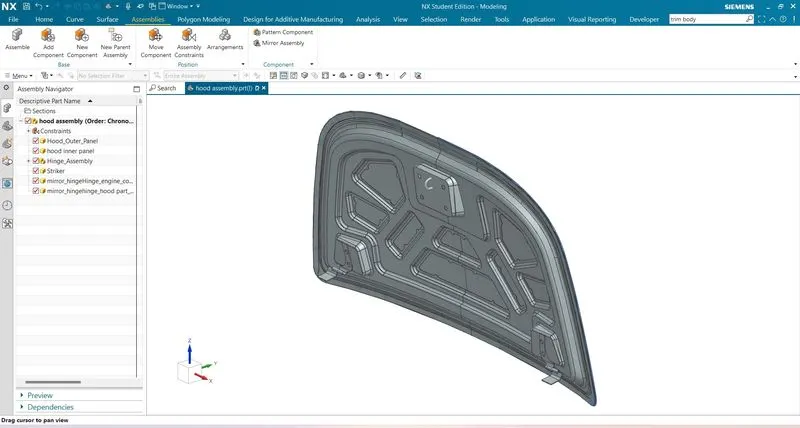
Conclusion
The design of Hood Outer Panel and Inner Panel and the necessary reinforcements by following the Master Section mentioned with the design parameters have been completed. All of the design was carried out in the student version of NX CAD software.