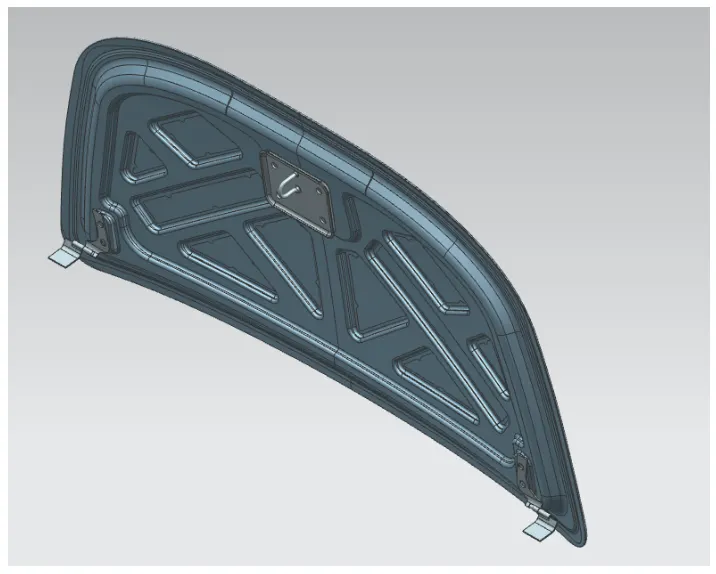
Hood design-Week 2
What is a Hood?
The Hood is an opening body panel that covers the engine in a front-engine vehicle. The hood is also considered as another type of door in a vehicle as it consists of an outer panel and inner panel. The inner panel provides strength while the outer panel functions as the metal cover.
The main fucntion of the hood is to protect the engine and also to provide access to the inner parts of the engine fot repairs and maintenance.
A car hood is meant to protect the performance parts of your vehicle, including the engine, while also providing easy access for repairs and maintenance.
Components of Hood:
A hood may contain a hood ornament, hood scoop, and wiper jets. A power bulge is present in the hood in order to leave space for the engine.
The hood also consists of the release system which consists of the interior latch handle,release cable and also the latch assembly.
There is also a hood stay which is actually an apparatus for an engine room of the car,which can enable the hood to stay in the open state.
A supporting rod can also be used to support the hood when the hood is placed in the open position while repairing and maintanence works
Hood Balancer (A device for supporting the engine hood of a motor vehicle in its open position) and its Function.
A gas stay is similar to the Hood balancer or supporting rod but it is actuated by the Gas.
The hood consists of the
1.Inner panel to provide strength
2.Outer panel for aesthetic purpose
3.Latch and striker for locking mechanism
4.Emboss to increase the strength
5.Supporting rod
6.Hinger
7.Mastic glue
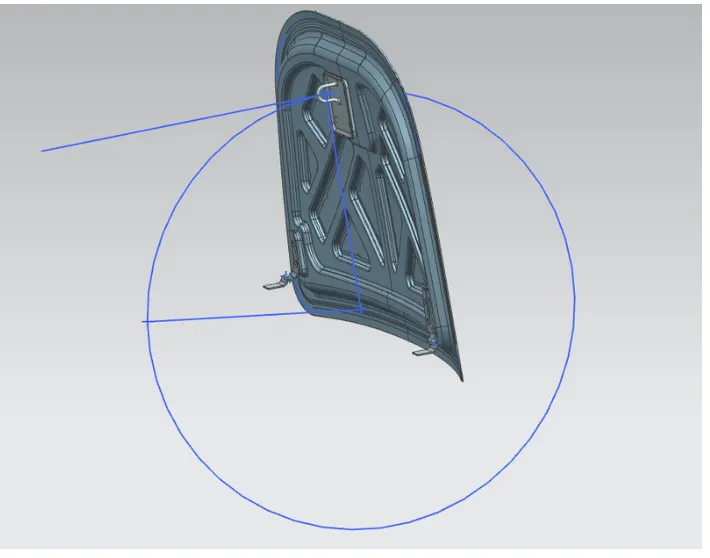
Latch trajectory:
The Latch trajectory is designed in such a way that the normal functioning of the latch and striker works perfectly fine.
Both the hinges are joined using a line which is called as the hinge axis and with the midpoint of the hinge axis as the center and the radius data is recieved from the designer based on the place where the latch is placed. The circle should pass through the center of the striker and the perpendicular line drawn from the striker should be made tangent to the circle
This is the latch and striker trajectory
MASTIC DATA:
Mastic is a glue kind of material which is small in size when placed in between the inner panel and the outer panel but it expands and acts as a Rubber kind of padding in between the inner panel and the outer panel.
The Mastic would be in the diameter of just approximately 8-10 mm in the beginning but after it expands , it would assume the diameter of nearly 60-80mm.
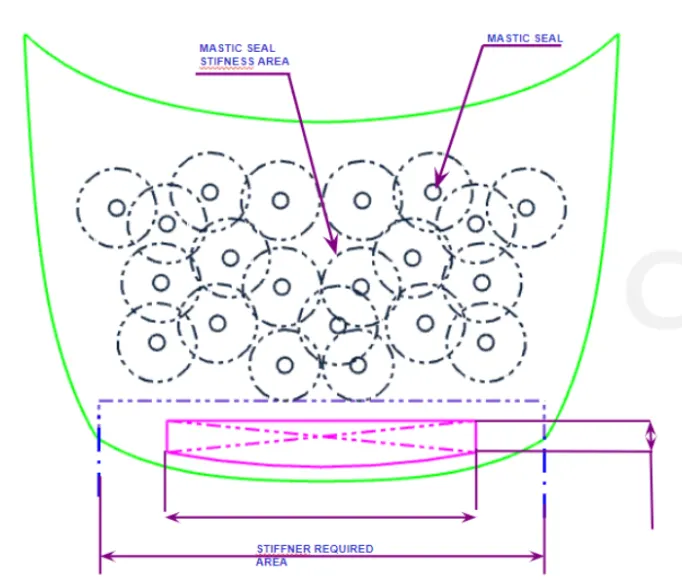
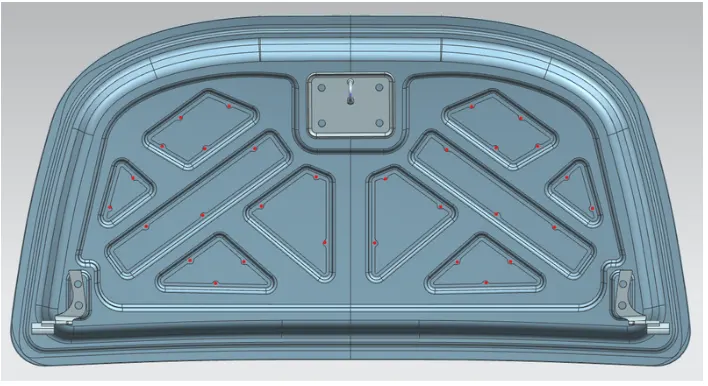
The points marked in red are the places where the mastic sealant will be placed and the mastic will expand to around 10 times its initial radius.They are good to prevent the NVH.Noise Vibrations and Harshness.
Embossing:
Sheet metal embossing is a stamping process for producing protrusions or shallow spaces in the design. This process can be made by means of matched male and female roller dies, or by passing sheet or a strip of metal between rolls of the desired pattern. It is often combined with Foil Stamping to create a shiny, 3D effect.
There are three types of metals that are used for embossing dies. Based on the shape of the image, the texture to be created and the length of the run you can select the metal.
- Magnesium dies are used for the embossing projects that have short runs. The designs are large and uncomplicated. Magnesium also allows for special hand tooling.
- Brass dies are the most popular embossing dies. They are easy and provide some freedom to the embosser to create fine lines, sculptured images, combo foil stamping and embossing. They are also very good for images requiring extensive hand tooling. You can make brass dies by machines or by a semi-photographic process. The photograph is transferred onto the die to use as a guide for drawing.
- Copper dies are used in between to magnesium and brass. However copper dies do not permit hand tooling.
Hemming:
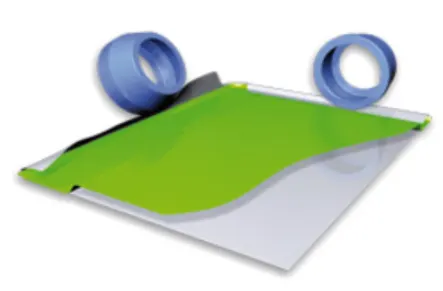
Hemming is a forming process in which the edges of the sheet are folded over the same part or it is folded over the another part.These operations are actually used to connect two different parts together , to improve the appearances of a part and also to strengthen the edges of the part.
In the hood manufacturing process after the deep drawing , trimming and the flanging operations , the hemming operation is done
Deep drawing:
Deep drawing is the manufacturing process which is one of the extensively used sheet metal forming process.We would need a punch and die to carry out the process.
Spot welding
Two sheet metals are joined together by applying welds in specific parts and
Riveting:
It is a forging process in whcih one of te part is joined to its adjacent surface.Rivets are used in construction extensively.
Design Considerations:
There are many design considerations , a hood engineer should taken into account.
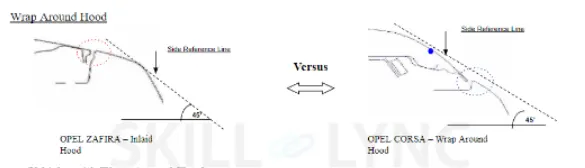
1.Wrap around hood:
A hood can be a wrap around hood or Inlaid hood depending on the point where the side reference line meets the Car body
2.Opening style of the hood:
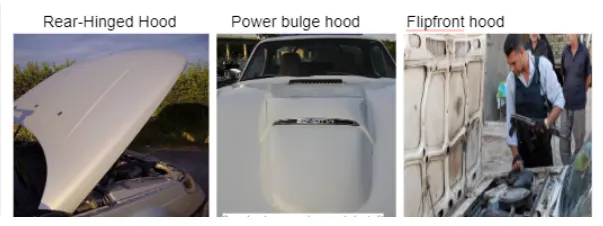
Hood can be planned to be the Rear-Hinged hood, power bulge hood or the Flip front hood depending on the custoer requirements .
3.Type of hood:
The hood type should also be considered which includes whether the part is an active hood or the passive hood.For the active hood , the structure adopts additional parts in order to enhance the strength.Whereas for the passive hood, the inbuilt structure itself will provide the necessary reinforcements and safety
4.Opening angle:
Depending on which region we are designing the cars for, the opening angle can be made to vary
5.Pedestrian Safety:
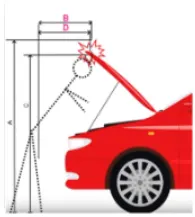
Pedestrian head impact zone
Impact point selection
Test method
injury criteria
The parts of the hod are strengthened in such a way that the head impact and injury faced by the pedestrian on collision is low .
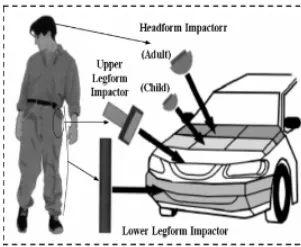
The hood is the first part of the car which the pedestrian encounters during an accident. So the car hood is designed by taking into consideration of the head injury factor . There are two main impact regions namely child impact region and the adult impact region. The average height of the adults in the region for which the car is designed is taken and in the head impact region of the hood embosses are created in order to make the material a little soft which would otherwise be so tough and worsen the impact of the injury.
Similarly the hood is designed in such a way that the crash loads which the hood experiences is transferred to the hinge assembly rather than to the inside regions of the car. So the hood must not be stiff and really strong to transfer the impact loads. They should be designed to crumble under the effects of high load.
Functional requirements of the parts:
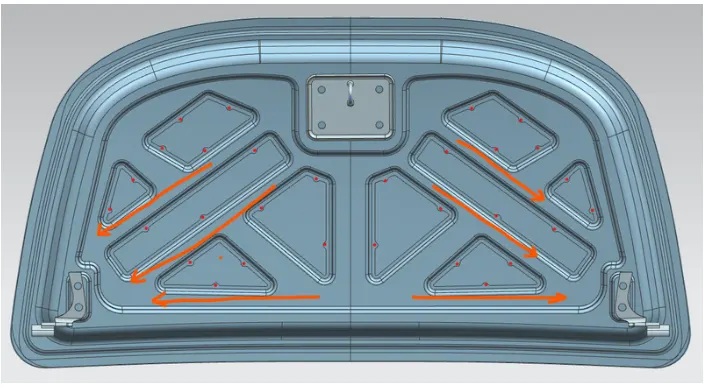
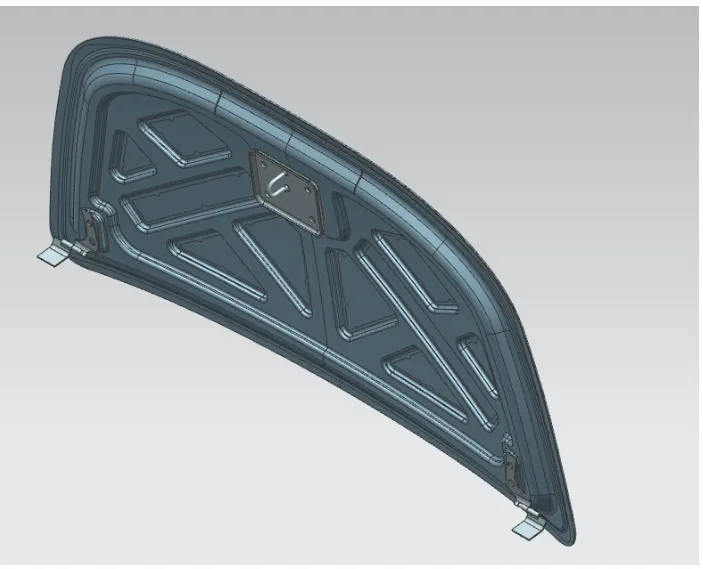
The Hood is designed with three levels of emboss in which we remove the material which strengthens the hood panel.
The embosses are placed in such a way in order to re-direct the forces acting during the crash on to the hinge assembly
The edges are blended into smooth corners and the sharp corners are consciously avoided in order to avoid accumulation of stresses.
The inner panel is connected to the outer panel using the mastics and heming process.
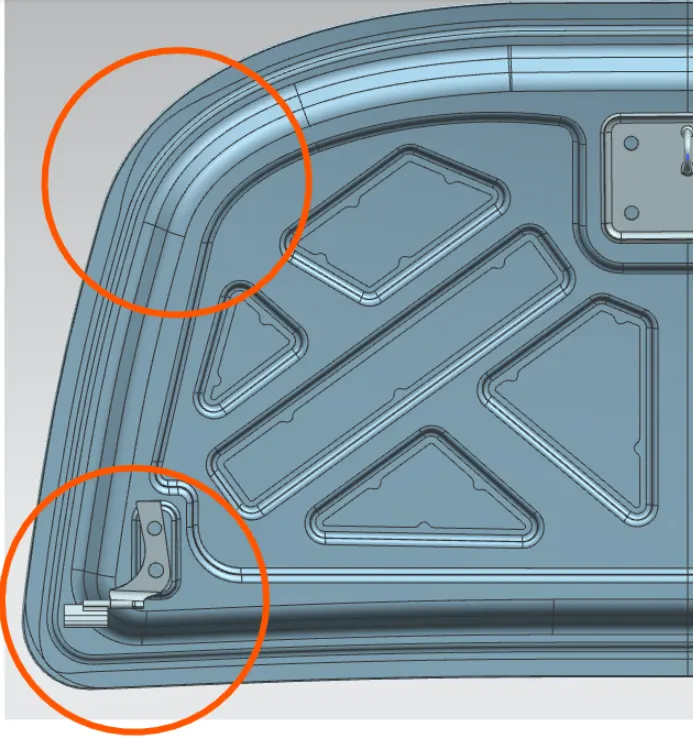
Some relief is provided in the hood outer panel during the hemming process in order to allow the rolling hemming process to happen seamlessly and to avoid wrinkles
Embosses:
Relief :
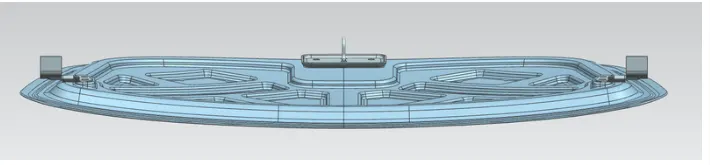
Views:
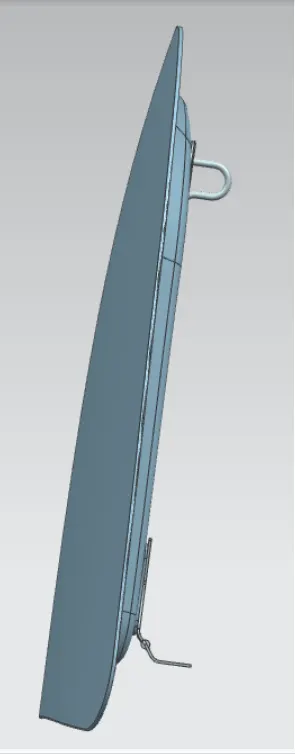
Side view:
Back View:
Isometric view:
Innerpanel view
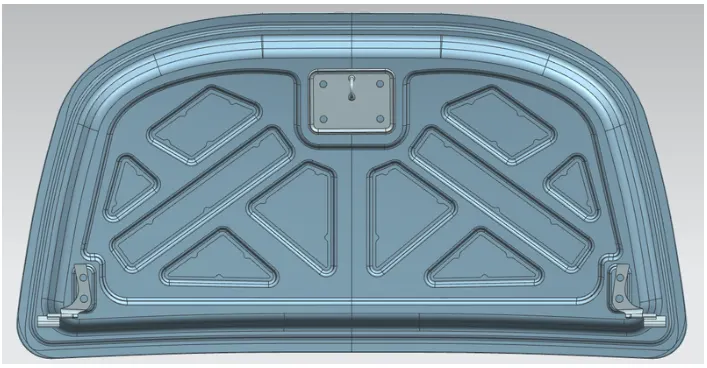
Whole Assembly