Hood design-Week 2
AIM
To create and assemble the hood inner panel and outer panel and their reinforcements by following the design rules and master section.
Objective
Design hood outer panel, inner panel and reinforcements with the given outer hood skin, master section and design parameters.
Introduction
The hood or bonnet is the hinged cover over the engine of motor vehicles. Hoods can open to allow access to the engine compartment (or trunk on rear-engine and some mid-engine vehicles) for maintenance and repair. In design perspective hood should meet some specific conditions like pedestrian safety, hood head zone for the lock striker, force distribution when subjected to frontal collision (occupant safety), manufacturability etc.
HOOD
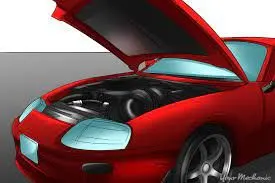
The car’s hood consists of an inner and an outer panel. The inner panel provides strength, while the outer panel is just a metal cover. The underside of the hood is often covered with a sound-absorbing material.
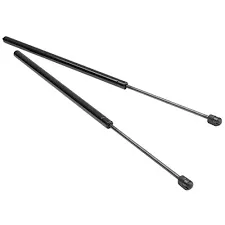
GAS STAY:
It is also a Hood stay but it is automated or need some slight amount of force then gas itself actuates it and make it work desirably. Advantages: It is automatic in nature
Design parameters
Hood Thickness Information
Outer Panel Thickness = 0.75mm
Inner Panel Thickness = 0.75mm
Reinforcement Thickness = 1.5mm
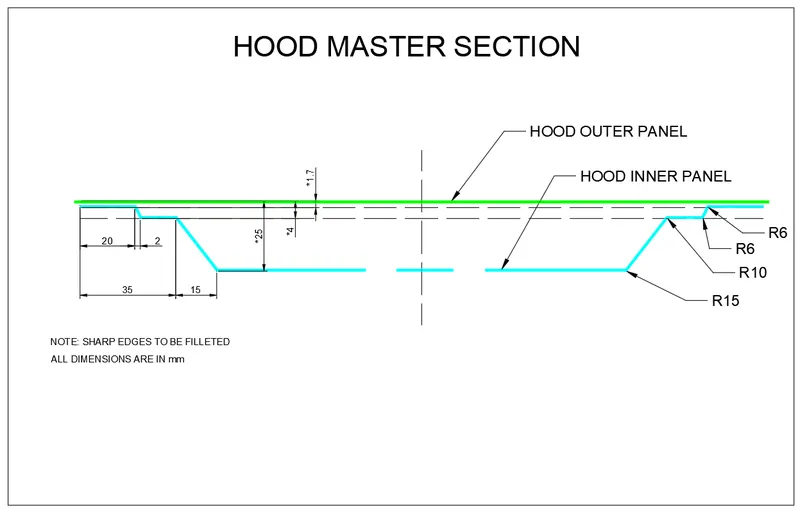
Master Section
COMPONENTS USED IN THE DESIGNING HOOD
1.HINGE ASSEMBLY
This hinge was placed on the hood to give rollover action to tilt up or tilt down the hood.
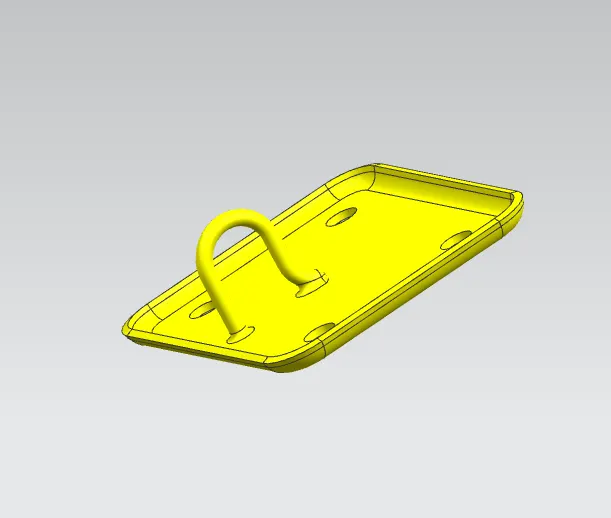
3.LATCH AND STRIKER
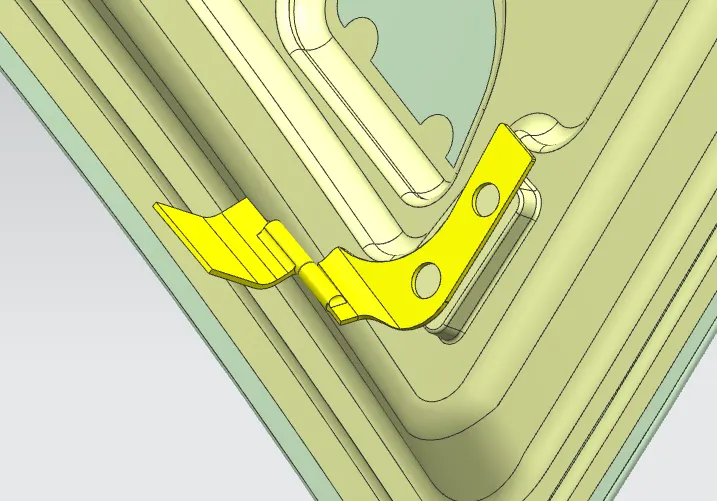
This is the part of the hood that has a trajectory or hook type design used to lock or unlock from the vehicle engine compartment.
4.Hood outer panel
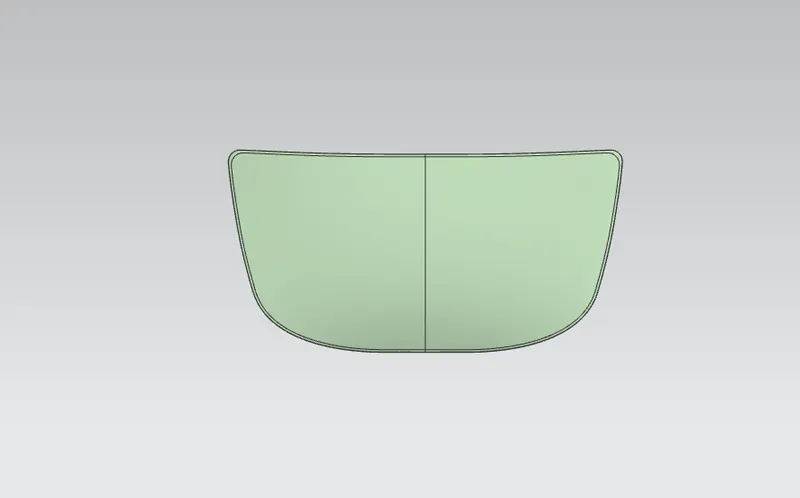
Outer panels are the aesthetic elements of a car. It is the styling team who provides the skin for the outer panel. The shape, position and size of the hood should satisfy the safety norms. So while designing the hood we should give more importance to pedestrian safety. The outer panel is attached to the inner panel by hemming. So, it is necessary to provide required hemming flange and reliefs for the hemming operation. We also provide mastic sealants between outer panel and inner panel to reduce vibration.
5.Hood inner panel
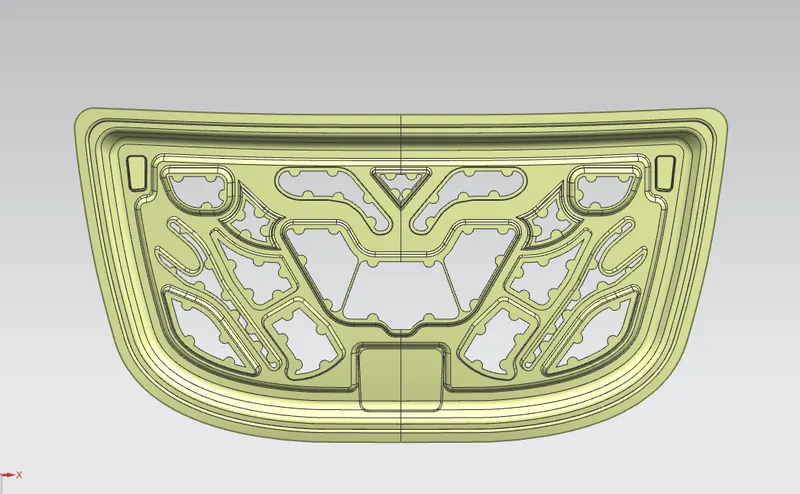
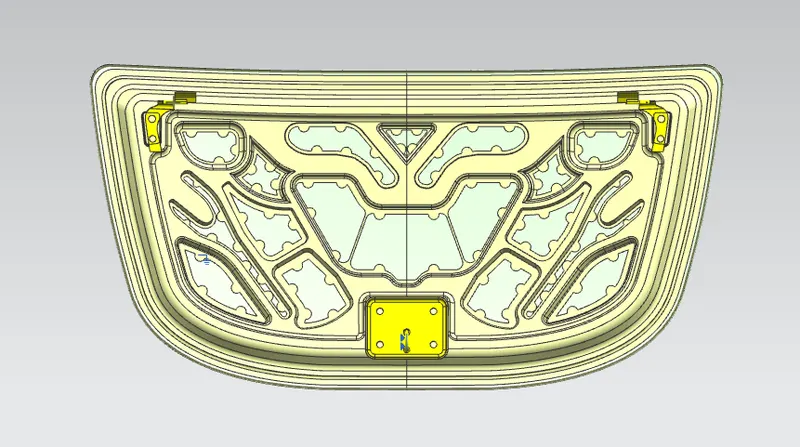
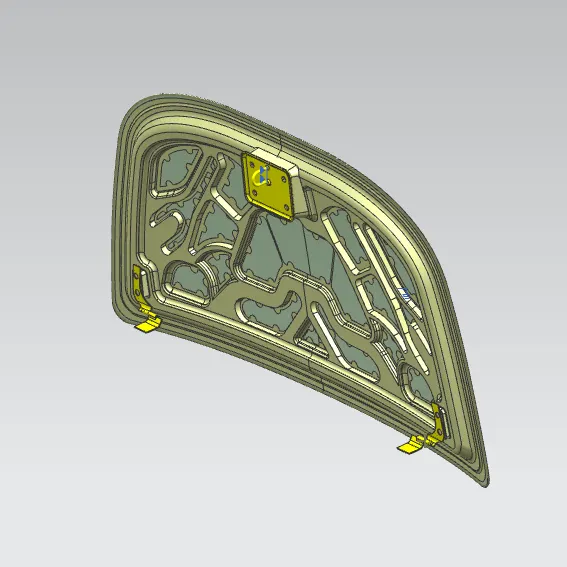
Inner panel is the part that gives strength and rigidity to the outer panel. The master section represents the initial emboss shape and size. Then we provide the emboss for the latch and hinge elements after fixing the location.
SAFETY REQUIREMENTS
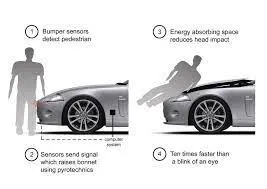
PEDESTRAIN SAFETY
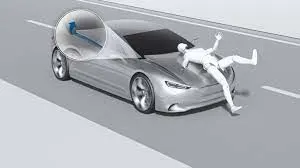
A Frontal Protection System (FPS) then can be device fitted to the front end of a vehicle to protect both pedestrians and cyclists in the event of a front-end collision. Car design has been shown to have a large impact on the scope and severity of pedestrian injury in car crashes.
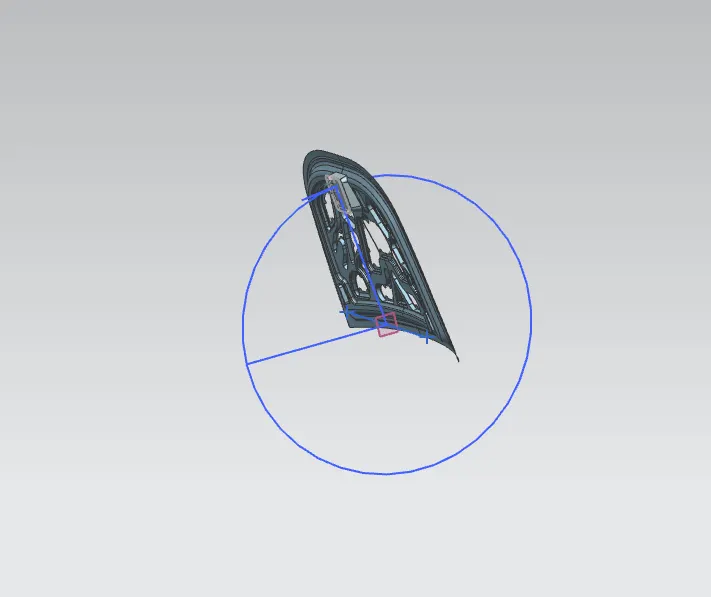
Latch Trajectory
Latch trajectory is given by the circle drawn from the hinge axis point. Hinge axis point is the centre point of the hinge axis. First, we can fix either the latch or the hinge. If we have fixed the hinge position then we should plot the Trajectory circle for the latch. For proper mating condition the striker axis through the tip of the striker should be tangential to the latch trajectory.
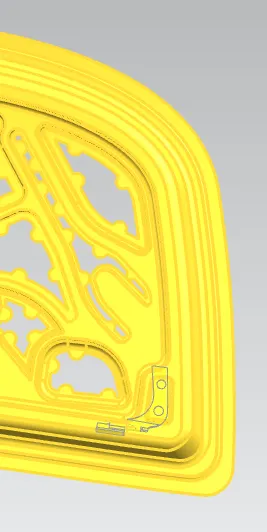
Reinforcement
Reinforcements are provided according to the design requirements. Mainly it is provided at the hinge and latch regions to improve the strength locally. Usually thickness of reinforcements will be higher than that of the inner panels and the value varies according to cost and requirement. According to the design requirement here it is given 1.5mm thickness to both hinge and latch reinforcements.

MASTIC SEALANTS
A mastic sealant is a type of liquid sealant that cures in an elastic state, thus making it flexible while holding the bond of the surfaces that has attached together. It adheres to just about any material making an all purpose type of sealant.The main purpose of the outer panel is for the aesthetic looks. Thus we cannot use bolts or welding. This has to be done with the help of the hemming and mastic sealants. Mastic sealants are elastic compound that behaves like the rubber. It is placed between the outer and inner panel. Initially is it in paste form, but after the hot furnace bath it gets hardened thus joining the outer and inner panel. Mastic sealant has the tendency to increase the strength of the panel and has influence of 80mm diameter.
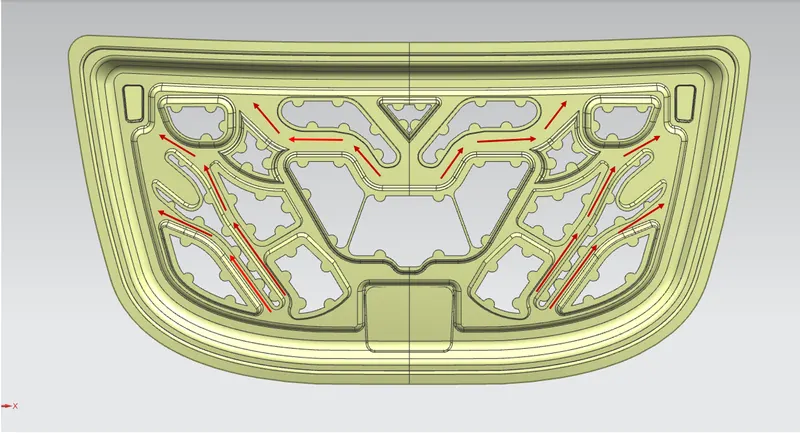
Emboss definitions
Throughout the inner panel we provide different embosses. We can increase the stiffness of the inner panel through these embosses. The shape and size of the embosses also determines the direction of the force distribution resulted from frontal collision. The force should be always distributed away from the passengers. Here in the figure the embosses are designed in such a way that the force is directed to either sides of the car.
DEEP DRAWING
Deep drawing is one of the most widely used processes in Sheet metal forming. Apart from its use in many other sectors, it is applied in the automotive industry for the manufacturing of car body parts.
Deep drawing processes are divided into three types:
- Deep drawing with tools
- Deep drawing with active means
- Deep drawing with active energy
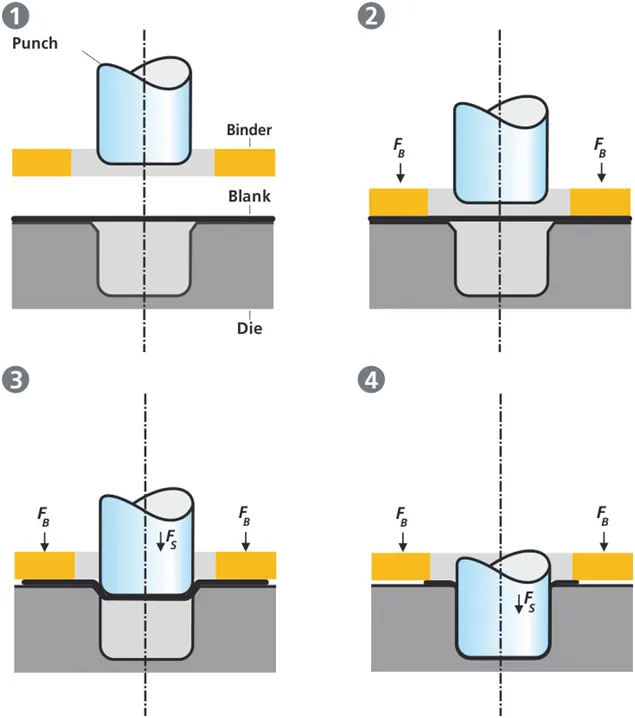
In the automotive industry, deep drawing is usually carried out using rigid tools.
Illustration of the deep drawing process
The figure illustrates the deep drawing process. The rigid tools consist of a punch, die and binder. In deep drawing, the plate holder closes after the metal sheet blank has been inserted.
Next the sheet is clamped between the die and the binder. This process slows down the flow of the sheet while it is being drawn and thereby prevents wrinkles from forming under the binder. The punch stretches the sheet over the die radius and forms it in the die. The amount of punch force necessary for forming is thereby continually increased up to the lower dead center of the punch.
Whereas in pure deep drawing there is no reduction of sheet metal thickness, forming is achieved in stretch forming purely as a result of a decrease in sheet metal thickness. Stretch forming is extensively used for the forming of only slightly curved parts with low depth of draw (e.g. roofs, doors)
HEMMING
Hemming in automotive manufacturing is a cold process of joining an inner and outer panel by folding the flanges of the outer panel onto the inner panel, permanently clamping the inner panel in place. This process is used in the manufacture of doors, hoods, and decklids and can be accomplished using a traditional press or with a robotically controlled roller.
In car part production, hemming is used in assembly as a secondary operation after deep drawing, trimming and flanging operations to join two sheet metal parts (outer and inner) together. Typical parts for this type of assembly are hoods, doors, trunk lids and fenders.
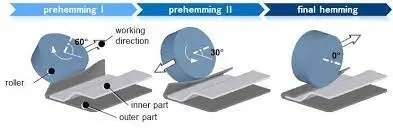
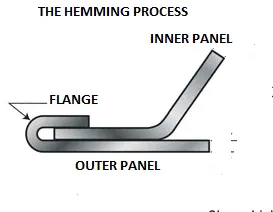
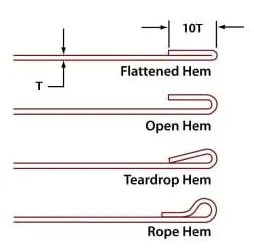
TYPES OF HEMMING
- Flattened/closed hemming
- Open hemming
- Rolled/rope hemming
- Tear drop hemming
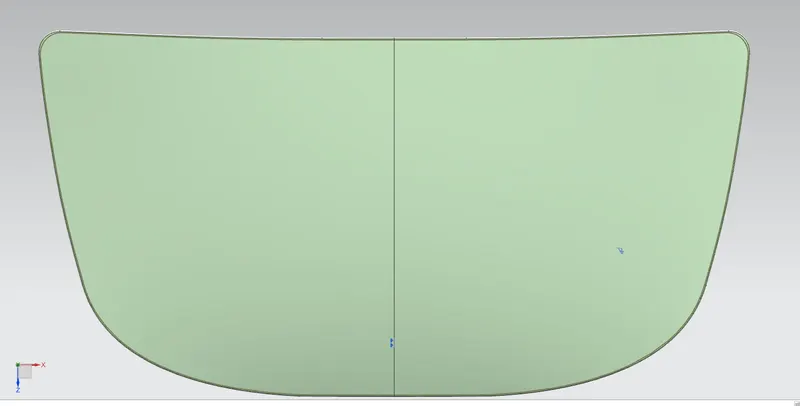
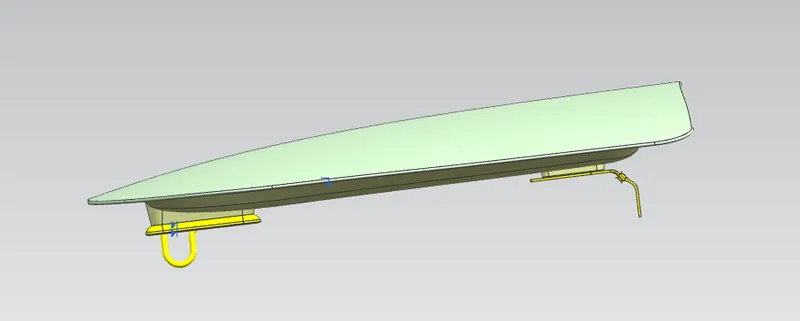
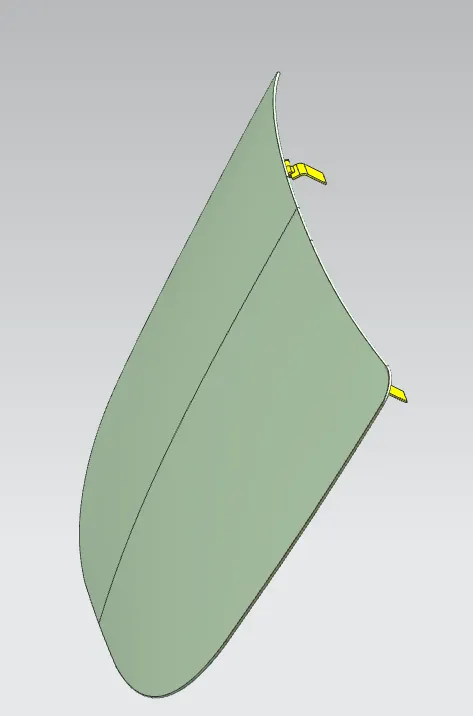
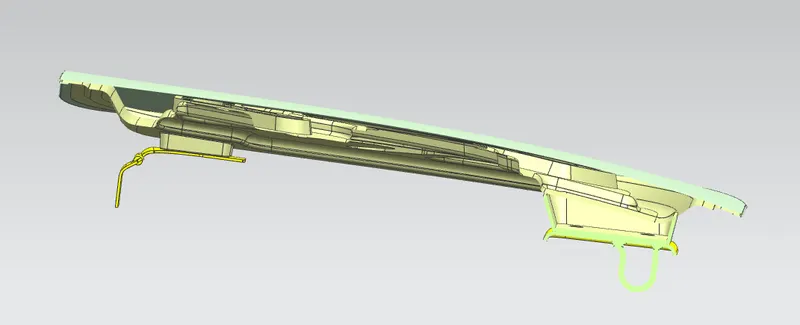
DIFFERENT VIEWS OF HOOD FINAL ASSEMBLY
SECTION VIEW
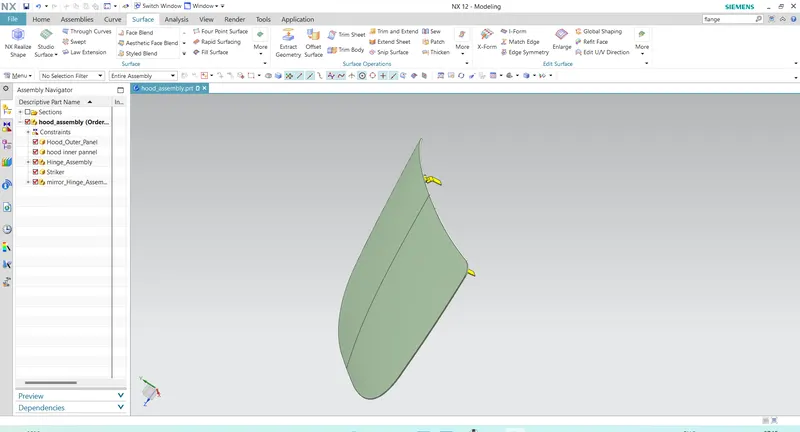
FEATURE TREE
CONCLUSION
Thus the hood/bonnet of car has been designed and assembled by using nx-cad.
I HAVE MADE ALL THE COMPONENTS INTO ZIP FILE AND ATTACHED INTO THE BELOW BOX.