Hood design-Week 2
DESIGN AND ASSEMBLY OF HOOD
Aim
To design a hood for an automotive vehicle considering the safety of passengers and pedestrians using NX CAD.
Objective
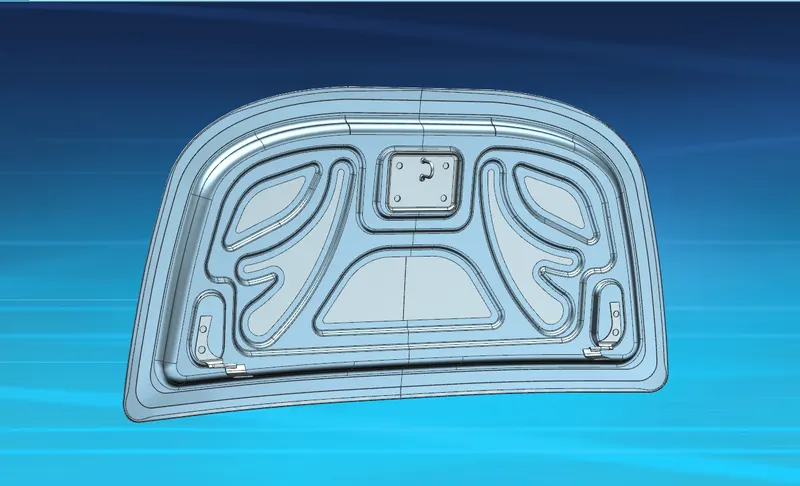
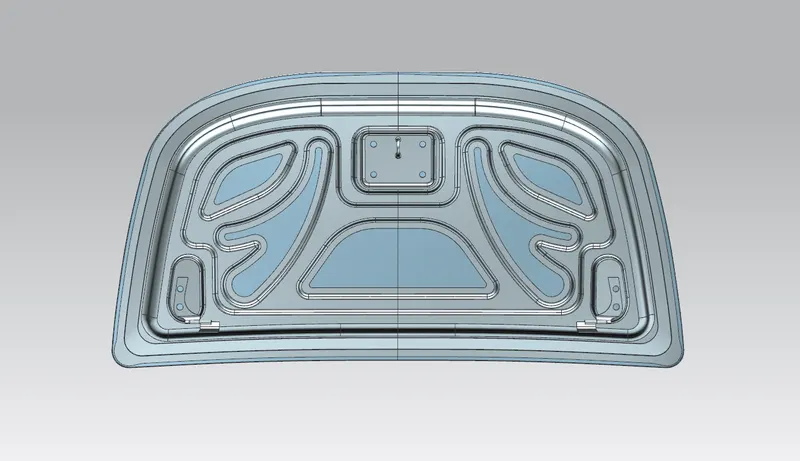
To design a hood inner panel.
Assembly of the hinge and Latch & Striker to the hood.
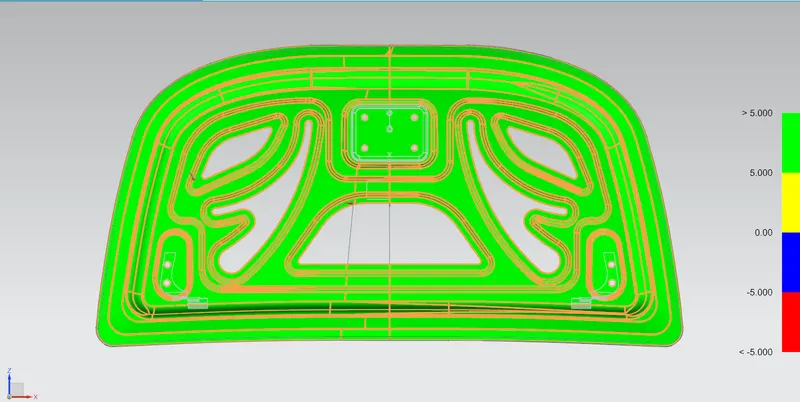
Draft Analysis for the designed hood.
Introduction
A car hood is a metal part that covers the engine of an automobile. It is also referred to as a bonnet. Hood is the hinged cover that rests over the engine of a front-engine vehicle. Its purpose is to provide access to the engine for repair and maintenance.
Car hoods are typically constructed from steel and sometimes from aluminium. The hood design may vary its design based on the type of automotive.
Hood Components
Hood Outer Panel.
Hood Inner Panel.
Hinge Assembly.
Latch & Striker.
Description
A car hood is meant to protect the performance parts of your vehicle, including the engine, while also providing easy access for repairs and maintenance. A concealed latch is typically used to hold down the hood which locks the movement of it.
Advanced hoods need to be designed to avoid the severe injuries of pedestrians after the collision.
Hood Outer Panel
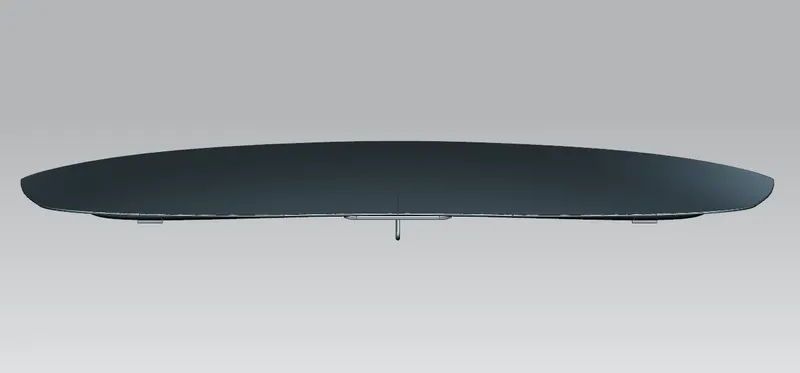
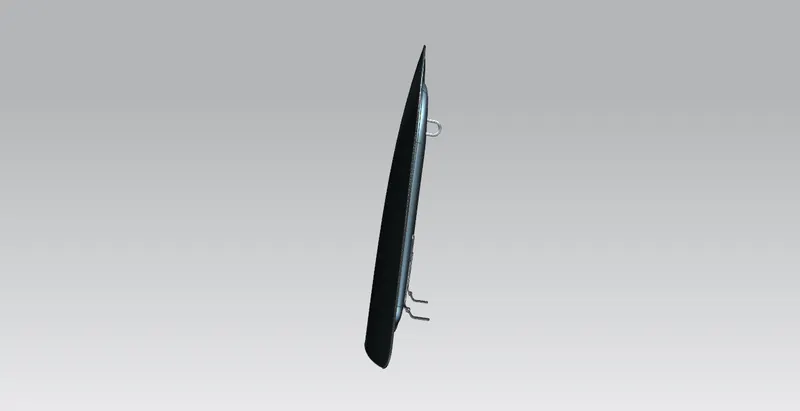
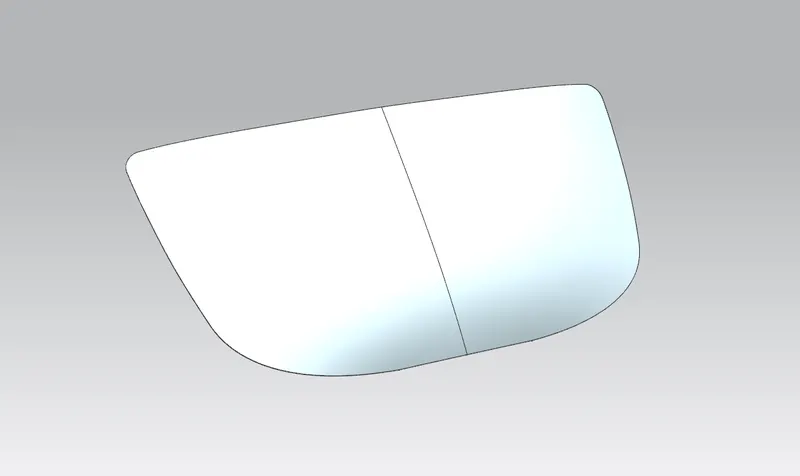
The hood over panel acts a styling part of the vehicle. Hood outer panel is aerodynamic in shape to reduce the air drag when vehicle in motion.
Hood Inner Panel
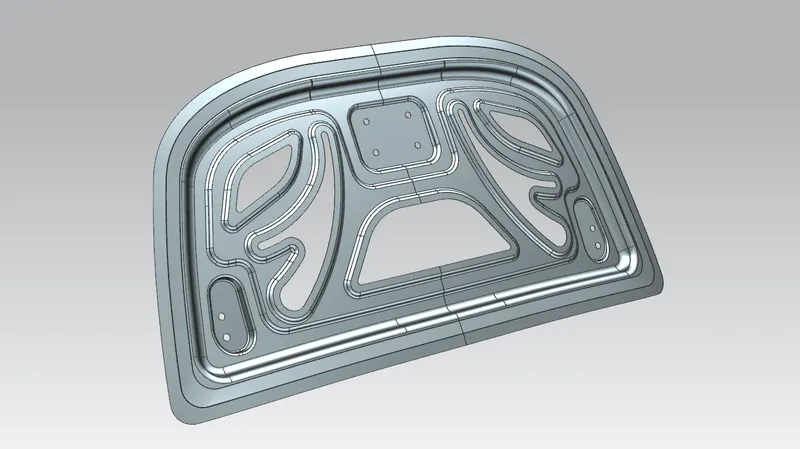
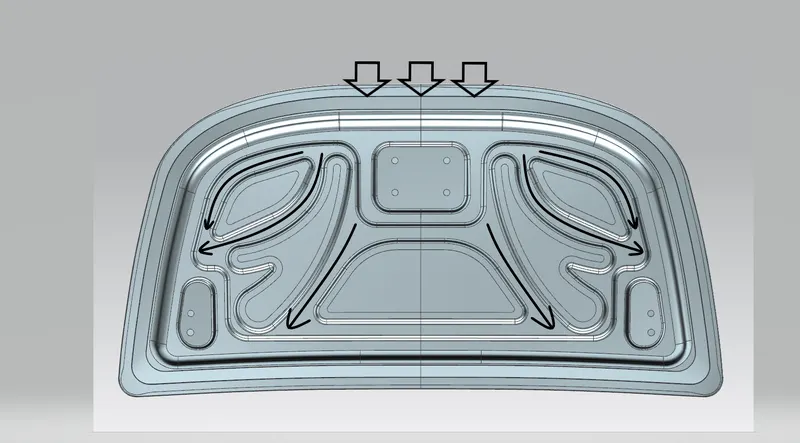
Hood inner panel acts as firm support for the outer panel. Hood inner panel must be designed in such a way that, during the collision, it must be able to dissipate the frontal crash force in the outward direction. this helps in the safety of passengers. So emboss must be created in a way that, the crash force must be diverted outwards i.e towards the hinge.
Hinge Assembly
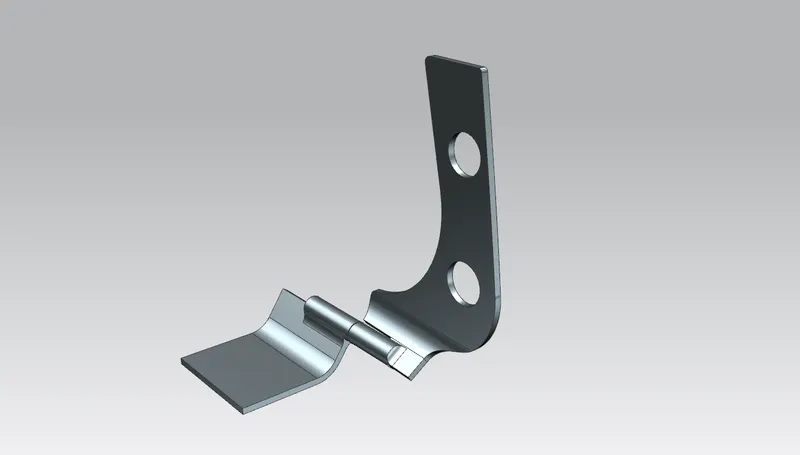
Hinge is a component that fixes the hood to the vehicle fender. Hinge regulates the motion of the hood in opening and closing.
Latch & Striker
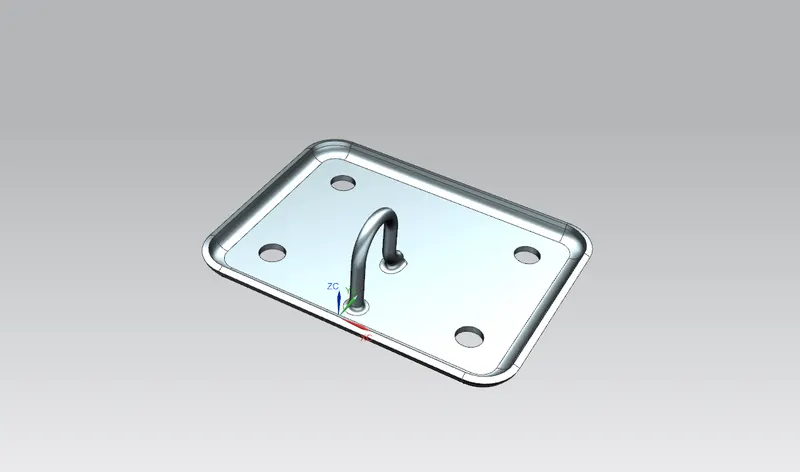
Hood latch is a component that keeps hood closed. Latch ensures that the hood is securely connected to the vehicle and it doesn't pop open unexpectedly.
Hood Design
Hood of an automobile is designed, taking the safety of passengers and pedestrians into account. Hood must be able to dissipate the impact force outside for the safety of passengers.
Latch Trajectory
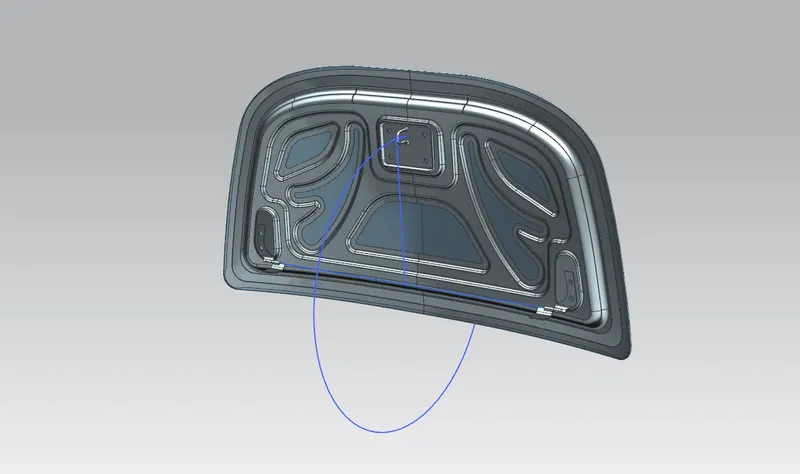
In the opening or closing the hood, the latch must be perfectly aligned to the fixing or striker point. The latch trajectory is a path followed by a latch which is fixed to the hood while closing or opening of the hood. Latch trajectory must be perpendicular to the hinge axis.
Mastic Data
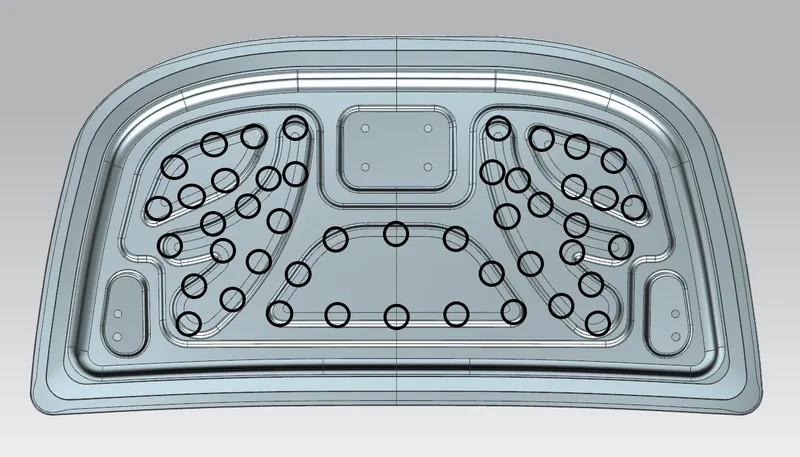
Mastic points are the areas where the inner hood panel and outer panel joined together with mastic glue. The glue at mastic points holds the inner and outer panels witch helps in reducing the noise and vibration. However, the hem of the outer panel holds the inner panel along the outline of the outer panel.
Corner Relief
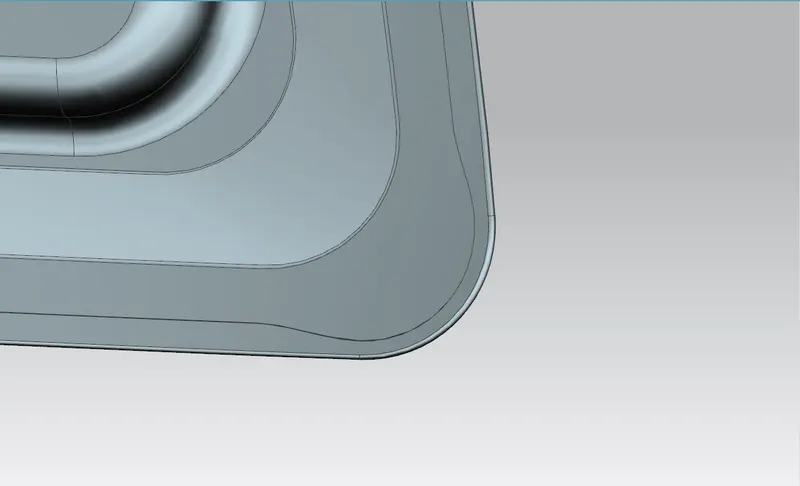
The reliefs at corners must be provided which reduces the stress concentration in the process of hemming of the outer panel.
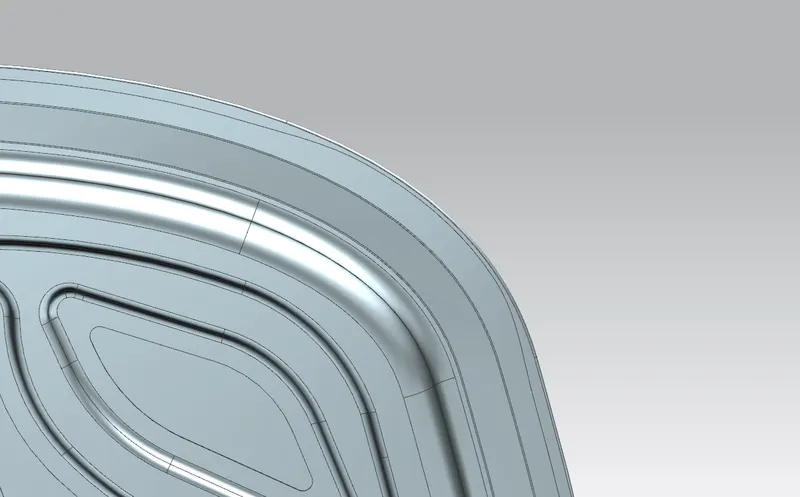
Emboss
Embosses increases the strength of the hood. The sheet metal embossing is a stamping process for producing a raised or sunken or relief in sheet metal. Embosses in the hood is designed in a way to divert the collision force outwards. So that it reduces the damage caused to the passengers during the collision.
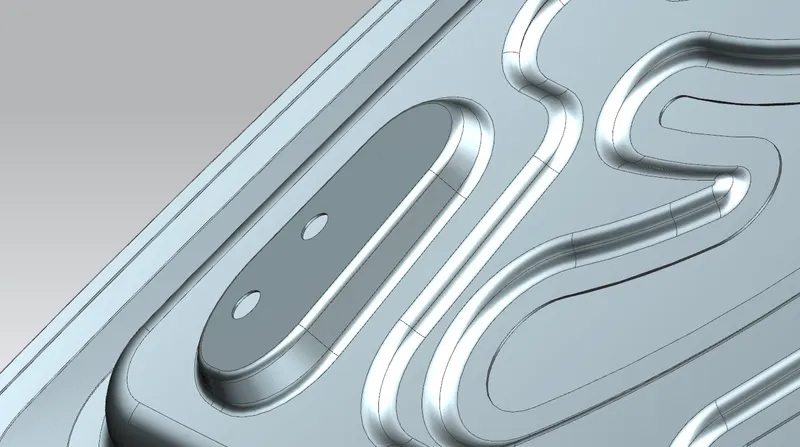
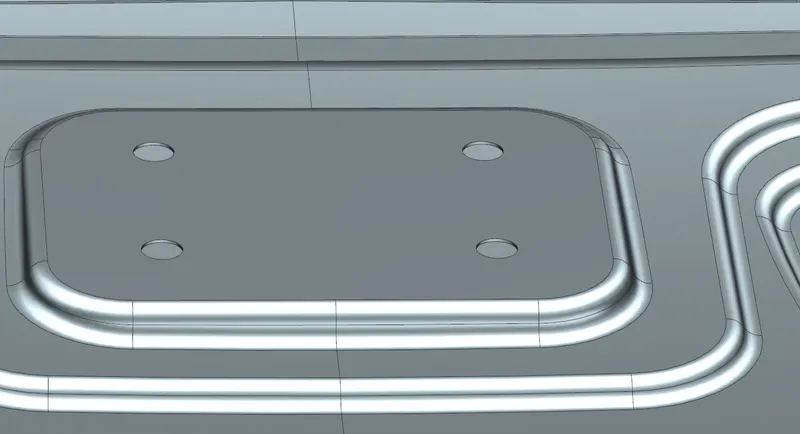
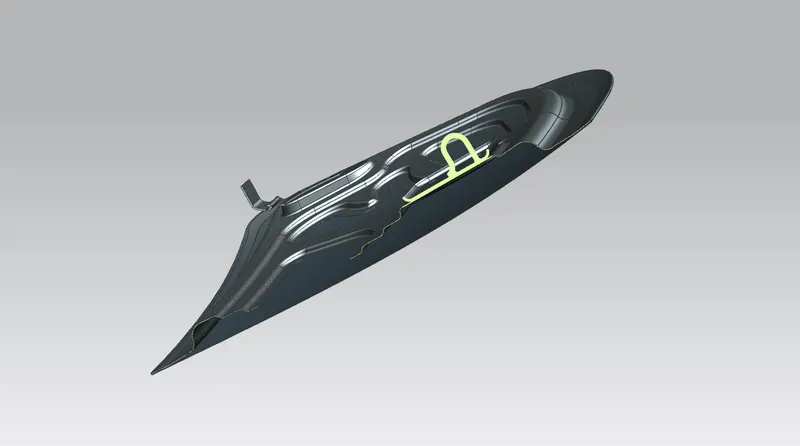
Deep drawing
Deep drawing is one of the most widely used processes in sheet metal forming, it is applied in the automotive industry for the manufacturing of car body parts.
A flat sheet metal blank is formed into a hollow body open on one side or a hollow body is formed into a hollow body with a smaller cross-section. In the automotive industry, deep drawing is usually carried out using rigid tools.
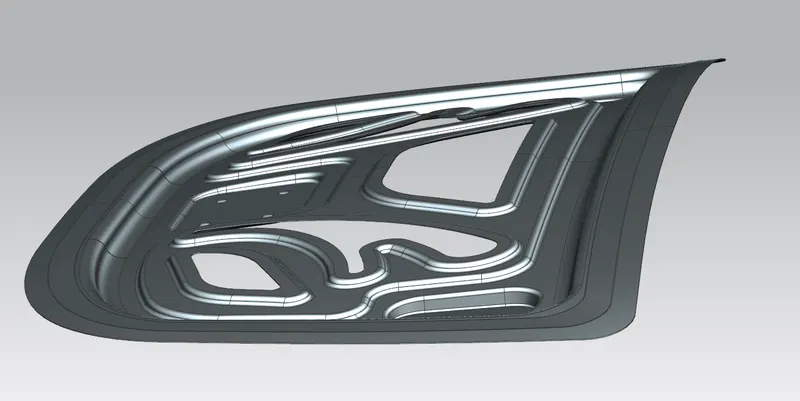
The sheet is clamped between the die and the binder. This process slows down the flow of the sheet while it is being drawn and thereby prevents wrinkles from forming under the binder. The punch stretches the sheet over the die radius and forms it in the die. The amount of punch force necessary for forming is thereby continually increased up to the lower dead centre of the punch.
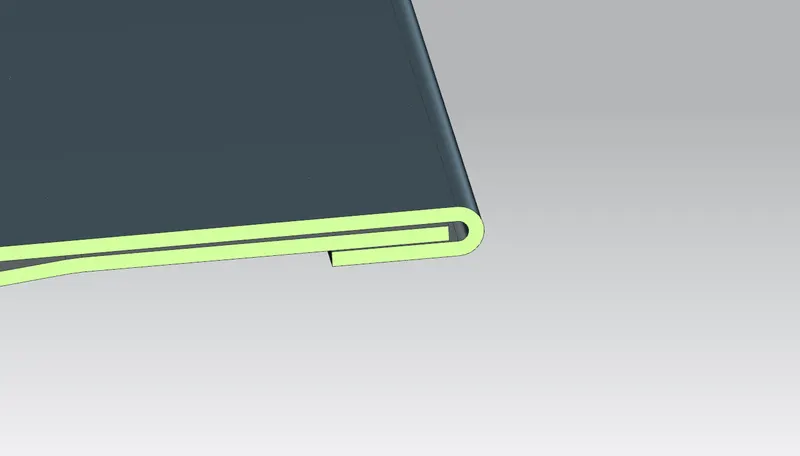
Hemming
Hemming is a forming operation in which the edges of the sheet are folded or folded over another part to achieve a tight fit. Normally hemming operations are used to connect parts, to improve the appearance of a part and to reinforce part edges.
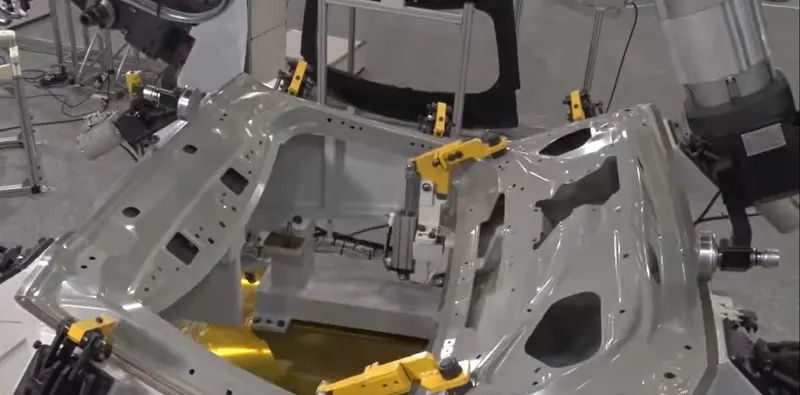
Roll hemming
Roll hemming is carried out incrementally with a hemming roller. An industrial robot guides the hemming roller and forms the flange. Roll hemming operation can also be divided into several pre-hemming and final hemming process steps. Roll hemming is very flexible to use and tool costs are significantly lower as compared to those of conventional die hemming. However, the cycle times are much higher since the hemming is realized using a hemming roller which follows a defined path.
features used to design hood
Sketch
Extract
Trim Body
Offset in face
Trim sheet
Through curves
Law Extension
Trim & Extension
Face Blend
Edge Blend
Bridge Curve
Trim Curve
Datum plane
Emboss
Projected Curve
Linked Composite Curve
Linked Face
Mirror Geometry
Sew
Thicken
Curve on Surface
Assembly
The hinges to the outer panel are constrained, by applying the assembly constant relation between the designed emboss on the outer panel for the hinge.
Latch and Stricker to the outer panel are constrained, by applying assembly constraint relation between the designed emboss on the outer panel for the hinge.
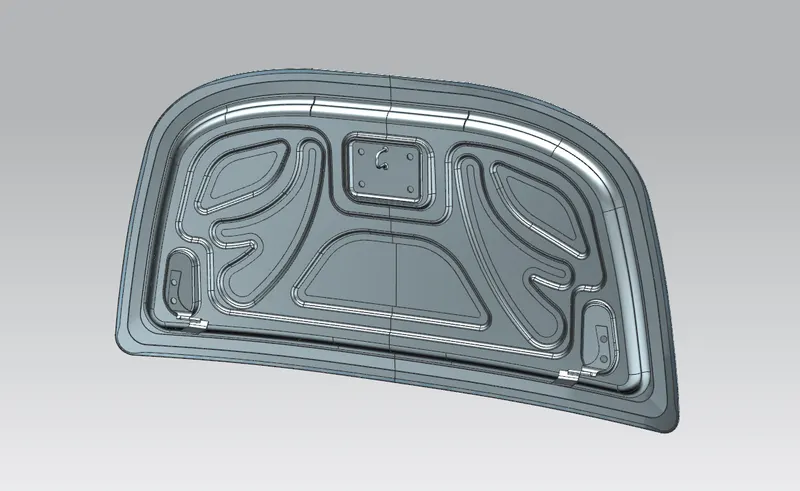
Draft Analysis
Draft analysis is useful in detecting the negative draft angle of the designed component. The draft angle which is less than 5 Degrees is not recommendable as per the manufacturing standards of OEM.
Conclusion
Hood of the vehicle is designed considering the safety of passengers and pedestrians.
The designed hood is assembled, Draft Analysis is made as per the OEM standards.