Hood design-Week 2
AIM: TO DESIGN AN ASSEMBLY of Hood Inner Panel, Outer Panel, Latch, Hinge and the Reinforcements.
OBJECTIVE:
A detailed report about the Hood Design which includes a detailed explanation about hood and its components, Latch Trajectory, Mastic Data, Emboss Definitions, Manufacturing process like Deep-Drawing and Hemming, and all the parameters followed in the design.
The report should be well-formatted and should have a good flow of content. Add all the relevant images.
INTRODUCTION:
The hood of a car is a hinged cover over the engine of the motor vehicles. Hood can open to allow access to the engine compartment (or trunk on rear-engine and some mid-engine vehicles) for maintainance and repair. In degisn perspective the hood should meet some specific conditions like pedestrian safety, hood head zone for latch and sticker, force distribution subjected to frontal collision( occupant safety), manufacturabillity etc. A typical hood assembly consists of hood outer panel, hood inner panel, latch and striker , hinge, hood stay. The hood stay is an apparatus for supporting the engine hood of a moto vehicle in an open position. It is the most critical part of the car as it is always exposed to frontal crash, climatic conditions, heat generation from engine compartment etc. This gives access to the engine, battery and other components which are required to inspect at regular intervals. The hood is the combination of outer and inner panels and as per its design consideration, it also dissipates energy outside the car body.
DESIGN CONSIDERATION FOR CAR HOOD
CONSIDERATION FOR NOISE VIBRATION HARNESS(NVH) : Noise, Vibration and Harness also known as NVH is the sutdy of noise and vibration charecteristics of vehicles, particularly cars and trucks. While noise and vibrations can be reasily measured, harness is asubjective quantity and is measured either via 'jury' evaluations or with analytical tools that can provide results refelcting human subjective impressions.
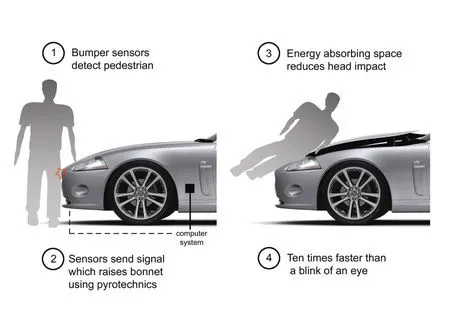
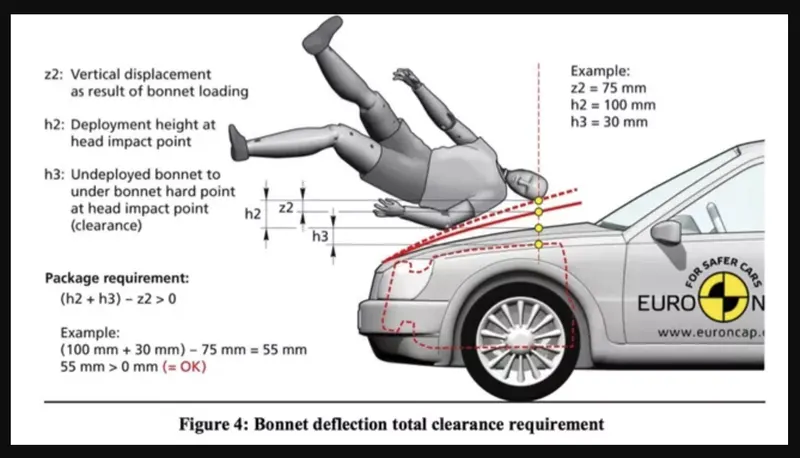
PEDESTRIAN SAFETY: Pedestrian safety is an important consideration while designing the hood. According to the wrap arround distance and the pedestrian head impact zone, the hood is designed. Safety is one of the most important criteria in automobile designs which concentrates on both pedestrian and occupant safety. The pedestrians are most vulnarable road users and are at ahigh risk of traffic accidents. the major reason for the fatality of the in traffic accidents is due to head injury resulting from hard impact of the head against the stiffer hood or the ground. this leads to the neccessity of new inner hood panel which are less stiffer and pedestrian friendly. The area at the head impact zone is made softer to reduce the impact force during car accidents.
DESIGNING PARAMETRS:
Data to be used:
Hood Thickness Information
- Outer Panel Thickness = 0.75mm
- Inner Panel Thickness = 0.75mm
- Reinforcement Thickness = 1.5mm
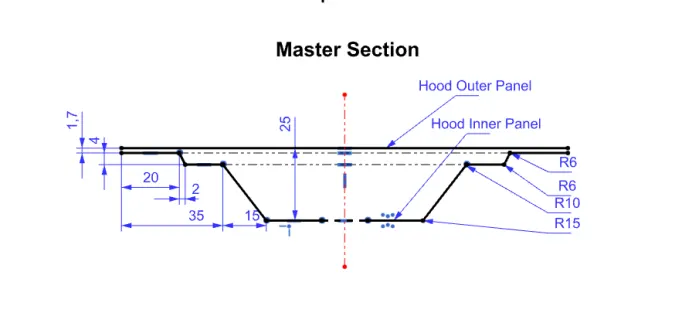
Master Section:
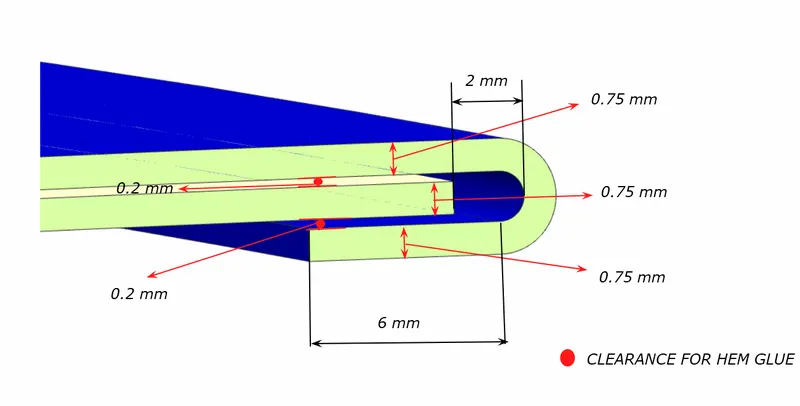
Hemming Data:
Relief rear section:
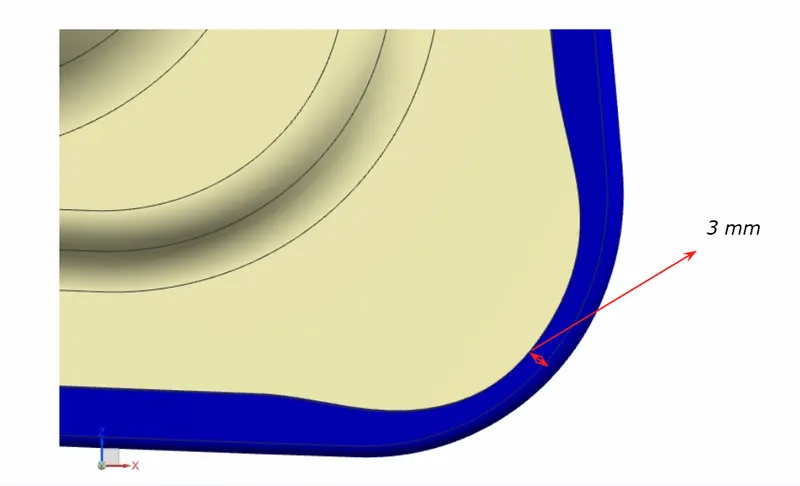
Front relief:
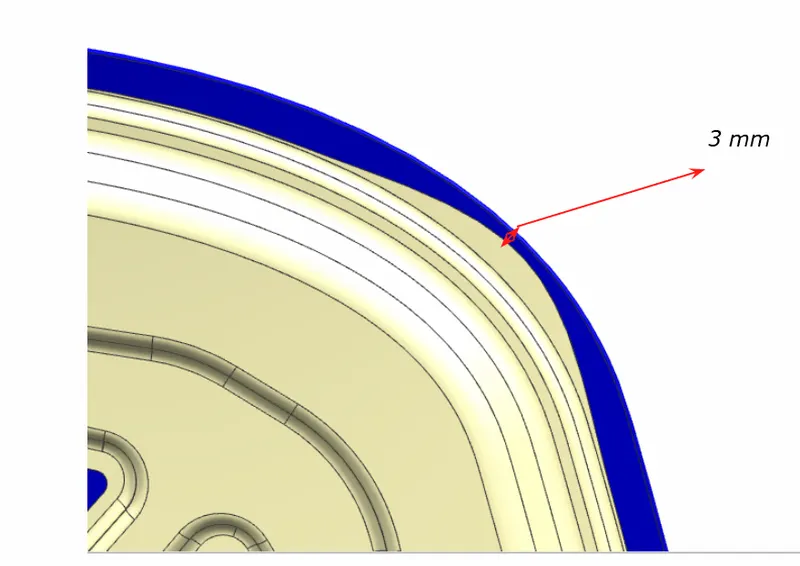
PROCEDURE:
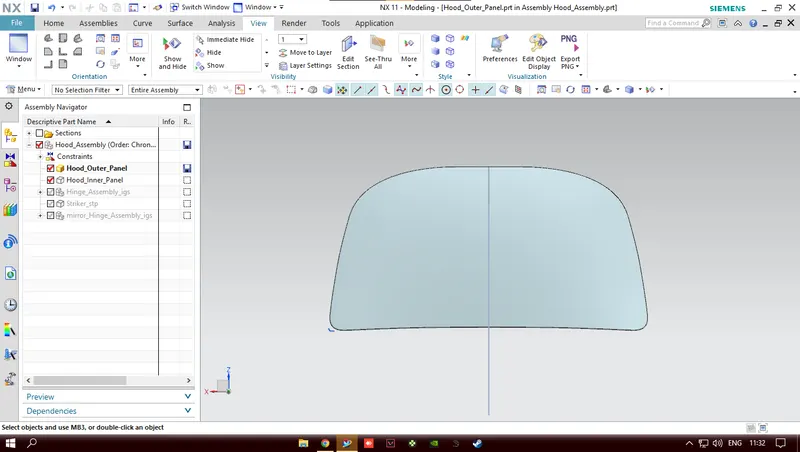
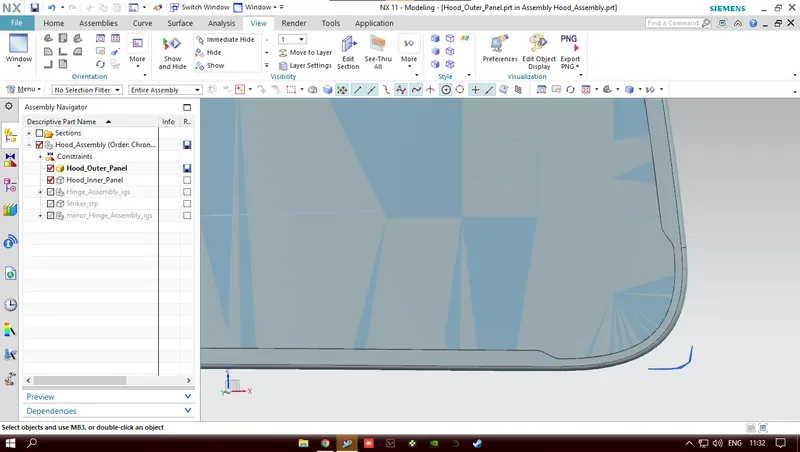
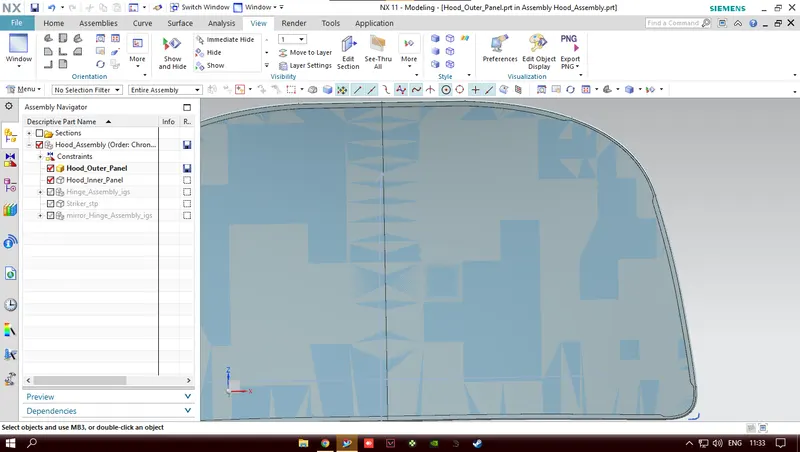
HOOD OUTER PANEL: Outer panels are aesthetic elements of the car. It is the styling team which provides the skin for the outer panel. The shape ,position and size of the should satisfy the safrty norms. So while designing the hood, more importance to pedestrian safety should be given. The outer panel is attached to the inner panel by a process called hemming. So it is mandatory to provide hemming falnges and reliefs for the hemming operation. Also, mastic sealants are provided between inner and outer panel to reduce vibrations.
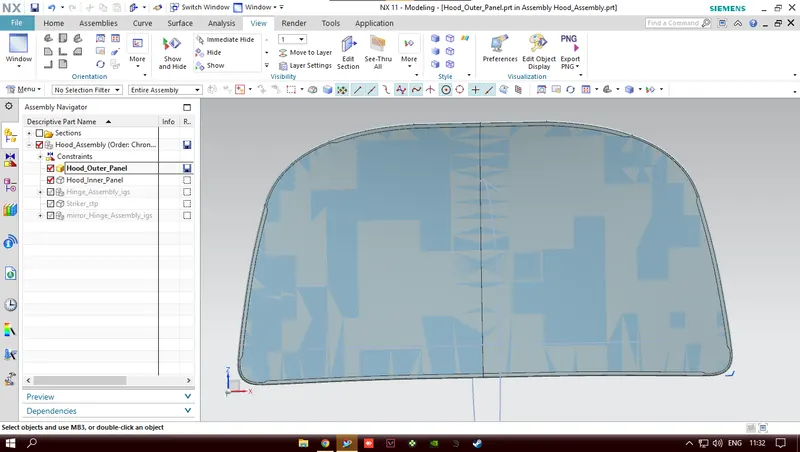
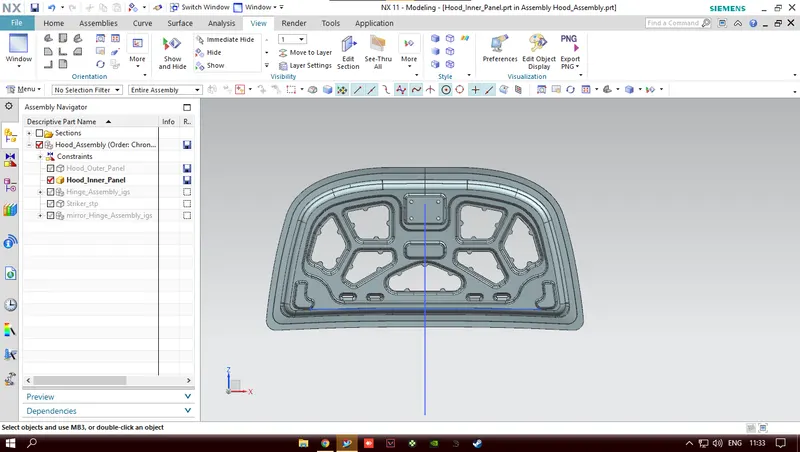
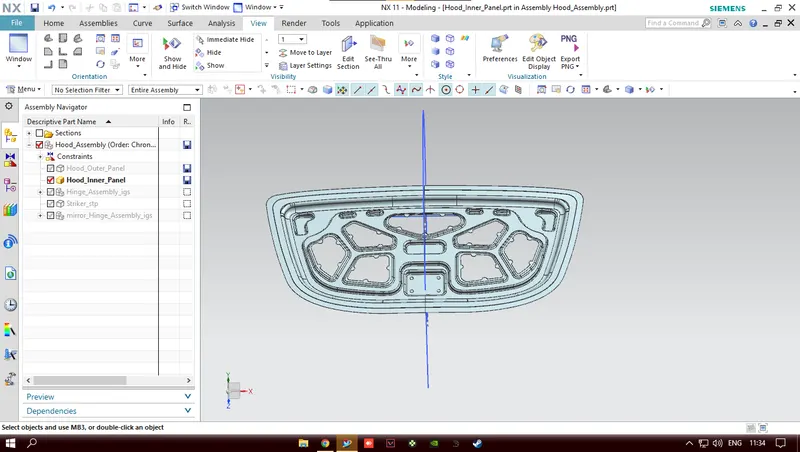
HOOD INNER PANEL: Hood inner panel is a part which gives strength and rigidity to the outer panel. The master section shows initial emboss shape and size. We then follow the master section to create the required section and then add emboss for striker and hinges.
REINFORCEMENTS: Reinforcements are given as per the design requirements. Mainly it is provided at the hinge and at the latch regions to improve strength locally. Usually the thickness of reinforcemnts should be higher than that of the inner panels and the value according to the cost and requirements. According to the design requirement here, the reimfocement is 1.5mm thickness to both the lacth and the hinges.
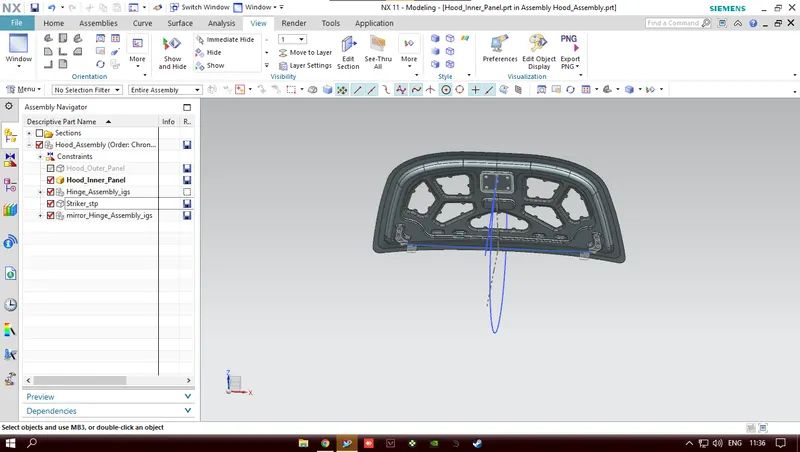
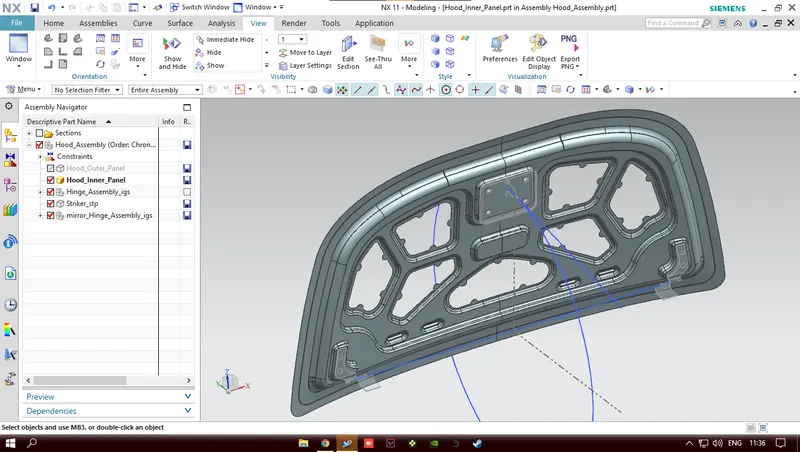
LATCH TRAJECTORY: Latch trajectory is given by the circle drawn from the hinge axis point. First we can fix either the latch or the hinge. If we have fixed the hinge position, then we should plot the trajectory circle for the latch. for proper making condition, the skriker axix thorugh the tip of the striker should be tangential to the latch trajectory.
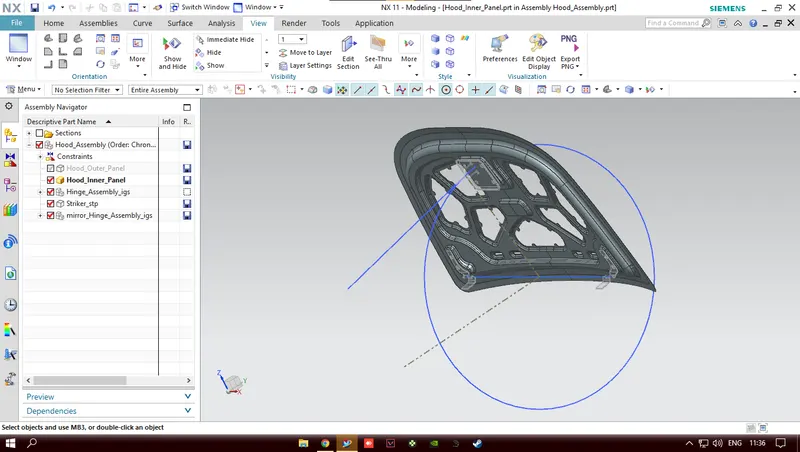
EMBOSS: Different embosses are provided throughout the inner panel. The stiffness of the inner panels are increased with emboss. The shape and size of the emboss also determines the the force disrtibution resulted during frontal collision. The force should always be distributed away from the passengers.
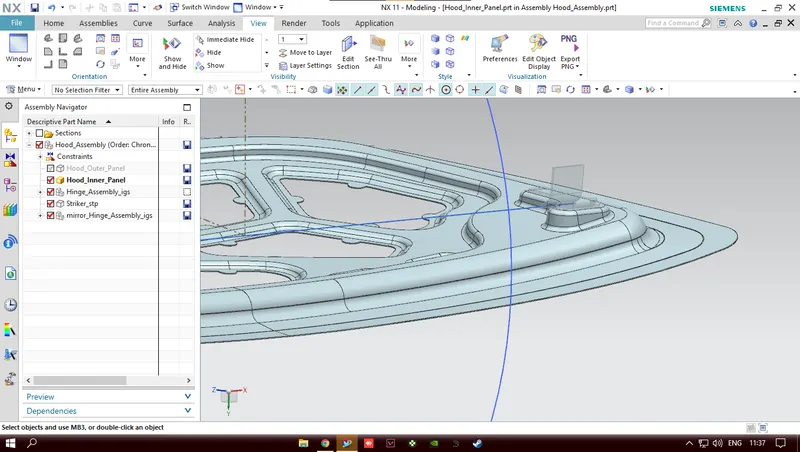
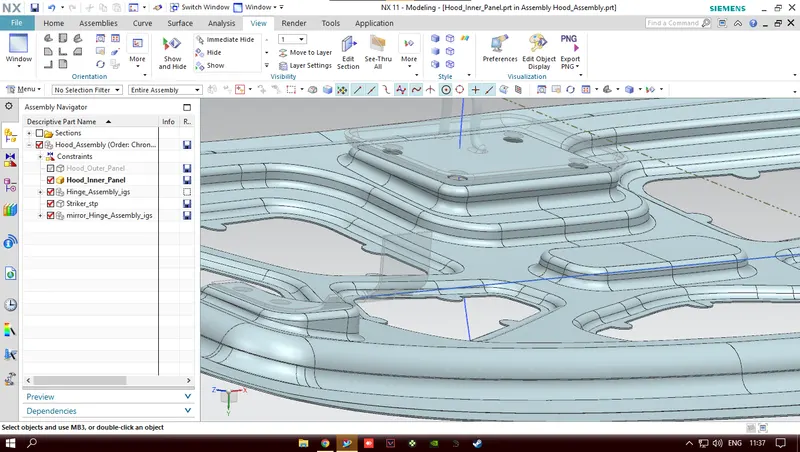
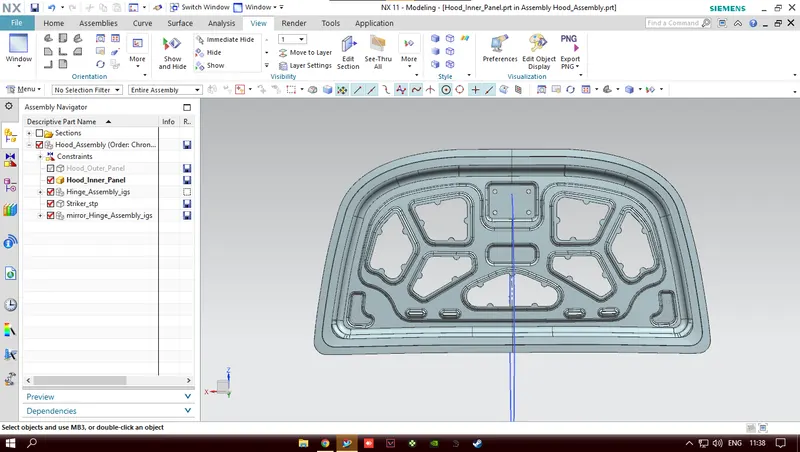
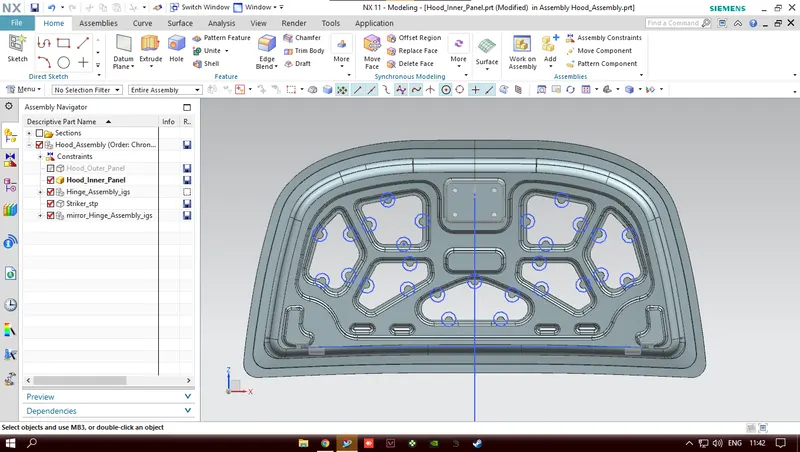
MASTIC SEALENT DATA: The hood is a very large area and the hemmimg is done only at the boundary of the hood. Other joining methodds such as welding, rivetting, etc cannot be used as they tend to leave outer marks to the outer panels which spoils the aesthetic purpose of the vehicle. So mastic sealents are used to join the inner and the outer panel. mastic sealents are an elastic compund which behaves as a hard rubber. It is applied in specific spots.Each spot of the mastic sealent has its effect around a circular region of 80mm diameter. thus, the mastic sealents are placed in such a way that is cover areas away from the hemming which are more vulnarable to vibration.
NOTE:The blue circles are there just to denote the mastic sealent points nothing more than that.
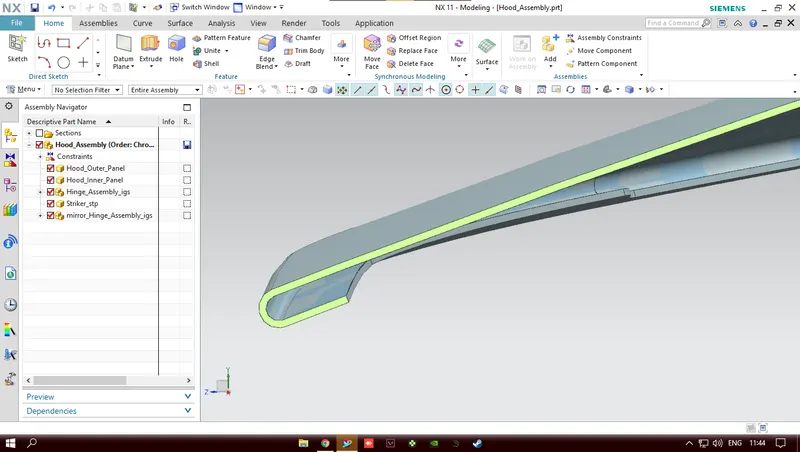
HEMMING: Hemming is a forming operation in which the edges of the sheets are folded over another part in order to acheive a tight fit. Normally hemming is done to join two parts together to improve the appearence of the part and to reinforce the part edges. In car part production, hemmimg is used in assembly as a secondary operation after deep drawing, trimming and fllanging operations to join two sheet metal parts together. Typical parts for this type of assembly are hood, doors, trunk lids and fenders. The accuracy of the hemming process is ver important as it affects the appearance of the surface and the surface quality. Matarial deformation, which occurs during the hemming process, can lead to dimensional variations and other defects in parts. typical hemmimg defects are split and wrinkles in the flange, material overlaps in the corner areas and or material roll-in. It is required to give reliefs at the corners.
There are 2 types of hemming process:
1.Conventional die hemming
2.Roll hemming.
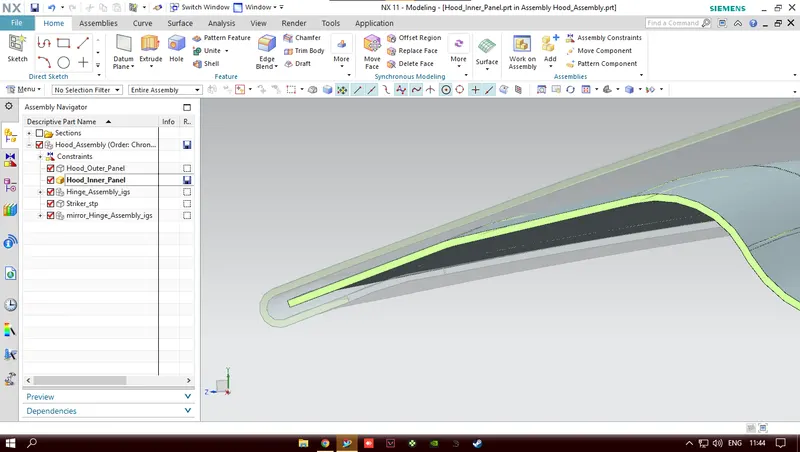
CONCLUSION: So in this challenge I learnt to design the hood inner panel with the help of given master section from the outer panel skin data, I learnt how to place the striker, latche trajectory and hinges. Also learnt how to assemble all the parts together.
ZIP file:
https://drive.google.com/file/d/1Fr_nphpv0fMjkTOgE_yFjqMGDPtz4mOj/view?usp=sharing